


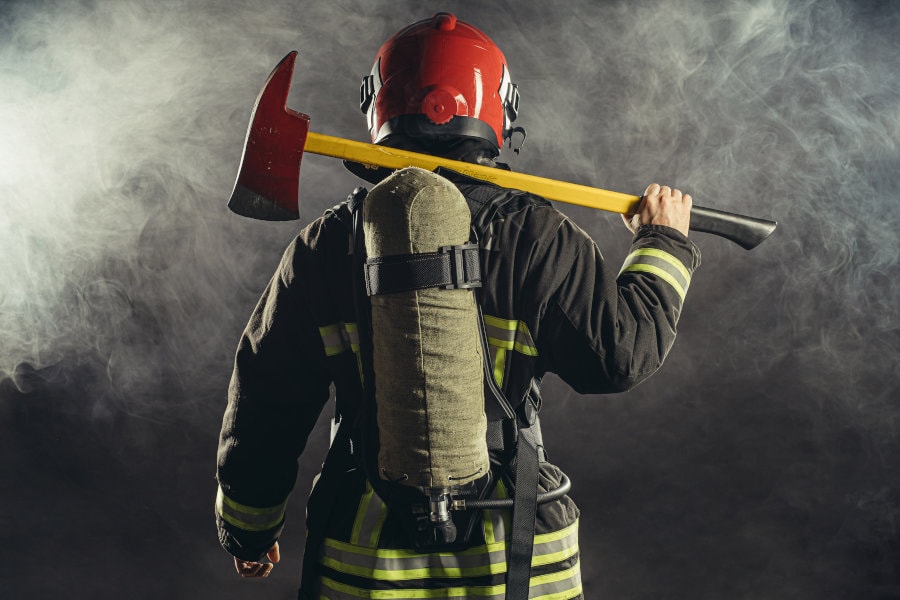
Firefighting
This firefighting course is part of the compulsory STCW Basic Safety Training for all mariners. The aim of the course is to provide its learners with basic knowledge on firefighting principles and fire classification, fire detection equipment, firefighting means and protection for ships.
Curriculum
Burning and fire
Burning is a chemical process in which a substance and oxygen (a substance that supports burning) are combined.
Firefighting principles and fire classification
When the substance is cooled by a fire extinguishing agent, its temperature drops to a value lower than the flash point, the combustion process stops, and the fire is extinguished.
Fire detection equipment
The manual fire detector is used for the rapid transmission of fire information.
Firefighting means
When choosing a fire extinguisher, both the characteristics of the expected fire and the properties of the fire extinguisher should be taken into account.
Fire protection for ships
reducing the likelihood of flammable cargo vapors igniting. The possibility of ignition of flammable cargo vapors is reduced by preventing the escape of flammable liquids, preventing the accumulation of flammable vapors, limiting flammability (no fuel with a flash point below 60 ° C should be used), limiting the ignition source (all devices with a surface warmer than 220 ° C, which the fuel can reach must be thermally insulated and all pipes from the ventilation systems of the cargo tanks must be equipped with flame arresters), separating the ignition source from flammable materials and liquids, and the obligation to maintain the atmosphere of the cargo tanks beyond the limits of explosiveness (obligation to own a system for inerting - introduction of inert gases).
Boat fire extinguishing
open flames (cigarette, cigarette, cooker flames, etc. self-ignition is the result of chemical/biological processes (fish meal, cotton soaked in flammable liquids), or a rise in temperature (bringing heat to the level of ignition (flash point), etc.