



Boat fire extinguishing
Sources of fire
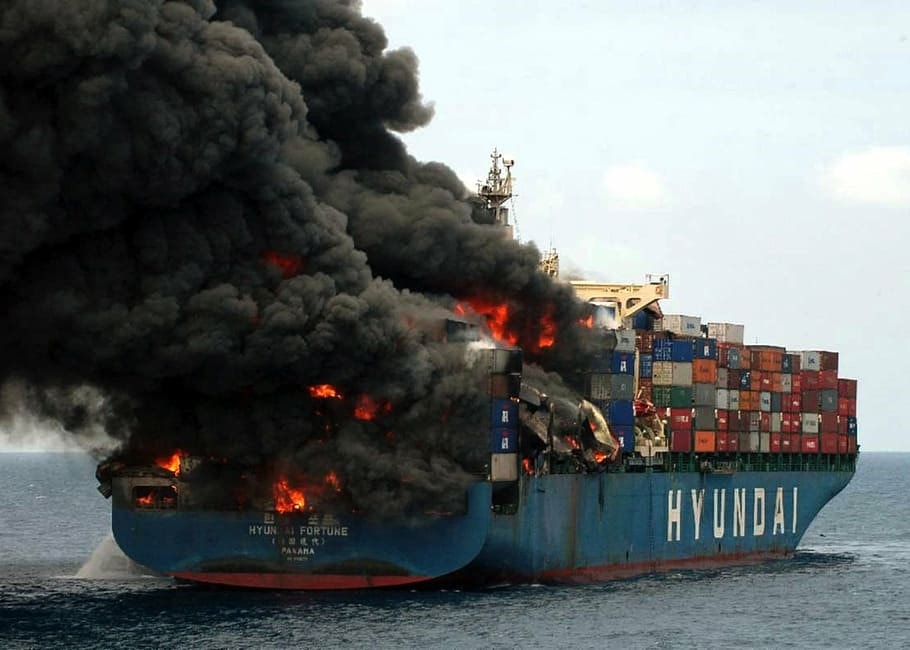
Numerous possible sources of fire on board are classified into:
- open flames (cigarette, cigarette, cooker flames, etc.)
- heated appliance surfaces (exhaust pipes, light bulbs, steam lines)
- sparks (glowing particles) generated by friction of hard materials
- electric spark (switches, electric motors, short circuits, static electricity)
- self-ignition is the result of chemical/biological processes (fish meal, cotton soaked in flammable liquids), or a rise in temperature (bringing heat to the level of ignition (flash point), etc.
Basically, success of extinguishing is proportional to the elapsed time from the outbreak of the fire to the beginning of the extinguishing. Therefore, preparations should be started with even the slightest doubt about the existence of a fire. A thorough check is done later. If it is established that a fire exists, the ship's alert system needs to be activated immediately.
Fire extinguishing in accommodation spaces
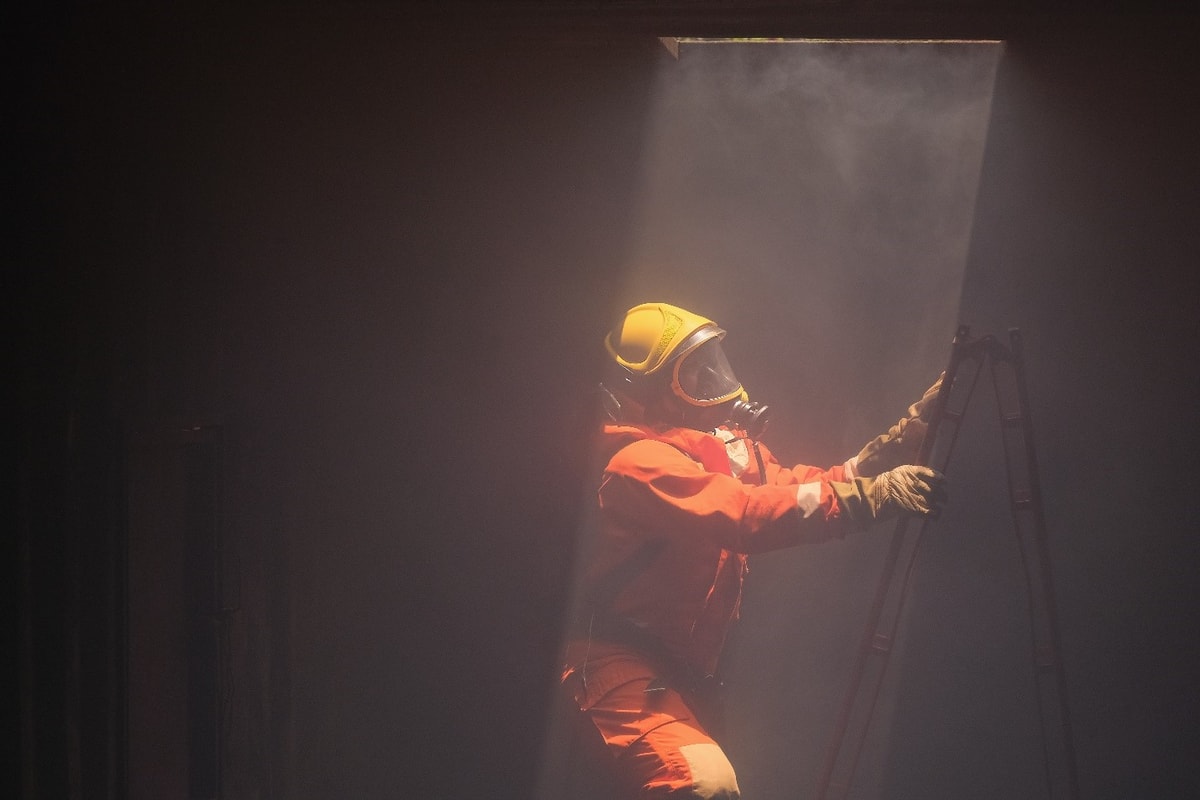
Extinguishing is carried out by portable fire extinguishers and sprinklers.
After a fire has been detected, the manual fire detector must be switched on and the fire extinguisher manually operated. At T = 68 to 79 ° C, the sprinkler system is switched on. After the fire has been extinguished, the system must be shut down as soon as possible to prevent unnecessary further damage to the inventory in the burned area due to seawater.
If the fire is not extinguished by the sprinkler, the fire alarm door remotely closes the fire door, switches off the ventilation and air-conditioning systems, and starts the deck fire extinguishing system (the fire pumps must be switched on beforehand, the valves adjusted to supply water to the deck pipeline and the fire hoses fitted with nozzles to the ports - the system is ready).
When extinguishing with the deck system, it is necessary to reach the center of the fire as soon as possible and lower the temperature to a value lower than the flash point. It is best when all the extinguishing water is converted to water vapor. In this way, the burned substance/mass is deprived of most of the heat (most effective cooling). As this is difficult to do, it is recommended to convert the water jet on the nozzle into water mist. Scattered water droplets evaporate faster than water jets.
For efficiency, it is very important how long it will take to start the extinguishing process, especially on passenger ships due to wooden and flammable materials interior (fires spread quickly).
When entering a burned area, hot air and heated steam are dangerous. Therefore, when the water first touches the flame, it is necessary to stand behind a slightly open door and push only the nozzle through the narrow opening (there are nozzle openings in some compartments). After a decrease in temperature, when entering the room, one should move closer to the floor, since the highest temperatures are at a height of 4.5 to 7 m above it.
Particular attention should be paid to the thermal state of the adjacent and the spaces above the burned. Fire temperatures in the superstructure range from 500 to 700 ° C, flammable liquids around 1200 ° C, and some hazardous loads over 1500 ° C.
If the fire spreads to several adjacent rooms, the fire area should be surrounded and extinguished on all sides. It is very good if smoke, water vapor and combustion gases can be released into the atmosphere. In this way, better visibility and safer operation are achieved, as well as a lower risk of poisoning and burns.
Smoky areas should not be entered without breathing apparatus, safety rope and escort. Doors, windows and other openings should only be opened if fresh air does not flow through them, that is if there is no oxygen. The exceptions are smoke, gas and vapor vents.
During extinguishing, guards monitor adjacent rooms (measure temperature). It should be noted that when the jet is used to extinguish a fire, the maximum jet height is reached at an angle of 80 ° and the maximum range below 32 °.
Fire extinguishing in cargo areas and on deck
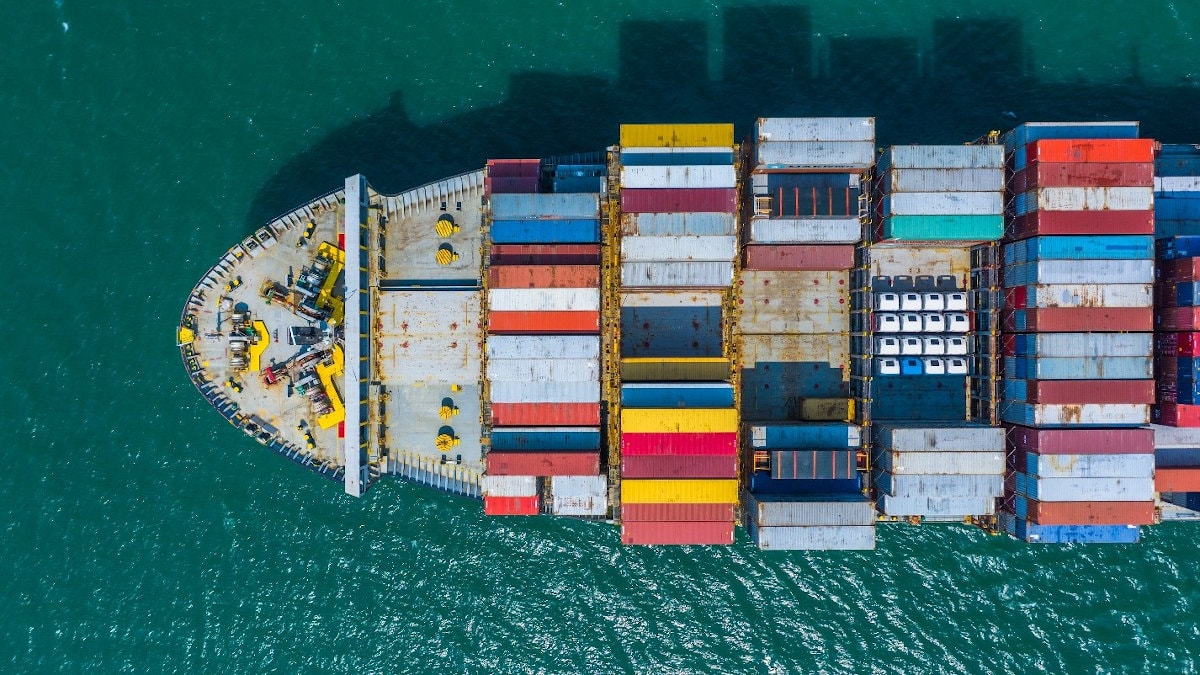
In cargo spaces, the built-in fire-fighting system and the deck fire-fighting system intervene in case of fire.
Dry cargo ships (general, containers, bulk) most commonly use CO2 fire extinguishing systems unless the ship is transporting chemicals that can react with CO2. In case of fire, ventilation must be switched off immediately, all openings closed, and CO2 released. The effects are seen in 5 to 15 minutes (when CO2 enters the space). Depending on the type of cargo (some release oxygen by burning), it can take up to several days to extinguish the fire. In exceptional cases, smoldering may continue even later if the fibrous materials (jute, cotton) have burned, as CO2 cannot reach the center of the burning material. It is a good idea to open the warehouse as late as possible, the best near the port (possible assistance needed). During the voyage, thermal values and cool/bay decks and adjacent spaces are monitored.
If the CO2 extinguishing system has not been successful, the deck fire extinguisher is activated. The jet is used to try to reach the center of the fire. If not - some/all of the storage needs to be flooded.
Containerized cargo is particularly difficult to extinguish. Due to the almost hermetic closure, when CO2 is introduced into the tank, it has a difficult time reaching the inside of the container. Therefore, after the introduction of CO2 into the container pool, the burning container is opened.
Water quenching is also used. The container is opened, and nozzles are introduced to the hoses of the deck system. If the container cannot be opened (small space/distortion), the formwork is broken or the fire inside is not extinguished at all, but the container is cooled from the outside, and firefighting measures are taken after entering the port.
However, if the container is easily accessible or on deck, it can be submerged in the sea or simply thrown away.
On tankers, fire is easily transferred to the cargo area from other areas (engine room, dwellings) and easily caused by collision/impact, explosion, accident during cargo handling, etc.
It should be noted that an explosion of fully loaded tanks is unlikely. After breaking through the tanks, running out and igniting the liquid cargo, it is foam extinguished and water is used only to cool the decks or adjacent spaces. In case of ineffective intervention - abandon ship immediately!
LNG - transportation of liquefied gas. Powder quenching is done only after stopping the gas supply.
If a lot of water is used during extinguishing, the ship's stability needs to be kept in mind. Attempts to drain the water are made. The ship should navigate to the nearest port, and in particularly in difficult conditions - strangle the ship. The possibility of flooding in a shallow sea/port is also needs to be considered.
If the ship is in navigation - reduce speed and sail downwind to reduce the air current (amount of oxygen) around the ship.
Fire extinguishing in the engine room
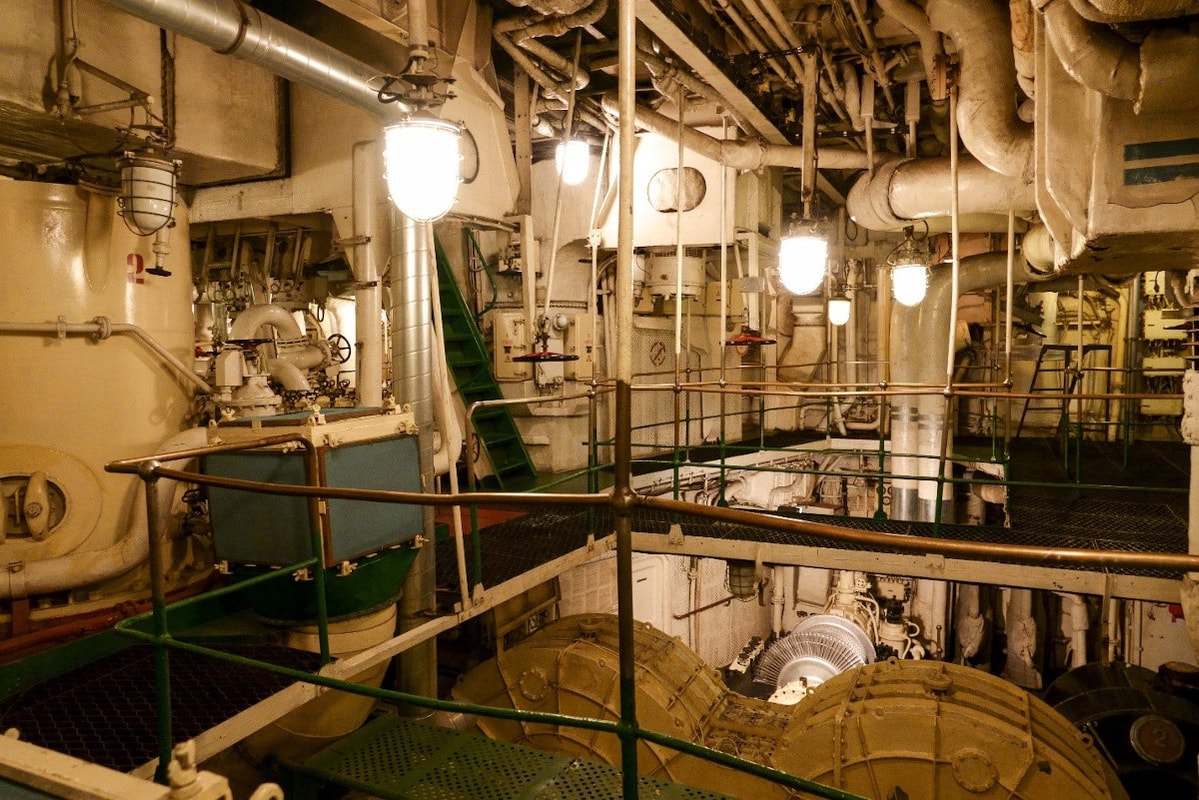
The likelihood of a fire in an engine room is much higher with respect to other parts and spaces on the ship, due to flammable liquids and numerous devices (pipelines) where high temperatures develop. Most fluids, marine fuels and lubricants, have a flash point lower than 280 ° C, and this value exceeds the operating temperatures of many devices and machine elements. Also, there are frequent leakages of flammable liquids from tanks and pipelines in the engine room, and flammable impurities (oily rags, cotton, grease, etc.) are also common.
In the engine room, combustible liquid fires are possible, with high-pressure liquid fires from high-pressure fuel lines being particularly dangerous. A dangerous mixture of fuel and air is created near heated surfaces. The fuel supply (closing the valve and shutting down the pump) must be closed immediately and the shutdown must be started.
Minor fires are extinguished by portable and transportable fire extinguishers. If there is a nearby source of electricity - extinguish with powder and CO2 and I other cases with foam. If a fire breaks out, it is impossible to use portable and transportable equipment - extinguish with a gas system (CO2 or HALON) or foam. A deck fire extinguisher is rarely used for water because water (especially marine) inflicts additional damage to appliances, machinery and equipment.
- Before initiating gas extinguishing, it must be established that all persons have left the engine room, that the fuel and lubricants have been closed and that all openings have been closed. After this, gas is released from the tank.
Entry into the burnt-out space after extinguishing is delayed for some time, because gas extinguishes the fire, but does not cool the space and equipment in it. Indoor cooling is very slow. Coolness is checked by two people in fireproof clothing with a breathing device connected by a safety rope (lifeline). If the condition of the chiller cannot be checked due to something, the gas should be left in the space min. 36 hours.
After extinguishing, ventilation is carried out in such a way that the entire volume of air must be changed several times.
- When using a foam system, the entire burned area must be filled with foam as soon as possible. It is problematic to cover all surfaces and semi-enclosed recesses, so people must be prepared for additional fire-fighting intervention (portable hand-held fire extinguishers or water).
- If a water spray fire-extinguishing system is installed on board and if used, the use of minimum quantities of water should be taken into account. This mode is used only if other means are unavailable or in a hurry to act, for example, because of dangerous cargo in an adjacent warehouse.
Danger of poisoning and suffocation
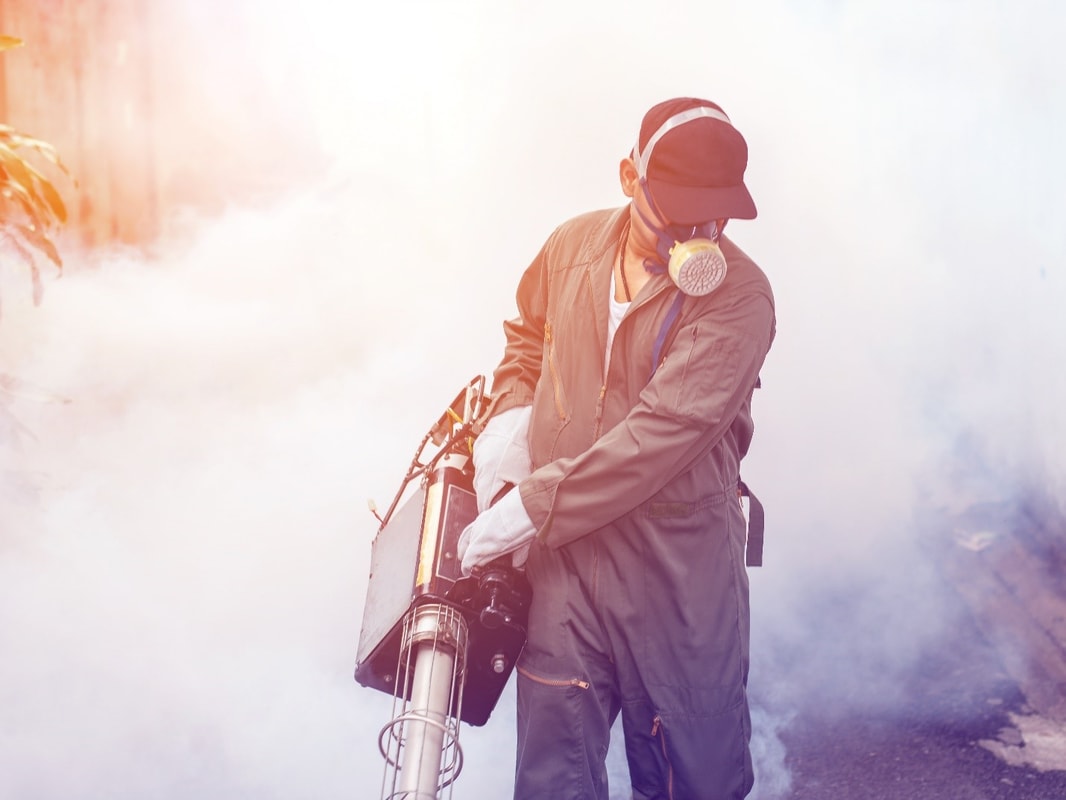
The dangers of poisons, harmful gases or oxygen deficiency exist in some areas. Poisons are all solid, liquid and gaseous substances that, by their chemical and biochemical properties, affect health and lead to temporary/permanent disruption of life functions. They take effect after inhalation (usually in seafaring - 90%), ingestion or touch. May be flammable -> toxic fumes.
Inhalation poisons: dusts (tiny solids; raised by air current and inhaled), fumes and fogs (fumes - solid particles; formed by condensation. Fogs are made from tiny particles of liquid; most commonly generated by dispersion), and vapors and gases (vapors are the gaseous phase of a substance; gases are substances in a gaseous state). In terms of effects, poisons are classified into those that:
- prevent (inhibit) the action of enzymes in the body
- damage hemoglobin
- damage the blood and blood-forming organs
- affect blood vessels
- damage the nervous system
- damage the liver
- damage the kidneys and urinary tract
- damage the bones
- damage the skin and mucous membranes, etc.
In maritime transport, poisoning is most commonly caused by groups of poisons:
- irritants
- suffocators
- intoxicants
- blood poisons.
Irritants aggravate the organs they come in contact with, most commonly the respiratory organs (sneezing and coughing). They are quickly detected (hydrochloric acid, bromine, chlorine, sulfur dioxide).
Suffocators block the supply of oxygen. They are recognized by their headache, dizziness, fainting, until the oxygen in the brain runs out (hydrogen sulfide, phosphorus compounds, carbon monoxide and dioxide, methane, nitrogen and oxides of nitrogen).
Intoxicants primarily affect the nervous system. The following are recognized: dizziness, headache, movement disorders, etc. (most toxic vapors of crude oil and its products).
The effect of certain poisons on the human body depends on the amount of poison, concentration, duration of exposure, mode of digestion (inhalation, ingestion), resistance of the person (age, age, sex), etc. The presence of gas is detected by a gas tracker, or by a handheld detector (disposable tubes are used to determine the amount/concentrations; they change color after the introduction of an).
In addition to poisoning, cases of suffocation have been known to occur because of the reduced amount of oxygen in an area. A reduced amount in the air is felt when the value drops from 21% to 16-18% (fatigue and tiredness at work). When inhaling, a person uses only about 4% oxygen -> replaces it with the same amount of CO2 -> exhales the remaining volume. At 10 to 16% -> Dizziness and mild fainting (no longer able to physically exert himself). Oxygen content <6% -> Fainting and rapid death.
In critical situations, endangered persons (breathing apparatus) are withdrawn from reduced oxygen rooms and resuscitated. The amount of oxygen is measured by built-in instruments, test tubes or personal instruments for measuring gases and vapors.
Maintenance, inspection and training
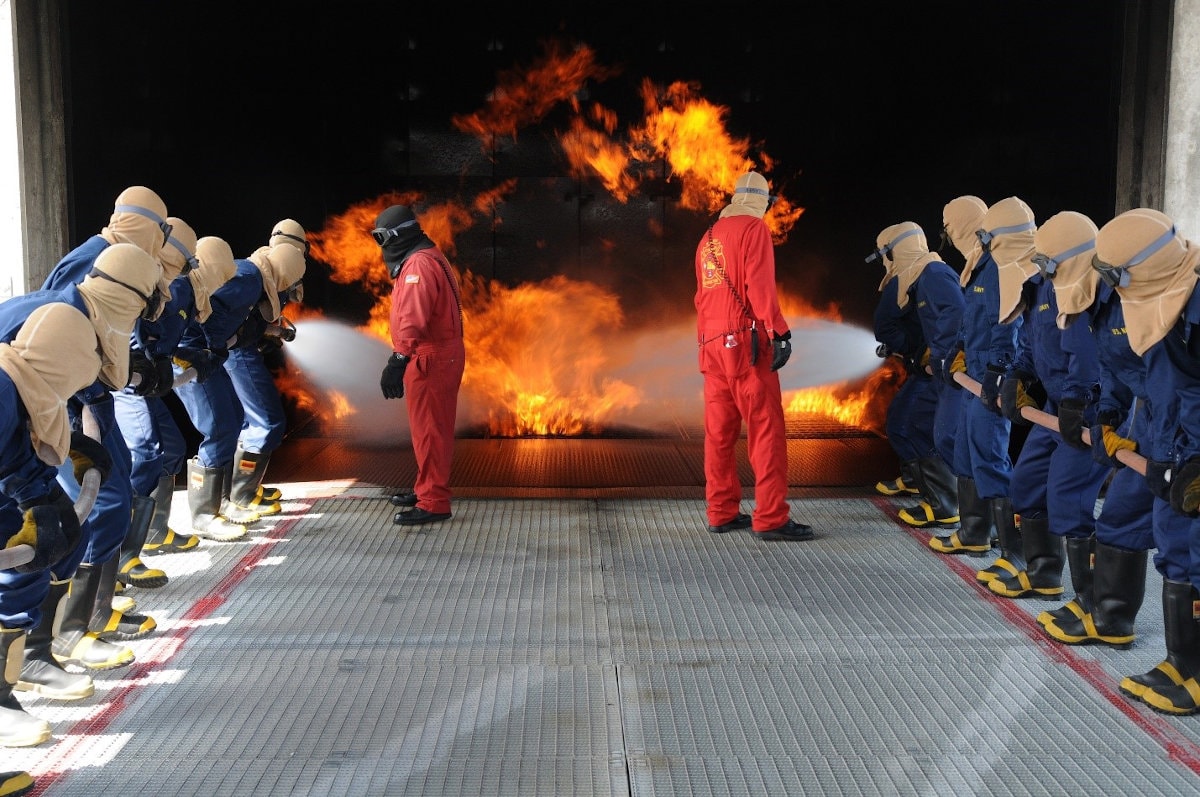
The fire system maintenance plan contains instructions and procedures for maintenance:
- deck fire protection system
- built-in fire alarm systems
- built-in fire protection systems (including sprinkler system)
- ventilation systems
- emergency fuel supply closure systems
- fire doors and their control system
- general alert system
- emergency breathing apparatus
- portable and transportable fire extinguishers
- personal firefighting equipment.
On passenger ships, the plan also describes the Lowlocation lighting system and the Public address system. Generally, the plan is adapted to the specific groups, types and classes of ships, their general features and purposes.
Crew training is carried out according to firefighting schedules, as frequently as the abandonment exercises, based on the Training manual. The manual must include:
- general precautionary measures (smoking, electrical, flammable liquids),
- general instructions on procedures for detecting and extinguishing fires (use of manual fire detectors)
- instructions on how to use the ship's alarm system
- instructions on the operation and use of fire extinguishers and systems
- instructions on the operation and use of fire doors
- instructions on the operation of smoke protection
- instructions on how to leave the burning place, etc.
The technical description of the fire-fighting equipment, appliances and apparatus available to the ship is shown in the General Fire-Fighting Plan. It includes:
- the location of control stations
- the location of fireproof bulkheads
- the location of fire alarms
- layout of the space that protects the embedded systems
- the way of access to individual premises
- description of the ventilation system
- the location of fire-fighting equipment, tools and means
- an indication of the location of the maintenance instructions