


Fire protection for ships
The principles of fire protection for ships
The principles of fire protection for ships are:
- vertical and horizontal separation of the ship's interior by thermal and structural barriers
- separation of passengers and crew accommodation from other spaces
- restricting the use of combustible materials
- timely detection of fires in the areas where they occurred
- limiting and extinguishing fires in the area where they occurred,
- providing access to/distance from the place of fire
- maintaining the ongoing readiness of fire-fighting agents
- reducing the likelihood of flammable cargo vapors igniting.
The possibility of ignition of flammable cargo vapors is reduced by preventing the escape of flammable liquids, preventing the accumulation of flammable vapors, limiting flammability (no fuel with a flash point below 60 ° C should be used), limiting the ignition source (all devices with a surface warmer than 220 ° C, which the fuel can reach must be thermally insulated and all pipes from the ventilation systems of the cargo tanks must be equipped with flame arresters), separating the ignition source from flammable materials and liquids, and the obligation to maintain the atmosphere of the cargo tanks beyond the limits of explosiveness (obligation to own a system for inerting - introduction of inert gases).
The SOLAS Convention, in order to reduce the possibility of fires, stipulates an obligation to restrict the flow of air to the fire, to limit the spillage of flammable liquids, and to limit the use of combustible materials.
Limiting air flow to a fire is achieved by shutting down natural and forced ventilation, and successful firefighting is carried out by installing a sufficient number of fire alarms and modern fire detection systems, organization of fire patrols, installation of automatic fire extinguishing systems (sprinkler), etc.
The containment fire to the source is achieved by fireproof bulkheads in the ship structure. They feature fireproof (fire) doors that can be closed manually or remotely.
The basic means of extinguishing a fire are built-in fire-fighting systems and portable devices. The main system is the deck water extinguishing system. When it comes to the fire protection of engine rooms, some of the following are installed: gas fire extinguishing systems, high expansion foam systems, or pressurized water systems.
Each ship has fire protection plans, which show the fire extinguishing systems, information on fire alarms, fire extinguishers, fire extinguishing methods, protection measures, schedules and duties of crew members, alarm modes, procedures, etc.
Portable fire extinguishers
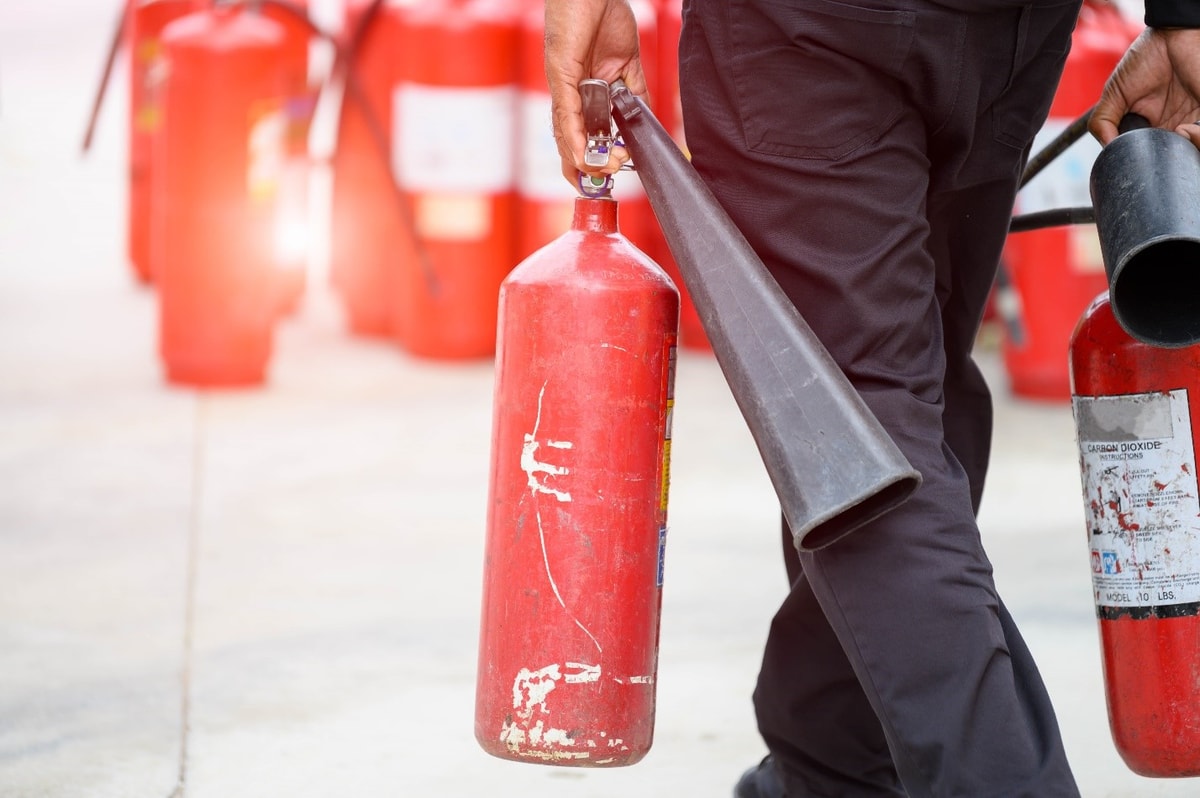
Portable fire extinguishers contain high-pressure fire extinguishing agents (water, foam, powder, CO2, halons).
Portable fire extinguishers with water are designed to extinguish fires from wood, paper, cloth, etc. Water is expelled from the tank by the pressure of carbon dioxide or some other inert gas. These devices must not be used near electrical sources due to the electrical conductivity of water. They must not be held at places where T is lowered to values <0 ° C, or in places where high pressure vessels should not be kept due to high temperatures.
Foam extinguishers are used to extinguish wood, paper, cloth, flammable liquids, etc. They are filled with a mixture of water and foam (air and chemical foam). Mixing water and air -> air foam. Chemical foam extinguishers are less commonly used.
Fire extinguishers that use powder as a fire extinguisher can be used to extinguish all types of fire. Dust is ejected from the tank by inert gas pressure. The quenching is based on the principle of anti-catalytic action on the chemical reaction of coupling of the fuel substance with oxygen, i.e. on the principle of separation of the fuel substance and oxygen. These appliances are less effective outdoors, especially in windy weather.
Some types of powders, when in contact with other substances, have a suffocating effect. These appliances are suitable for extinguishing fires in areas with electrical installations and appliances/devices, although electrical contacts may be damaged. Due to the increased pressure in the tank, the appliances should not be placed in rooms with high temperatures. Portable carbon dioxide (CO2) extinguishers contain pressurized liquefied gas (about 70 bar). The vessels are equipped with safety valves (pressure increase due to elevated T). They are suitable for extinguishing flammable liquids and gases, as well as electrical installations. The quenching is carried out by creating an inert atmosphere above the combustible substance. Not suitable for extinguishing in wind and at greater distances (1.5m). They must not be housed in rooms in which people reside, or in rooms where T can be elevated.
Halogenated hydrocarbon fire extinguishers (halogen chemical beginning F, Br, J, Cl - in combination with metals directly give salts; chemically very active) contain some of the HALONS under nitrogen pressure (8 to 12 bar). Halons 1212 and 2402 are ejected in liquid and halon 1301 in gaseous state. Therefore, its effectiveness in the open air is diminished. Extinction is based on an anti-catalytic effect, so burning is stopped immediately. High concentrations of halons can be toxic to humans.
The weight of the portable fire extinguisher must not exceed 23 kg. Labeling of each device: manufacturer and year of manufacture, approval for use (inspection, repair, certificate), type of fire, quantity of extinguishing agent, instructions for use, thermal work area, test pressure and warnings.
In addition to portable, transportable fire extinguishers are also used. They weigh up to 250 kg. Those up to 100 kg (powder, foam and CO2) are used on ships.
Deck firefighting system
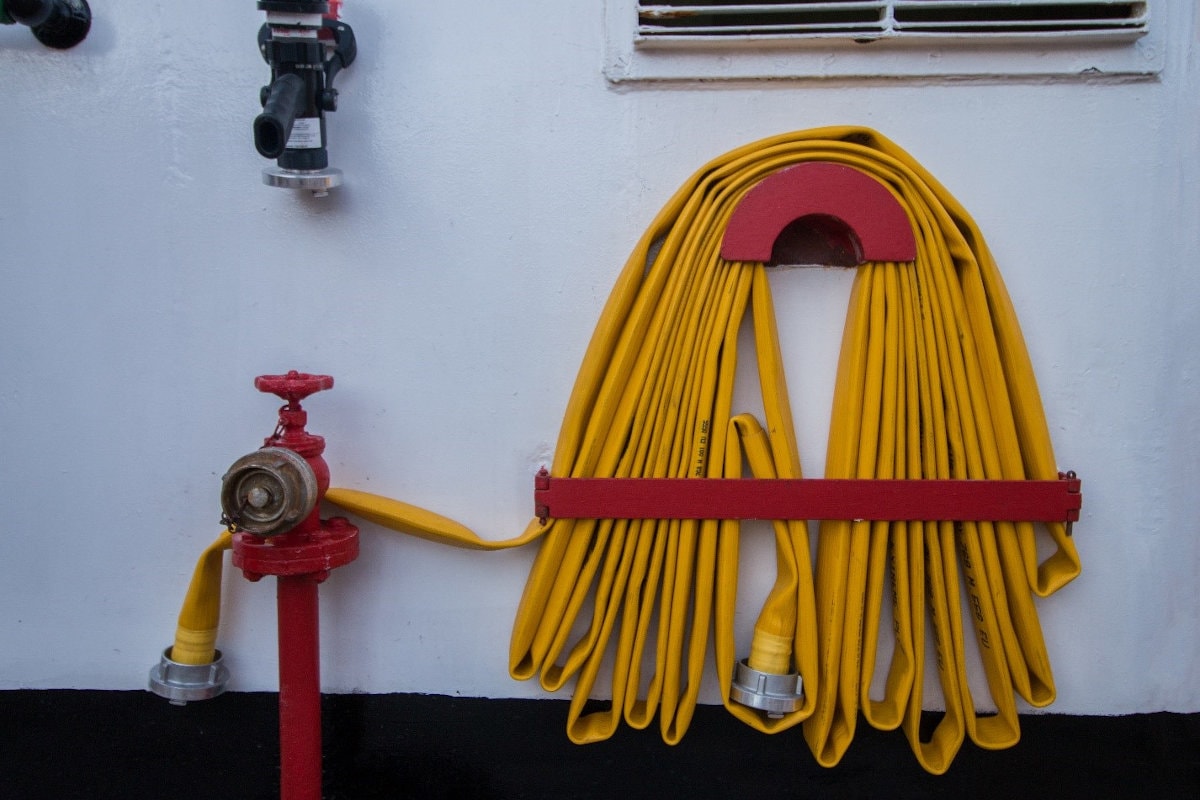
This is the basic fire extinguishing system on board ships. It must be constantly ready for a quick start-up, self-start or remote start-up. It consists of a fire pump, piping, hydrants, fire hoses and nozzles.
A fire pump is any marine pump (Cmin = 25m3) except for fuel and oil pumps. Each ship has at least two and passenger ships in excess of 4000BT - three such pumps. Drive: electric/motor. A special Emergency Fire Pump also exists on board ships. It must not be in the engine room or in the area with direct access to the engine room.
The fire pipeline is on the deck. The diameter of the pipe can withstand the pressure that the water produces on at least two fire pumps at the same time (on freight ships at least 140m3/h).
The number and the position of the hydrants allows at least two jets from different hydrants to reach each point on board. The distance between the two closest hydrants on deck must be less than 40 m. Indoors and corridors - 20 m. Hydrants are red in color. The water pressure on each hydrant must be at least 0.25 to 0.40 N/mm2, but not higher than the pressure which allows the nozzle to operate properly.
Fire hoses are up to 15 m long in the engine room and up to 20 m on deck. They are equipped with nozzles and placed in cabinets near hydrants. On passenger ships, fire hoses are permanently connected to hydrants.
Nozzles with a mouthpiece 12, 16 and 19 mm in diameter allow for a full jet, creating a protective mist and closing the flow of water. The jet range is about 12 m.
Supply of the ship's fire-fighting deck system with water from the mainland is achieved by connecting the fire-fighting system to the water supply from the mainland by an international flange. It is standard in size and can be used on either side of the boat. Measures:
- outer diameter: 178 mm
- inside diameter: 64 mm
- thickness: 14,5 mm
- screws: 16 X 50 mm
- bores: 19 mm (4 pcs)
- bore center diameter: 132 mm.
Water extinguishing systems
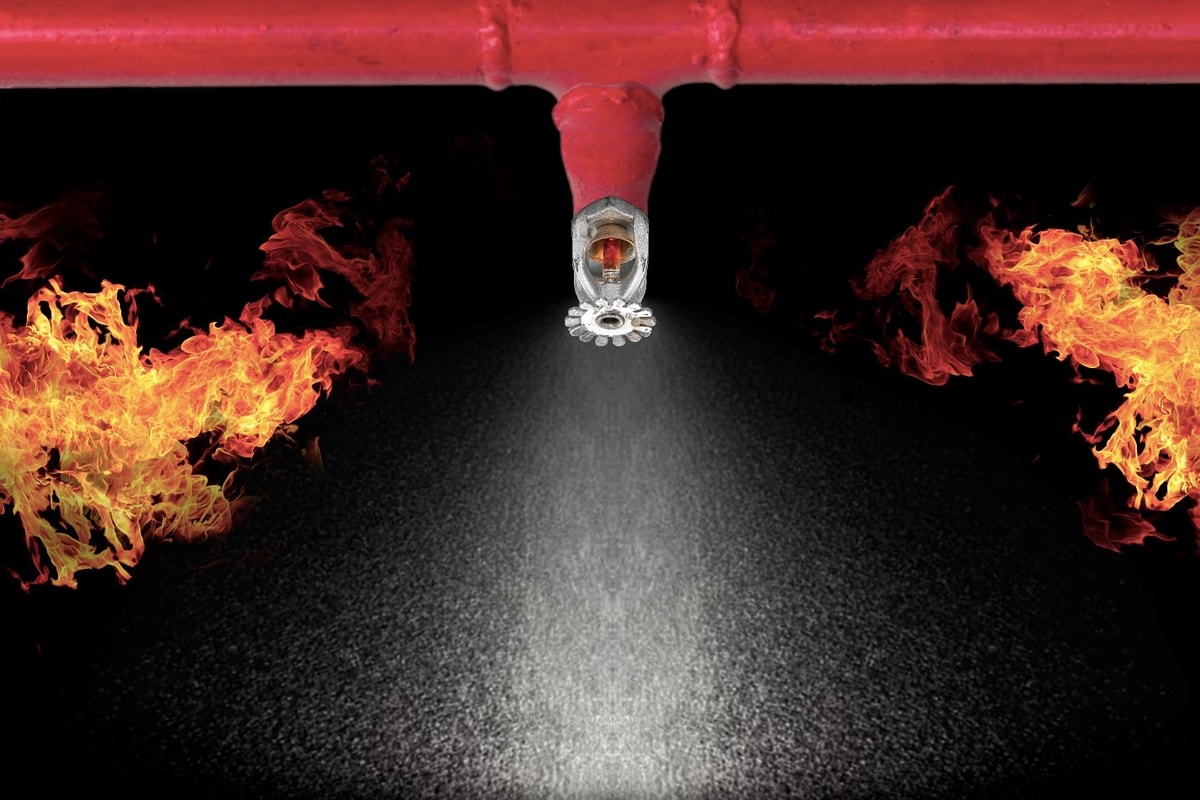
Water extinguishing systems can operate with spray water (water fog, drencher; Fixed pressure water - spraying system; engine room, cargo areas, warehouses, storage areas) or independently (sprinkler; passenger and crew accommodation, public spaces).
Pressure water spraying. Water mist is formed by droplets ejected from a nozzle at a certain rate (pressure). They can be coarse (1 to 5 mm), medium (0.1 to 1.0 mm), highly dispersed (dispersions; 0.01 to 0.1mm) or in the form of water fog (0.05 to 0.01 mm).
The firefighting is based on the fact that water droplets form a mixture (milk - emulsion) of water and liquid. In this way burning is prevented/stopped while the heated objects are cooled.
The system consists of a pump, pressure vessel, piping and nozzles. When running, it covers at least 5l/m2/min. It is effective in extinguishing high-pressure liquid fires. These are the most dangerous fires and, on ships, liquids under pressure of up to 150 bar can leak out.
The nozzle pressure is at least 12 bar. Larger droplets penetrate the mass of the inflamed fluid better, while finer droplets allow for better cooling. With this type of extinguishing, due to the high T water droplets can instantly evaporate and cause the liquid to burn.
Another drawback is the large amount of residual water after the fire is extinguished, which can, in certain conditions, destabilize a vessel. Vessels with such systems must have drainage pumps with a Cmin = 125% of the total amount of water, which can be ejected by both the water fog extinguishing system and the deck fire protection system.
The sprinkler system consists of a delivery pump, a pressure vessel, a pipeline and a sprinkler nozzle. The capacity of the pump and pipeline allows at least 280 m2 of coverage with water volume of at least 5l/m2/min.
Independent operation of the system is made possible by maintaining a constant freshwater pressure in the pipeline (up to the nozzle that holds the water). The nozzle's head has a mechanical element which, in case of elevation of T, allows the flow of water.
This element may be a glass container containing fluid. Elevation in T -> fluid expansion in the tank -> the tank is broken and opens the flow of pressurized water. The second, rarer type is a metal switch. Elevation in T -> the switch dissolves -> water flow. In each case, the temperature at which the sprinkler is activated is from 68 to 79 ° C. Exceptionally, the flow release temperature may be higher in some rooms, but not more than 30 ° C than expected T.
When, leaking out of the nozzle, water hits the spray board and water mist fills the room. The pumps allow the constant supply of water at the required pressure.
In conventional sprinkler systems, the pressures are from 5 to 8 bar, however, systems with significantly higher pressures where the water in the pipelines is up to 25 bar are also used, and during fire extinguishing, the supply pump provides pressure up to 140 bar. These high-pressure systems have many advantages:
- due to small amounts of water (3 to 5% for low pressure systems), there is no risk of free surface effects
- relatively small damage is caused on the burned objects/surfaces
- easy to install due to thinner inlet pipes, etc.
The droplet size is <0.01 mm, so the water extinguishing surface is more than 100 times larger than the surface at full jet. The consequence is a more efficient heat transfer, i.e. better cooling (about 400 times faster evaporation -> heat consumption).
The drawback is in the technical design complexity (high-pressure reserve pump, additional pressure vessels in case of energy shortages, control panel) regarding low-pressure sprinklers.
Carbon dioxide fire extinguishing system
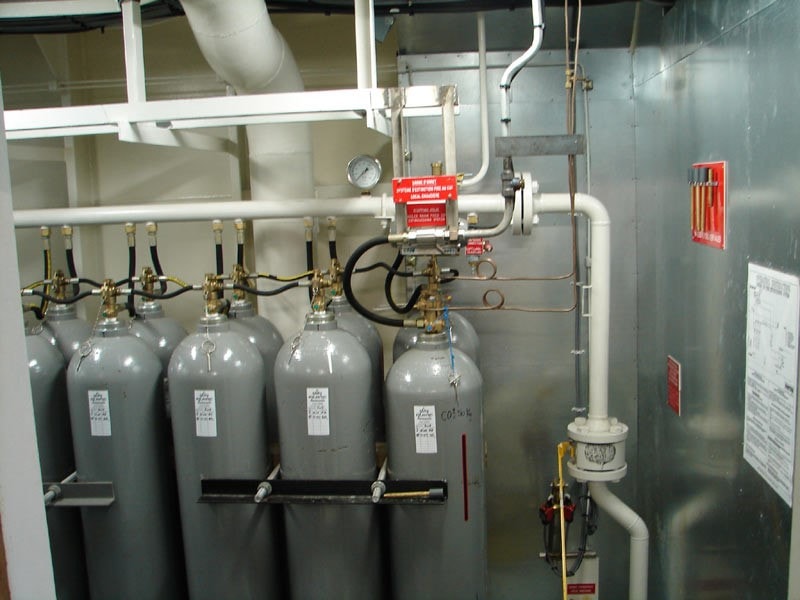
Carbon dioxide fire extinguishing system - engine rooms, cargo areas for dry cargo and sometimes pump spaces - pumproom. The system includes pressurized CO2 vessels + safety valves, connecting pipes with valves, pressure gauges, control panel in the cabinet, an exciting gas tank, piping and nozzles. The system can extinguish a fire in one/more rooms, and if a fire is extinguished in rooms inhabited by people, it must also have an alarm device, which precedes the activation of the system for at least 20 seconds. The system must only be operated manually! Usually, opening the cabinet triggers an alarm.
Gas Release - Procedure: The room in which it is intended to operate is selected from the valve system. The compressed CO2 containers are then opened. There are several ways to open a larger number of containers. On large ships, there are up to 40 carbon dioxide fire extinguishing systems.
The gas enters the burnt spaces through the nozzle openings (it is dispersed) and, in cargo spaces, by a pipe fire alarm system.
Since gas leaks are possible, the system must be constantly monitored. This is most easily done by checking the pressure on the manometers.
Foam fire extinguishing system
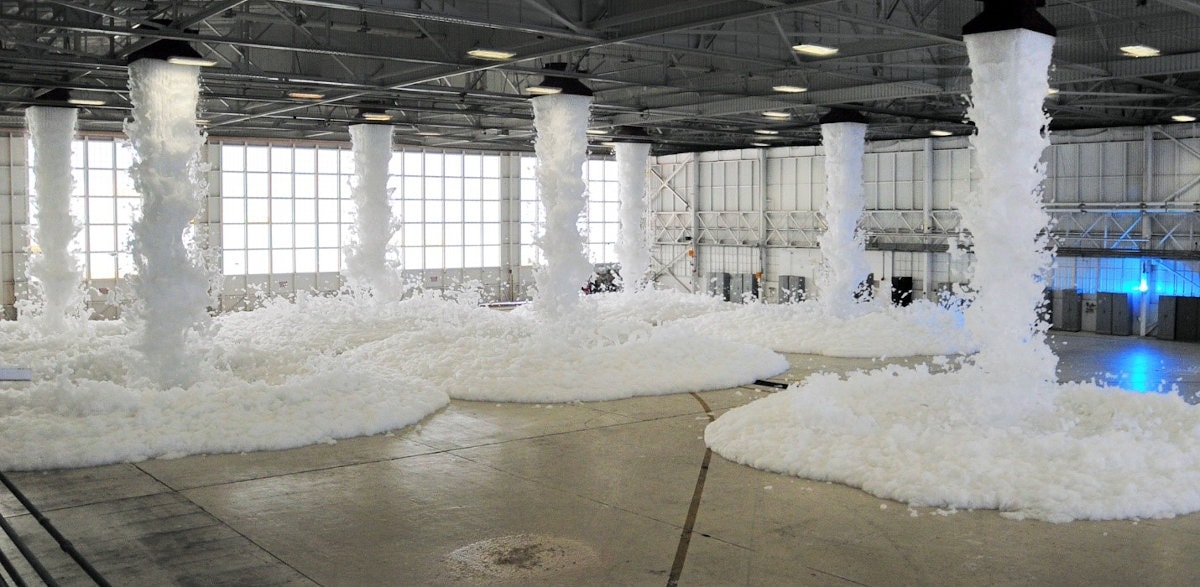
Foam fire extinguishing system - fluids in engine rooms, pump rooms, tanks and decks on tankers, sometimes cargo areas for bulk cargo. In open spaces -> heavy foams and indoors -> light.
Systems that use heavy foam (tanker deck protection) consist of a seawater pump, a foam tank, a mixer, a pipeline and a monitor (foam can be supplied to all monitors from one mixer, or each monitor has its own). The mixer adds 3 to 6% foam to the water inlet, and the mixing takes place in the pipeline to the monitor.
The foam system can cover the entire surface in all tanks. Monitor capacity is at least 3 l/min/m2 of the burned area, that is, at least 1250 l/min. The range of the monitor is at least 1/3 greater than the farthest point of protection. They are usually on the ship's longitudinal distance, which allows coverage of two adjacent monitors. They can be fixed for action in a particular direction, and they operate at an angle of ≈ 70°.
The heavy foam extinguishing system can produce enough foam to cover the maximum burnt surface with a layer (foam) min = 150 mm thick in 5 min.
Light foam systems consist of a seawater pump, a pipeline, a foam tank, and a built-in foam dispenser. The foam is created by injecting a mixture of water and foam into the air stream. The system can produce at least 1 m of foam height for a protected area with the largest surface area, per minute. The foam container has sufficient capacity to produce at least five times the foam volume of the largest protected room. Regardless of whether it has a pumping system of its own, it must be connected to a deck fire line (seawater).
Powder fire extinguishing system
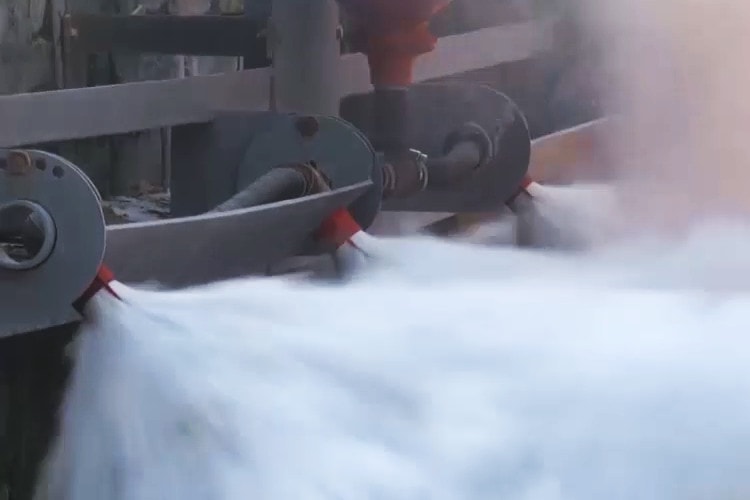
Powder fire extinguishing system - chemical transport vessels, LNGs, paint tanks and fires that are extinguished anti-catalytic. The system consists of a powder tank, a pressurized tank for propellant (N2 or CO2, 10 to 20 bar) and a pipe system with nozzles or cannons (protection of disembarkation points). The piping is made of rigid or flexible pipes. The dust starts to leak no later than 30 seconds after opening of the gas tank.
The system can be portable (standalone) or installed. Contains up to 1000 kg of powder in multiple containers. One empties first, then the other, etc. The nozzles are either built-in or manual. Range 10 to 40 m. Disadvantage: Lots of dust and reduced visibility.
After use, the system must be well-blown (cleaned) for possible clogging of pipes and nozzles.
HALON fire extinguishing system
The HALON fire extinguishing system (engine rooms, pumprooms, vehicle spaces, without passengers and cargo) consists of a liquefied gas tank, a pipeline and a control cabinet. The entire space is filled when extinguishing. Releasing of HALON is done manually and takes less than 20 seconds. Natural/machine ventilation must be switched off beforehand. The amount of gas required depends on the type of gas and the volume of the burned space.
Pressure in the gas tanks (N2 for HALON-1301 and air for 2402) must be constantly monitored (pressure gauges on the tanks). Only 1301 may be stored in protected areas. Others outside of them.
IMO resolution A.719, from 1994, prohibits the use of HALON on ships (destruction of the ozone layer).
Personal fire protection
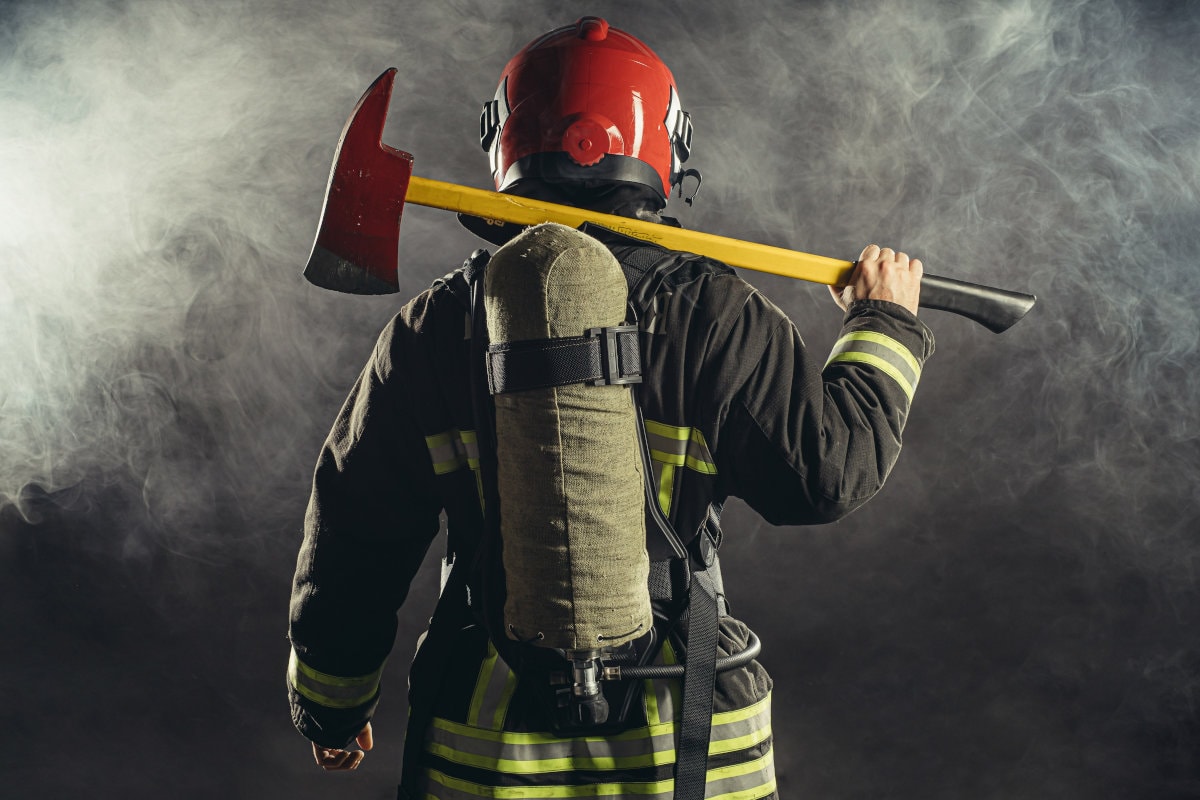
Personal fire protection means include:
- protective clothing
- protective footwear
- helmet
- electric lamp
- ax
- breathing device
Protective clothing is made of waterproof material. Protects the body from heat and burnes (caused by steam). Protective clothing (and footwear) is primarily intended to allow shorter stays and work in burned areas. They must not interfere with free movement and must drain the heat produced by the body.
When the body is affected by heat for a longer period of time, pain occurs first (surface temperature ≈ 45 ° C), followed by burns, that is, skin discoloration (T>55 ° C), blistering and eventually tissue destruction.
Surface T depends on the amount of heat absorbed, the color of the garment (reflection), the material, and the duration of exposure.
Protective footwear is made of rubber or other insulating material and protective helmets are made of solid materials.
The electric lamp must not spark when used and its battery life (continuous operation) must be at least three hours.
Breathing apparatus protects against toxic gases/vapors, hot air or water vapor. It is also used in cases where oxygen is lacking. The unit has a pressurized air tank (200 to 300 bar; 1200 l of air). It must be able to work 30 min continuously. It also has a main and reducing valve (reducing pressure to operating value - 5 bar), pressure gauge, pulmonary automaton (when inhaled it releases air from the tank, and when exhaled it closes the inlet from the tank, so the exhaled air enters the atmosphere), protective mask and an audible signal (sounds when the amount of air in the tank is reduced to 10%). Weight = 8 to 12 kg.
Some breathing apparatus devices do not have a reservoir. Instead, the air is supplied by tubes (l max = 36 m) and pressurized by a compressor or from a portable pressure tank.