


Firefighting means
Properties of fire extinguishers
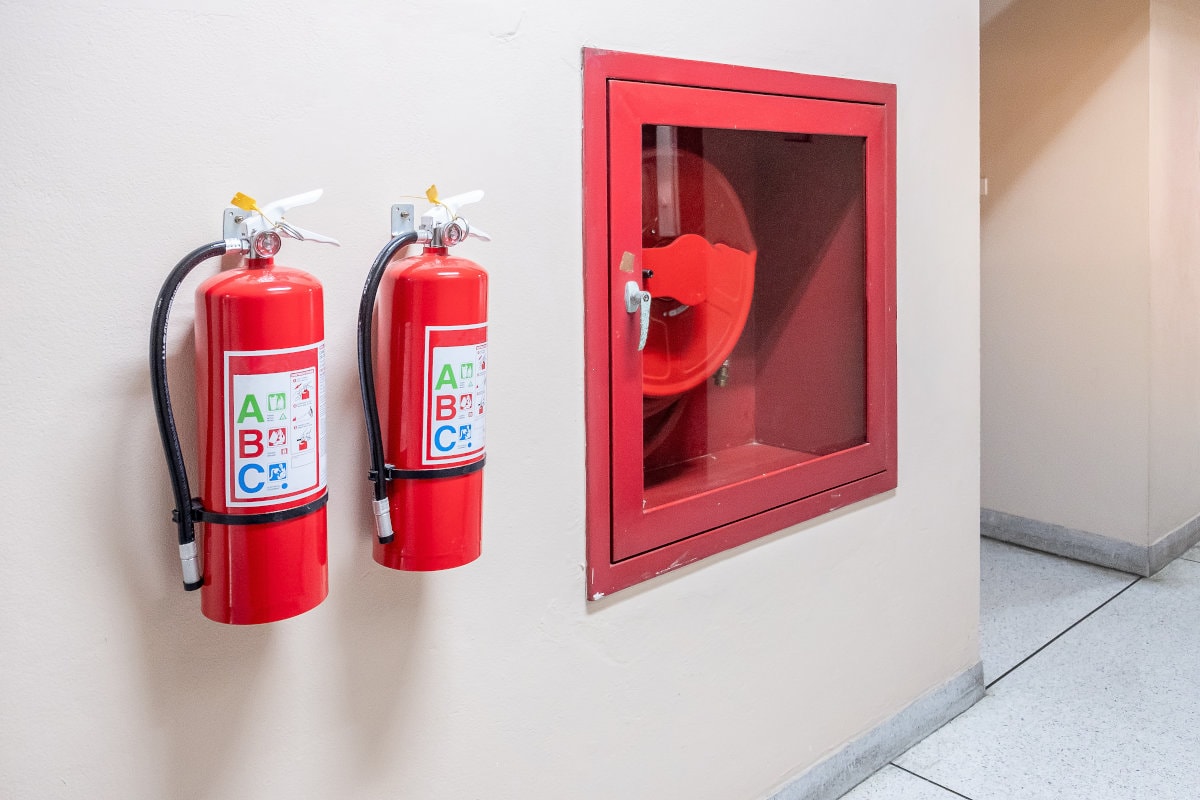
When choosing a fire extinguisher, both the characteristics of the expected fire and the properties of the fire extinguisher should be taken into account.
The properties of fire extinguishers that determine the possibilities and methods of administration are their toxicity, effectiveness, harmfulness, versatility, portability and scope of use.
The non-toxicity of fire extinguishers is a desirable trait for the protection of persons in the premises in which they operate and the safety of fire crews. Unfortunately, this is difficult to achieve, as certain chemical constituents often react with environmental constituents, and despite their original non-toxicity, acquire toxic properties during use.
An effective fire extinguisher is considered to be one that requires a smaller amount to extinguish the fire of a particular substance under given conditions.
When extinguishing a fire, special care must be taken to minimize the damage caused by fire procedures. Harmful agents can cause more damage than the fire itself. E.g. submerging individual areas with water can cause irreversible damage to electrical and other appliances and installations.
Versatile agents can effectively extinguish various types of fire. The simplicity of the technical conditions for the delivery of fire extinguishers to the fire (portability) determines their eligibility for use.
Scope of use implies the conditions under which an asset may be used, e.g. water in low temperature conditions (freezing of water, pipelines, valves, etc.).
In terms of frequency of application, fire extinguishers are most often classified into basic (water), dedicated (foam, carbon dioxide, powder, halogenated hydrocarbons) and supplementary (sand, blankets, etc.).
Water
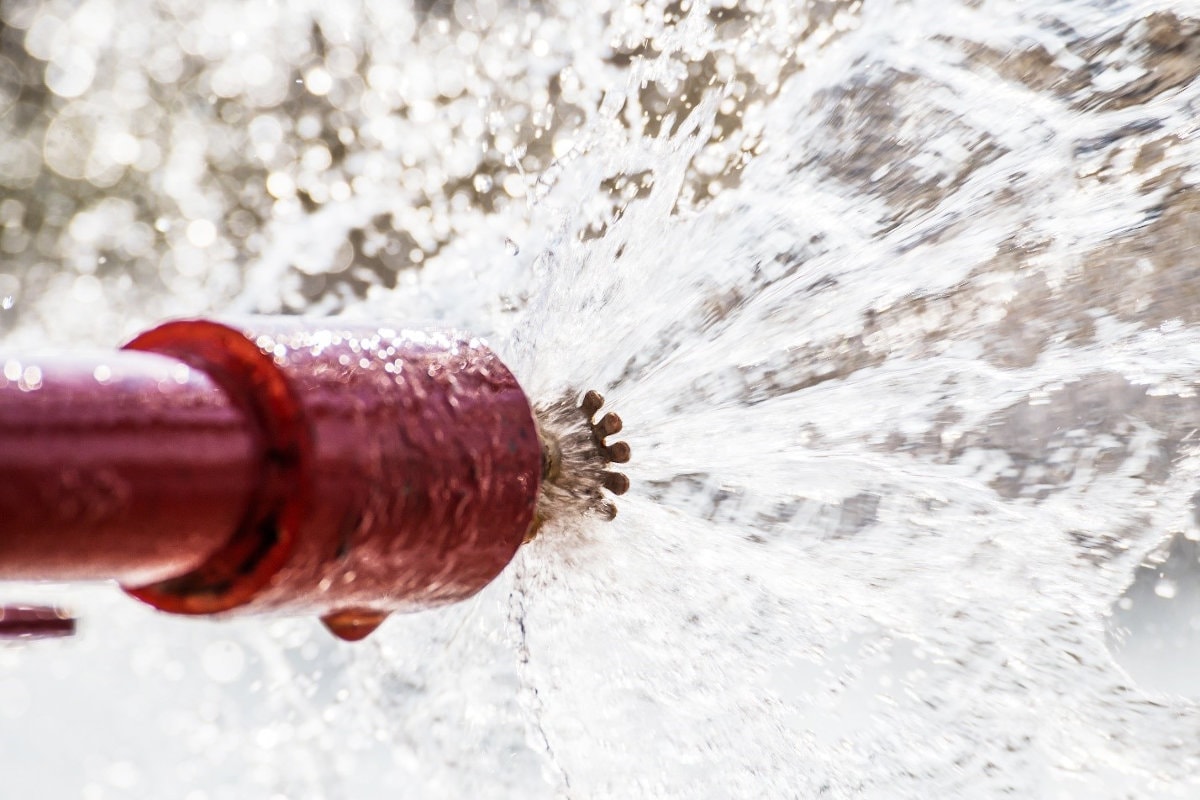
Water is the oldest, most well-known and most common firefighting agent (in extinguishing solids). It is available, non-toxic and portable in large quantities. It is formed as an oxidation product of hydrogen. It consists of two hydrogen atoms and one oxygen (H2O). In nature, it is mainly found in liquid, i.e. in a gaseous aggregate state. It has the highest density at 4 ° C. Chemically pure water is a liquid without colour, door or taste. The chemical compound of water is stable and decomposes only under the influence of high temperature. It contains solutes and solids (minerals, metals and gases).
In addition to high thermal fires (water evaporates -> large amounts of hydrogen + carbon monoxide), water must not be used to extinguish fires of substances with which water reacts chemically violent. These are alkaline (Li, Na, K, Rb, Cz) and alkaline earth metals (Al, Mg) and their alloys. When these metals burn, high T develops causing the water to decompose. For example, in the case of sodium burning, an explosion may occur.
Some liquids behave similarly. E.g. sulfuric acid (H2SO4) in contact with water creates splashing acid droplets and develops high T.
Some solids in contact with water may develop flammable gases (calcium carbide + water -> acetylene). Such substances are classified as dangerous.
When extinguishing, water can be used as a full jet, spray jet or water mist.
With a full jet, water can be discharged over long distances, but only about 8 to 10% of the total amount is used because the rest gets dissipated. However, this method is recommended in solids fires and at high temperatures, when it is difficult to get close to the source/centre of the fire.
The spray jet cannot be extended far, but it has a much higher water efficiency (20 to 25%), and is often used because of it. The droplets must not be less than phi = 0.3mm so that the jet can reach far enough.
Water mist is obtained by using high operating pressure (> 30 bar) and spraying through a nozzle.
Water can be used to extinguish flammable liquids (whose specific gravity is less than water), but care must be taken not to displace the burning fluid to a wider area by jetting (spreading the fire).
Because water is an excellent conductor of electrical energy, it is forbidden to extinguish fires near power sources with it.
Foam
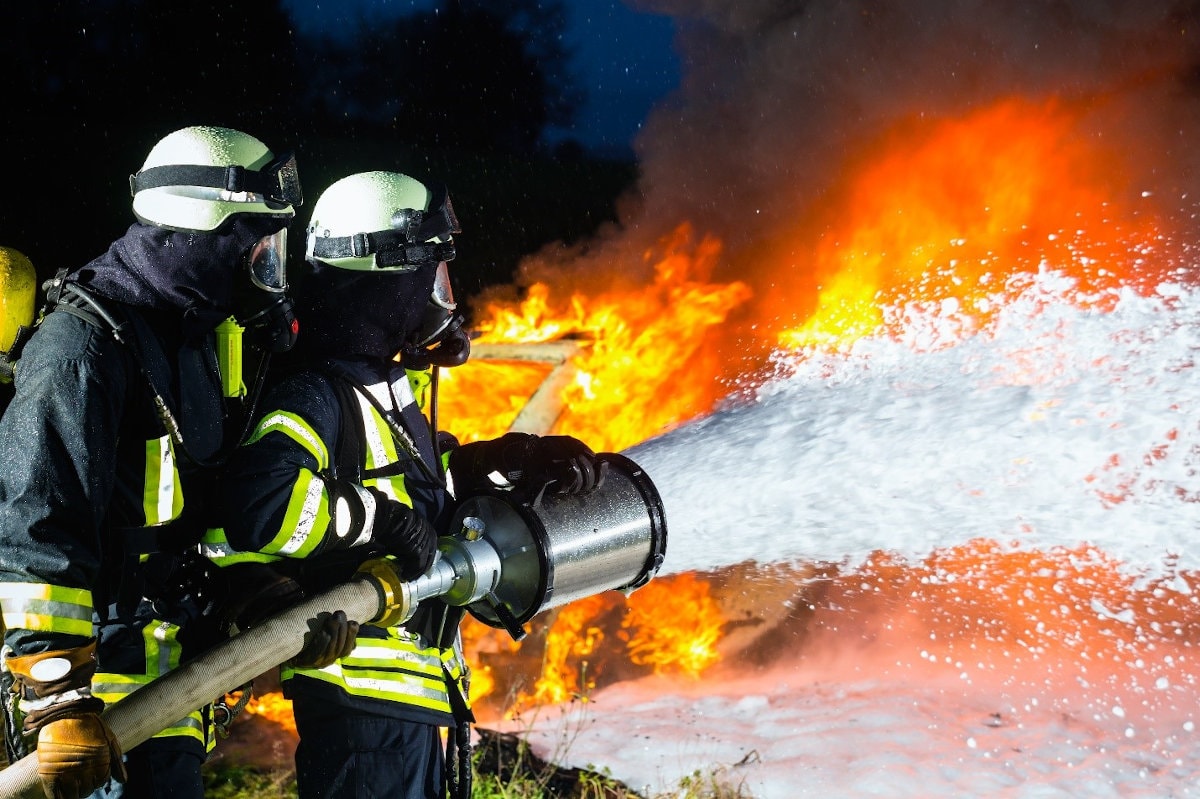
Foam is primarily used to extinguish flammable liquids. Fundamental principle: full coverage of the ignited substance (separation of the combustible substance from the surrounding oxygen). With regard to the degree of expansion (expansion - volume to mass ratio), the following differ:
- heavy foams (expansion rate <20),
- medium foams (expansion ratio 20 to 200)
- light foams (expansion rate> 200).
In terms of production methods, we can differentiate chemical and air foams. Chemical foam is produced as a reaction of acid salts (e.g. aluminium phosphate) on alkaline (e.g. hydrogen carbonate) bon carbonic acid + carbon dioxide. CO2 fills the foam bubbles and serves as a propellant to eject the foam. Foams are also added to some fire extinguishing enhancing agents.
Air foam is a mixture of water, foam and air. It is formed by the mechanical action of foam (2 to 6%). Protein, fluoroprotein, synthetic, fluorosynthetic, or universal foams are used.
The foam is neutral and non-harmful. Other desirable properties include: stability, maintenance, solubility, high and low T resistance (not freezing), decay prevention, poor corrosion, low surface tension, high expansion rate (5 to 10), long life, fire resistance, rapid spread on extinguishing agent etc.
When, for example, alcohols, thinners, acetones, etc. burn conventional foams cannot be used because they are rapidly degraded by the fuel substance. Alcohol foams should be used in these cases. It is mandatory to use them on chemical carriers.
Powder
For use in fire protection, it must satisfy certain conditions (appropriate particle size, less weight, non-toxicity, resistance to water, clotting, pressure, vibration, decay at high T, less electrical conductivity and abrasiveness).
The best particle size is 35 to 55µm. The usual density is about 2kg/dm3. There are three basic types of powder used today. They act anti-catalytic (slowing down chemical processes), by choking, cooling and by separating.
Powder with the basis of sodium hydrogen carbonate is used to extinguish fires of liquids, gases and fires near electricity. Potassium hydrogen carbonate powder is used for the same fires. Powder with a base of diammonium phosphate is suitable for all kinds of fires, and powder for extinguishing light metals has multiple bases, that is, it consists of several substances.
Carbon dioxide
Carbon dioxide (CO2) is a colorless, tasteless and odorless gas which does not conduct electricity. It's a persistent chemical compound. It decomposes only at T 2300 ° C. It weighs about 1.5 times more than air. It changes into a solid at T = - 43 ° C (dry ice). Expansion coefficient in transition fluid ->; ice = 450.
Concentration of up to 2.5% in the atmosphere has a beneficial effect on humans (refreshing and accelerating breathing). At 5% it considerably speeds up breathing and causes a headache. At 8 to 10% stops breathing ->; fainting ->; death within minutes. After death, the heart still works for some time (CO2 is not toxic), so first aid is provided by taking a person out into fresh/clean air (artificial respiration).
CO2 extinguishes fires by suffocating (extrudes the air). Already at 14% CO2 concentration, it reduces the oxygen concentration below the level which allows burning. In extinguishing, it is used as a gas or dry ice (occurs with a sudden expansion of gas ->; a strong decrease in T). Dry ice is better because it stays on the surface for a longer period of time.
CO2 is effective indoors at a concentration of 25 to 30% (reducing CO2 concentration to approximately 14%).
Halogenated hydrocarbons
Halogenated hydrocarbons (halons) are hydrocarbon compounds in which one/more carbon atoms are replaced by a halogenated element (chlorine, fluorine, bromine or iodine). Halons are numbered, so the first digit indicates how many compounds have carbon atoms, the second is F, the third is Cl, the fourth is Br, and the fifth is J. For example: HALON 1211. HALON 1301 is also commonly used.
Halon extinguishes the fire anti-catalytic. They decompose due to high T, and form free radicals which interrupt the burning process. The disintegration of halons releases the toxic gas FOZGEN, so substances that reduce toxicity have to be added. They are stored as high-pressure gases or as liquefied gases.
When there is 30% HALON 1211 indoors, the oxygen content is reduced to 14% and less, so people are at risk of suffocation. HALON 1301 is not as toxic, so it can be used in extinguishing in the presence of people.
They are particularly effective fire extinguishers that simultaneously provide protection of electronic installations, plants, appliances, laboratories, engine rooms, ships, vehicles, libraries, museums, institutions and other sensitive (non) moving objects. Due to the adverse effect on the Earth's ozone layer, HALONS are decommissioned and replaced by other means.