




Fire detection equipment
Manual detectors
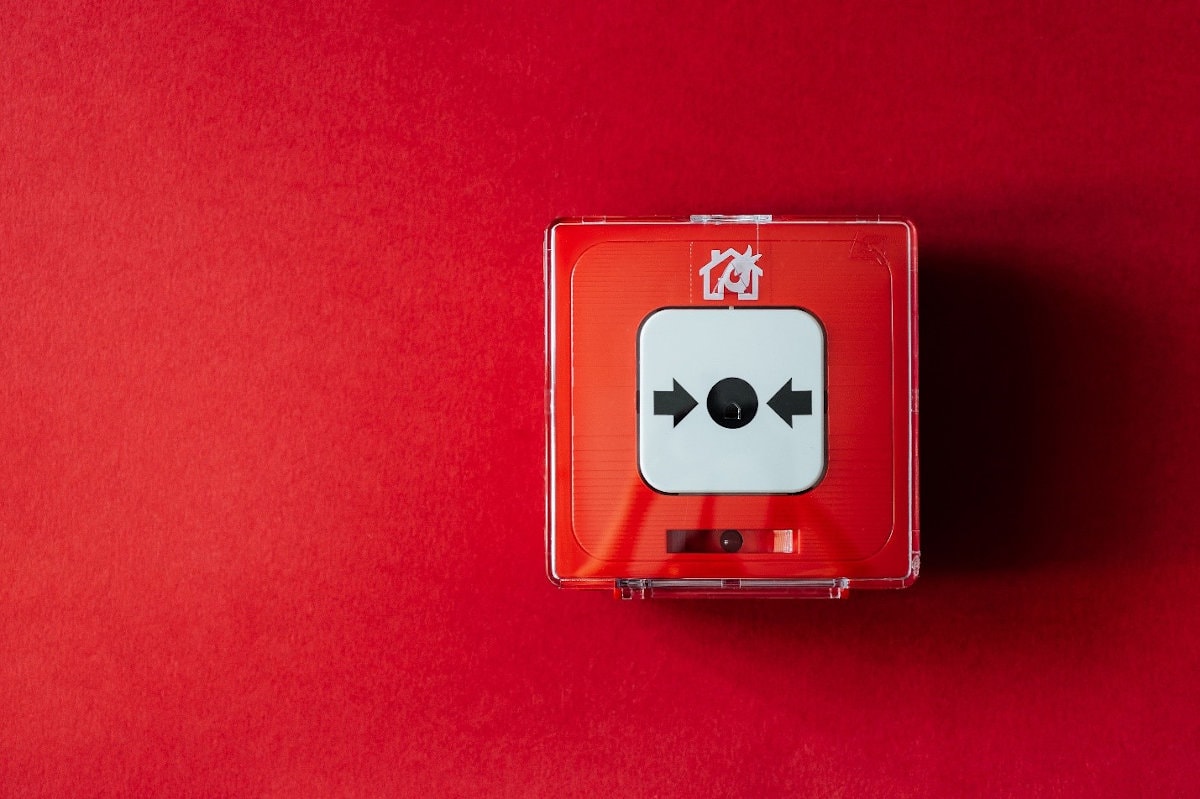
The manual fire detector is used for the rapid transmission of fire information. It is usually an electromechanical switch in a red metal housing with a glass/plastic cover. When a fire is detected, the lid is broken, the switch is turned, thereby activating the ship's audible signalling device and/or alerting the bridge of the location of the fire.
On ships, they are installed in corridors, control and auxiliary spaces, warehouses, storage areas, operating spaces, etc. The distance between them must ensure audibility on/within the whole ship (≈20m).
Automatic detectors
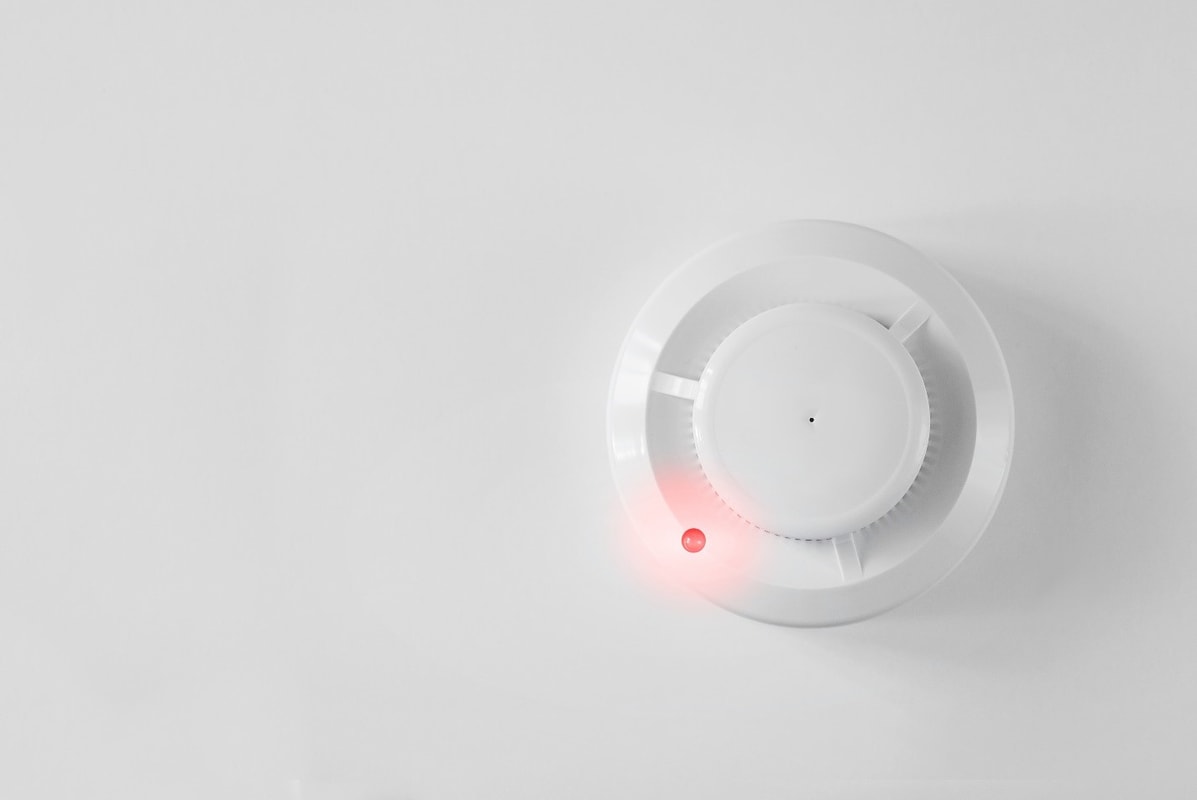
The automatic detector recognizes the physical changes of the environment (temperature, smoke particles) by measurement, and transforms the measured quantities into an electrical activity which activates the fire alarm station. Due to their sensitivity, they register even the smallest thermal changes. They can be divided into thermal, smoke and light detectors.
Thermal fire detectors are used to protect areas where a rapid increase in temperature is expected. On ships, they are installed at intervals of up to nine meters or more, that is, to cover a maximum of 37m2. They must give alerts to thermal values of 54 to 78 ° C. Depending on the purpose, the alarm boundaries may be changed. They can be thermomaximal and thermodifferential.
Thermomaximal detectors use/measure air temperature as an environmental parameter. They give a fire alarm when the temperature exceeds the setpoint. The sensing element is usually bimetal (bending closes the circuit).
In the structural design of these detectors, the pressure effects are also used. Due to the high temperature, the volume in the quartz tank increases, breaking the tank. Alarm. Less frequent design refers to the principle of operation of electrical fuse: elevated temperature -> blown over soluble conductor -> circuit break -> alarm!
Thermodifferential detectors use/measure the thermal gradient (thermal changes in time) as an environmental parameter. They are extremely rare on ships.
Smoke detectors are installed in areas where a large amount of smoke is expected in the event of a fire, but not in areas where smoke is normally generated during use. They are divided into ionization and light detectors.
The ionization detector consists of an open (measuring) and closed (reference) chamber. By using a weak source of radioactive radiation, the air in both chambers is ionized and so both free electrons (negative) and positive ions can be found in them. While the air in the chambers is clean, the difference between the flow rates of the chambers is insignificant. If smoke appears in the room, smoke particles enter the open chamber, absorb some of the radiation and reduce the current. Finally, the device's power supply also increases when it reaches/exceeds a limit value (typically 25mA) and an acoustic/light alarm sounds.
These detectors should not be installed in areas with high airflow or high humidity (over 80%). In such conditions they produce numerous false alarms.
Light detectors detect the presence of smoke by measuring the amount of light reaching the photoelement. The acoustic/light alarm signal is triggered when the smoke concentration in the room increases (usually) by 3%. Their effectiveness is reduced by vibrations, dust, moisture, ice crystals, etc. They are installed at distances of up to 11m and cover areas up to 74m2.
Flame detectors
They detect flames by measuring a portion of the light spectrum that only flames produce. They are classified into infrared and ultraviolet.
Infrared detectors have collection lenses, a filter and dedicated photocells. By collecting and filtering radiation, only the wavelengths from 0.85 to 1.2 μm reach the photocell. In this spectrum, the body a temperature of 1700 to 2200 ° C radiates. The detector responds to a flame up to 15 cm high, up to 6 m away. They are also often equipped with a delay assembly. This prevents false alarms (flames from cigarette lighters, etc.).
Spark detectors alarm even when IC radiation is very low. They are used in completely dark rooms that can only be lit by a spark/fire.
Ultraviolet detectors detect fire by exposing the solid to radiation, which becomes electrically conductive (conductor) when exposed to the radiation of the wave spectrum (λ = 0.17 to 0.30 μm). The strength of electricity through that body is a measure of the intensity of radiation.
These detectors are rarely installed on ships as dust and dense smoke can prevent radiation from being conveyed adequately and thus delay timely fire alerts. Sunlight can also cause some interference.
Fire and smoke alarm station and system
A fire alarm station is an assembly that shows the current status of all connected detectors. The station is usually placed on the bridge of command as it must be constantly monitored. Apart from the individual ones, the station displays the states and groups of detectors on/in some parts of the ship's.
In the event of a fire hazard, light and sound signs for the fire hazard is activated at the station. There are two minutes left to check the justification of the alert and to switch it off, or to bring it back to its original state for readiness. After 2 min the station switches on to the general emergency ship system, the sound of which is heard throughout the ship and inside it.
Fire alarm station and the whole electrical the network (circuits) must have dual power supply (one emergency power source). The correctness of the station (power and mains) is separately displayed and reported. Only a warning system for monitoring the closing of fire doors may still be connected to the station.
The pipe fire alarm system consists of a pipe network (phimin = 12mm). The network is spread all over the ship. Air is sucked into the pipes and brought to the control station at the bridge or to the ship's fire station.
If there is more than 6.65% smoke pollution in the air intake (smoke particles), a smoke detector (light and sound alarm) is activated.
The power supply must have a backup source and its own monitoring for correctness. Air flow is maintained by fans and flow monitoring is performed visually.
These systems are mainly installed on dry cargo vessels (general, bulk, containers).