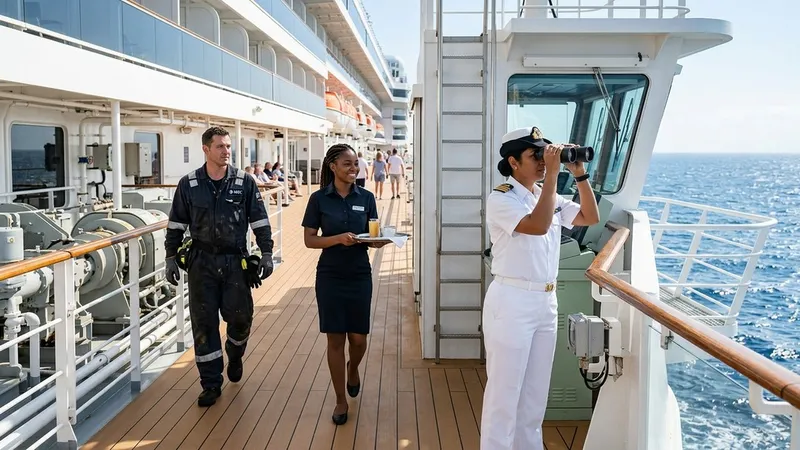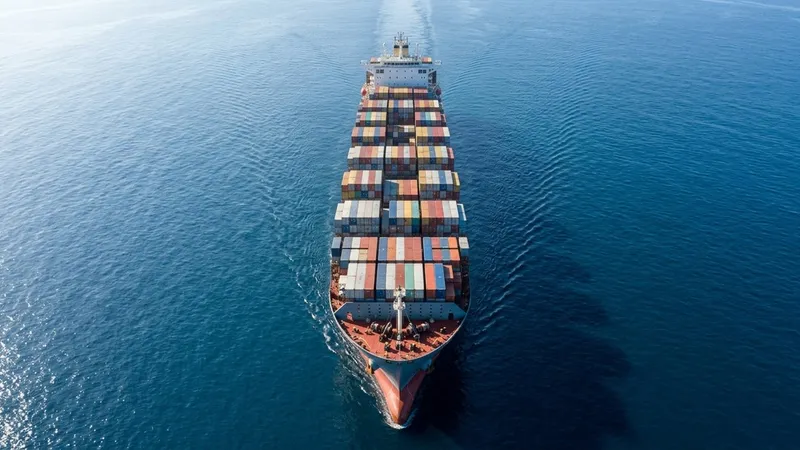

A merchant vessel runs on a precise command structure. Every crew member holds a defined rank, carries specific responsibilities, and reports to a defined superior. This hierarchy is not ceremonial; it determines who takes the wheel during a storm, who manages an engine failure at 3am, and who is legally responsible when something goes wrong.
There are roughly 1.9 million seafarers working on merchant ships worldwide. The Philippines supplies 25-30% of the global fleet, followed by India, Indonesia, Ukraine, and China. Regardless of nationality, all seafarers on internationally trading vessels follow the same rank structure governed by the STCW Convention (Standards of Training, Certification and Watchkeeping for Seafarers).
This guide covers every rank across the three main departments: Deck, Engine, and Catering. Note that these are merchant navy ranks (civilian commercial shipping), not military navy ranks, which use an entirely separate system covered at the end of this guide.
Ship Rank Hierarchy: Quick Reference
Before going into detail, here is the full rank order from highest to lowest across all departments:
Deck Department
- Master (Captain)
- Chief Mate (Chief Officer / First Officer)
- Second Mate (Second Officer)
- Third Mate (Third Officer)
- Deck Cadet
- Bosun (Boatswain)
- Able-Bodied Seaman (AB)
- Ordinary Seaman (OS)
Engine Department
- Chief Engineer
- Second Engineer
- Third Engineer
- Fourth Engineer
- Engine Cadet
- Electrician
- Fitter
- Oiler
- Wiper
Catering Department
- Chief Cook
- Steward / Messman
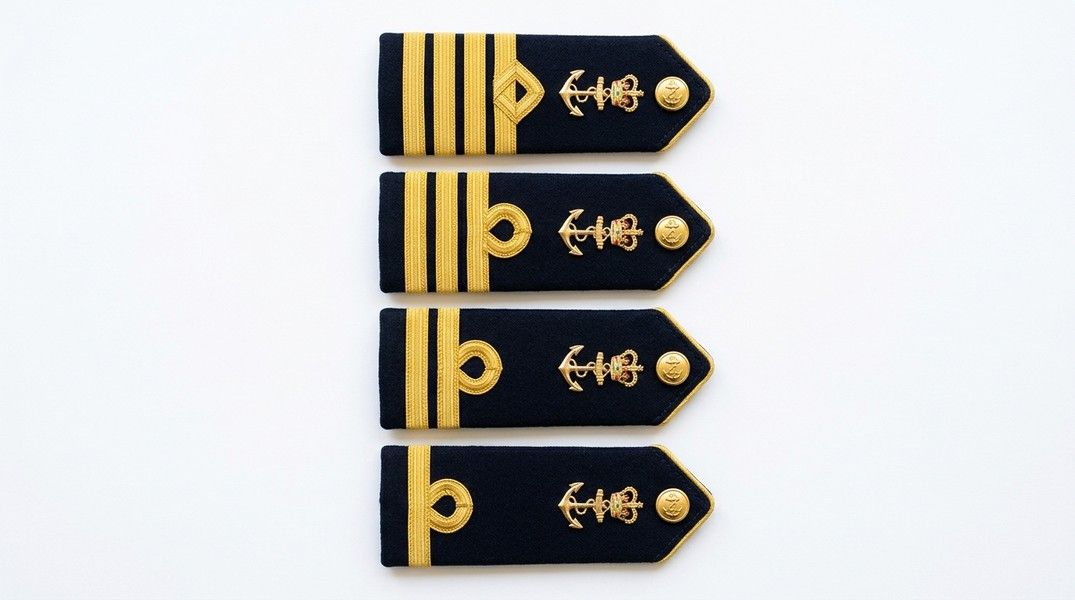
Deck Department
The Deck Department handles navigation, cargo operations, safety drills, and maintenance of all above-waterline equipment. It is the department that steers the ship and manages its external operations.
Master (Captain)
The Master holds supreme authority on board. Every decision affecting the vessel, crew safety, and cargo ultimately rests with the Captain. They are accountable to maritime law, the flag state, and the shipping company simultaneously.
STCW Requirements: Deck Class I Certificate of Competency (unlimited), plus advanced firefighting, medical care, leadership and managerial skills, and GMDSS.
Monthly salary range: $10,000 - $20,000 (varies by vessel type and flag state). For a detailed breakdown of cruise ship captain pay, see cruise ship captain salary.
Duties: Navigation oversight, emergency command, signing port documents, ensuring regulatory compliance, and managing all department heads. For a step-by-step breakdown of how officers progress to this rank, see how to become a cruise ship captain.
Chief Mate (First Officer)
The Chief Mate is second in command and the direct supervisor of the Deck Department ratings. On most vessels, the Chief Mate also serves as the cargo officer.
STCW Requirements: Deck Class II COC with Class I progression path. Advanced cargo handling and dangerous goods certificates are typically required.
Monthly salary range: $8,000 - $15,000
Duties: Cargo planning and supervision, overseeing deck crew, stability calculations, managing safety equipment inspections, and standing a navigation watch.
Second Mate (Second Officer)
The Second Mate is typically the ship's navigation officer, responsible for maintaining charts, publications, and the vessel's GPS and ECDIS systems. They are also usually the ship's medical officer.
STCW Requirements: Deck Class II Certificate of Competency. ECDIS certification and Medical Care certificate are standard requirements.
Monthly salary range: $6,000 - $12,000
Duties: Chart management, route planning, lifeboat and life raft inspections, maintaining the ship's medical supplies, and standing navigation watch.
Third Mate (Third Officer)
The Third Mate focuses on firefighting equipment, safety systems, and general navigation watch. This is often the first officer rank for newly certified navigators.
STCW Requirements: Deck Class III Certificate of Competency. Basic firefighting certification and survival craft proficiency required.
Monthly salary range: $4,000 - $8,000
Duties: Maintenance of firefighting and lifesaving equipment, navigation watch, assisting with drills, and supporting cargo operations. For a deeper look at onboard safety systems, see lifeboat mastery and maritime safety.
Deck Cadet
Deck Cadets are officer trainees completing the sea-time requirement for their Certificate of Competency. They rotate through all areas of deck operations under senior officer supervision.
STCW Requirements: In the process of completing Basic Safety Training and accumulating the required sea service days (typically 12 months minimum before sitting officer exams).
Monthly salary range: $400 - $800
Duties: Assisting officers with navigation and deck tasks, participating in all drills, completing training record books, and learning cargo and maintenance procedures. For more on day-to-day crew responsibilities, see essential duties of crew members on ships.
Bosun (Boatswain)
The Bosun is the senior rating in the Deck Department, serving as the foreman between officers and the AB/OS crew. They do not stand navigation watch but manage all deck maintenance operations.
STCW Requirements: No mandatory certificate beyond AB level, but most companies require extensive sea time and additional safety training.
Monthly salary range: $2,000 - $3,500
Duties: Supervising deck maintenance (painting, greasing, welding), managing stores and equipment, relaying officer instructions to ratings, and organizing work parties.
Able-Bodied Seaman (AB)
ABs are experienced deck ratings capable of standing an independent helm watch. They perform skilled maintenance tasks and serve as key crew in mooring operations and emergency situations.
STCW Requirements: STCW II/5 Able Seafarer Deck certificate, plus Basic Safety Training, proficiency in survival craft and rescue boats.
Monthly salary range: $1,500 - $3,500
Duties: Steering the vessel during bridge watch, mooring operations, maintenance (painting, chipping, lubrication), and assisting in cargo operations. ABs advance to Bosun with additional sea time.
Ordinary Seaman (OS)
The OS is the entry-level rating in the Deck Department. Most seafarers begin their careers at this rank before accumulating sea time to qualify as AB.
STCW Requirements: Basic Safety Training (BST) - the four-module course covering fire prevention, personal survival, elementary first aid, and personal safety.
Monthly salary range: $800 - $1,800
Duties: Cleaning and maintaining deck areas, painting, equipment upkeep, and assisting ABs and officers with all deck tasks. Promotion to AB typically requires 6-12 months sea time plus additional certificates.
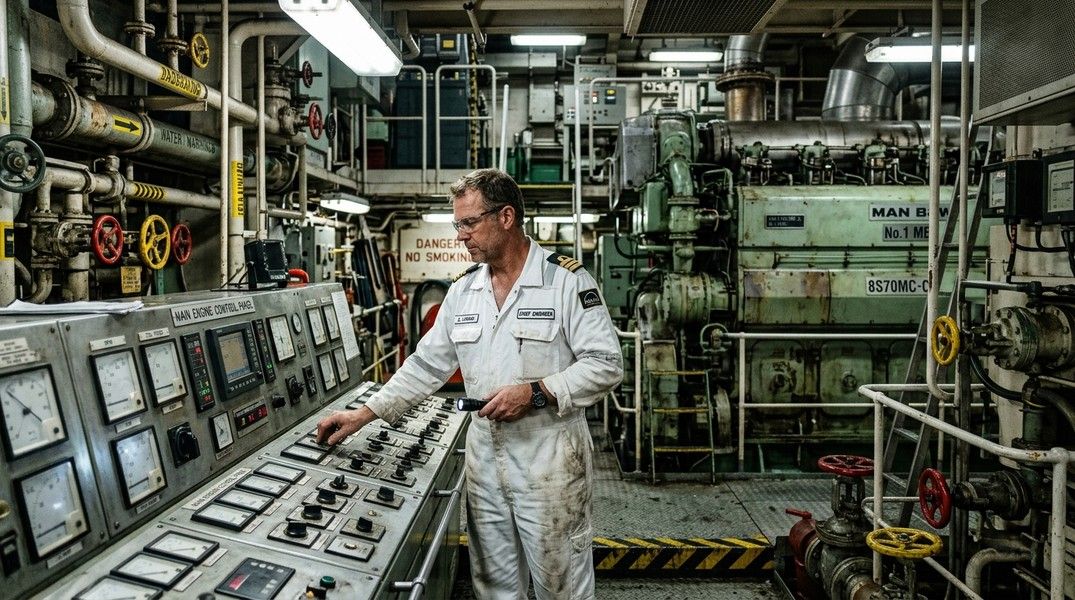
Engine Department
The Engine Department maintains and operates all propulsion, electrical, and mechanical systems on board. Without the Engine Department, the vessel does not move.
Chief Engineer
The Chief Engineer holds ultimate authority over the engine room and all mechanical and electrical systems on board. Like the Master on deck, the Chief Engineer is legally responsible for the engineering operations of the vessel.
STCW Requirements: Engine Class I Certificate of Competency (unlimited), plus electro-technical officer training and high-voltage systems certification where applicable.
Monthly salary range: $8,000 - $15,000
Duties: Overseeing all engine room operations, fuel management, maintenance planning, supervising engineering staff, and ensuring compliance with MARPOL environmental regulations.
Second Engineer
The Second Engineer runs the day-to-day operations of the engine room and typically manages the maintenance schedule and spare parts inventory.
STCW Requirements: Engine Class II COC with Class I progression path.
Monthly salary range: $6,000 - $12,000
Duties: Directing daily maintenance work, overseeing repairs, managing the engine room team during watch, and deputizing for the Chief Engineer.
Third Engineer
The Third Engineer takes charge of specific machinery systems (often auxiliary engines, boilers, or purifiers) and stands an independent engineering watch.
STCW Requirements: Engine Class II Certificate of Competency. Third Engineers often advance to Second Engineer with further sea time and examinations.
Monthly salary range: $4,500 - $9,000
Duties: Overseeing assigned machinery, engine room watch duties, assisting in maintenance and overhauls, and participating in safety drills.
Fourth Engineer
The Fourth Engineer is typically the most junior officer in the Engine Department and performs a wide range of engine room tasks under supervision.
STCW Requirements: Engine Class III Certificate of Competency, with opportunities to progress to Third Engineer through sea time and further exams.
Monthly salary range: $3,500 - $7,000
Duties: Monitoring machinery, logging engine parameters, assisting with maintenance, and participating in emergency drills. This is often the first rank for newly certified engineers.
Engine Cadet
Engine Cadets are trainee engineers completing their mandatory sea service before sitting engineering officer examinations.
STCW Requirements: Completing Basic Safety Training and accumulating required sea time while documenting progress in a training record book.
Monthly salary range: $400 - $800
Duties: Learning all aspects of engine room operation under supervision, including main engine operation, auxiliary machinery, and bilge systems.
Electrician
The ship's Electrician manages and maintains all electrical systems, from power generation to navigation lights and accommodation circuits.
STCW Requirements: Electro-Technical Ratings (ETR) certification (STCW III/7) plus Basic Safety Training.
Monthly salary range: $2,500 - $4,000
Duties: Maintaining generators, electrical circuits, and alarm systems; troubleshooting electrical faults; and working under the Chief Engineer's supervision.
Fitter
The Fitter is a skilled engine rating with mechanical expertise in welding, gas cutting, grinding, and lathe operation.
STCW Requirements: Technical qualifications in mechanical engineering plus Basic Safety Training.
Monthly salary range: $2,000 - $3,500
Duties: Mechanical repairs and fabrication in the engine room, operating the lathe and welding equipment, and assisting engineers with machinery overhauls.
Oiler
The Oiler is responsible for the lubrication of all machinery in the engine room and assists engineers during their watch.
STCW Requirements: Basic Safety Training plus engine room familiarization. Additional certifications allow progression to Fitter or Motorman.
Monthly salary range: $1,200 - $2,500
Duties: Lubricating machinery, assisting duty engineers with maintenance and operational tasks, and supporting machinery overhauls.
Wiper
The Wiper is the entry-level engine room rating. The role focuses on cleanliness and basic maintenance.
STCW Requirements: Basic Safety Training, with clear progression path through additional qualifications.
Monthly salary range: $800 - $1,500
Duties: Cleaning the engine room, handling waste oil, and assisting with machinery overhauls. Progression to Oiler or Fitter is typical after 6-12 months sea time.
Catering Department
The Catering Department manages all food service and accommodation on board. On long ocean voyages, crew morale is directly tied to the quality of the galley, making this department more important than it might appear on paper.
Chief Cook
The Chief Cook prepares all meals for the crew, typically for 20-25 people across multiple watches and cultural backgrounds. On vessels with multinational crews, menu planning requires knowledge of diverse dietary requirements and cooking traditions.
STCW Requirements: Basic Safety Training plus food handling and safety certifications. Some flag states require additional catering qualifications.
Monthly salary range: $2,500 - $4,500
Duties: Menu planning, food procurement and inventory management, kitchen hygiene compliance, and meal preparation for the entire crew.
Steward (Messman)
The Steward assists the Chief Cook and maintains cleanliness in the officers' mess, cabins, and common areas.
STCW Requirements: Basic Safety Training, with hospitality or housekeeping qualifications preferred by most companies.
Monthly salary range: $1,000 - $2,000
Duties: Assisting with meal preparation and service, cleaning and maintaining living quarters, and serving in the officers' mess.
Merchant Navy vs Military Navy Ranks
A common source of confusion: "seaman ranks" can refer to both the merchant navy and military navies. They are entirely separate systems.
The merchant navy operates commercial vessels: container ships, tankers, bulk carriers, cruise ships. Ranks are functional, based on certificates of competency and sea time. The Captain of a merchant vessel holds no military authority.
Military navies (such as the US Navy, Royal Navy, or Indian Navy) operate warships for national defense. Their rank structures include commissioned officers and enlisted personnel, with designations like Lieutenant, Commander, or Petty Officer. Promotion involves military service records, not STCW certificates.
The key distinction: merchant navy ranks are internationally standardized under STCW. Military ranks vary by country and branch of service.
Career Progression in the Merchant Navy
Most seafarers enter as OS or Engine Cadet and advance through sea time and examinations. Typical timelines:
- OS to AB: 6-12 months sea time plus survival craft certificate
- Cadet to Third Officer / Fourth Engineer: 24 months sea time plus Certificate of Competency exam
- Third to Second Officer / Engineer: 18 months sea time
- Second to Chief Mate / Chief Engineer: 12-18 months
- Chief Mate to Captain: 12-18 months plus Master COC exam
Total time from entry-level rating to Captain or Chief Engineer typically spans 8-12 years. Officers generally serve contracts of 4-6 months on board followed by 2-3 months leave.
During leave periods, many seafarers track their vessel's current position and route using Primo Nautic, a live ship tracking app that shows AIS positions for any merchant vessel worldwide. It's also useful for aspiring seafarers researching the types of ships they want to work on before applying.
Documentation matters at every step. For details on the seafarer identification document required for all ranks, see what is a seaman book and why every seafarer needs one.
The Full Picture
Every role on a vessel, from the Master down to the Wiper, is essential. A container ship can carry hundreds of millions of dollars worth of cargo across an ocean. The Chief Engineer keeps the engine running. The Second Mate plots the route. The Bosun manages the deck crew that secures the cargo. The Cook keeps everyone fed and functional.
The STCW framework ensures that every seafarer, regardless of nationality or employer, meets a minimum global standard. It is what allows a Croatian Captain to command a Filipino crew on a Liberian-flagged ship carrying German cargo through the Suez Canal.
Understanding these ranks helps aspiring seafarers plan their career path and helps everyone else appreciate the organization required to keep global trade moving.