





Seaman's Book: Requirements, Cost & How to Apply
A seaman's book is an official document that records a seafarer's identity, sea service history, and professional qualifications. It functions like a work passport for maritime employment: without one, you cannot sign onto a commercial vessel or have your sea time officially recognized for STCW certification and career advancement.
This guide explains what a seaman's book contains, how to apply for one in the Philippines, UK, and USA, what to do if it is lost, and what the 2026 STCW updates changed.
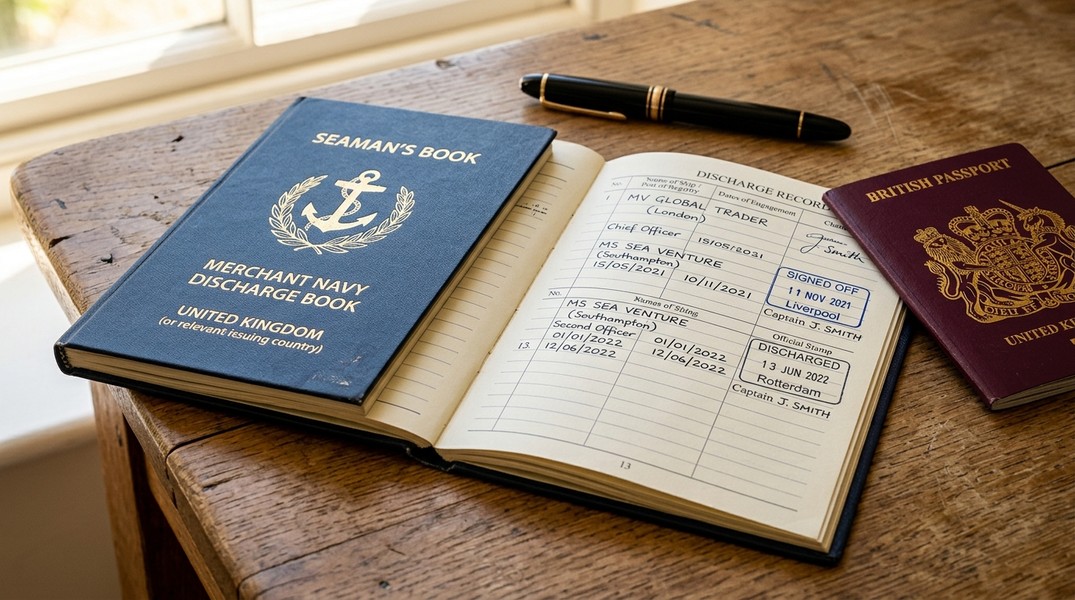
What a Seaman's Book Contains
A seaman's book, also officially called a Seafarer's Identification and Record Book (SIRB) or Seaman's Discharge Book, typically contains five categories of information:
Personal details: Full name, date and place of birth, nationality, photograph, signature, and a unique seafarer or book number assigned by the issuing authority.
Issuing authority information: Which maritime body issued the book, the date and place of issue, and the expiry date. Most books are valid for 5 to 10 years depending on the country.
Sea service record: This is the core of the document. Each time you sign onto or off a vessel, the master or authorized officer adds an entry recording the ship's name, IMO number, flag state, your rank, the dates of engagement and discharge, and the nature of the voyage. These entries must be signed and officially stamped to be accepted as valid sea time.
Certifications: Training certificates such as STCW basic safety, firefighting, medical first aid, and GMDSS qualifications are referenced or listed here, confirming that the holder meets the international standards required for commercial seafaring.
Endorsements and official remarks: Notes from maritime authorities, including suspensions or flags for specific flag-state compliance.
Why Seafarers Need It
The seaman's book serves three practical purposes that affect your ability to work, get promoted, and travel:
Proof of sea service for STCW certification. STCW certificates and national Certificates of Competency (CoC) all require documented sea time. When you apply to sit officer exams or renew your CoC, examiners check your seaman's book entries against the required sea time thresholds. Unsigned or unstamped entries are often rejected.
Employment verification. Shipowners and crewing agencies use the book to confirm your rank history and contract dates. A seafarer without a current, properly maintained book is generally not hireable on international vessels.
International mobility. Port authorities in many countries check the SIRB alongside your passport to confirm your status as a serving seafarer, which can affect crew-change permissions, shore leave, and visa treatment.
How to Get a Seaman's Book
The application process varies by country, but the general steps are similar everywhere.
Eligibility requirements (most countries)
- Legal working age (typically 18)
- Valid passport
- Medical fitness certificate (equivalent to ENG1 or STCW-compliant certificate from an approved doctor)
- Completion of basic STCW safety training: personal survival techniques, fire prevention and firefighting, elementary first aid, and personal safety and social responsibilities
Typical documents required
- Completed application form from the maritime authority
- Passport copy (bio-data page)
- Passport-size photographs
- Medical fitness certificate
- STCW training certificates
- Proof of nationality or residency
- Police clearance certificate (required by many authorities)
- Previous seaman's book if applying for renewal
Philippines (MARINA SIRB)
The Maritime Industry Authority (MARINA) issues the Seafarer's Identification and Record Book to Filipino seafarers. The Philippines supplies roughly 25% of the world's commercial seafarers, so MARINA processes a high volume of applications.
How to apply (2026 process)
- Create an account in the MARINA online portal (MISMO).
- Fill in your personal information and upload scanned copies of all required documents.
- Book an appointment at a MARINA regional office.
- Attend your appointment with original documents for biometric capture (photo and signature on record).
- Pay the official fee and receive your SIRB, or wait for dispatch if collection is by courier.
Processing typically takes several working days for standard applications. Express service is available at additional cost for urgent contracts.
SIRB validity is five years. Renewal requires a new application with updated documents. If your book expires while you are deployed on a vessel, some shipowners may not allow you to sign onto a new contract, so renew several months before expiry.
If you lose your SIRB in the Philippines: File a police report immediately, obtain a copy of the incident report, and prepare a notarized affidavit of loss. Submit both to MARINA along with a replacement application. MARINA cancels the old book number and issues a new one. Keep digital scans of every page as a precaution.
United Kingdom (UK Discharge Book)
The Maritime and Coastguard Agency (MCA) issues the UK Discharge Book to British and certain UK-connected seafarers. The UK book is distinct from the SIRB format: it records sign-on and sign-off entries for each vessel but is not used as a travel document at borders.
How to apply
- Download the Discharge Book application form from GOV.UK.
- Complete the personal details section and have your employer verify your seafaring employment, or provide a letter confirming an offer of sea employment if you are applying before your first contract.
- Arrange a countersignatory (a person of known good standing, such as a master, solicitor, or employer) to confirm your identity.
- Submit by post to the MCA with your passport-size photos, a certified copy of your passport, and the current fee.
UK Discharge Books are typically valid for ten years. Unlike some other flags, the sea service entries in an expired UK book remain valid indefinitely as evidence of past service, so keep old books permanently.
If you lose your UK Discharge Book: Contact the MCA and report the loss. You will need a police crime or loss reference number, any remaining copies of the book, and payment of the replacement fee.
United States (US-Based Seafarers)
The United States does not issue a classic Seaman's Book in the same format as most other countries. US seafarers rely on the USCG Merchant Mariner Credential (MMC) combined with employer sea-service letters to document sea time.
However, many US-based seafarers who work on foreign-flag vessels still need an internationally recognized SIRB. The most common solution is to obtain a book from an open-registry flag state such as Panama, Liberia, or Belize through a licensed maritime agency.
How to apply from the USA through an agency
- Choose a flag state that is accepted by your employer or the vessels you plan to work on. Panama and Liberia are the most widely accepted open registries.
- Gather your documents: valid US passport, current STCW certificates, medical certificate, sea-service letters, and passport-size photos.
- Submit scanned copies to a licensed agency that handles applications for that flag state.
- The agency reviews your documents and forwards them to the flag-state maritime authority.
- Once approved, the physical Seaman's Book is mailed to your US address.
Standard processing typically takes one to three weeks. Costs include the flag-state fee plus the agency service fee, and vary by flag and processing speed.
2026 STCW Updates Affecting Seaman's Book Requirements
The STCW amendments effective 1 January 2026 introduced two changes that directly affect what is documented in a seaman's book:
Violence and harassment prevention training. All seafarers must now complete a mandatory training module on preventing and responding to workplace violence and harassment before initial STCW certification. This module is recorded alongside basic safety training entries.
Electronic records parity. Several administrations, including China, now operate electronic SIRB systems where digital records carry the same legal weight as physical books. This affects how sea time is verified when applying for CoC upgrades or joining vessels in those administrations.
The broader IMO agenda in 2025 and 2026 has also increased scrutiny of falsified sea-service records. Expect stricter cross-checking between SIRB entries, company records, and vessel-level logs during port state control inspections.
Common Mistakes to Avoid
Not getting entries stamped at sign-off. The most common mistake is failing to have the master sign and stamp your discharge entry when leaving a vessel. Without a master's stamp, the entry is often not accepted as valid sea time by STCW examiners or CoC authorities.
Letting the book expire before joining a new contract. Shipowners regularly reject seafarers with expired books at the point of joining. Check the expiry date at least three months before any new contract and renew early.
Relying only on the book for sea-time proof. Many administrations require both the SIRB entry and a company sea-service letter to process CoC applications. Always request a formal letter from your employer at the end of each contract, and keep digital copies of both.
Not keeping digital copies. Loss or damage to a physical book requires a replacement process that can delay your next contract. Scan every page and store copies securely in cloud storage.
Using unofficial intermediaries for foreign SIRBs. Only use licensed, reputable agents when applying for a foreign-flag book. Fraudulent agencies sometimes sell pre-stamped books with fabricated sea time, which constitutes fraud and, if discovered, results in permanent disqualification from maritime employment.
Tracking Your Vessels While at Sea
Once you join a vessel, your family and contacts can follow the ship's movements in real time using AIS-based tracking tools. Primo Nautic shows live positions for commercial vessels worldwide, including the type, speed, and port of call, so that the people waiting ashore always know where a ship is and when it is expected to arrive.
For seafarers themselves, tracking tools are also useful when researching a new employer's fleet. Checking a vessel's actual route history and port patterns before accepting a contract can give useful context about the trade it operates in.
Understanding the structure of the vessel you join is also important for career planning. The full hierarchy of ranks and departments on commercial ships explains how the deck, engine, and catering departments are organized and what each rank requires for promotion.
Conclusion
A seaman's book is not just bureaucratic paperwork. It is the cumulative record of your maritime career. Every vessel you sign onto, every voyage you complete, and every rank you hold is documented there, and that record becomes the foundation for every certification and promotion you pursue.
Applying for one early, keeping entries properly stamped, and maintaining digital backups are the three most important practical habits for any seafarer. For country-specific questions about the current process at MARINA, MCA, or your flag-state authority, check the official website of your issuing body directly, as fees and processing steps are updated regularly.
If you are starting out in the industry, the guide on how to become a seaman covers what qualifications to obtain before your first contract, including the STCW courses you will need documented in your book from day one.
Most Recent Posts
Discover more articles from our blog.