



How to Become a Cruise Ship Captain
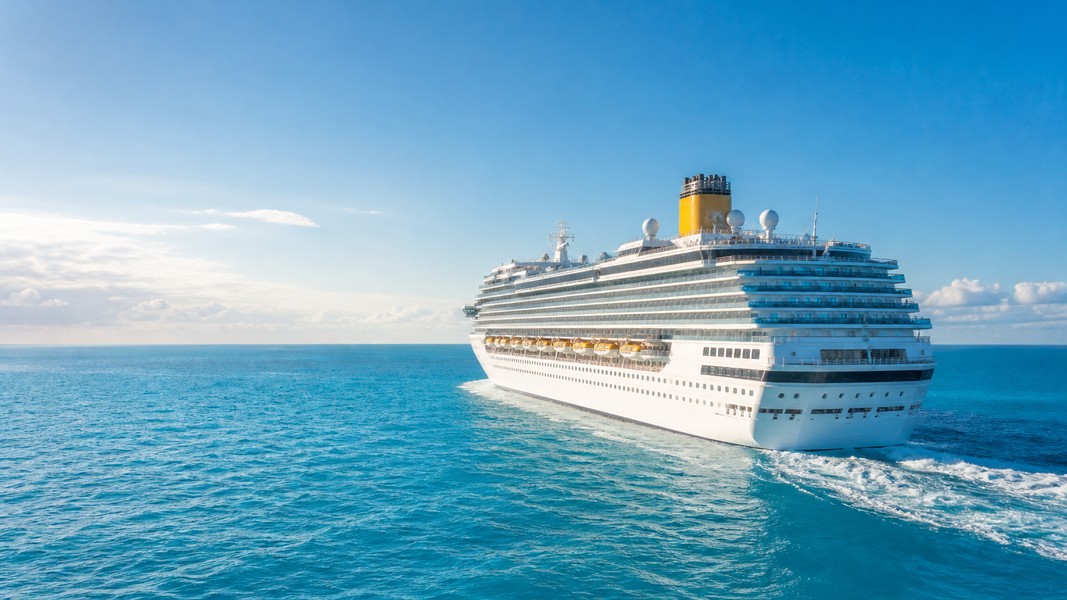
Becoming a cruise ship captain takes between 15 and 25 years of progressive sea service, formal education, and escalating certifications. You start as a deck cadet with a nautical science degree, work through successive officer ranks, and earn your Master (Class 1) certificate before any cruise line hands you command of a ship carrying thousands of passengers and crew.
The path is demanding, but it follows a clear structure governed by international maritime law. This guide covers every stage: what the role actually involves, the education and certifications required, the career ladder from cadet to captain, the realistic timeline, salary at each rank, and how to land a position with a major cruise line.
What Does a Cruise Ship Captain Actually Do?
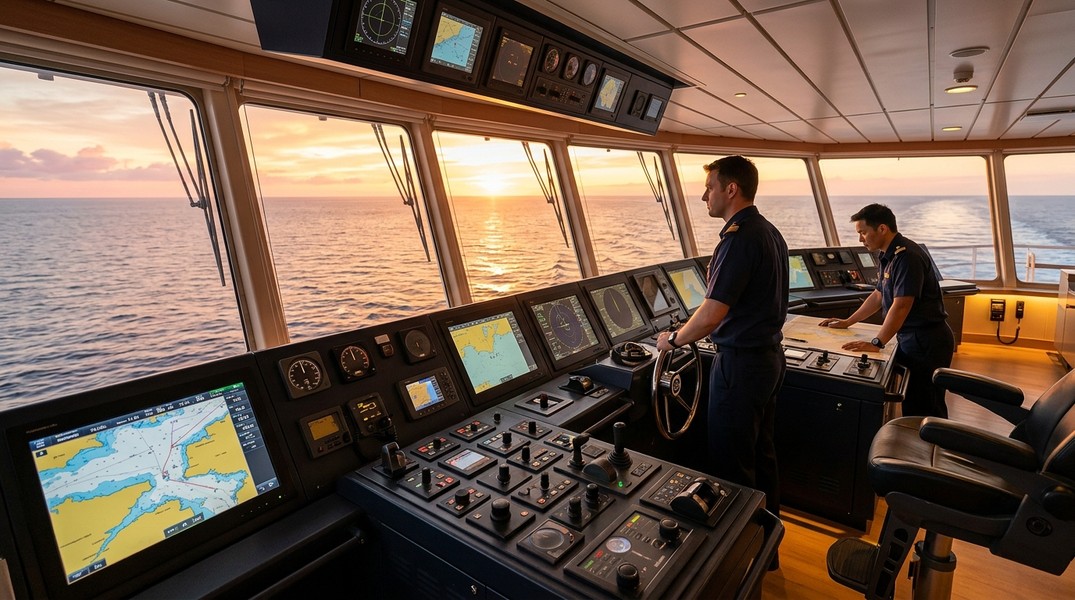
The captain of a cruise ship holds ultimate authority over everything on board: navigation, safety, crew management, passenger welfare, and legal compliance. Every person on the vessel, from crew members to guests, falls under the captain's command authority during the voyage.
Daily responsibilities span more ground than most people realise. Captains brief maritime pilots when entering port, oversee bridge training for officers, lead emergency drills, and coordinate with customs and immigration authorities at each port of call. They also handle incident reporting for any damage, medical emergencies, or passenger conduct issues.
The cruise captain role differs significantly from cargo or merchant shipping. A cargo vessel captain focuses primarily on freight handling, route efficiency, and a small professional crew. A cruise captain adds passenger management at scale: embarkation screening, security oversight under the ISPS Code, and the kind of public-facing duties that have nothing to do with navigation, like officiating onboard ceremonies or briefing passengers during unusual weather.
Under the SOLAS convention and MARPOL regulations, the captain is personally responsible for seaworthiness, safety equipment readiness, and environmental compliance. Enforcement powers are real: the captain can confine individuals to quarters, refuse embarkation, or divert the vessel if safety demands it.
On the navigation side, captains make final decisions on route planning, weather avoidance, and pilot handoffs at port entry. They work closely with the chief mate, who manages the deck department, and the staff captain, who handles crew discipline and drills.
Education Requirements to Start Your Journey
Most cruise ship captains begin at a maritime academy, earning a Bachelor of Science in Nautical Science or Marine Transportation. These four-year programmes cover navigation, meteorology, ship stability, cargo handling, maritime law, and bridge simulation, with sea time built into the curriculum.
In the United States, the main pathway runs through the federal maritime academy at Kings Point or one of the six state maritime academies. International equivalents exist across Europe, Asia, and Latin America, all aligned to STCW standards set by the International Maritime Organization.
STCW, the Standards of Training, Certification and Watchkeeping for Seafarers, is the international framework your entire career is built on. Without STCW-endorsed certificates, you cannot legally serve as a watch officer on a commercial vessel operating internationally. Every certification you earn from cadet through captain is either an STCW certificate or nationally issued and STCW-equivalent.
The bachelor's degree serves a dual purpose. It satisfies academic requirements for the higher officer licences and provides the theoretical foundation for the practical assessments you'll face throughout your career. A four-year programme is the fastest route because it combines academic content with mandated sea time, so you finish with both a degree and your first qualifying sea service documented.
There is an alternative route: some officers advance through the ranks without a formal maritime degree, gaining qualifications purely through sea service and examination. This route is slower, typically adding several years to the timeline, but it remains a legitimate path in many flag states.
Certifications and Licenses You Need
Each stage of the career ladder requires specific STCW certificates. You cannot skip levels: the certifications are sequential, and each one demands documented sea time at the previous rank.
Core Officer Certificates (STCW Progression)
STCW Basic Safety Training is the entry point. It covers personal survival techniques, fire prevention and firefighting, elementary first aid, and personal safety and social responsibilities. You complete this before or during your cadet training, and no maritime employer will consider you without it.
The Officer of the Watch (OOW) certificate, formally the STCW II/1, qualifies you to stand navigational watches on vessels over 500 gross tonnage. It requires completion of the academic programme and a minimum of 12 months approved sea service as a cadet. The OOW certificate is your licence to serve as a junior officer.
Progressing to the Chief Mate certificate (STCW II/2 at the operational level, II/1 at the management level) takes additional sea time as a watchkeeping officer, typically two to three years, plus passing the chief mate examination. The chief mate is second-in-command and takes responsibility for cargo operations, safety equipment, and the deck crew.
The Master certificate (Class 1, unlimited tonnage) is the highest licence in civilian maritime, authorising you to command any vessel on any route. To sit the Master's examination, you need documented sea service as chief mate, typically 12 to 36 months depending on the issuing flag state, and you must pass a comprehensive written and oral examination covering navigation, ship stability, maritime law, emergency procedures, and bridge resource management.
Additional Certifications Required for Cruise Ships
Supporting certifications add to your portfolio throughout the journey:
- GMDSS operator certificate: Radio communications for distress and safety signalling, mandatory for bridge officers
- Medical certificate: ENG1 or equivalent, confirming physical fitness for sea service, renewed every two years under age 65
- ECDIS type-rating: Required for operating electronic chart display and information systems on modern vessels
- STCW Crowd and Crisis Management: Mandatory for vessels carrying more than 12 passengers, which makes it essential for cruise ships
- Security training: STCW VI/6, covering ISPS Code responsibilities on passenger ships
Flag state endorsements matter on cruise ships. Most cruise vessels sail under the flags of The Bahamas, Panama, Malta, or other open registries. Your Master certificate must be endorsed by the vessel's flag state administration before you can legally serve. This involves an application and fee but is routine once you hold the underlying STCW qualification.
For US-based officers, the Coast Guard issues national credentials through the USCG National Maritime Center. These national licences are structured to align with STCW requirements, so an officer with a USCG endorsement can obtain the equivalent flag state endorsement for cruise line employment.
From Cadet to Captain: The Career Ladder
The deck officer career follows a defined progression, and cruise lines promote internally based on seniority, performance, and the accumulation of passenger ship experience. Here is what each rank involves and the minimum sea service time typically required.
Deck Cadet (Midshipman): The starting rank, served during your academic programme. Cadets complete approved sea time on commercial vessels, typically 12 months spread across the degree, working under the supervision of licensed officers. The cadet phase builds practical navigation and watchkeeping skills alongside the academic qualification.
Third Officer (Junior Officer): The first rank after obtaining your OOW certificate. Third officers stand bridge watches, maintain navigational charts, and serve as lifeboats officer. This is where sea miles accumulate quickly, and most officers spend one to two years as third officer before sitting the second mate examination.
Second Officer: Responsible for navigation equipment, chart corrections, and the medical locker on many vessels. Second officers stand bridge watches and support the chief mate. On cruise ships, the second officer role often includes additional safety and security responsibilities not found on cargo vessels. Expect to spend two to three years here.
Chief Mate (First Officer): The operational head of the deck department and the captain's deputy. Chief mates manage the crew schedule, oversee cargo or passenger safety equipment, and are responsible for the stability calculations. This is a demanding management role, and most officers take the chief mate examination after accumulating 36 months of total officer sea service. Cruise lines often require passenger vessel experience at this stage.
Staff Captain: The senior deputy to the captain, with primary responsibility for crew management, emergency drills, security operations, and ISPS Code compliance. On large cruise ships, the staff captain role exists as a distinct rank between chief mate and captain. Not all fleets use this rank, but the major cruise lines do. The staff captain effectively runs the human side of the vessel while the captain focuses on overall command.
Captain (Master): Ultimate command authority over the vessel, its crew, its passengers, and its compliance with all applicable maritime law. The captain is accountable to the flag state, port state authorities, the cruise line, and the families aboard. Captains in major cruise fleets typically have 15 to 25 years of sea service behind them by the time they take their first command.
How seniority works on cruise lines differs from independent shipping. Fleet-wide seniority systems mean promotions depend on your position in the queue, the availability of senior vacancies, and your performance record. Cruise lines also require company-specific training beyond STCW: bridge resource management programmes, passenger safety certifications, and internal command courses are standard before the first captaincy.
Because the career spans decades, families of officers working their way up the ranks often want to stay connected across rotations. Primo Nautic lets families track the vessel their loved one is serving on in real time, with AI-generated updates that translate AIS position data into readable insights about where the ship is, what conditions are like, and when it is expected at the next port.
How Long Does It Take to Become a Cruise Ship Captain?
The realistic answer is 15 to 25 years, and most officers fall somewhere in the middle of that range.
The core timeline breaks down like this. A four-year maritime degree earns you the OOW certificate by age 22 or 23 if you start immediately after secondary school. Three to four years as a junior and second officer brings you to your late 20s. Another three to four years as chief mate takes you into your early 30s. Staff captain and the wait for a captain's vacancy typically adds another five to ten years.
Most officers reach their first cruise ship command between age 40 and 50. Some reach it earlier, particularly those who advance quickly through a company's internal programme or who join a growing fleet during an expansion period. Others take longer, especially if they start in cargo shipping and later transition to the cruise sector.
Several factors can compress the timeline. Joining a cruise line's cadet programme directly links you to a structured internal promotion system. Demonstrating exceptional bridge resource management skills and a clean safety record accelerates consideration. Serving on a growing fleet where captain vacancies appear more frequently also makes a difference.
Factors that extend the timeline include gaps in sea service, changing employers frequently without building seniority, starting on vessels where passenger ship time does not accumulate, and flag state complications when switching between different maritime registries.
The time commitment is substantial. On a typical cruise line contract schedule, officers spend three to six months aboard followed by two to three months off. Family life, geographic flexibility, and willingness to serve on different vessel sizes all shape the trajectory.
Salary at Every Stage
Maritime salaries reflect both rank and contract structure. Officers on cruise ships receive their wages for time aboard, with housing, meals, and travel covered by the employer. The effective annual compensation is therefore higher than a direct salary comparison with shore-based work might suggest.
| Rank | Estimated Annual Range (USD) |
|---|---|
| Deck Cadet | $30,000 - $50,000 |
| Third / Second Officer | $50,000 - $80,000 |
| Chief Mate | $90,000 - $130,000 |
| Staff Captain | $120,000 - $160,000 |
| Captain (Master) | $150,000 - $250,000+ |
Cruise ship captain compensation sits at the higher end of maritime pay scales. The passenger vessel premium reflects the additional responsibilities, the public-facing nature of the role, and the scale of the operation: large ships carry over 5,000 passengers and a crew of more than 1,500.
Contract rotations also shape take-home pay. An officer on a six-months-on, two-months-off rotation effectively compresses a full year of earnings into a shorter period of active service. Combined with no accommodation or meal costs during the rotation, the financial position is often more favourable than raw salary figures indicate.
How to Get Hired by a Major Cruise Line
The cruise industry recruits internationally, and the largest fleets, including Royal Caribbean, Carnival Corporation, MSC Cruises, and Norwegian Cruise Line, actively seek officers from both maritime academies and the merchant marine.
Most cruise lines want candidates who already hold passenger ship certification, even for officer-level entry. Joining directly from a cargo or tanker background is possible, but expect to start at a rank below your equivalent merchant service grade while you accumulate passenger vessel hours and complete company-specific training.
The application process typically involves an online submission, interviews with a maritime recruiter, simulator assessments testing bridge resource management and emergency response, medical and drug testing, and background checks. Flag state endorsements for the cruise line's vessel registry must be obtained before starting.
What cruise lines look for beyond the minimum STCW qualifications is consistent: a clean safety record, strong English communication skills (the operational language on most international fleets), demonstrated leadership at sea, and the ability to work effectively in a multicultural environment. Large passenger ships have international crews drawn from dozens of nationalities, and the ability to lead across cultural contexts is genuinely tested.
Many of the major cruise lines run their own cadet programmes, taking academy graduates directly into a structured training pathway tied to the company's fleet. These programmes are competitive but represent the most direct route into cruise employment, since they develop officers specifically for passenger vessel operations from the start.
Officers transitioning from cargo or offshore sectors can also apply through crewing agencies that specialise in maritime placement. Primo Nautic's blog has covered the full range of vessel types and their roles in depth, which is useful background for officers assessing where their existing experience translates most directly to cruise operations.
Once hired at officer level, advancement follows the internal seniority system described above. Building a record of safe watchkeeping, effective crew leadership, and strong performance during company evaluations is what moves you through the queue toward a captaincy.
Required Medical Standards
Maritime medical fitness is assessed under the Medical Examination of Seafarers framework, aligned with ILO Maritime Convention requirements. The ENG1 certificate issued by approved maritime medical examiners is the standard in most jurisdictions.
The examination covers vision (corrected and uncorrected), colour vision (essential for reading navigation lights), hearing, cardiovascular health, musculoskeletal function, and overall fitness for duty. Certain conditions are disqualifying or require flag state dispensation.
For deck officers, colour vision standards are strict. The ability to distinguish red, green, and white navigational lights correctly is mandatory, and candidates who fail the primary colour vision test face a significant obstacle to holding a watchkeeping certificate. This is worth assessing early if there is any family history of colour vision deficiency.
Medical certificates for seafarers are typically valid for two years under the age of 65 and one year thereafter. Maintaining fitness to serve is an ongoing requirement, not a one-time clearance.
The AIS transponder data that feeds vessel tracking platforms, including Primo Nautic, represents the officer's navigational output made visible to the world: position, speed, heading, and destination. The skills behind that data stream represent decades of training and sea service by the officers and ultimately the captain maintaining it from the bridge.
How to Begin Your Maritime Career
Starting the path to cruise ship captain comes down to a few practical first steps. The most direct is applying to a maritime academy for the four-year nautical science or marine transportation programme. Research the admission requirements for your national academy first: the US Merchant Marine Academy has specific entry criteria, and most state maritime academies have competitive admissions.
If you are already working at sea in a non-officer role, the first priority is completing STCW Basic Safety Training and identifying a pathway to the OOW certificate. Some shipping companies sponsor officer training for capable seafarers who show aptitude for bridge duties.
For anyone considering the career as a second act, the timeline demands honest assessment. Starting a maritime academy degree at age 30 means reaching a first captaincy in your late 50s at the earliest. Some officers manage it, but the timeline is compressed and the sea service requirements remain fixed.
The maritime industry needs competent officers. The major cruise lines are expanding their fleets, and the demand for qualified deck officers, particularly those with passenger vessel experience, is real. The path is long, but the structure is clear, the milestones are documented, and the career, from cadet to captain of a ship carrying thousands of people, is a concrete goal with an achievable route.
Conclusion
Becoming a cruise ship captain means working through every rank from deck cadet to master over 15 to 25 years, building a portfolio of STCW certifications, and accumulating sea service at each level before earning promotion. The role combines navigational command, passenger safety responsibility, crew leadership, and regulatory compliance at a scale found in few other professions.
The cruise industry hires internationally and offers a structured internal progression for officers who join their cadet programmes or transition from the merchant marine. Salary at the captain level reflects the demands of the role, and the contract rotation model provides significant time ashore to balance a life at sea.
For anyone drawn to the sea and serious about command, the path starts with maritime education and a first STCW certificate. Everything else follows from there.
Most Recent Posts
Discover more articles from our blog.