



Types of Ships: Every Major Category Explained
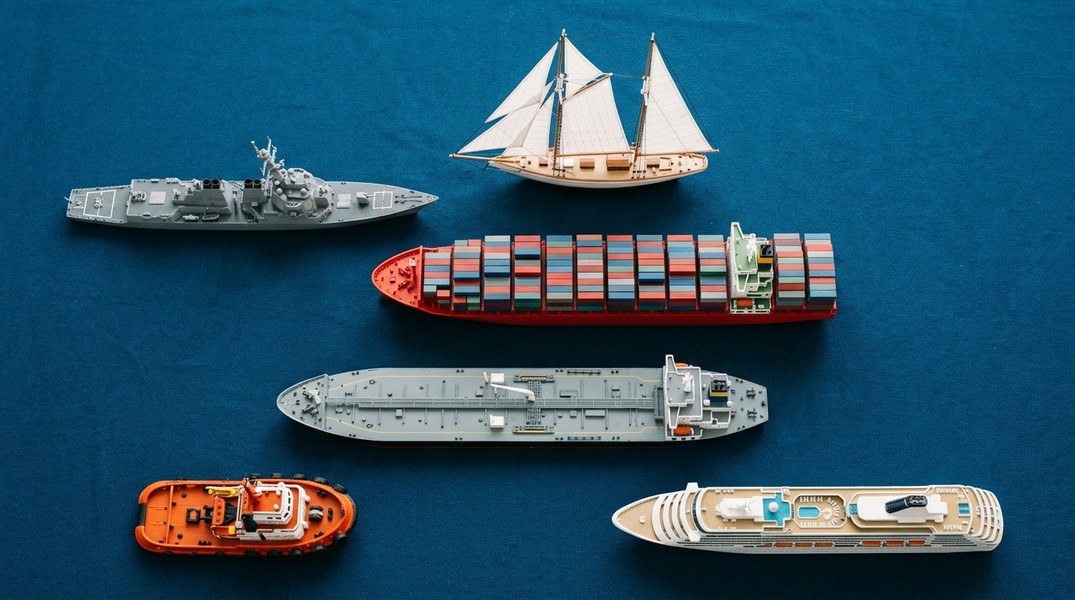
The main types of ships include cargo vessels, container ships, tankers, cruise ships, naval vessels, ferries, sailing yachts, and specialized workboats. Each category carries a distinct design, purpose, and set of characteristics that determine how it moves, what it carries, and how it appears on AIS tracking maps.
Whether you spotted a ship from a port, are following a vessel's route online, or simply want to understand the global fleet better, this guide covers every major category you'll encounter at sea.
Cargo Ships: The Workhorse of Global Trade
Cargo ships are the broadest category in the merchant fleet, covering any vessel designed to transport goods in bulk or general lots. The two most common subtypes are bulk carriers and general cargo ships.
Bulk carriers haul unpackaged dry commodities including grain, coal, iron ore, and fertilizer in large open holds below deck. They range from compact Handysize vessels (10,000 to 35,000 deadweight tons) up to the massive Capesize class, which exceeds 150,000 DWT and cannot pass through the Panama or Suez canals. You can identify a bulk carrier by its wide, boxy hull, multiple hatches running the length of the deck, and loading cranes positioned amidships.
General cargo ships handle a mixed assortment of packaged goods, machinery, timber, and other cargo that doesn't fit the standardized container model. They're versatile and commonly serve smaller ports where specialized ships aren't economical. AIS classifies bulk and general cargo vessels under codes 70 to 79, and they typically cruise at 10 to 15 knots between major bulk terminals.
Container Ships: The Standardized Revolution
Container ships changed global trade permanently when Malcolm McLean introduced the standardized steel box in the 1950s. Today, almost everything manufactured moves through the container supply chain at some point.
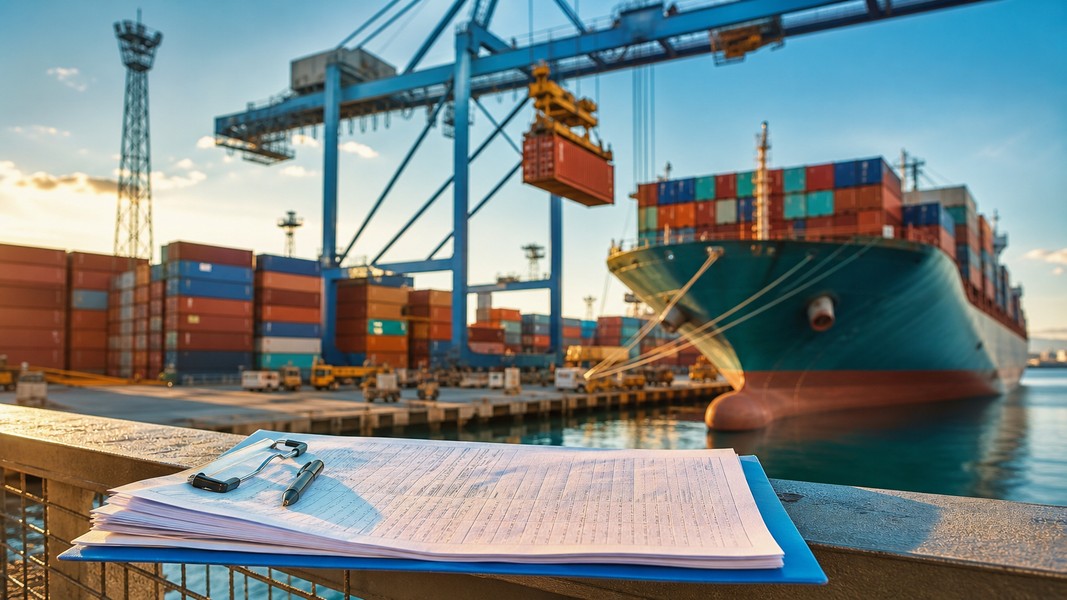
These ships are designed entirely around stacking TEUs (Twenty-foot Equivalent Units) both below deck in holds and high above deck in visible columns of colored boxes. The largest container ships currently carry over 24,000 TEU and stretch nearly 400 meters in length, with beams of up to 61 meters. According to World Shipping Council data, the order book for vessels over 12,000 TEU includes more than 436 ships and 11.8 million TEU of capacity under construction.
On AIS, container ships appear with type code 74. Their data typically includes TEU capacity, making it easy to distinguish a small feeder vessel serving regional routes from an ultra-large container vessel (ULCV) on an Asia-to-Europe main lane.
Tankers: Moving Liquids Across the Ocean
Tankers are purpose-built to carry liquid cargo in sealed tanks: crude oil, refined petroleum products, liquefied natural gas, or chemical feedstocks. The type of liquid determines the tanker's construction, safety systems, and classification.
Oil tankers range from Aframax vessels (80,000 to 120,000 DWT) up to VLCCs, or Very Large Crude Carriers, which exceed 320,000 DWT. After the Exxon Valdez disaster in 1989, international maritime regulations mandated double hull construction on all new tankers, adding a second layer of steel between the cargo tanks and the sea. A smooth hull with no cargo hatches, an inert gas system visible on deck, and low freeboard are the visual hallmarks of a tanker.
LNG tankers are among the most recognizable ships at sea. They carry cryogenic liquefied natural gas at around minus 162 degrees Celsius in either spherical Moss-type tanks (which visibly bulge above the deck) or prismatic membrane tanks that give the ship a cleaner profile.
Chemical tankers are smaller and more specialized, often carrying multiple different cargoes simultaneously in separate coated tanks. AIS codes for tankers run from 80 to 89.
Cruise Ships: Floating Cities at Sea
Cruise ships are passenger vessels designed entirely around the experience of the journey rather than its destination. They carry pools, theaters, restaurants, casinos, and retail areas across multiple decks of staterooms, many with private balconies.
The size range within cruise ships is wider than most people expect. Small expedition ships carry a few hundred passengers into remote polar or river destinations. At the other end, Royal Caribbean's Icon of the Seas accommodates more than 7,600 passengers and 2,350 crew across 20 decks. You can identify a cruise ship at sea by its high, stepped superstructure, prominently branded funnel, and large number of balconies along the hull sides.
On AIS, cruise ships use type code 60. Their data includes passenger capacity and frequently shows the specific itinerary ports. Primo Nautic's "Loved One on Cruise" tracking purpose is built specifically for this scenario, surfacing weather at the ship's location and dual ETA estimates in a format designed for families rather than fleet operators. If you want a dedicated tool for following cruise ship movements, a live cruise ship tracker lets you monitor position, ETA, and weather conditions at the vessel's location in real time.
Naval and Military Vessels
Military ships serve combat, logistics, and patrol functions, and they span a wide range of sizes and roles. The major categories include destroyers, frigates, aircraft carriers, amphibious assault ships, submarines, and patrol craft.
Aircraft carriers are the largest warships ever built. Nimitz-class carriers exceed 100,000 tons and carry up to 90 aircraft. Destroyers and frigates are the workhorses of most naval fleets, displacing 5,000 to 10,000 tons and tasked with anti-submarine warfare, air defense, and surface combat. Submarines range from small coastal vessels to nuclear-powered strategic boats like the Virginia-class, which displaces over 7,800 tons submerged.
Military vessels often transmit limited or no AIS data for security reasons. Unlike commercial ships, warships are not required under international maritime law to operate AIS transponders in the same way. When they do appear on tracking maps, their type codes and details are frequently restricted or anonymized.
Passenger Ferries and Ro-Ro Vessels
Ferries serve the short-distance passenger market, connecting islands to mainlands or bridging straits that road and rail don't reach. They range from small water taxis to large vessels carrying thousands of passengers and hundreds of vehicles across open-sea routes.
Ro-Ro, or Roll-on/Roll-off, refers to any vessel with ramps that allow wheeled cargo to drive aboard directly, a design used for ferries, car carriers, and military logistics ships alike. Pure car carriers, sometimes called PCCs, are a specialized Ro-Ro subtype that transports new automobiles from manufacturing ports to dealership markets. They have flat, windowless sides, multiple internal decks, and a distinctive high profile that can make them look almost like floating apartment blocks. A modern car carrier holds up to 8,000 vehicles.
On AIS, passenger ferries use codes 60 to 69, while Ro-Ro cargo vessels use code 70. Ferry routes show up as dense, repetitive paths between the same two points.
Sailing Ships and Yachts
Wind-powered vessels range from historical tall ships used for training to modern performance racing yachts and luxury superyachts. They share a reliance on sails but differ almost entirely in everything else.
Traditional tall ships, including three-masted barques, brigantines, and full-rigged ships, still operate today as sail training vessels and attractions. The Cutty Sark, preserved in Greenwich, is among the most famous. Modern equivalents like the superyacht Black Pearl blend historical aesthetics with computerized sail handling systems.
Sailing yachts used for cruising or racing are classified in AIS under code 90. They typically appear at lower speeds than motor vessels and are concentrated in coastal waters, yacht anchorages, and the popular bluewater sailing routes. Superyachts over 30 meters often have full crews and move seasonally between Mediterranean and Caribbean sailing grounds.
Specialized Vessels Worth Knowing
Beyond the main commercial categories, a wide range of purpose-built ships keep global maritime infrastructure running.
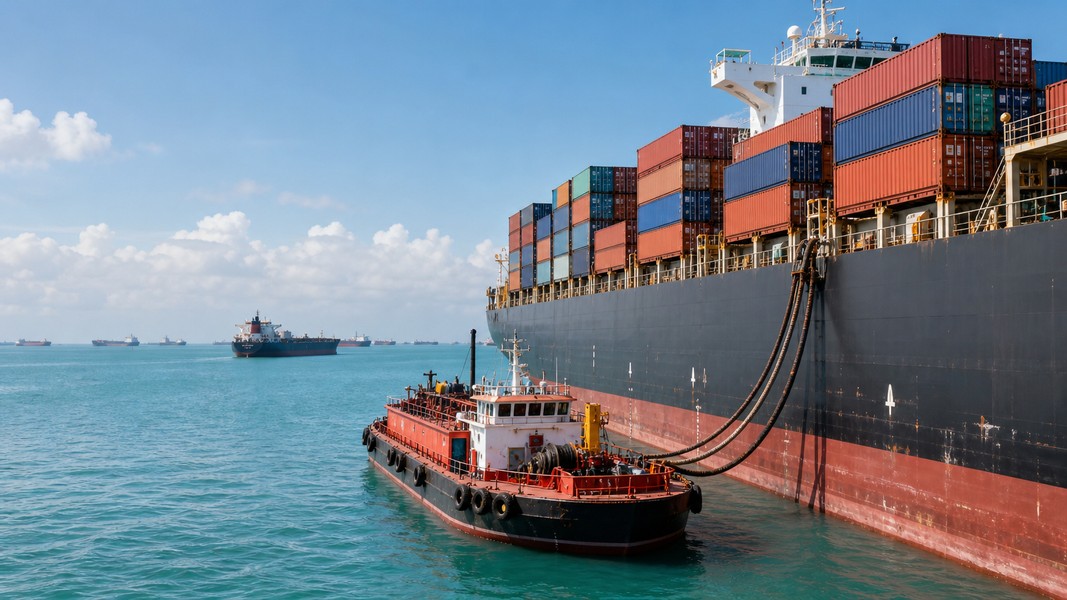
Tugboats are compact, powerful vessels that maneuver larger ships into and out of port. They typically measure 20 to 50 meters and generate bollard pull forces far exceeding their size. AIS codes 31 and 32 cover tugboats and towing vessels.
Icebreakers are reinforced to force through sea ice and open shipping lanes in polar regions. Their hulls are specially shaped to ride up onto the ice and crush it downward, and they can displace 20,000 tons or more. Russia's nuclear-powered icebreakers are the largest in service.
Research vessels, offshore supply ships, and dredgers round out the category. Research vessels (AIS code 51) support scientific expeditions; platform supply vessels run cargo and equipment to offshore oil and gas rigs; dredgers maintain navigable depths in ports and channels using suction pipes or mechanical buckets.
How to Identify Any Ship Type at Sea
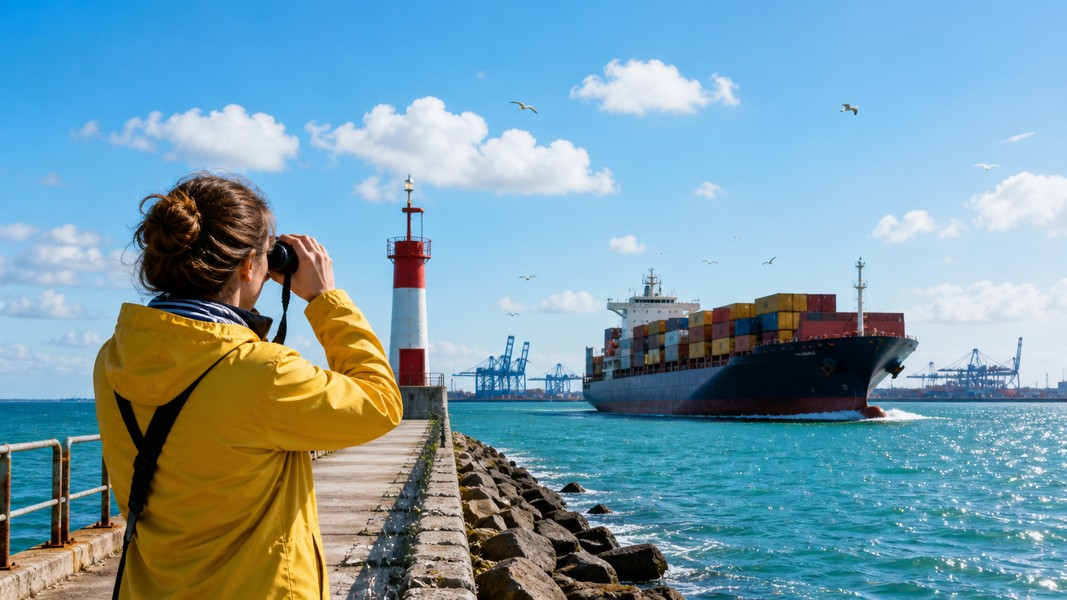
Visual identification comes down to hull shape, deck layout, and what's loaded on or inside the ship. Bulk carriers have open hatches; container ships have stacked boxes; tankers have smooth hulls with no visible cargo; cruise ships have rows of balconies. Once you recognize a few key visual patterns, distinguishing most ship types takes only a moment.
For precise identification from anywhere in the world, AIS tracking apps show each vessel's type, flag, tonnage, speed, and current route. To understand how AIS tracking works and what data it collects, the underlying system assigns every commercial vessel a unique MMSI number and a type code that maps directly to the categories covered in this guide.
Primo Nautic lets you track any vessel type with AI-personalized updates adapted to your reason for tracking, whether you're monitoring a cargo shipment, following a cruise ship, or exploring vessels as an enthusiast. The app pulls live AIS data across all the ship categories listed here and adds contextual information like weather at the vessel's location and dual ETA estimates.
Conclusion
The world's fleet divides into eight broad ship types: cargo ships, container ships, tankers, cruise ships, naval vessels, ferries, sailing yachts, and specialized workboats. Each has a distinct design logic driven by its cargo and operating environment. Container ships are built around the TEU box; tankers around sealed liquid systems; cruise ships around passenger comfort; bulk carriers around maximizing hold volume for raw materials. Recognizing these differences makes every ship you see at sea or on a tracking map considerably more interesting.
Most Recent Posts
Discover more articles from our blog.