



Shipping Container Dimensions: 20ft, 40ft and High Cube
The standard 20ft shipping container measures 6,058mm (19'10") long, 2,438mm (8') wide, and 2,591mm (8'6") tall. A 40ft container doubles that floor space, while high-cube variants add 305mm of extra height for bulkier cargo. These ISO-standardized shipping container dimensions are the foundation of global trade: every box you see stacked on a container vessel conforms to the same external envelope, no matter where it was built or what it carries.
Understanding the differences between container types helps you make sense of ship manifests, cargo tracking data, and the numbers behind vessel capacity.
The Standard 20ft Shipping Container
The 20ft dry container is the baseline unit of international shipping. It's so foundational that all ship capacity is measured in TEU, or Twenty-foot Equivalent Units, a term derived directly from this box. It's the preferred choice for heavy cargo like machinery, metals, and minerals that hit weight limits before running out of space.
External dimensions are 6,058mm × 2,438mm × 2,591mm (19'10" × 8' × 8'6"). Inside, usable space drops slightly to 5,898mm × 2,352mm × 2,390mm, giving you 33.1 cubic meters of capacity. The door opening measures 2,340mm wide by 2,280mm tall, enough for standard 1.2m × 1m pallets, typically 11 across.
On weight: the tare (empty) weight is 2,150 kg. Maximum payload sits at 28,330 kg, with a max gross weight of 30,480 kg. The 20ft container is purpose-built for density: shipments that fill the volume before the payload limit rarely use this format.
The Standard 40ft Container
The 40ft container, or FEU (Forty-foot Equivalent Unit), doubles the floor space of the 20ft without increasing external width or height. External dimensions are 12,192mm × 2,438mm × 2,591mm (40' × 8' × 8'6").
Internally, that translates to 12,032mm × 2,352mm × 2,390mm with 67.6 cubic meters of usable space, enough for 22 to 24 standard pallets. The door opening is the same as the 20ft at 2,340mm × 2,280mm.
The weight spec has a counterintuitive detail: the max gross weight is the same 30,480 kg as the 20ft, but the heavier container itself (3,640 kg tare) leaves a smaller max payload of 26,840 kg. For consumer goods, textiles, electronics, and other shipments where volume matters more than weight capacity, the 40ft is the standard choice and dominates most major trade lanes.
High-Cube Containers: 40ft and 45ft
High-cube containers look nearly identical to standard units from the outside, except they stand 2,896mm (9'6") tall instead of the standard 8'6". That extra 305mm of height increases internal volume by roughly 13%, which matters for lighter, bulkier cargo like furniture, mattresses, flooring, and e-commerce products.
The 40ft high-cube has external dimensions of 12,192mm × 2,438mm × 2,896mm, with internal space of 12,032mm × 2,350mm × 2,695mm and 76.2 cubic meters total. The door opening is taller at 2,585mm, making loading easier for oversized items. Max gross weight increases slightly to 32,500 kg with a payload of 28,800 kg.
The 45ft high-cube pushes external length to 13,716mm, with 86 cubic meters internally and a max payload of 27,850 kg. This format is common in European intermodal transport, where the extra length is permitted on approved road and rail routes.
High-cube containers are identifiable by black and yellow stripes near the corner castings. On a live vessel tracker you won't see individual container types on deck, but knowing whether a ship carries primarily high-cube or standard boxes tells you something about the cargo profile. High-cube traffic tends toward e-commerce and consumer goods, while standard boxes carry denser industrial freight. Apps like Primo Nautic display vessel type and declared cargo category alongside real-time AIS position, helping you connect the container specs to the ship you're watching.
Refrigerated Containers (Reefers)
Reefer containers carry perishables: fresh produce, pharmaceuticals, frozen seafood, dairy. They share the same external footprint as standard ISO containers, but thick insulation reduces internal dimensions by 15 to 20%. The refrigeration unit is built into one end wall, which further reduces usable depth.
A 20ft reefer has internal dimensions of approximately 5,456mm × 2,288mm × 2,263mm with 28.2 cubic meters of temperature-controlled space. Tare weight is higher at 2,810 kg due to the refrigeration machinery, with a max payload of 27,670 kg. A 40ft high-cube reefer offers 67.5 cubic meters internally with a max payload of 30,510 kg.
Reefer containers require a power supply on board the vessel. Ships running reefer trades are fitted with large numbers of electrical outlets on deck and in cell guides, and the proportion of reefer plugs on a vessel indicates its suitability for temperature-sensitive cargo routes. If you're tracking a container shipment of perishable goods, the ship's reefer capacity gives you context on how aggressively the vessel will maintain its schedule.
Specialty Types: Open-Top, Flat-Rack, and Tank
Three specialty container formats handle cargo that won't fit through a standard door or can't be enclosed at all.
Open-top containers have no solid roof. They're covered with a tarpaulin and loaded from above by crane, making them the right choice for timber, scrap metal, industrial machinery, or any overheight load. A 20ft open-top measures 5,898mm × 2,350mm × 2,348mm internally with 32.5 cubic meters and a max payload of 28,240 kg. A 40ft high-cube open-top reaches 75.1 cubic meters with 28,610 kg payload.
Flat-rack containers are essentially a steel floor with two end walls and no sides or roof. They carry oversized and extremely heavy loads that extend well beyond standard container dimensions: large transformers, wind turbine components, construction equipment, yachts. A 20ft flat-rack handles payloads up to 35,000 kg. A 40ft high-cube flat-rack reaches 52,500 kg. Because flat-racks extend beyond normal container profiles, they require special stowage planning and lashing on deck.
Tank containers hold bulk liquids and gases within a standard ISO steel frame. The cylindrical tank sits inside the 20ft external envelope and typically carries between 17,500 and 26,000 liters of food-grade oils, chemicals, or liquefied gases. They're common on specialized chemical tanker services and intermodal routes connecting chemical plants to ports.
What TEU Means and Why It Matters
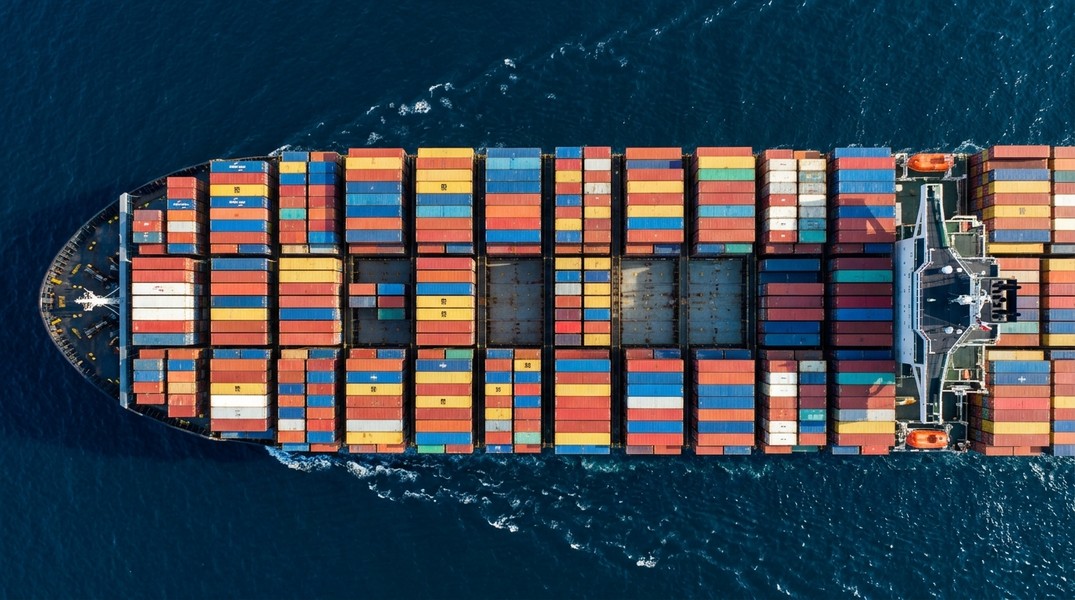
TEU is the universal language of container shipping. One 20ft container equals 1 TEU. A 40ft container counts as 2 TEU. High-cube and 45ft units also count as 2 TEU for capacity calculations, even if the physical volume is slightly different.
Every container ship is rated by TEU capacity, and that number shapes everything about how the vessel operates. A Panamax vessel, the largest able to transit the original Panama Canal locks, typically holds around 5,000 TEU. Post-Panamax ships carry 10,000 to 15,000 TEU. According to the World Shipping Council, the largest container ships afloat now carry well over 20,000 TEU. The Ever Given, which blocked the Suez Canal in 2021, had a nominal capacity of approximately 20,388 TEU.
TEU utilization on a vessel affects your shipment's transit time. A vessel running at full TEU capacity on a peak trade lane tends to skip optional port calls and maintain stricter schedules. A lightly loaded ship may add ports of call or slow steam to save fuel. When you follow a container ship with Primo Nautic, the AI-powered ETA predictions factor in real-time vessel data including speed changes, port approach patterns, and historical schedule adherence: context that raw AIS coordinates alone don't provide.
ISO Standards Behind the Dimensions
The uniformity of container dimensions worldwide isn't an accident. The ISO 668 standard defines the classification, external dimensions, and maximum gross masses for series 1 freight containers. ISO 1496 sets the structural performance requirements and the tests each container must pass before entering service.
These standards ensure that a container built in South Korea fits on a vessel loaded in Brazil, gets lifted by a crane in Rotterdam, and rides a double-stack train across North America without modification. The 20ft is actually 19'10.5" rather than a true 20 feet, which allows two 20ft containers to occupy exactly the same bay space as one 40ft container when stacked end-to-end in a ship's cell guide structure.
Standardization has been in place since the late 1960s, when the adoption of ISO container dimensions transformed global logistics. The containerization revolution turned a process that once took days of manual labor into a mechanized system where a single crane cycle takes under two minutes. Today, a modern automated container terminal handles thousands of TEUs per day with minimal human intervention.
Container Dimensions and Cargo Tracking
Container specifications connect directly to how you interpret tracking data. A ship carrying 10,000 TEU of high-cube e-commerce cargo from Shanghai to Rotterdam behaves differently from one loaded with 6,000 TEU of heavy machinery: different draft, different port priorities, different weather sensitivity.
When you follow a Maersk container vessel or any other carrier on a live tracker, the voyage data often includes declared cargo types, hazardous goods flags, and reefer counts. Combined with real-time AIS position and vessel-specific performance data, those details help you understand not just where your shipment is, but how likely it is to arrive on time.
Knowing whether your cargo occupies a 20ft or 40ft slot, whether it requires a reefer connection, or whether it's on a flat-rack with special stowage requirements changes how you read transit milestones and port handling timelines.
Conclusion
Shipping container dimensions follow ISO standards that have remained largely unchanged for decades. The 20ft (TEU) and 40ft (FEU) dry containers form the core of global trade, with high-cube variants handling volume-sensitive cargo and reefers maintaining cold chains for perishables. Specialty types like flat-racks and open-tops extend the system to oversized and unconventional loads. TEU capacity is the fundamental unit by which ship size and cargo volume are measured; understanding it turns raw vessel data into meaningful context for anyone tracking cargo at sea.
Most Recent Posts
Discover more articles from our blog.