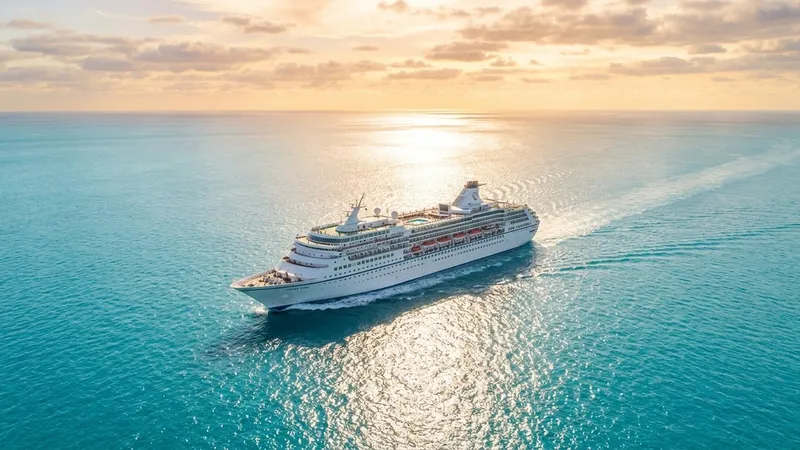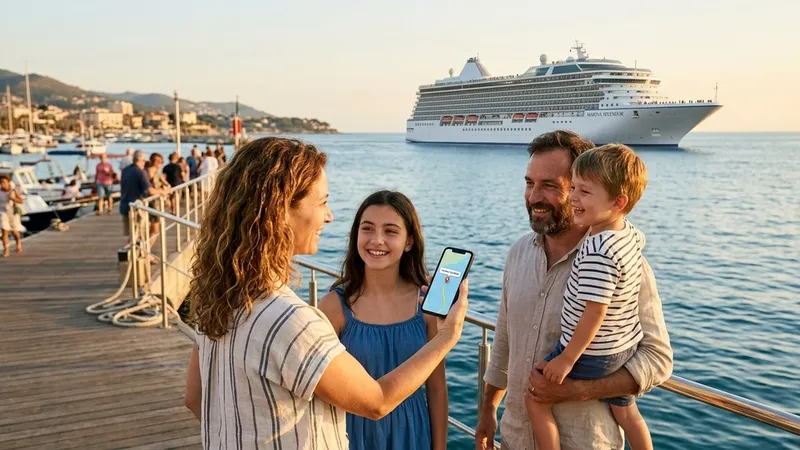
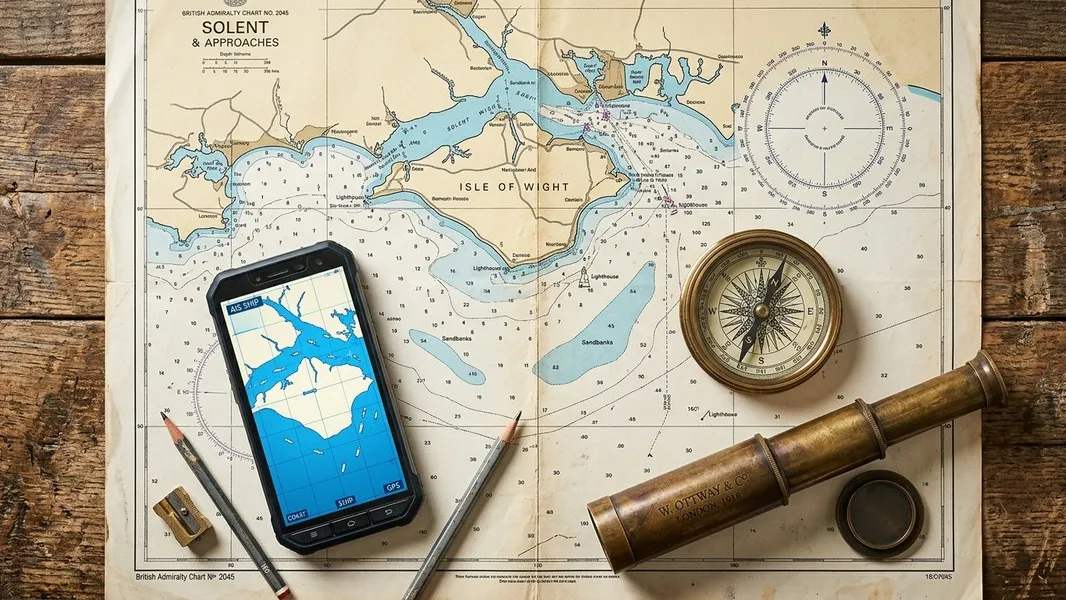
A ship finder is any app or website that uses AIS data to show you where vessels are right now, complete with speed, course, destination, and estimated arrival time. Whether you want to follow a cruise ship carrying your family, confirm when a cargo shipment is due, or simply explore the ocean traffic on your screen, a good ship finder puts that information in your hands in seconds.
Not all ship finder tools are equal. Some dump raw data without context. Others are locked behind professional pricing. A few have figured out that most people tracking ships aren't maritime professionals: they're curious, worried, or planning. This roundup compares the best ship finder apps available today, covering data quality, ease of use, AI features, and who each tool is actually built for.
Our Top Picks at a Glance
| Rank | App | Best For | Free Tier | AI Features |
|---|---|---|---|---|
| 1 | Primo Nautic | Families, enthusiasts, boat owners | Yes | Yes: personalized updates |
| 2 | MarineTraffic | Maritime professionals | Yes | No |
| 3 | VesselFinder | Global coverage, photo enthusiasts | Yes | No |
| 4 | ShipFinder.co | Quick desktop lookups | Yes (limited) | No |
| 5 | CruiseMapper | Cruise passengers only | Yes | No |
How We Evaluated These Tools
Every app on this list was assessed against five criteria. First, data coverage: does the app track vessels globally or only near major ports? Second, search flexibility: can you find a ship by name, IMO number, or MMSI? Third, mobile quality: is the app genuinely usable on a phone, or is it a desktop tool squeezed onto a small screen? Fourth, context: does the app explain what the data means, or does it leave you staring at numbers? Fifth, free tier generosity: can you do meaningful tracking without a subscription?
Globally, these platforms collectively monitor hundreds of thousands of vessels. Networks processing AIS signals at scale handle over 661,000 vessels and 1.3 billion data points every day; the raw data is there. The question is how each app surfaces it.
#1 Primo Nautic: Best Overall Ship Finder App
Primo Nautic approaches ship finding differently from every other tool on this list. Rather than presenting a live map and leaving you to interpret the data, it asks why you're tracking a vessel and adapts everything accordingly.
Before you start tracking, you pick a purpose: following a loved one on a cruise, keeping tabs on a friend traveling by sea, monitoring a cargo shipment, checking on your own boat, or exploring ships as an enthusiast. From that moment, the app tailors every update to your context. A family tracking a cruise ship receives warm, reassuring progress reports and weather updates in plain language. A cargo monitor gets precise logistics updates focused on ETA accuracy and delay alerts.
The dual ETA system is one of Primo Nautic's clearest advantages. It shows both the captain's reported arrival time and an AI-calculated prediction based on the vessel's actual current position and speed. When those numbers diverge, you know something's changing before any official update reaches you.
Search works across all three vessel identifiers: ship name, IMO number, and MMSI. The interactive map shows live positions, heading indicators, and navigation status. Weather conditions at the exact vessel location are also included, not just general regional weather.
For maritime enthusiasts, the app turns ship watching into something genuinely educational. AI-generated insights explain what type of vessel you're looking at, where it's been, and what kind of cargo or passengers it typically carries. That educational layer separates Primo Nautic from tools that treat every user as a logistics professional.
The free plan covers approximately 30 vessels per month. Premium unlocks broader tracking capacity for users who monitor multiple ships regularly.
Ideal for: cruise families, seafarer families, ship enthusiasts, boat owners who want more than a position dot on a map.
#2 MarineTraffic: Best for Maritime Professionals
MarineTraffic is the industry benchmark. It covers more vessels than any competing tool, integrates weather overlays, port congestion data, and fleet monitoring for commercial operators, and has been the go-to reference for maritime professionals for years.
The interface reflects that professional orientation. The map is dense with information: vessel types, traffic density layers, port activity, and historical route data all compete for attention. For someone who knows exactly what they're looking for and how to read AIS data, that depth is a feature. For someone checking where a family member's cruise ship is right now, it can feel overwhelming.
MarineTraffic's free tier provides genuine global coverage. Paid plans add extended history, advanced filtering, and fleet management tools. Mobile apps exist for iOS and Android, though the app inherits the desktop's data-heavy presentation style.
Ideal for: fleet operators, port professionals, maritime researchers, and experienced enthusiasts comfortable with raw AIS data.
#3 VesselFinder: Best for Global Coverage and Vessel Photos
VesselFinder covers over 300,000 active vessels using both terrestrial and satellite AIS, giving it strong reach even in areas where land-based receivers have gaps. The platform is clean and reasonably approachable, with vessel photos, basic voyage details, and 24-hour position history available on the free tier.
You can search by vessel name, IMO number, or MMSI, and the results include current position, destination, draught, and predicted route. Compared to MarineTraffic, VesselFinder's interface is somewhat simpler, which makes it a reasonable entry point for new ship trackers. The photo database is a genuine differentiator: thousands of vessels have community-submitted images, which adds a visual dimension that data-only apps lack.
The free tier is generous for casual use. Pro plans unlock seven-day position history, advanced filters, and fleet tools.
Ideal for: enthusiasts who want broad coverage, users who appreciate vessel photography, and anyone wanting a cleaner alternative to MarineTraffic's professional interface.
#4 ShipFinder.co: Best for Quick Desktop Lookups
ShipFinder.co covers the basics: search by name or MMSI, see current position on a map, check destination and ETA. The interface is minimal and loads quickly, making it useful when you need a fast answer and don't want to dig through feature-heavy alternatives.
The limitations are real, though. Mobile usability is secondary to the desktop experience. There's no AI layer, no personalization, no context for what you're seeing beyond the raw AIS fields. For someone who just wants to confirm a vessel is moving toward its destination, that's enough. For anyone wanting more, the tool runs out of capability quickly.
Ideal for: quick one-off lookups, users comfortable interpreting raw AIS data without explanation.
#5 CruiseMapper: Best for Cruise-Specific Tracking
CruiseMapper focuses exclusively on cruise ships, which makes it highly specific but limited in scope. It tracks cruise itineraries, shows live ship positions, and includes deck plans and port information for cruise passengers.
The narrow focus is both its strength and its constraint. Deck plans and cruise-specific itinerary data aren't available anywhere else in this roundup. But you can't track a cargo ship, a ferry, or any vessel outside the cruise category.
For cruise passengers who want sailing details beyond what their cruise line's official app provides, CruiseMapper fills a niche. For anyone tracking multiple vessel types or wanting AI-driven updates, it's too narrow.
Ideal for: cruise passengers who specifically want itinerary data and deck plans.
What to Look for in a Ship Finder App
The right choice depends on your situation, but four factors separate genuinely useful apps from ones that frustrate more than they inform.
Coverage and data freshness determine whether the position you see is real or a few minutes stale. Satellite AIS extends coverage into open oceans; terrestrial AIS is faster near ports. Apps combining both give the most complete picture.
Search flexibility matters because not everyone knows a vessel's IMO number. The ability to search by ship name, MMSI, or IMO, and get results quickly, is basic functionality worth checking before committing to any tool.
Context and interpretation is where most apps fall short. A position on a map tells you where a vessel is. What it doesn't tell you is whether the ship is on schedule, what weather conditions the crew is dealing with, or whether the ETA you see is reliable. Apps that translate raw data into useful language earn significant loyalty from non-professional users.
Use case fit is the factor most overlooked in reviews. An app built for fleet managers will frustrate a parent tracking their daughter's cruise. An app built for vessel tracking with multiple user personas will feel natural across different tracking reasons. Check whether the tool was designed with someone like you in mind.
For cruise-specific tracking, you can also explore our guide on the cruise ship position finder options available today.
Conclusion
Ship finder apps have become genuinely capable tools, covering hundreds of thousands of vessels with live position data available to anyone with a smartphone. The core difference between them comes down to what they do with that data once they have it.
Professional platforms like MarineTraffic and VesselFinder serve users who can work with raw AIS output. Tools like Primo Nautic serve everyone else: people who want to know where a ship is and what that means for them, delivered in a way that doesn't require a maritime background to interpret. The best ship finder is the one that matches how you track and why you track, not just one that shows the most vessels on a map.