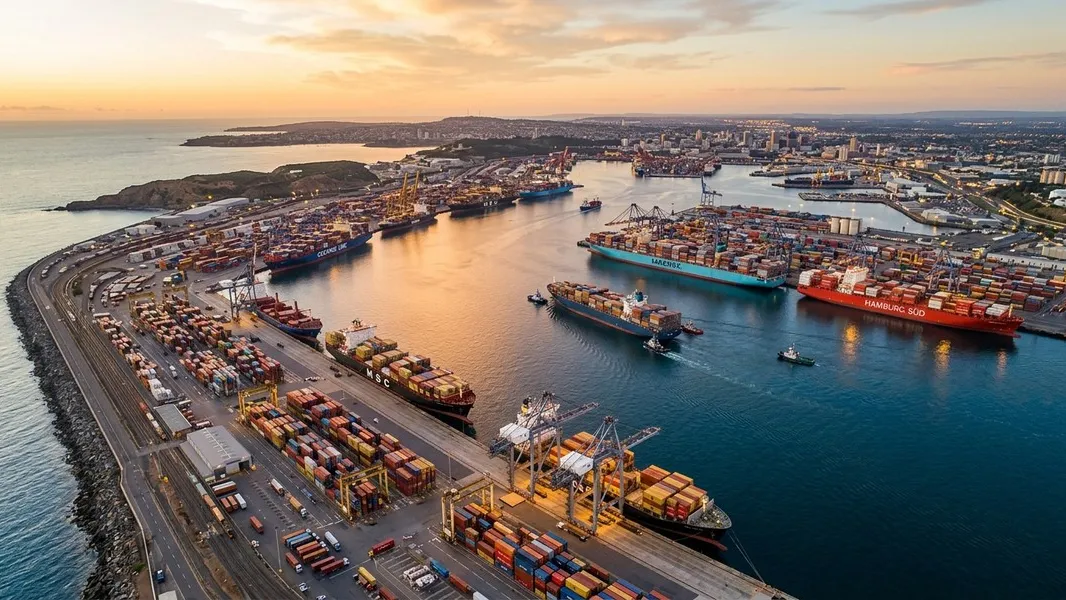
The best vessel tracker app depends on what you are tracking and why. If you are a cruise family wanting reassuring updates, the raw AIS data from professional tools can feel overwhelming. If you are a cargo shipper, you need reliability over simplicity. And if you are a maritime enthusiast, you want depth and breadth.
This guide breaks down the top vessel tracker apps available today: what each one does, who it is built for, and where it falls short. More than 200,000 vessels worldwide transmit AIS data continuously, yet most tracking apps deliver the same raw coordinates with no context about what those numbers actually mean for you. We evaluated six leading apps across accuracy, coverage, ease of use, and how well they serve different types of users.
Top Vessel Tracker Apps at a Glance
| Rank | App | Best For | Coverage | Tier |
|---|---|---|---|---|
| #1 | Primo Nautic | Families, seafarers, all users | Global AIS + AI insights | Freemium |
| #2 | MarineTraffic | Professionals, cargo shippers | Global with satellite AIS (pro) | Freemium |
| #3 | VesselFinder | Enthusiasts, casual trackers | Global satellite + terrestrial AIS | Freemium |
| #4 | FleetMon | Commercial fleet operators | Global AIS fleet views | Freemium |
| #5 | MyShipTracking | Occasional trackers | Coastal AIS | Free |
| #6 | CruiseMapper | Cruise travel planners | Cruise ship routes only | Free |
How We Evaluated These Apps
Every vessel tracker app pulls from the same AIS network, so the differences come down to what it does with that data and who it is designed for. We looked at five factors: AIS coverage type (terrestrial vs. satellite), interface quality for non-professional users, alert capabilities, AI or personalization features, and how well each app serves casual users alongside commercial ones.
AIS coverage splits into two types. Terrestrial receivers near coastlines capture signals from ships within roughly 70 nautical miles. Satellite AIS extends tracking to open ocean, where no land-based receiver exists. An app that relies only on terrestrial data will lose a vessel the moment it leaves port, which matters enormously for families tracking ocean voyages or shippers monitoring transatlantic routes.
#1 Primo Nautic: AI-Personalized Vessel Tracking
Primo Nautic is the only vessel tracker app that adapts to why you are tracking, not just what you are tracking. Instead of delivering raw AIS coordinates, it translates ship position data into plain-language updates using AI, so the information actually means something to the person reading it.
The core differentiator is its six tracking purposes. When you set up tracking, you choose your reason: following a loved one on a cruise, monitoring a family member working at sea, tracking your own boat, watching a cargo shipment, or exploring vessels as an enthusiast. Each purpose triggers a different AI communication style. A cruise family gets warm, reassuring updates about journey progress and sea conditions. A cargo monitor gets concise, logistics-focused ETAs and delay alerts. A seafarer family gets empathetic updates that communicate not just position but what the conditions are like where their loved one is working.
This approach solves the core frustration with traditional vessel tracking apps: they deliver data, not meaning. Seeing "18.4 knots, heading 247°, destination Barcelona" tells you almost nothing if you are not a maritime professional.
The app also includes a dual ETA system that compares the captain's reported arrival time against an AI-calculated route estimate. When the two differ, Primo Nautic tells you that and gives you a confidence score. This is practically useful when ships run early or late, and no other consumer-facing tracker offers anything comparable.
Live weather data at the vessel's exact location rounds out the feature set. You see temperature, wind speed, visibility, and sea state at the ship's position, not a general forecast for the nearest port. For families tracking loved ones at sea, that context makes a real difference.
Primo Nautic tracks all vessel types globally: cruise ships, merchant vessels, private yachts, cargo carriers, and ferries. The free tier covers roughly 30 vessels per month, which is more than enough for personal use. For the tracking a cruise ship use case specifically, no other app combines live position data with personalized context in this way.
Best for: Families tracking cruise travelers, seafarer families, boat owners, cargo shippers wanting simplified updates, maritime enthusiasts who want context alongside data.
#2 MarineTraffic: The Industry Standard
MarineTraffic is the largest AIS vessel tracking platform in the world. With over 5 million Android downloads and more than 126,000 user reviews, it sets the benchmark for coverage and data depth. It is the tool maritime professionals reach for first.
The core platform delivers live positions, speed, course, destination, and detailed vessel information for commercial ships worldwide. Weather overlays, voyage history, and port information add context for professional users. The Mobile Pro tier unlocks satellite AIS coverage, enabling ocean tracking where terrestrial receivers fall short.
The limitations surface quickly for casual users. MarineTraffic's interface is built for people who know what "navigation status," "draught," and "ETA source" mean. There is no translation layer, no personalization, and no adaptation for different user types. A cruise family tracking a relative's voyage sees the exact same data feed as a port authority tracking container traffic.
User reviews reflect this split. The app holds a 3.4 out of 5 rating on Android from those 126,000 reviews, with maritime professionals generally satisfied and casual users regularly frustrated by the learning curve and the amount of information on screen. The free tier covers coastal AIS data; satellite coverage and advanced features require the paid tier.
For cargo shippers, port operators, maritime professionals, and advanced enthusiasts, MarineTraffic remains the most powerful option available. For everyone else, the data richness comes at the cost of usability.
Best for: Commercial shipping, port operations, maritime professionals, serious enthusiasts who want maximum data depth.
#3 VesselFinder: Clean Design with Global Coverage
VesselFinder positions itself as the more accessible alternative to MarineTraffic, offering satellite and terrestrial AIS data in a cleaner interface. It is popular among maritime enthusiasts who want global coverage without the professional density.
The app's visual approach stands out. Clean map views in Simple, Detailed, Dark, and Satellite modes give you options depending on what you need to see. User-contributed ship photos bring a community element that raw AIS data cannot replicate. The "My Views" feature lets you save custom map perspectives, so returning to a favorite port or shipping lane takes seconds rather than rebuilding the view each time.
Coverage is genuinely global through a combination of terrestrial stations and its own satellite AIS network. Where MarineTraffic locks satellite data behind a pro tier, VesselFinder includes basic satellite coverage at no cost, which is a meaningful advantage for users tracking ocean voyages on a budget.
Personalization and alerts are where VesselFinder falls short. The data is clean and accessible, but it is still just data. There is no adaptation for different user types, no AI context, and notification options are limited compared to purpose-built tools like Primo Nautic. If you want to understand what a vessel's position and speed actually means for an expected arrival, you are on your own.
VesselFinder is a natural fit for enthusiasts exploring vessel locations, studying shipping routes, or tracking ships for interest. It also works well for Great Lakes vessel tracking, where its clean regional map views handle the dense freshwater traffic particularly effectively.
Best for: Maritime enthusiasts, hobbyist trackers, Great Lakes shipping watchers, users who prioritize interface clarity over feature depth.
#4 FleetMon: Built for Commercial Fleet Monitoring
FleetMon targets a specific user: the commercial operator who needs to monitor a group of vessels as part of business operations. Its core strength is fleet organization, with grouped ship views, custom dashboards, and port-call monitoring that give coordinators an operational overview at a glance.
The fleet monitoring tool supports multiple vessels grouped by route, operator, or ownership, which is useful when you are tracking a small fleet rather than a single ship. Port-call history and live AIS data provide enough context for day-to-day shipping coordination without requiring the full enterprise feature set that platforms like MarineTraffic's commercial offerings provide.
For non-commercial users, FleetMon is a poor fit. The interface is optimized for fleet management workflows, not individual vessel tracking. There is no consumer-friendly layer, no AI features, and no personalization for user types like families or enthusiasts. It is fundamentally a business tool applied to maritime data.
Commercial users with advanced requirements around compliance, risk analysis, or sanctions screening may also find FleetMon insufficient. Those needs typically require dedicated maritime intelligence platforms rather than AIS-based trackers.
Best for: Small fleet operators, commercial vessel coordinators, logistics businesses managing multiple ships.
#5 MyShipTracking: Free Baseline Tracking
MyShipTracking offers the essentials without cost: live vessel positions, basic ship details, and a searchable vessel database. For users who only occasionally need to check a ship's location and prefer not to sign up for a full-featured app, it covers the minimum.
The interface is functional rather than refined. Position, speed, course, and destination data from AIS are all present, which covers the baseline need. Satellite AIS coverage is limited on the free tier, meaning ships on open-ocean routes may disappear from view between coastal waypoints.
There is no personalization, no AI layer, no meaningful alert system, and no features tailored for specific user types. For someone new to vessel tracking who wants to understand what how AIS tracking works before committing to a dedicated app, MyShipTracking provides a low-friction introduction. For regular use, the limitations become apparent quickly.
Best for: Occasional vessel checkers, users exploring ship tracking for the first time.
#6 CruiseMapper: Cruise-Only Tracking
CruiseMapper focuses exclusively on cruise ships, providing itinerary details, port schedules, and live AIS positions for major cruise lines. The cruise-specific context is its genuine advantage: the platform knows ship itineraries, so it can tell you not just where a vessel is but what port it is heading to next and when it is scheduled to arrive.
Deck plans, cruise line route maps, and port arrival schedules add detail that general-purpose AIS apps simply do not have. For someone following a specific voyage and wanting to know what comes next on the schedule, that context is valuable.
The limitation is scope. CruiseMapper only covers cruise ships, which makes it irrelevant for seafarer families with loved ones on merchant vessels, cargo shippers, boat owners, or maritime enthusiasts tracking non-cruise traffic. The mobile experience is also limited, as the platform is primarily designed for desktop browsing.
As a supplementary tool for cruise travel planning or following one specific voyage, CruiseMapper has a clear place. As an everyday vessel tracker, it is too narrow.
Best for: Cruise travel planners, passengers following a specific cruise itinerary, vacation-context tracking.
What to Look for in a Vessel Tracker App
Choosing the right vessel tracker depends on matching the tool to your actual tracking situation. Five factors matter most.
AIS coverage type determines whether you can track ships beyond coastal waters. Terrestrial AIS covers ports and coastal routes effectively; satellite AIS extends tracking to open ocean. If the ship you are following spends significant time at sea between ports, you need an app that includes satellite coverage.
Context and personalization separate tools built for professionals from those built for everyone else. Raw AIS data is meaningful to maritime workers but opaque to most people. An app that translates position, speed, and ETA into plain language suited to your specific situation significantly reduces the effort required to understand what you are seeing.
Alert reliability matters if you care about arrivals and departures. Check whether the app notifies you when a vessel docks, departs, or experiences a significant delay, and whether those notifications are specific to your situation or just generic position updates.
Mobile experience affects daily usability directly. Platforms designed primarily for desktop will feel clunky on a phone, which is where most personal users check updates.
Vessel type coverage is worth confirming before you commit. Some apps focus exclusively on cruise ships; others prioritize commercial vessels; the best options cover all vessel types globally so you are not locked into one segment.
Conclusion
The vessel tracker app market divides into two camps: professional platforms that serve maritime industry users with raw AIS data at scale, and consumer-facing tools that prioritize usability and clarity. MarineTraffic and FleetMon lead in the professional space. VesselFinder bridges both audiences. Primo Nautic stands alone in translating AIS data into personalized, context-aware updates adapted to why you are tracking. MyShipTracking and CruiseMapper fill specific, narrow use cases adequately.
The right choice depends entirely on your situation. A family following a cruise voyage and a cargo coordinator monitoring a container ship have almost nothing in common in terms of what they need. Match the app to the use case, and the experience improves considerably.