



How to Track a Cruise Ship Location in Real Time
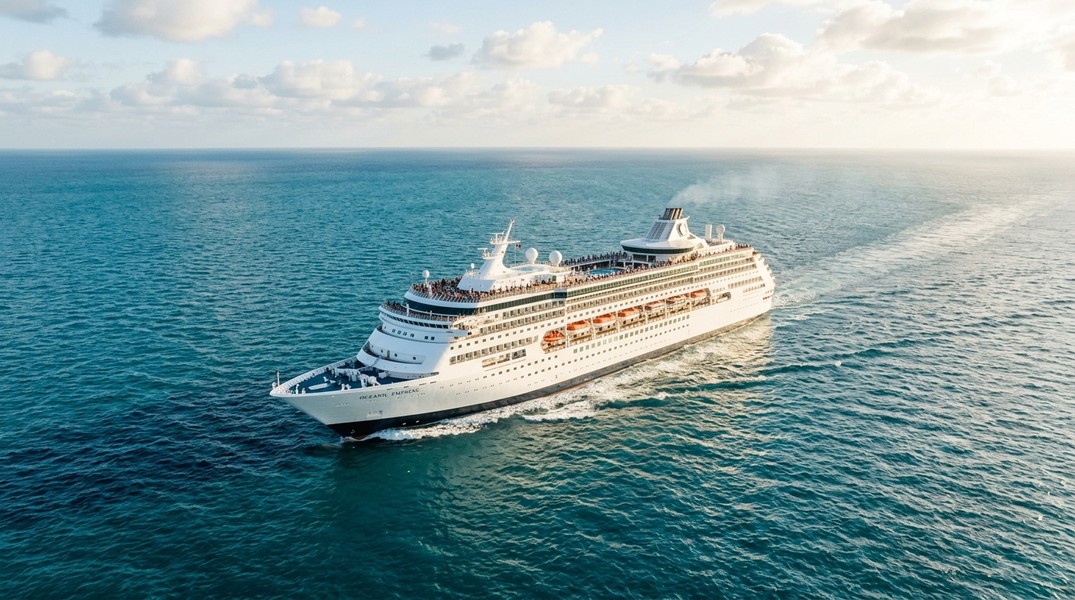
Yes, you can track a cruise ship's location in real time, and it's easier than most people expect. Every cruise ship broadcasts its position continuously using a technology called AIS, and anyone can access that data through a vessel tracking app or website. This guide covers exactly how to find and track cruise ship location, what the data actually means, and how to set up alerts so you never miss an arrival or departure.
Whether your family member is on a Carnival sailing or you want to follow a Royal Caribbean itinerary from shore, the process is the same.
How Cruise Ship Tracking Works
Cruise ships use AIS (Automatic Identification System), a technology that broadcasts a ship's position, speed, course, and identity to receivers around the world. Every large passenger vessel is required by international law to carry a Class A AIS transponder, which transmits at high power and updates frequently.
The data transmitted includes the ship's name, a unique identifier called an MMSI number, current coordinates, speed in knots, heading, and navigation status (underway, anchored, or moored). This information is picked up by two types of receivers: terrestrial stations near coastlines and satellite receivers that cover open oceans where land-based stations can't reach.
Because of satellite AIS coverage, you can track cruise ship location even when a vessel is days away from the nearest port. Coverage can have brief gaps in very remote ocean areas, but for major cruise routes including the Caribbean, Mediterranean, and Alaskan waters, tracking is effectively continuous. AIS systems now provide near-global coverage through the combination of terrestrial and satellite receivers.
What You Need Before You Start
To find your ship quickly, gather a few details beforehand:
- The ship's name (for example, "Carnival Breeze" or "Oasis of the Seas")
- The cruise line
- The sailing date and departure port
The ship name is the fastest way to search. Most tracking apps let you type it directly into a search bar and pull up the live position within seconds. If you don't know the exact name, searching by cruise line and filtering by vessel type narrows it down quickly.
You do not need an account or paid subscription to view basic position data on most platforms. Apps like Primo Nautic offer free tracking credits that cover searches and basic data for dozens of vessels per month.
How to Find and Track Your Cruise Ship
Open a vessel tracking app and use the ship name search. Once you find the vessel, tap it to open the detail view. You'll see the ship's current position on an interactive map along with its speed, heading, and most recent port or sea area.
Zoom in on the map to see the ship's icon moving in real time (updates every few minutes). The icon's direction indicates heading, and a trail shows the path the vessel has taken over the last several hours.
For app-based tracking with Primo Nautic, you can select the purpose for your tracking. Choosing "Loved One on Cruise" triggers an AI persona that translates raw maritime data into plain-language updates, including what the weather feels like at the ship's location and how the voyage is progressing.
Save the vessel to follow it throughout the trip. You can then check back at any time without searching again, and the app will remember your tracking purpose to keep updates personalized.
For a side-by-side overview of the top apps available, the live cruise ship tracker guide covers the leading options in detail.
Understanding What the Data Shows
A tracking page for a cruise ship typically displays several types of information. Here's what each means:
Position coordinates are the ship's exact latitude and longitude. Most apps convert these to a readable map view automatically, but you may see the numbers if you open detailed vessel info.
Speed in knots tells you how fast the ship is moving. One knot equals approximately 1.15 miles per hour. Cruise ships typically cruise between 18 and 24 knots. A ship moving at 5 knots or less is likely maneuvering in or out of port.
Navigation status shows what the ship is doing: underway (moving normally), at anchor (stopped in open water), or moored (docked at port). This updates as conditions change.
ETA to next port is one of the most useful pieces of data for families. Many tracking apps show two ETAs: the captain's declared arrival time, which the ship manually updates, and an AI-calculated ETA based on current speed and course. The AI version adapts in real time if the ship speeds up, slows down, or changes route.
Weather at vessel location is data that standard AIS feeds don't include but purpose-built tracking apps layer on top. Knowing the wind speed, sea temperature, and wave conditions at the ship's actual position helps you understand what passengers on board are experiencing. NOAA explains that AIS data gives context for weather interpretation at sea when combined with meteorological overlays.
Tracking Major Cruise Lines
Every cruise line that operates modern passenger ships is trackable. AIS transponders are mandatory for vessels above a certain size, and all cruise ships qualify. Here's what to expect for the most commonly searched lines:
Carnival Cruise Line operates one of the largest fleets in the world, with ships sailing primarily in the Caribbean and Mediterranean. Ships like Carnival Breeze, Carnival Vista, and Carnival Horizon are among the most frequently tracked. Search by ship name directly rather than by cruise line for the fastest results.
Royal Caribbean ships are large and well-covered by both terrestrial and satellite AIS. Icon of the Seas and Oasis of the Seas generate significant tracking interest given their size. Voyage history on these ships typically goes back several weeks.
Norwegian Cruise Line vessels are trackable across all major routes. Norwegian Encore and Norwegian Bliss are common search targets. Notification-based tracking works particularly well for Norwegian itineraries with multiple port stops.
Princess Cruises ships including Ruby Princess and Diamond Princess appear with reliable ETA predictions due to consistent route patterns. Port-to-port updates are accurate for most Pacific and Caribbean routes.
Celebrity Cruises operates ships like Celebrity Edge and Celebrity Millennium on routes with strong satellite AIS coverage. Weather-integrated tracking is especially useful on transatlantic Celebrity sailings where conditions can change significantly.
If you're not sure which ship your family member is on, check the booking confirmation for the vessel name. The cruise line website also lists which ship operates each departure.
For more background on how vessel tracking technology works across different ship types, the complete ship tracking guide covers AIS and related systems in depth.
Setting Up Notifications and Alerts
Tracking a ship once is useful. Getting notified automatically is better. Most vessel tracking apps let you set alerts for specific events tied to a saved vessel.
The most helpful alerts for cruise families are arrival notifications (when the ship enters port), departure alerts (when it leaves), and delay warnings (when the ETA shifts by more than a set threshold). For a 7- or 14-day cruise, you can follow the entire itinerary without opening the app at every port stop.
Primo Nautic's notification system adapts the message to your tracking purpose. An arrival notification for "Loved One on Cruise" reads differently from a raw maritime alert: it includes context about the port, how the voyage went, and what conditions were like at sea during that leg.
Set up notifications before the sailing date so alerts are active from the moment the ship departs. This is especially useful if the departure port is in a different time zone and you won't be awake to check manually.
What Cruise Ship Tracking Can't Do
It's worth being clear about the limits of AIS tracking, especially for families who expect more detail than the technology can provide.
AIS shows vessel position, not passenger locations. There is no way to track an individual person on a cruise ship through vessel tracking systems. You see where the ship is, not where your family member is within it.
Updates arrive every few minutes, not second by second. For most purposes this is more than frequent enough, but if you expect real-time second-by-second movement, the data won't reflect that.
Ships can technically turn off their AIS transponders, but this is extremely rare on passenger vessels. International regulations and passenger safety requirements make it effectively impossible on active cruise sailings. If a ship briefly disappears from tracking, it usually means a satellite coverage gap rather than a transponder issue.
Coastal AIS stations near ports provide the most frequent updates. In open ocean, satellite AIS picks up the data, but update intervals may be slightly longer in very remote areas like the middle of the Pacific or southern Atlantic.
Putting It Together
Tracking a cruise ship is straightforward once you know the vessel name and have a tracking app set up. Search by ship name, save the vessel, select your tracking purpose if the app supports it, and turn on notifications for arrivals and departures.
The data you'll see covers position, speed, navigation status, ETA to the next port, and weather conditions at sea. For the most-searched cruise lines (Carnival, Royal Caribbean, Norwegian, Princess, and Celebrity), all ships are trackable regardless of where in the world they are sailing.
The difference between a raw AIS feed and a purpose-built tracking experience is what you see beyond the coordinates: whether the data is translated into something meaningful or left as numbers on a screen.
Most Recent Posts
Discover more articles from our blog.