



The Ultimate Ship Tracker Guide for Maritime Enthusiasts
As the modern maritime industry becomes highly digitalized, the ship tracker is one of the vital leading technologies expected to be installed on passenger carriers, cargo ships, fishing boats, and virtually all vessel types, sizes, and shapes.
With the advent of internet use, almost real-time monitoring allows close control of every commercial vessel worldwide. It also enhances operational efficiency, guarantees regulatory compliance, and improves traffic security at sea.
This article delves into the ultimate guide for ship trackers that every maritime enthusiast should know and be familiar with.
How Does a Ship Tracker System Work?
The IMO, or International Maritime Organization Members, signed a convention in 2004. The convention requires all merchant ships weighing more than 300 metric tons that operate worldwide and all passengers to carry an AIS or automatic identification system.
The AIS is an electronic transponder device permanently installed on every vessel. The system is assigned A unique identification number, its Maritime Mobile Service Identity or MMSI.
AIS uses GPS or Global Positioning System technology to collect the unit’s latitude and longitude coordinates. The device communicates with shore-based antennae and satellites. It helps the vessel crew members report their position, identity, status, cruise, and speed to nearby ships in open water and AIS receiving stations. The data is most often automatically uploaded to the electronic charts. However, captains are still responsible for performing manual entry.
Most vessels prefer satellites as their communication medium because they offer broader geographic coverage compared to cellular telephony or high-frequency radio. While these other methods are much cheaper, they have limited coverage.
AIS can address these issues brought about by traditional tracking methods, including maritime or aerial patrols, logbooks, and on-board observations.
Signals that AIS base stations share are accumulated by specialized data services or companies that make information readily accessible to everyone concerned, including vessel owners, traders, shippers, coastal authorities, shipbrokers, and shipping lines.
To make interpreting the data more accessible, many AIS providers show several details about every ship on a live map. These include name, flag, identification number, length or breadth, status, course or speed, destination, cargo information, position at a given time, and destination.
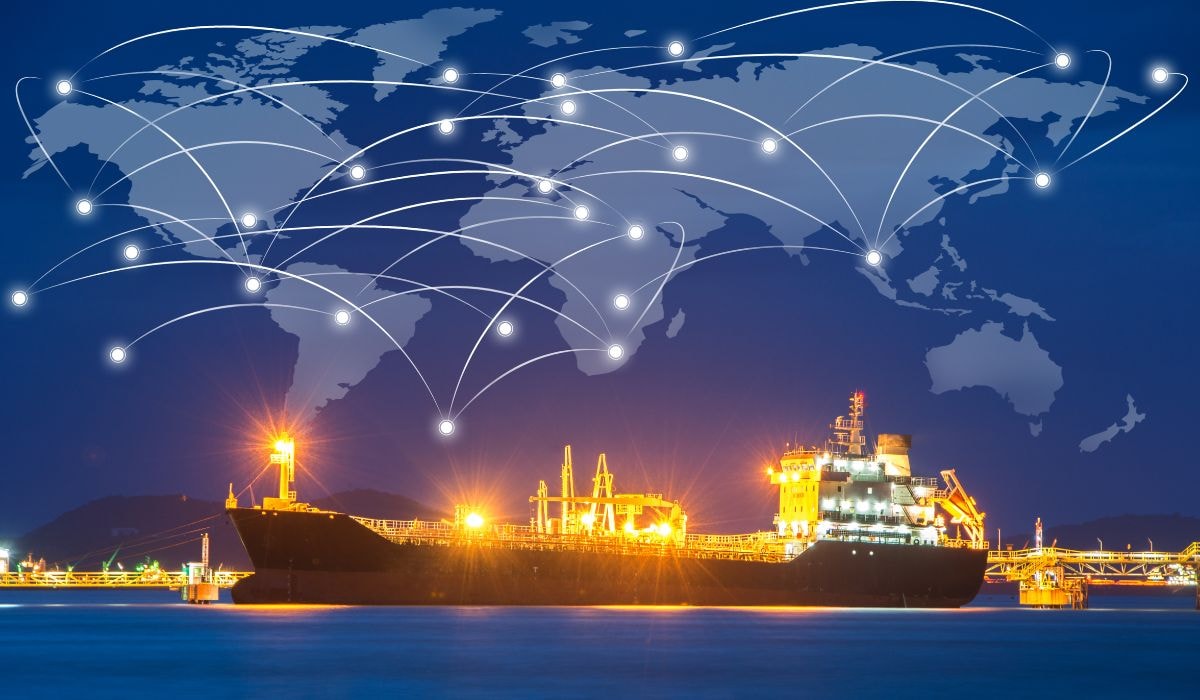
Advanced density maps displayed on a dedicated app or website by tracking services get real-time updates depending on the vessel’s movements. All users will be able to track their choice of ship, whether alongside or waiting for berth and sailing, no matter what time of day it is and wherever it is in the world.
What Constitutes Effective Ship Tracking?
Ship trackers are critical resources for everyone in the maritime industry. To get the most out of these tools, it’s imperative to clearly understand how to interpret the data and filter out irrelevant information.
For starters, you need to be familiar with the different forms of data that a ship tracker can provide. These include vessel destination, positions, and speed. Through careful analysis of these inputs, users can gain helpful insights into the vessel’s movements, pinpoint possible congestion and delays, or reach educated decisions regarding logistics planning.
Secondly, users must also use features like sorting map views, sorting options, and search filters to filter irrelevant data and focus on particular data appropriate for their needs.
Lastly, setting up notifications or alerts can guarantee that users will be notified immediately of any crucial developments or changes. By adhering to these tips and taking advantage of ship trackers, users can improve their situational awareness, make more educated decisions, and optimize their operations in general.
Limitations of Existing Ship Tracking Systems
Despite their relatively quick spread, ship tracking systems still need to improve in optimal function due to several constraints. These include:
- Several vessels switch off AIS equipment or invalidly transmit identification numbers to dodge the restrictions several countries put in place, even if they still appear on radars.
- Cyber attacks may occur, as several hackers can send fake vessel positions or manipulate numbers to forecast trade patterns and bet on commodity or freight rates.
- Distance limits
- Improperly configured devices
- Erroneous data entry if manually typed
- Latency as a result of radio interference
- Issues with satellite transmission
- Weather conditions
These factors may result in incomplete or inaccurate data collisions and other accidents.
Primary Purposes of Real-Time Ship Tracking
Even though regulations by the IMO aren’t intended to swap navigation systems for AIS, it completes conventional radar installations to offer advanced and additional value to different stakeholders.
The real-time monitoring of ships allows for improved safety levels. If crucial events occur, all involved parties receive notifications immediately to help them react as fast as possible.
Rescue teams and coast guards can respond instantly to the emergency because they know the vessel’s location in distress. If the ship has been reported missing, on the other hand, they will at least have a good starting point for their search.
Authorities also use the data gathered to ensure that each ship follows global regulations and takes appropriate measures if a code violation is recorded or an interfering ship is detected.
According to the AIS network’s data, supply chain experts can estimate the number of available ships for loading cargo or forecast trade without waiting for the official figures to be released.
Data acquired by a ship tracker can also help improve decision-making. Thanks to the comprehensive overview of every vessel’s voyage, its manager or owner can evaluate its performance and take the necessary actions to provide operational excellence.
Governments will also become more aware of commercial cargo and vessels in all country ports, including transshipments, imports, and exports.
A ship tracker’s real-time tracking can also contribute to efficiently managing operations. Teams based on the shore can give a ballpark figure of the arrival and departure times of every vessel from and to a certain port and, because of that, plan the discharging and loading operations.
The way the activities are done ensures that the operations stay within the designated port team, and intensive preparation enhances the safety and productivity of the quay’s terminal staff and the smooth flow of traffic outside and inside the port terminal.
Crew members can also pick the best route and speed to ensure that the ship gets to its destination in a timely, cost-efficient, and safe way. They can also have safe navigation in the open sea and, most notably, in busy harbors and waterways.
Awareness of their precise location and the other ship’s position can help avoid collisions while working around harsh conditions with significant vessel traffic and other hazards and risks.
New Innovations and Technologies in Ship Tracking
The internet age has revolutionized how people do things, and maritime and ship tracking are no exception. As more industries take advantage of the internet’s power, shipping companies ensure that they keep up with these changes. One newly adopted technology is 5G technology for connectivity.
This connectivity allows continuous and smooth communication among the vessels. Hydration, pressure, and temperature can also be effectively measured.
GPS technology integrates geofencing and geolocation capabilities to send and set virtual boundaries. This improves security and wards off unauthorized access or even theft.
Processing maritime data improved machine learning and artificial intelligence algorithms, allowing easier identification of patterns and prediction of possible disruptions, problems, or delays with the shipment. Ship tracker systems combined with big data analytics made a significant difference.
Wrapping It Up
Even with several constraints and limitations that prevent them from having a broader reach, existing ship tracking systems have significantly changed how the maritime industry functions and operates.
With the help of broadband internet, various companies are now improving connectivity across every channel to make the most of this technology and its fullest potential. As the role being played by the Internet of Things becomes more significant by the day, researchers also continue to develop better monitoring technologies with reduced exposure to attackers.
The moment the key limitations are eliminated, the monitoring systems of today’s vessels will be able to provide the high-value data and reliability that the marine travel sector requires to address some of the most crucial problems of the modern era.
Most Recent Posts
Discover more articles from our blog.