



Reefer Container: What It Is and How It Works
A reefer container is a refrigerated ISO shipping container with a built-in cooling unit that maintains a precise temperature range throughout a sea voyage. It is the backbone of cold chain logistics, keeping perishable goods, pharmaceuticals, and other temperature-sensitive cargo at safe conditions from the moment they leave the warehouse to the moment they arrive at port.
If you are shipping frozen fish, fresh avocados, or vaccines across oceans, you are almost certainly using reefer container shipping. Understanding how these units work, what they carry, and why tracking them matters can save you from costly surprises at the port.
What Is a Reefer Container?
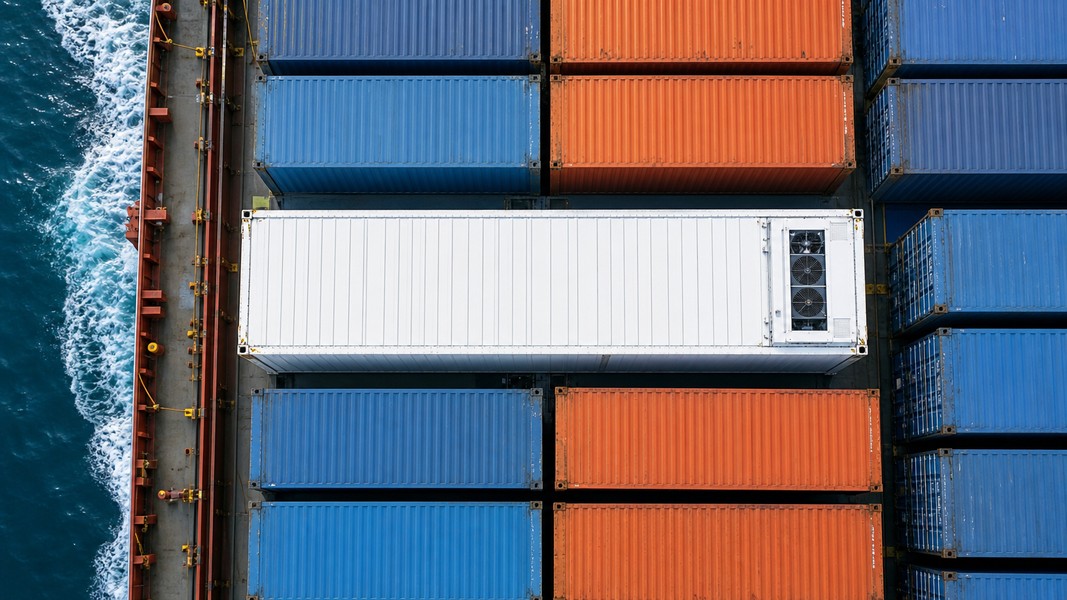
A reefer container is a standard ISO intermodal container fitted with an integrated refrigeration system. The cooling machinery occupies one end of the unit, leaving the interior free for cargo. Unlike portable coolers or insulated boxes, the reefer unit actively generates cold air to hold a set temperature.
The term "reefer" is shorthand for "refrigerated", used across the shipping industry to describe any refrigerated container regardless of whether it is chilling, freezing, or gently warming the cargo inside.
Reefers come in the same dimensions as regular dry containers: the 20-foot unit and the 40-foot unit are the two standard sizes. A 40-foot high-cube reefer is the most common choice for large commercial shipments because it maximizes cargo volume while staying within standard port equipment limits.
How Reefer Containers Work
The refrigeration unit inside a reefer container works much like a household refrigerator, only at industrial scale. A compressor circulates refrigerant through an evaporator coil inside the cargo space and a condenser coil on the outside. The evaporator absorbs heat from inside the container and exhausts it outside, lowering the interior temperature to the target setpoint.
Air circulation is critical. The floor of a reefer container has a T-bar profile that creates channels beneath the cargo pallets. Cold air is pushed down through these channels, rises through the cargo, and returns to the evaporator at the top. This constant circulation prevents hot spots and ensures uniform temperature distribution.
The system needs power to run. On a container ship, reefer units plug into the vessel's electrical grid through dedicated reefer sockets distributed across the cargo hold and deck. On land, when a container moves by truck or sits at a terminal, a diesel-powered generator set (called a "genset") attaches to the container to keep the refrigeration running.
Types of Reefer Containers
Not all reefer containers are identical. Knowing the variations helps you choose the right unit for your cargo.
Integral reefers are the modern standard. The refrigeration system is built directly into the container. They can operate standalone with a genset and are compatible with the reefer plug systems on most modern container ships. Integral reefers give shippers the most flexibility and the tightest temperature control.
Porthole reefers are an older design. Instead of an internal unit, they have two circular openings (portholes) in one end through which the ship's central cooling system circulates cold air. They cannot operate independently on land and are disappearing from commercial use as the global fleet modernizes.
Modified atmosphere (MA) containers are a specialized variant that controls both temperature and the gas composition inside. By adjusting oxygen and carbon dioxide levels, MA containers slow down the ripening of fresh produce like berries and bananas, extending shelf life significantly beyond what temperature control alone can achieve.
What Gets Shipped in Reefer Containers
Reefer container shipping covers a wide range of commodities. Fresh produce is the largest single category, with bananas, avocados, grapes, citrus fruit, and berries moving in enormous volumes between South America, Southeast Asia, and consuming markets in Europe and North America.
Frozen protein is the next major segment: beef, pork, poultry, fish, and seafood all depend on deep-freeze temperatures of around -18°C to stay safe during multi-week voyages. Dairy products, including butter, cheese, and powdered milk, fall into the chilled category and need temperatures between 0°C and 5°C.
Pharmaceuticals represent one of the fastest-growing reefer segments. Vaccines, biologics, insulin, and other temperature-sensitive medicines must stay within narrow ranges, often 2°C to 8°C, with zero tolerance for excursions. A single temperature breach can destroy an entire shipment worth millions.
Beyond food and pharmaceuticals, reefer containers also carry flowers and live plants, certain chemicals and resins, and even works of art or film reels that degrade in heat. If it spoils, wilts, or degrades at ambient temperature, a reefer is the answer.
Reefer vs Standard Container: Key Differences
A standard dry container is a steel box with no temperature control. It is cheaper to ship and simpler to operate. A reefer container adds cost at every stage: the unit itself is more expensive to manufacture, charter rates are higher, and the shipper pays for the power consumed during the voyage.
The key differences come down to cargo suitability, monitoring requirements, and documentation. Reefer shipments require a temperature setpoint to be specified on the bill of lading, along with ventilation settings, humidity controls, and sometimes atmosphere modification parameters. Carriers and terminals have obligations to verify the setpoint and maintain power continuity.
If power is lost to a reefer container for too long, the cargo is compromised. This is why reefer plugs on vessels are monitored continuously, and why port terminals have priority procedures for reefer handling when space is tight.
Standard containers can sit on a terminal for days with no consequence. A reefer container on a congested terminal without genset power is a ticking clock for the shipper.
Tracking Reefer Cargo: Why It Matters
Reefer cargo is among the most time-sensitive cargo in international shipping. When a vessel carrying 2,000 pallets of fresh Chilean avocados departs Valparaíso, importers in Rotterdam need to know exactly when it will arrive. Not approximately, but with enough precision to schedule cold-storage trucks, customs clearance, and distribution to supermarkets.
A one-day delay in picking up fresh produce from the port can mean the difference between product that sells at full price and product that goes to waste. For pharmaceutical cold chains, port delays affect distribution schedules downstream and, in critical cases, patient access to medication.
Real-time container tracking tools give reefer shippers the visibility they need. Primo Nautic tracks any vessel in real time using AIS data and generates AI-driven insights that adapt to your tracking purpose. For cargo shippers, the app provides professional, logistics-focused updates: vessel position, speed, estimated arrival, and delay alerts, all framed around the operational decisions you need to make.
Rather than checking a raw AIS feed and doing the ETA calculation yourself, you can see a plain-language update that tells you whether your shipment is on track or running late, and by how much. That kind of visibility is especially valuable for reefer cargo, where timing at the destination is not flexible.
The basics of container tracking apply to reefer shipments as to any other cargo: you track the vessel, not the container directly, using the booking number, bill of lading number, or the vessel name. Primo Nautic lets you search by vessel name and then monitor the entire voyage until arrival.
ETA accuracy is critical for cold chain planning. The app's dual ETA system compares the captain's reported arrival time against an AI-calculated estimate based on current speed and route. If the two diverge significantly, that is an early signal that something has changed: a port call schedule shift, unexpected weather, or a route deviation.
Conclusion
A reefer container is a self-contained refrigerated unit that keeps temperature-sensitive cargo in safe condition from origin to destination. The refrigeration system requires continuous power, careful monitoring, and precise documentation. Fresh produce, frozen protein, pharmaceuticals, and perishables of all kinds move in these units across every major shipping route in the world.
For importers, the ability to track the vessel carrying your reefer cargo is not a luxury. It is the information backbone of cold chain logistics. Knowing when your shipment will arrive lets you coordinate cold storage, plan distribution, and avoid costly port dwell time that can render your cargo unsellable.
Most Recent Posts
Discover more articles from our blog.