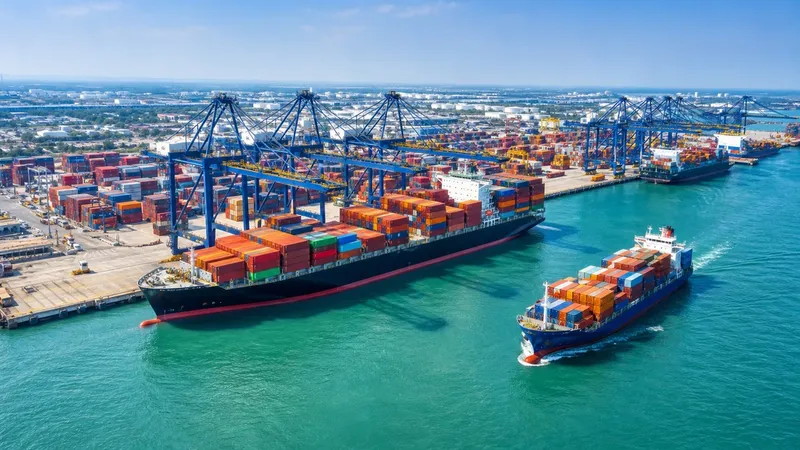
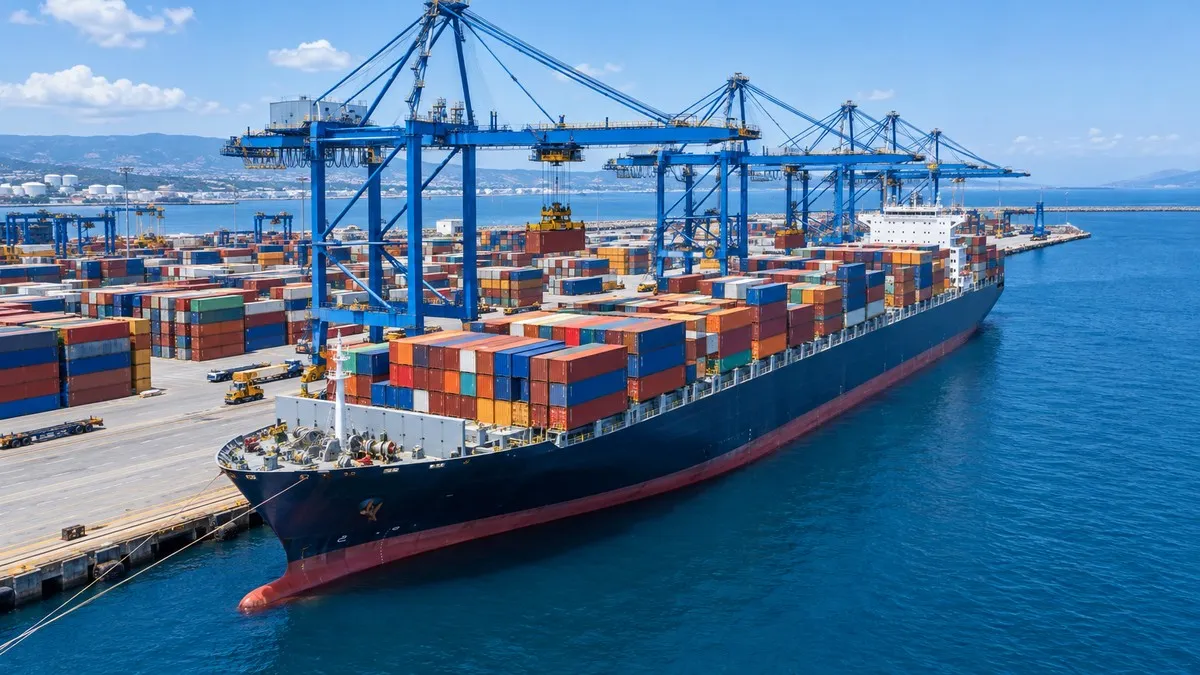
ISF filing is the electronic report US Customs and Border Protection (CBP) requires for ocean cargo headed to the United States. The importer, or a customs broker acting for it, sends 10 data elements about the shipment no later than 24 hours before the cargo is loaded onto the vessel at the foreign port, and the ocean carrier sends 2 more. That is why the rule is called "10+2".
If you import by sea, the ISF is the first customs step you take, and it happens before your goods have left the origin country. A late or wrong filing can bring a $5,000 claim from CBP. This guide covers what the filing contains, who is responsible for it, and how to file it on time, step by step.
What Is ISF Filing and Why It Exists
The Importer Security Filing came from a CBP rule published on November 25, 2008, and importers have had to comply since January 26, 2010. Its purpose is security screening: CBP wants to know who sold the goods, who bought them, where they were made and where they were packed into the container, early enough to flag a risky box before it is even loaded.
The requirement sits in Part 19, section 149 of the federal customs regulations. It applies to cargo arriving by vessel, and the filing has to be in English and sent through a CBP-approved electronic system. There is no paper form to post or fax.
The ISF is not your customs entry. It does not pay duty or release your goods. It is an advance security notice, and the entry and entry summary still come later, when the cargo arrives.
Who Is Responsible for Filing the ISF
The regulation calls this party the ISF Importer: the party causing the goods to arrive in a US port by vessel. For ordinary imports that is the goods' owner, purchaser or consignee, or an agent such as a licensed customs broker. For foreign cargo remaining on board (FROB), cargo that passes through a US port without being imported, the carrier or the non-vessel operating common carrier is the ISF Importer instead.
In practice most importers hand the transmission to their customs broker or freight forwarder. The legal responsibility stays with the ISF Importer, so you still need to know what was sent and when.
Which Shipments Need an ISF
Every non-bulk shipment arriving by sea needs one, and the regulation makes no exception for small ones, so an LCL carton shared with other importers needs its own ISF. Bulk cargo, meaning loose homogeneous cargo stowed in the hold, is exempt. Some break bulk cargo is exempt from the 24-hour timing and must be filed 24 hours before arrival instead.
Air freight and courier parcels fall outside the rule because they do not arrive by vessel. The US Postal Service is also not an ISF Importer.
What You'll Need Before You File
Gather four things before your supplier books the cargo, because the clock starts at loading, not at arrival:
- A customs bond. The ISF Importer must hold a basic importation and entry bond or a single-transaction ISF bond. If you have none, the agent filing for you may post its own bond.
- Your importer of record number and consignee number. These are an IRS number, Employer Identification Number, Social Security Number or a CBP-assigned number.
- Supplier details. Seller, manufacturer or supplier name and address, and where the goods will be packed.
- A tariff classification. The commodity's HTSUS code to at least six digits, which you can work out with a guide to classify your product.
You also need someone with access to CBP's electronic interchange. The regulation requires the filer to have the communication protocol CBP sets, which is why most small importers file through a broker rather than directly.
ISF Filing Requirements: The 10 Data Elements
Each element is reported for every good at the six-digit HTSUS level, at the lowest bill of lading level, which means the house bill when there is one. The manufacturer, country of origin and HTSUS number must be linked to one another line by line.
| # | Element | What it means | Deadline |
|---|---|---|---|
| 1 | Seller | The party selling the goods | 24 hours before loading |
| 2 | Buyer | The party buying the goods | 24 hours before loading |
| 3 | Importer of record number | The IRS, EIN, SSN or CBP number of the importer | 24 hours before loading |
| 4 | Consignee number | The number of the US party the goods are shipped for | 24 hours before loading |
| 5 | Manufacturer or supplier | Who last made, assembled or grew the goods, or who supplies the finished goods | 24 hours before loading |
| 6 | Ship to party | The first party to physically receive the goods after release | 24 hours before loading |
| 7 | Country of origin | Where the goods were made, produced or grown under US rules | 24 hours before loading |
| 8 | Commodity HTSUS number | The tariff code, at least six digits | 24 hours before loading |
| 9 | Container stuffing location | Where the goods were packed into the container | 24 hours before arrival |
| 10 | Consolidator (stuffer) | Who packed the container or arranged the packing | 24 hours before arrival |
How Many HTSUS Digits to Report
The HTSUS number may be given at up to 10 digits, and according to the data element rules it can be reused for your entry only when the importer of record or its licensed broker provides it at 10 digits or more.
The Two Carrier Elements
The "+2" belong to the ocean carrier, not to you. The carrier sends a vessel stow plan, which CBP must receive no later than 48 hours after the ship leaves its last foreign port, and container status messages, which go to CBP within 24 hours of being entered in the carrier's tracking system. You do not file these, but they are why CBP knows exactly which box is on which vessel.
Flexible Elements
Four elements are flexible in content: manufacturer, ship to party, country of origin and HTSUS number. You may send your best available answer, even a range of possible answers, 24 hours before loading, then update it with the precise one. The stuffing location and consolidator are flexible in timing instead, because they are often unknown until the container is packed.
How to File the ISF in 7 Steps
The order below follows a typical full container or LCL shipment from Asia or Europe into a US port.
Step 1: Name the ISF Importer and the Filer
Decide in writing, for each trade lane, who is the ISF Importer and who transmits. If your forwarder at origin collects the data and a US broker sends it, both need to know the cutoff. If each party assumes the other one has filed, nobody files.
Step 2: Put a Bond in Place
Without an active bond the filing has nothing behind it. A frequent importer usually holds a continuous bond that covers all entries and filings for a year; an occasional importer can buy a single-transaction ISF bond. According to CBP's ISF FAQ, the bond amount and any claim are not based on the value of the cargo.
Step 3: Collect the Data at Booking
Ask your supplier for seller, manufacturer, origin and HTSUS details on the same day the booking is confirmed, not when the container is gated in. Match the supplier's product description to the classification you plan to use for entry, so the code on the ISF and the code on the entry agree.
Step 4: Transmit 24 Hours Before Loading
Elements 1 to 8 must reach CBP no later than 24 hours before the cargo is loaded at the foreign port. The loading date, not the sailing date, is the reference.
Step 5: Check the Acceptance
The system returns a confirmation for each transmission. Check that it was accepted and that the bill of lading numbers on the ISF match the house and master bills the carrier will report. Catch a mismatch now, while the cargo is still at origin.
Step 6: Update Before Arrival
Send the container stuffing location and consolidator as early as possible, and no later than 24 hours before the vessel arrives at the US port. Replace any flexible answers with the final ones in the same window. Knowing the real arrival time matters here: a vessel that makes up time at sea shortens your update window.
Step 7: Withdraw if the Goods Are Not Coming
If the cargo is cancelled, rolled to another destination or no longer meant for the United States, the filer must withdraw the ISF and give CBP the reason. A filing left open for goods that never arrive is a violation in its own right.
ISF Filing Deadline at a Glance
There are three clocks, and they run from two different events. The first eight elements are due 24 hours before loading abroad. The stow plan is the carrier's, due 48 hours after the vessel departs its last foreign port. The stuffing location, consolidator and any flexible updates are due 24 hours before arrival in the US.
When the foreign port is less than 24 hours' sailing from the nearest US port, the arrival deadline moves forward to the moment of loading. On a short sea route, everything is effectively due at loading.
ISF Filing Penalty and How Claims Are Mitigated
CBP enforces the rule through liquidated damages against your bond. The CBP mitigation guidelines allow a claim of $5,000 per late ISF and $5,000 per inaccurate ISF, and an inaccurate update can draw the same claim. The carrier faces its own claims: $50,000 per vessel arrival for a missing or bad stow plan, and $5,000 per container status message violation up to $100,000 per arrival.
A claim is rarely paid in full. For a first violation, CBP may cancel a late or inaccurate ISF claim on payment of between $1,000 and $2,000, depending on mitigating and aggravating factors. For later violations the payment is not less than $2,500. No relief is granted if CBP finds the violation compromised law enforcement goals.
Two details surprise importers. Liquidated damages for failing to file cannot be assessed when no bond is in place, so CBP handles that case under separate enforcement instructions. And CBP's FAQ notes that the statute of limitations for liquidated damages is six years from the breach, so an old error can still come back.
Tips for Better Results
Build the ISF into your purchase order. When the supplier knows the filing data is due at booking, it stops being a last-minute scramble at the port.
Track the vessel, not just the paperwork. Your arrival deadline moves with the ship, and the published schedule can change after you file. Primo Nautic lets you search a vessel by name, MMSI or IMO number and follow its live AIS position, so you can see when your cargo actually sailed and where it is now.
Watch for delays that change your window. With the Cargo Shipment tracking purpose, Primo Nautic compares the captain's reported ETA with its own route-based estimate and sends delay and arrival notifications, which tells you when the 24-hours-before-arrival cutoff is really coming.
Keep one ISF per house bill. If a forwarder consolidates your goods with other shippers' goods, the filing still follows your own house bill of lading, and the stuffing location is wherever your cartons went into that shared box.
Troubleshooting Common Issues
The supplier will not share the manufacturer. A trading company may not want to name its factory. The regulation accepts the party supplying the finished goods in the export country when the maker is not known, so ask for that name and address at minimum.
The goods were sold on the water. CBP's FAQ says the ISF must be updated when a shipment is sold in transit. The new buyer and importer details replace the old ones before arrival.
The HTSUS code changed after filing. Update the ISF as soon as the code is final. If the classification is still being settled when the cargo moves on to the customs clearance process, a mismatch between the ISF and the entry is what draws attention.
The vessel was swapped or the cargo rolled. A rolled container gets a new loading date and often a new vessel. Check whether your broker's filing still matches the bill of lading the carrier will report, and update it if not.
Conclusion
ISF filing is the security report CBP needs for almost every sea shipment into the United States, and it is due before your goods even leave port. Ten elements come from you or your broker, two from the carrier.
The first eight are due 24 hours before loading abroad; the stuffing location, consolidator and final answers to flexible elements are due 24 hours before arrival. A late or inaccurate filing can bring a $5,000 claim, usually mitigated to between $1,000 and $2,000 on a first violation and not less than $2,500 after that.
Settle who files before the booking, keep a bond active, collect the data from your supplier at the start, and update the filing as the vessel moves. Treated that way, the ISF becomes routine paperwork rather than a penalty risk.