



Transshipment: What It Means and How Cargo Changes Ships
Transshipment is the transfer of cargo from one vessel to another at an intermediate port before it continues to its final destination. Your container leaves port A, is unloaded at hub port C, and then sails on a different ship to port B.
If your bill of lading lists a port you never expected, or your tracking page shows a new vessel name halfway through the voyage, transshipment is almost always the reason. It is one of the most common ways ocean freight moves, and it changes how long a shipment takes, where delays can happen and what you should watch while your goods are at sea.
This guide covers the meaning of transshipment, how hub ports work, how it compares with direct shipping and transloading, why customs authorities care about it, and how to keep track of a container that changes ships along the way.
What Is Transshipment in Shipping?
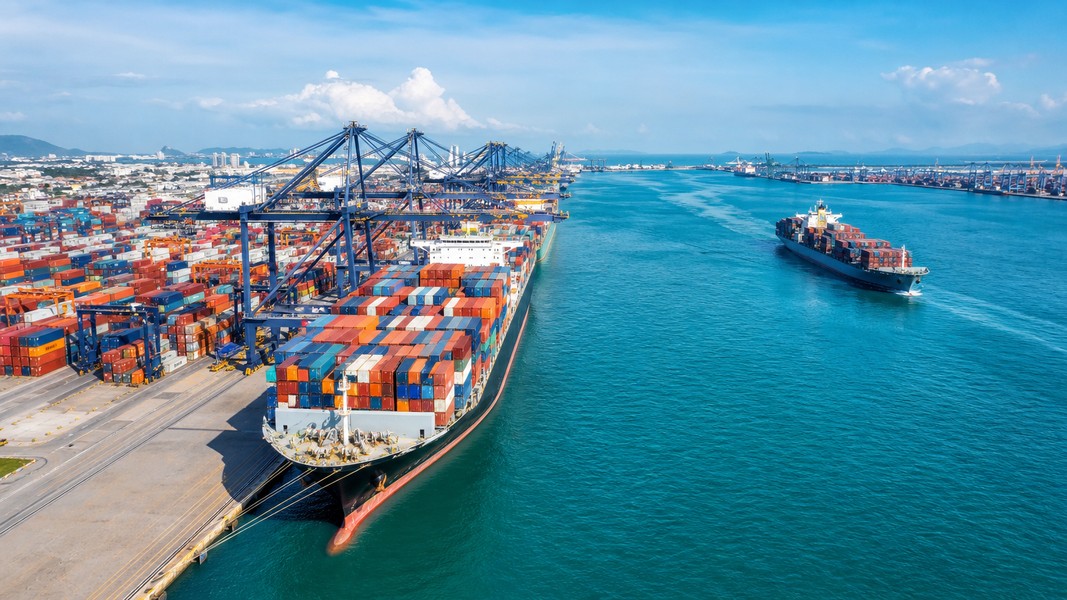
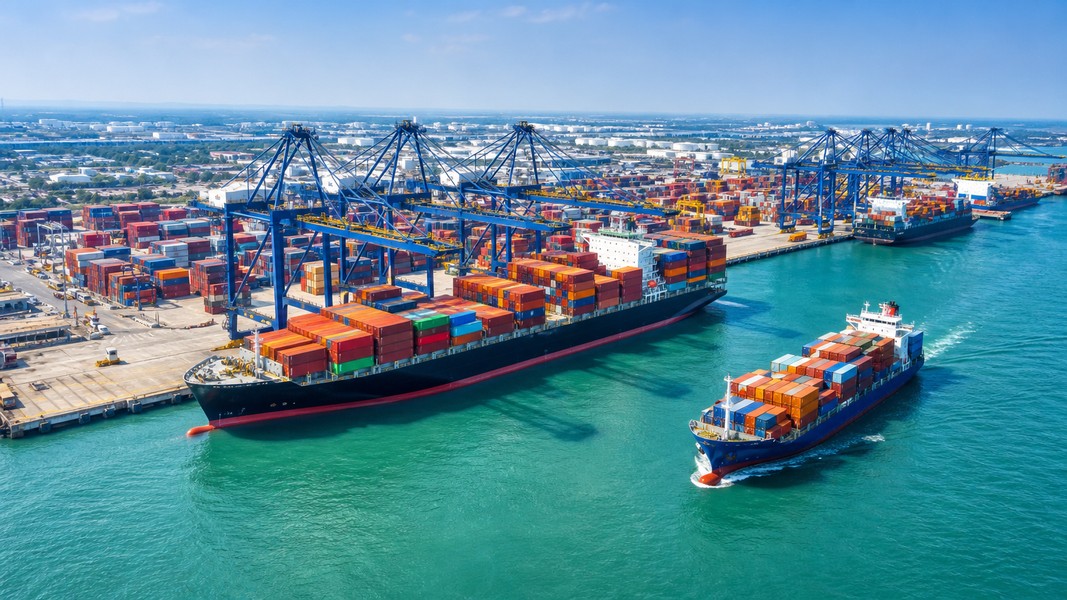
In container shipping, transshipment means a container is discharged from one ship, stored briefly in the terminal stack, and loaded onto another ship that carries it onward. The goods do not enter the country where the hub port sits. They stay under the carrier's control and pass through as cargo in transit.
MSC gives a simple example on its own transshipment explainer: cargo moving from Fos-sur-Mer in France to New York can travel via Valencia, where it switches vessels. The shipper books one journey, but the container rides two ships.
The key point is that transshipment is planned, not a detour. Carriers design their networks around it, and many trade lanes have no direct service at all.
Transshipment Meaning in Plain Terms
The word itself is a clue: "trans" means across, so the cargo is shipped across an intermediate point. You will also see it spelled transhipment or trans-shipment. All three spellings describe the same process, and all three appear on carrier schedules and shipping documents.
How Transshipment Works: The Hub and Spoke Model
Most transshipment follows a hub and spoke network. Large, well placed ports act as hubs, and smaller regional ports act as spokes that feed them.
Hapag-Lloyd describes the hub and spoke process in three stages:
- Collection at spoke ports. Containers are loaded at smaller ports and carried to the hub by feeder vessels, which often call at several spoke ports on one loop.
- Sorting at the hub. The hub receives cargo from many spokes, unloads it and groups containers by final destination.
- Distribution. Containers are loaded onto large mainline ships for long ocean crossings, or onto other feeders for regional ports.
Feeder vessels are the link that makes this work. They are smaller ships running short routes, and they connect ports that could never fill a large container ship on their own.
The result is that one mega vessel can serve dozens of ports without calling at any of them. That is why transshipment has grown alongside ever larger container ships: the bigger the ship, the fewer ports it can profitably visit.
Why Carriers Rely on Transshipment
Consolidation is the main reason. A carrier can gather small volumes from many ports into one large sailing, which fills ships more efficiently and lowers the cost per container. MSC notes that transshipment routes can be cheaper than direct services and can also be more efficient overall, because one large vessel replaces several smaller direct sailings.
It also widens the map. A port pair with too little cargo for its own direct service can still be connected through a hub, which is how smaller economies stay linked to global trade.
Transshipment Ports: Where Containers Change Ships
A transshipment port earns its living from cargo that never leaves the terminal. Location matters most: the best hubs sit on or near the main east west shipping lanes, so mainline ships lose little time calling there.
Singapore is the clearest example. The Maritime and Port Authority of Singapore reported that container throughput passed 41.12 million TEU in 2024 and that around 90% of that volume was for transshipment to other destinations, making it the largest container transshipment hub in the world. In 2025 the port handled 44.66 million TEU, a new record and an increase of 8.6% on the previous year.
Other major hubs include Tanjung Pelepas in Malaysia and Colombo in Sri Lanka in Asia, and Tanger Med and Valencia in the Mediterranean. According to Alphaliner figures reported by Global Maritime Hub, throughput at the world's leading container ports rose an estimated 5.2% in 2025, and transshipment gateways were the main beneficiaries as carriers rerouted around the Red Sea and cargo shifted in response to US tariffs.
Disruption tends to push more cargo through hubs, not less. When a route closes or schedules break down, carriers use hub ports to reshuffle containers onto whatever services are still running.
If you want to see how these hubs connect to the wider network, our guide to world shipping lanes maps the main routes that feed them.
Transshipment vs Direct Shipment
A direct shipment stays on one vessel from the port of loading to the port of discharge. A transshipment uses at least two vessels with a stop at a hub in between.
The trade off is usually cost against time. MSC states that non direct routes may offer lower transportation costs but in most cases result in longer transit times. The extra time comes from the wait at the hub: a container can sit in the stack for days until its connecting vessel arrives.
Direct services suit cargo where speed or predictability matters most, such as seasonal retail stock or perishable goods. Transshipment routes suit cargo where cost matters more than a few extra days, and they are often the only option for smaller ports.
The paperwork is normally the same. MSC points out that documents for transshipment and direct shipping are usually identical, although some hub ports and destination countries require additional manifests or notifications.
Transshipment vs Transloading
The two terms are easy to mix up. Transshipment usually means moving cargo between two ships of the same kind at a port. Transloading means changing the mode of transport, for example moving goods from a ship or rail car onto trucks.
Transloading also often involves opening the container and moving the goods themselves into another container or trailer. In transshipment the sealed container simply moves from one ship to another, and the cargo inside is never touched.
Transshipment and Customs: Why Tariffs Put It in the News
In customs language, transshipment has a second, less innocent meaning: routing goods through a third country to disguise where they were made and pay a lower duty.
That practice became a headline in 2025. Executive Order 14326, published in the Federal Register in August 2025, states that goods determined by US Customs and Border Protection to have been transshipped to evade applicable duties face an additional duty of 40 percent instead of the rate for their country of origin. The order also rules out mitigation or remission of those penalties.
It is worth keeping the two meanings apart. A container that changes ships in Singapore on its way from Vietnam to Los Angeles is ordinary logistics, and its country of origin does not change. The penalty targets goods whose origin was misrepresented, not the normal hub and spoke movement of cargo.
For importers, the practical lesson is to keep origin documents clean and consistent, especially when a route involves a hub in a third country.
Delays and Risks at the Transshipment Hub
Every extra port call is another point where a schedule can slip. Three situations cause most transshipment delays:
- Missed connections. If the first vessel arrives late, the container can miss its connecting ship and wait for the next sailing on that service, which may be a week later.
- Congestion at the hub. When a hub is crowded, containers wait longer in the yard and vessels wait longer at anchor.
- Blank sailings. When a carrier cancels a scheduled sailing, containers already waiting at the hub are moved to a later vessel.
These are not rare events in 2026. Kuehne+Nagel reported in early September that China port congestion was forcing carrier schedule changes as vessel delays mounted, and Drewry's container capacity data showed eight blank sailings announced for a single week in mid September.
Delays at the hub also carry costs at the destination. A container that arrives later than planned can collide with free time limits, so it helps to understand how demurrage charges build up once a box sits too long at the terminal.
How to Track Cargo Through a Transshipment Port
Tracking a transshipped container is harder than tracking a direct one, because the vessel you need to watch changes halfway through the voyage.
Start with your booking or bill of lading. It usually names the first vessel and voyage, and it may list the transshipment port. The carrier's own tracking page will show when the container is discharged at the hub and, later, which vessel it has been loaded onto.
Once you know the connecting vessel's name, IMO number or MMSI number, you can follow the ship itself on an AIS tracker. This is where the real waiting time becomes visible: you can see whether the connecting ship is still on its way to the hub, alongside at the terminal, or already sailing toward your destination.
Primo Nautic is built for exactly this step. You can search the connecting vessel by name, MMSI or IMO number, choose the cargo shipment purpose, and get precise updates on its position, speed and arrival instead of a stream of raw AIS data.
Watching the ETA on the Second Leg
The ETA deserves the most attention. Primo Nautic shows the captain's reported ETA next to an AI calculated route ETA with a confidence score, so a gap between the two is an early sign that the second leg is running late. Delay and arrival notifications mean you do not have to keep checking the map while the container waits at the hub.
A useful habit is to re-check the vessel name after the hub call. Carriers sometimes move containers to a different ship than the one originally planned, and tracking the old vessel will give you a confident but wrong arrival date.
Key Takeaways
Transshipment is the planned transfer of cargo between ships at a hub port, and it underpins much of global container trade. Hubs like Singapore, where around nine in ten containers are in transit to somewhere else, let large ships connect many smaller ports through feeder services.
It usually lowers the cost of moving cargo and often adds transit time, because containers wait at the hub for their connecting vessel. Missed connections, congestion and blank sailings are the main sources of delay.
In customs terms, the same word also describes routing goods through a third country to evade duties, which the United States now penalises with an additional 40 percent duty. Ordinary hub and spoke shipping does not change a product's origin.
When your cargo is transshipped, the most useful thing you can do is identify the connecting vessel as early as possible and follow that ship, not the one that first carried your container.
Most Recent Posts
Discover more articles from our blog.