




Maritime Safety: Measures, Protocols & Tips for Seafarers
Maritime safety is the framework of international regulations, onboard procedures, and personal practices that protect seafarers, passengers, and vessels from injury, accident, and loss at sea. The International Maritime Organization (IMO) mandates safety standards through conventions like SOLAS and the ISM Code — but regulations alone don't keep people safe. Knowing what those rules actually require and how to apply them on deck does.
This guide covers the core maritime safety measures, protocols, and practical tips that every seafarer working on commercial vessels should understand — from fire suppression requirements under SOLAS Chapter II-2 to MOB recovery procedures and enclosed space protocols.
What Maritime Safety Covers
Maritime safety operates across three interconnected areas: structural safety (the ship itself meets design standards), operational safety (procedures and systems work as required), and personal safety (seafarers take the right precautions for their specific duties).
Under the ISM Code (International Safety Management Code), every vessel operating internationally must have a Safety Management System (SMS) — a documented set of procedures covering emergency response, equipment checks, drill schedules, and incident reporting. The SMS is the backbone of maritime safety management on any commercial ship.
The following measures and protocols are what that system looks like in practice.
Maritime Safety Measures Under SOLAS
Fire Safety Systems
SOLAS Chapter II-2 mandates fire safety through 23 regulations covering structural boundaries, detection, suppression, escape routes, and crew training.
Key structural requirements include A-class fire divisions: steel bulkheads that prevent flame passage and limit temperature rise on the unexposed side to an average of less than 140°C for 60 minutes. Engine rooms, cargo holds, and accommodation boundaries must meet specific A-class ratings (A-0, A-30, A-60) depending on the risk level.
For suppression, SOLAS and the FSS Code require:
- Fixed CO2 or foam systems in machinery spaces, with remote release mechanisms and pre-discharge alarms
- Automatic sprinklers in accommodation and service areas
- Local wet chemical systems in galleys
- Pressure water-spray systems in Ro-Ro vehicle spaces, with drainage and manual activation capability
As of 1 January 2026, SOLAS amendments (IMO Resolution MSC.550(108)) banned PFOS-containing foam agents — ships must switch to compliant alternatives by their first survey after that date.
Life-Saving Appliances
SOLAS requires lifeboats, liferafts, and man-overboard (MOB) recovery equipment on all vessels. Requirements are specific: passenger ships must have sufficient lifeboat capacity for all persons on both sides, with one on each side being a rescue boat.
The specific MOB recovery gear — including LifeSling and similar systems — must be deployed and practiced during drills. Newport Bermuda Race requirements define a full MOB recovery sequence: immediate response, maneuvering, visual contact, and hoisting. The same logic applies on commercial vessels: drills must simulate the full sequence, not just the initial alarm.
Navigation Safety
2026 SOLAS amendments additionally mandate roll-motion monitoring via electronic inclinometer or equivalent on new ships — addressing a known factor in capsizing casualties and improving situational awareness for officers on the bridge.
Maritime Safety Protocols Every Seafarer Must Follow
Enclosed Space Entry
Enclosed space accidents — often fatal — are among the most preventable incidents at sea. SOLAS Regulation XI-1/7 mandates a documented permit-to-work system before any entry into enclosed spaces.
The protocol requires:
- Atmospheric testing for oxygen levels (should be 20.8–21%), flammable gases, and toxic substances (per SDS, IMDG, IMSBC, IBC, or IGC codes depending on cargo)
- A signed enclosed space entry permit
- Continuous ventilation during entry
- A standby person positioned at the entrance throughout
- Emergency retrieval equipment ready before entry begins
Gas meters must be calibrated and verified before use. Rushing this protocol is one of the most common causes of fatal enclosed space accidents — the rescuer entering without gas checks often becomes the second victim.
Man Overboard (MOB) Response
MOB response must be drilled, not just planned. The four-phase sequence that effective drills practice:
- Immediate response — throw a lifebuoy, post a lookout, maintain visual contact
- Maneuvering — execute the correct recovery maneuver for sea state and wind conditions
- Contact — approach the casualty safely without causing further injury
- Hoisting — use appropriate recovery gear; never haul a casualty over the guardrail without proper equipment
Officers on watch must know which recovery maneuver to use: the Williamson Turn for good visibility (man overboard discovered late), or the direct-return maneuver for immediate response in daylight.
Safety Drills and Musters
SOLAS Chapter III requires:
- Abandon ship and fire drills at least monthly (for vessels on voyages exceeding 24 hours)
- All crew to participate in at least one abandon ship and one fire drill in any calendar month
- Muster lists posted at key locations showing each crew member's emergency station
Drills must be documented in the ship's official logbook. Treating drills as formalities — rushing through to completion — defeats their purpose. The drill is when mistakes are cheap; real emergencies are when they cost lives.
Personal Safety on Board Ship
PPE Requirements
Personal protective equipment is mandatory, not optional. The minimum PPE by work type:
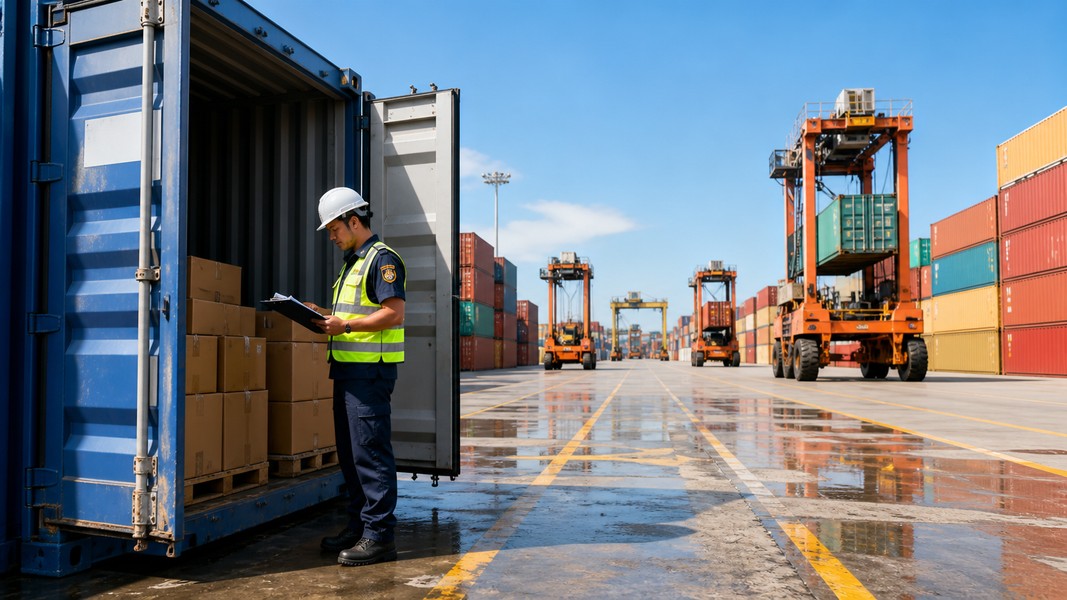
- Deck operations: Safety helmet, safety boots with steel toe caps, high-visibility vest, gloves
- Engine room: Hearing protection (noise regularly exceeds 85 dB), heat-resistant gloves, safety glasses
- Enclosed spaces: Full gas monitoring equipment plus standby person outside
- Working at height: Full body harness with double lanyard, verified anchor points
- Chemical handling: Appropriate gloves, goggles, and respiratory protection per the Safety Data Sheet
PPE is only effective when it fits correctly and is inspected before each use. A cracked helmet or a harness with a worn lanyard provides no protection at the moment it matters.
Movement and Situational Awareness
The mantra "one hand for yourself, one hand for the ship" applies whenever moving through the vessel in rough weather. All watertight doors, hatches, and ladders should be used with both awareness and grip.
Specific risks to watch for:
- Open hatches on deck and in accommodation areas
- Slippery surfaces after rain, spray, or spills
- Moving loads during cargo operations — stay clear of the swing radius
- Unsecured cargo containers during heavy weather
Report unsafe conditions immediately to the safety officer or duty officer. Crew members who report hazards protect everyone; those who ignore them create accident statistics.
Tool and Equipment Safety
Portable power tools must be checked before each use. Safety guards must be fitted and confirmed in place before work begins. Live wires, unsecured equipment, and improper tool storage are among the most common causes of shipboard injuries.
The rule is simple: if a tool looks wrong or feels wrong, tag it out and report it. No job on a ship is worth completing with faulty equipment.
Maritime Safety Examples: What Goes Wrong
Vehicle deck fires on Ro-Ro vessels prompted the 2026 SOLAS amendments on detection systems. Electric vehicle fires in car decks are particularly difficult to suppress with standard equipment. The lesson: passive fire detection (smoke and heat sensors) must be verified and tested — not assumed to be functioning because no alarm has triggered recently.
Enclosed space fatalities follow a predictable pattern: seafarer enters to investigate a smell or retrieve equipment, collapses due to oxygen depletion or toxic gas, and a rescuer enters without checking the atmosphere and becomes a second victim. Fully half of enclosed space fatalities are rescuers. The protocol exists because intuition fails in an emergency.
GPS spoofing has affected vessels in the Eastern Mediterranean, Persian Gulf, and waters near North Korea — ships receive false position data that makes them appear in a different location than where they actually are. The ISM Code's 2024–2025 incorporation of cyber risk management (requiring vessels to identify, protect, detect, respond, and recover from cyber threats) addresses this directly. Officers navigating in affected areas should cross-check AIS position against radar, visual bearings, and chart soundings.
Key Maritime Safety Regulations at a Glance
| Regulation | Scope |
|---|---|
| SOLAS Chapter II-2 | Fire safety: structural, detection, suppression, escape |
| SOLAS Chapter III | Life-saving appliances and arrangements |
| SOLAS Reg. XI-1/7 | Enclosed space entry permit requirements |
| ISM Code | Safety Management System (SMS) requirement |
| STCW Convention | Seafarer training, certification, and watchkeeping standards |
| MARPOL | Pollution prevention — chemical and fuel handling relevance to onboard safety |
Understanding these regulations at a practical level — knowing what Chapter II-2 actually requires in your specific space, not just that "fire safety exists" — is what separates a seafarer who can respond effectively from one who cannot.
For a deeper look at the systems seafarers rely on for emergency communication at sea, the guide to how AIS vessel tracking works explains the technology behind ship location data. For fire emergency response specifically, the breakdown of fire extinguisher types and fire classes on ships covers what suppression equipment to use and when.
Staying Safe at Sea
Maritime safety is not a checklist completed once during induction. It is a continuous practice built from understanding what regulations actually require, drilling emergency responses until they are automatic, and maintaining the personal discipline to use PPE and follow protocols even when no one is watching.
The ISM Code requires that safety is managed systematically. SOLAS requires that equipment meets specific standards. But the seafarer who understands why those requirements exist — and what happens when they are skipped — is the one who keeps both themselves and their crew safe.
Most Recent Posts
Discover more articles from our blog.