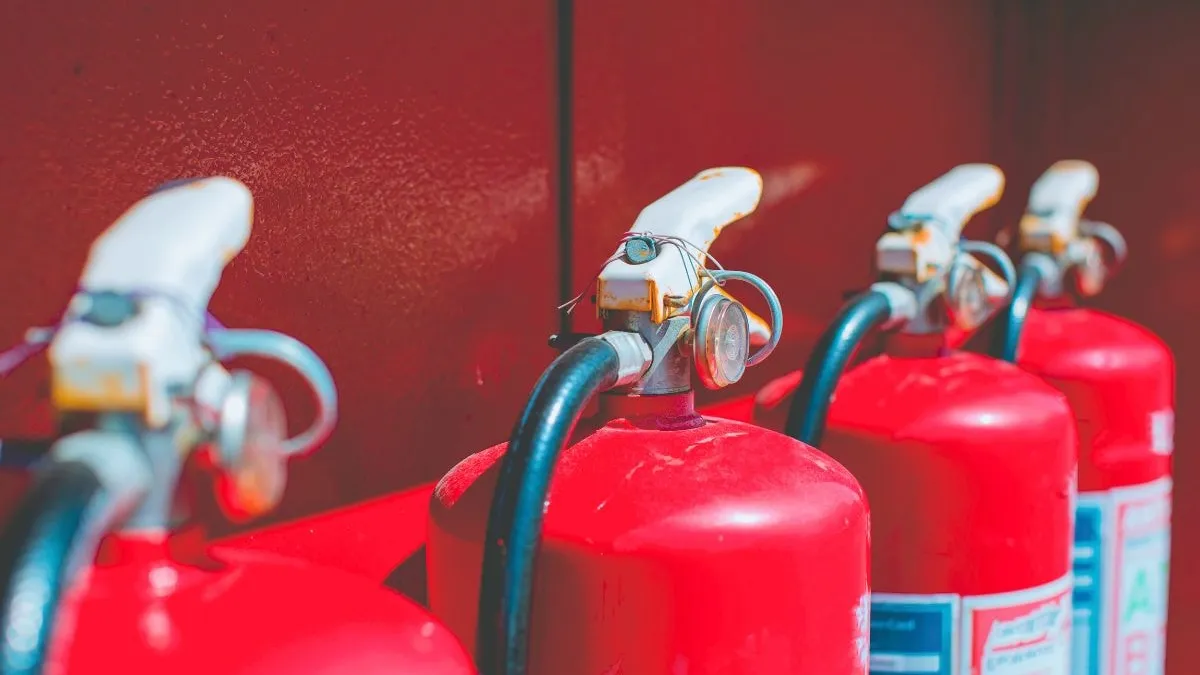
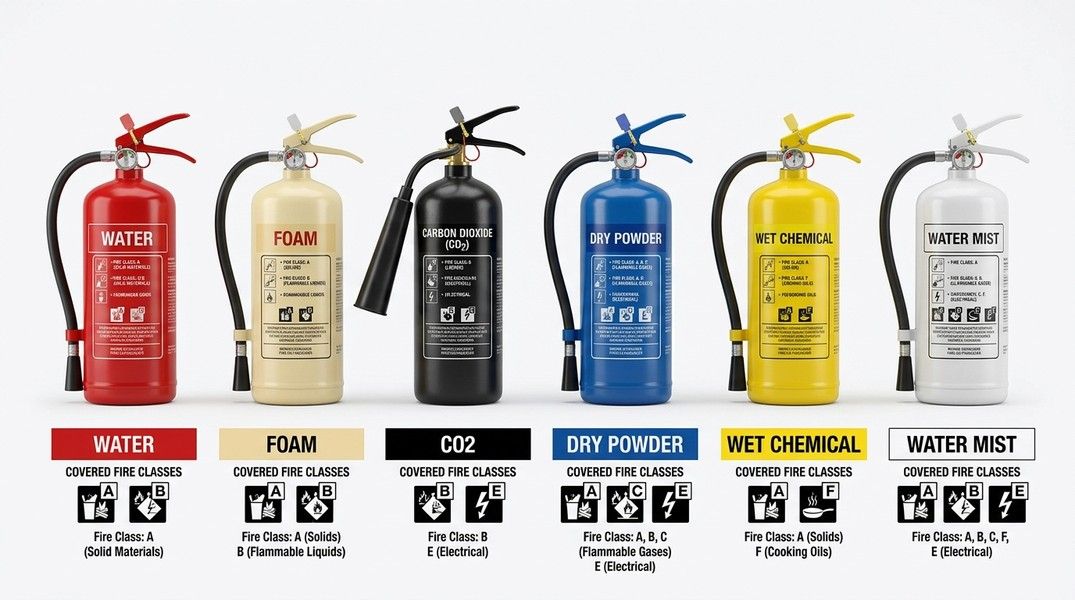
Ships carry six types of fire extinguishers, each designed for specific fire classes: water (Class A), foam (Class A and B), CO2 (Class B and C), dry powder (Class A through D), wet chemical (Class K), and water mist (Class A, B, and C). Choosing the right extinguisher depends on the fire source, whether that is combustible materials, flammable liquids, electrical equipment, or cooking oils.
Fire at sea is uniquely dangerous. Unlike land-based structures, ships offer limited escape routes, and fires can compromise navigation and communication systems within minutes. A well-prepared crew with the right equipment is the difference between a contained incident and a catastrophe. This guide covers every fire extinguisher type found on ships, the fire classes they address, and the latest SOLAS regulation changes effective in 2026.
Unique Challenges of Maritime Environments
Ships, whether traversing open seas or navigating through busy ports, operate in an environment rife with challenges. The combination of combustible materials, intricate machinery, and often unpredictable conditions creates a heightened risk of fires. Unlike land-based structures, ships face the additional challenge of limited escape routes, making the need for immediate and effective firefighting measures critical. The need for specialized maritime firefighting equipment is evident, and ships are equipped with various fire extinguisher types designed to address specific types of fires.
The potential consequences of shipboard fires are severe, ranging from loss of life and property to environmental disasters. The unique challenges of fighting fires at sea necessitate a proactive approach to prevention and control. Fire extinguishers act as the first line of defense, enabling crews to intervene swiftly before a minor incident escalates into a catastrophic event. Suppressing fires in their early stages is paramount in preventing widespread damage and ensuring the safety of all on board.
Modern ships have complex and sensitive systems, including navigation equipment, communication devices, and electrical systems. In the event of a fire, these critical systems are at risk of damage, potentially compromising the vessel's ability to navigate and communicate. Fire extinguishers, particularly those designed for electrical fires (Class C), safeguard these vital shipboard systems. Using non-conductive agents ensures firefighting efforts do not inadvertently worsen the situation by causing electrical shorts or damage.
Fire Classes on Ships: Classifications Explained
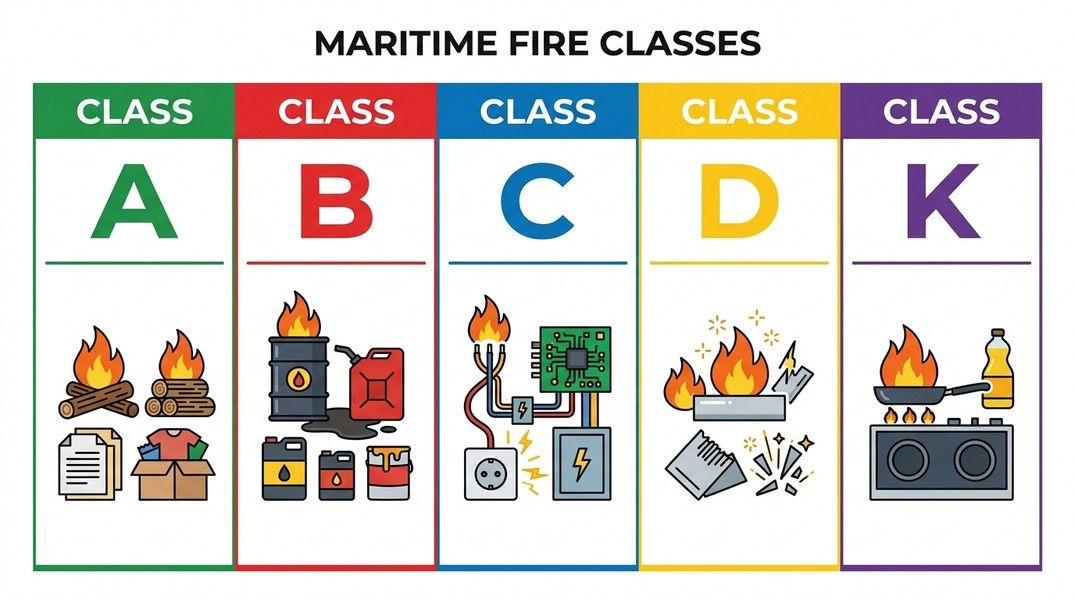
Understanding fire classes is essential before selecting the right extinguisher. Ships use the international fire classification system defined by the IMO and aligned with ISO 3941 standards. There are five fire classes relevant to maritime environments:
Class A: Ordinary Combustibles
Class A fires involve solid combustible materials: wood, paper, fabric, rope, and plastics. These are the most common fires in accommodation areas, store rooms, and on deck. Water and foam extinguishers are the primary agents.
Where on a ship: Crew cabins, offices, storage areas, cargo holds with general cargo.
Class B: Flammable Liquids and Gases
Class B fires involve flammable or combustible liquids and gases: fuel oil, diesel, gasoline, lubricants, and solvents. Engine rooms and fuel storage areas carry the highest Class B risk. Foam and CO2 extinguishers are used; water must never be used on Class B fires as it spreads the burning liquid.
Where on a ship: Engine room, pump rooms, fuel oil tanks, paint lockers, cargo spaces carrying flammable liquids.
Class C: Electrical Equipment
Class C fires originate from live electrical equipment: switchboards, control panels, motors, and generators. CO2 and dry powder extinguishers are safe for Class C fires because they are non-conductive. Water must never be used on live electrical equipment.
Where on a ship: Engine control room, bridge, electrical panels, generator rooms.
Class D: Combustible Metals
Class D fires involve metals that can burn: magnesium, titanium, sodium, and potassium. These are rare on merchant vessels but can occur in certain cargo types or chemical tankers. Dry powder (specifically formulated for metals) is the only effective agent. Standard extinguishers are ineffective and can make Class D fires worse.
Where on a ship: Chemical tankers, vessels carrying metal cargo, certain laboratory spaces.
Class K: Cooking Oils and Fats
Class K (sometimes marked Class F in European standards) covers fires in cooking oils and fats. These fires reach extremely high temperatures and require wet chemical extinguishers that create a cooling, saponifying reaction. Water causes violent splashing and spreads the fire.
Where on a ship: Galley, crew mess, ship's kitchen.
Types of Fire Extinguishers
To ensure proper and suitable emergency response, it is also essential to be familiar with the different fire extinguisher types that every ship at sea should have:
Water Fire Extinguishers (Class A)
Water fire extinguishers are the most common type designed for Class A fires involving ordinary combustibles. They work by cooling the fire and reducing the temperature below the ignition point. However, water extinguishers should never be used on Class B, C, or electrical fires, as water can conduct electricity and spread flammable liquids.
Foam Fire Extinguishers (Class A and B)
Foam extinguishers are versatile and practical for Class A and B fires. They form a blanket over the fuel, smothering the fire and preventing re-ignition. These extinguishers suit fires involving flammable liquids such as oil and gasoline. Foam extinguishers are a valuable asset on ships with a higher risk of fuel-related fires. As of January 2026, new SOLAS regulations prohibit foam concentrates containing PFOS (perfluorooctane sulfonic acid) above 0.001% by weight, pushing the industry toward fluorine-free alternatives.
Carbon Dioxide (CO2) Fire Extinguishers (Class B and C)
CO2 extinguishers are ideal for Class B and electrical fires. They work by displacing oxygen and cooling the fire. CO2 is non-conductive, making it safe for use on electrical equipment. These extinguishers are crucial for protecting sensitive electronic systems on ships and are effective in confined spaces where other types of extinguishers may be less practical.
Dry Powder Fire Extinguishers (Class A, B, C, D)
Dry powder extinguishers are versatile and suitable for a wide range of fires, including Class A, B, C, and D. They work by forming a barrier between the fuel and oxygen, preventing the fire from spreading. Dry powder extinguishers are commonly found on ships due to their ability to tackle various fire types. However, their use can result in reduced visibility and create a mess, so they should be used cautiously in enclosed spaces.
Wet Chemical Fire Extinguishers (Class K)
Wet chemical extinguishers are designed explicitly for Class K fires involving cooking oils and fats. They create a cooling effect and form a soap-like solution that seals the surface, preventing re-ignition. Wet chemical extinguishers are crucial in shipboard kitchens and galley areas with a higher risk of cooking-related fires.
Water Mist Fire Extinguishers (Class A, B, C)
Water mist extinguishers are a relatively recent addition to shipboard firefighting equipment. They use ultra-fine water droplets to suppress fires by cooling, displacing oxygen, and reducing radiant heat. Water mist extinguishers are effective for Class A, B, and C fires and are suitable for protecting sensitive equipment and areas where water damage is a concern. New IMO guidelines are advancing water mist lance design and performance standards, with draft SOLAS updates expected to take effect for containerships by 2032.
Uses and Applications of Fire Extinguishers
The CO2 and Dry Powder extinguishers are crucial in suppressing flammable liquid and electrical fires common in engine rooms. The regular maintenance and accessibility of extinguishers in these areas are essential.
Meanwhile, Water Mist and Foam extinguishers suit Class A fires in living quarters, public spaces, or accommodation areas. Clear evacuation routes and routine fire drills help ensure the safety of passengers.
Lastly, Wet Chemical extinguishers are indispensable in combating fires involving cooking oils and fats. It is also crucial for the crew members to be trained in adequately using these specialized extinguishers.
2026 SOLAS Fire Safety Updates
The International Maritime Organization (IMO) introduced significant fire safety amendments effective 1 January 2026 that affect fire extinguishing equipment and systems on ships:
PFOS foam ban. New ships may no longer use or store fire extinguishing media containing PFOS above 10 mg/kg (0.001% by weight). Existing ships must comply by their first survey after this date. This affects foam concentrates in fixed systems for machinery and cargo spaces, requiring a transition to fluorine-free alternatives.
Enhanced Ro-Ro and vehicle deck requirements. Ships with Ro-Ro spaces and vehicle carrier decks must now install individually addressable smoke and heat detectors, linear heat detection systems, continuous CCTV monitoring, and strengthened water-based fixed suppression systems with specified flow rates. These changes were driven in part by the growing risk of electric and hybrid vehicle battery fires on car carriers.
Extended fire detection for cargo ships. Cargo ships built after 1 January 2026 must extend fire detection coverage to control stations and accommodation areas, closing a gap that previously left some crew spaces without automatic detection.
Water mist lance advancements. The IMO is advancing standards for portable water mist lances and thermal imaging cameras for firefighting, particularly for containership fires where accessing cargo holds is difficult. These tools allow crews to pierce container walls and apply suppression without opening sealed units.
Ship operators and maritime professionals can track these regulatory changes and vessel compliance using ship tracking tools that provide real-time data on vessel types and their operational status.
Proper Placement and Maintenance of Fire Extinguishers on Ships
Ensuring the effectiveness of fire extinguishers on ships involves proper placement and regular maintenance. Fire extinguishers should be strategically located in accessible areas, with clear signage indicating their presence. Regular inspections and maintenance checks are essential to confirm that the extinguishers are in working order, and crew members should be trained in their proper use.
Best Practices for Firefighting at Sea
Having different fire extinguisher types on board is necessary but not sufficient. Crew members must also master several firefighting practices.
Here are a few tips to remember to ensure timely emergency response during maritime firefighting scenarios.
- Observe and maintain proper and clear communication. Establish clear communication channels during emergencies. The crew should also get regular updates regarding fire safety procedures and potential hazards.
- Conduct crew training. Train crew members to use each type of fire extinguisher properly. Ensure the crew is also familiar with the location of extinguishers and emergency exits.
- Practice proper evacuation procedures. Ensure that all crew members and passengers are already familiar with evacuation routes. Conduct regular evacuation drills to enhance preparedness.
- Prepare an emergency response plan. Develop and practice a comprehensive emergency response plan. Assign specific roles to crew members to ensure an organized and efficient response.
- Make regular inspections a regular habit. Conduct routine inspections of fire extinguishers to ensure they are in good working condition. Verify that pressure gauges are within the recommended range.
Conclusion
Safeguarding a ship from the threat of fire requires the right equipment and a well-trained crew. Understanding the various types of fire extinguishers and their applications is a fundamental aspect of shipboard safety.
By adhering to best practices and fostering a culture of preparedness, maritime professionals can confidently navigate the seas, knowing they are well-equipped to handle potential fire emergencies and ensure the safety of all on board.