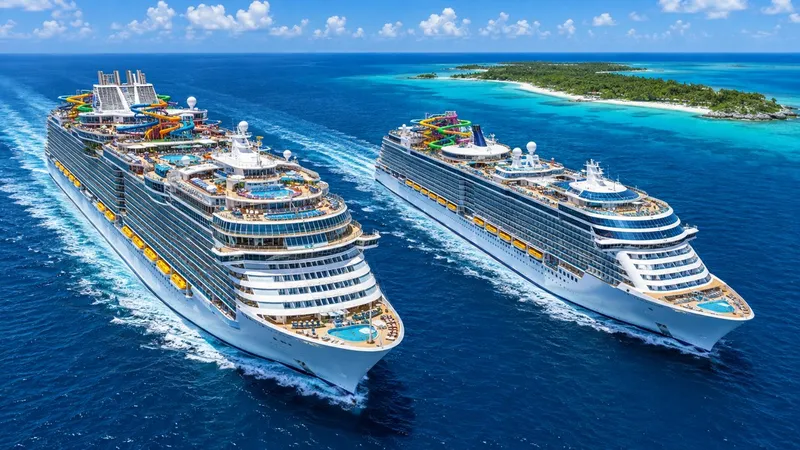
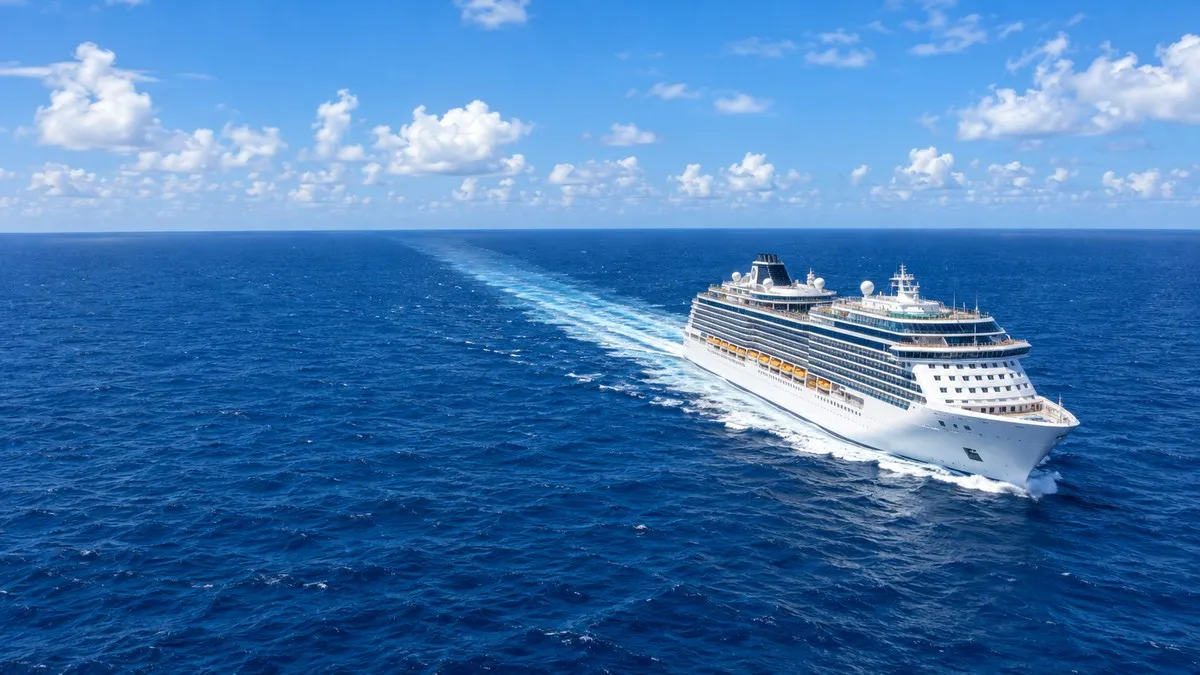
A repositioning cruise is a one-way voyage that carries passengers while a cruise line moves a ship from one seasonal region to another, for example from the Mediterranean to the Caribbean in autumn. The ship has to make the trip anyway, so the line sells the cabins, usually at a lower nightly fare and with far more days at sea than a normal round trip.
If you have seen a 15-night Barcelona to Fort Lauderdale sailing priced like a week in the Caribbean and wondered what the catch is, this guide explains it. You will see why ships reposition, when and where they sail, what the fares really look like once flights are added, and which travellers come home from one delighted.
What Is a Repositioning Cruise?
Cruise lines follow the weather. Alaska, Northern Europe and the Mediterranean are summer destinations, while the Caribbean, South America and Australia fill the other half of the year. A ship cannot be in both places at once, so twice a year it has to sail between them.
That transfer voyage is the repositioning cruise. It starts in one home port and ends in a completely different one, often on another continent. Norwegian Cruise Line describes these sailings on its own travel blog as one-way trips that happen when a ship moves "to match seasonal travel demand", typically once or twice a year.
You will also see the terms cruise repositioning, cruise ship repositioning or simply a "repo" cruise. They all mean the same thing. A transatlantic cruise is the best known kind, but repositioning is a general term for any seasonal move, whatever ocean the ship crosses.
Repositioning cruise vs a regular cruise
A standard cruise is a closed loop: you board in Miami and step off in Miami a week later, after a port almost every day. A repositioning cruise breaks that pattern in three ways. It is one-way, it is longer, and it trades ports for open ocean. Those three facts explain nearly everything else about it, from the price to the passengers it attracts.
Why Cruise Ship Repositioning Happens
Every cruise region has a season, and the seasons do not line up. Norwegian runs its Alaska season from May to September, and Celebrity Cruises gives the same window. When the season closes, a ship that spent the summer in Juneau and Ketchikan heads south or west, and it comes back a few weeks before the next season opens.
Europe works the same way on a bigger scale. Mediterranean and Baltic itineraries run from spring into early autumn. Over the winter, many of those ships move to the Caribbean and Florida, and in spring they cross back.
A ship sailing empty across an ocean earns nothing, so the line fills it with paying passengers instead. The voyage would happen with or without you, which is the root of the lower fares and the unusual routes.
When Repositioning Cruises Sail
The timing follows the shoulder seasons on either side of summer. In a Forbes travel piece, David Nikel puts the most common windows at March to April and October to November. Transatlantic sailings run eastbound in spring, roughly March to May, and westbound in autumn, with the westward flow picking up from September and a few ships still crossing in December.
Cruisebound's review of fall 2026 sailings found the westbound crossings from Europe running mostly from late October through November. A real example is Norwegian Star's 14-night sailing from Southampton to Miami on 20 November 2026, with calls at Le Havre, La Coruña, Leixões, Ponta Delgada in the Azores and Great Stirrup Cay before Florida.
The Pacific has its own rhythm. In April, a few weeks before the Alaska season, ships arrive from Asia, Hawaii or the West Coast. In late September they leave again for Asia, Australia, Mexico or the Caribbean.
The Main Repositioning Routes
Most repositioning voyages fall into a handful of patterns. Knowing them helps you search, because cruise lines often file these sailings under the destination rather than under the word "repositioning".
Transatlantic crossings
The busiest corridor connects Europe with Florida and the Caribbean. Typical routes include Barcelona to Fort Lauderdale, Rome (Civitavecchia) to Miami, and Southampton or Lisbon to Florida. Ships often call at Spanish ports, Lisbon and Madeira or the Canary Islands, and some break the crossing in the Azores or Bermuda.
Some lines also cross from Italy and Spain to Brazil and Argentina for the southern summer. MSC Cruises, for example, has scheduled several such sailings for October and November 2027.
Panama Canal and the Pacific coast
Ships moving between Alaska or California and the Caribbean often transit the Panama Canal, which makes the repositioning voyage a destination in its own right. Shorter moves run up and down the Pacific coast, and Cruise Critic notes that some last only one to three nights, such as Seattle to Vancouver.
US law shapes these itineraries. Under the Passenger Vessel Services Act, a foreign-flagged ship may not carry passengers between two US ports, directly or via a nearby foreign port, as the CBP compliance guide explains with an example involving Ensenada in Mexico. A one-way trip between two US ports has to include a distant foreign port, which is why so many coastal repositioning sailings start or end in Vancouver.
Transpacific and the Indian Ocean
The longest repositioning cruises cross the Pacific between North America and Asia, or run from Hawaii to Australia, or from Asia to Australia and the Middle East. These can run to around 28 nights and cross the International Date Line, so a day disappears or repeats depending on direction.
How Long They Last and What Sea Days Feel Like
Repositioning cruises are longer than an average sailing because the ship has an ocean to cover. Norwegian says many of its sailings run seven to 14 days, Celebrity quotes 13 to 19 nights, and The Points Guy found the range stretching from four or five nights to around 28.
The sea days come in long runs. Celebrity mentions itineraries with up to 10 nights at sea, and Cruisebound counts six to eight consecutive sea days on a typical Barcelona to Fort Lauderdale crossing without a mid-ocean stop. Even without stops, an ocean crossing takes about a week: Cunard's Queen Mary 2 needs seven nights between New York and Southampton.
Clock changes instead of jet lag
On a transatlantic crossing the clocks move one hour a day, forward when sailing east and back when sailing west. You adjust gradually, so you step off in Europe or Florida already on local time. Westbound passengers gain an extra hour most nights.
What fills the days
With no shore excursions to rush to, the ship becomes the destination: the pools, restaurants, spa and shows. Norwegian notes that sailings outside peak season tend to draw a smaller crowd of seasoned cruisers, so a lounger is easy to find. Cruise Critic adds the other side: for some passengers, days on end in the middle of nowhere feel more maddening than relaxing, which is worth knowing about yourself before you book.
Are Repositioning Cruises Cheaper?
Usually per night, yes. Norwegian, Celebrity and Cruise Critic all say repositioning sailings tend to cost less per night than standard cruises, because they run outside peak season, include many sea days and appeal to a narrower group of travellers.
Real numbers make the point. In its look at fall 2026 crossings, Cruisebound found Norwegian fares from about $1,069 per person for an inside cabin and $1,629 for a balcony, roughly $116 per night for the balcony. It estimated Celebrity at about $130 to $160 per night, Holland America at $120 to $150 and MSC at $90 to $130. Those figures exclude taxes, gratuities and airfare, and they move constantly.
The real comparison is total trip cost, not the fare per night. You still pay daily gratuities for every one of those 14 or 16 nights, and you need a one-way flight home from the far end. Cruise Critic warns that one-way or open-jaw flights can cost more than a round trip, so price the flight before you call the cruise a bargain. Some lines bundle airfare into crossing deals, and that can change the maths.
The Downsides to Weigh
The same features that make a repositioning cruise cheap also make it wrong for some people. Before booking, check each of these against your own trip:
- Weather: The voyages run at the edges of the season. Forbes notes that weather and sea conditions may not be ideal, which raises the risk of seasickness and missed ports, and the North Atlantic can be rough late in the year.
- Time: Two weeks plus travel days at each end is a big block of leave, which is why crossings draw many retirees.
- Flights and documents: You fly into one city and home from another, and a passport is required because you start and end in different countries.
- Babies: Most lines raise the minimum age from six to 12 months for crossings. Royal Caribbean's infant policy applies the 12-month rule to any cruise with three or more consecutive sea days, and Carnival does the same above two.
If motion worries you, book a midship cabin on a lower deck and read our guide to motion sickness on a cruise before you pack.
Who a Repositioning Cruise Suits
A repositioning cruise is a good fit if several of these describe you. You enjoy sea days more than shore days. You have two weeks or more to spare outside the school holidays. You want to see a ship and a cruise line in depth, or to try a long voyage before committing to something like a world cruise. You also like the idea of arriving in Europe or Florida without jet lag, and you are happy to plan a one-way flight.
It suits poorly if you want a new port every morning, are travelling with a baby, get seasick easily, or can only take a week off. For families with school-age children, the spring and autumn windows also fall in term time.
The cheapest way in is flexibility. Fares vary widely between sailings, and a crossing that ends in a city where you would happily spend a few days before flying home turns the one-way leg into an extra holiday.
Following a Crossing From Home
Long crossings change things for the people left at home, too. On a week in the Caribbean the ship is in port almost daily, and a phone finds a signal ashore. Mid-ocean, staying in touch depends on the ship's internet package, and a family member may go quiet for days.
This is where a tracking app helps. With Primo Nautic you can find the ship by name and follow its live position, speed and course on a map as the AIS data comes in. Choose the "Loved One on Cruise" purpose and the AI turns that data into warm, plain-language updates about how the journey is going, along with live weather at the ship's location.
Primo Nautic also shows two arrival estimates side by side, the captain's reported ETA and an AI-calculated one with a confidence score, and it can alert you when the ship arrives. For families following a westbound crossing toward Florida, that means knowing when to expect the first message from shore. Our guide on how to track a cruise ship covers the basics.
Is a Repositioning Cruise Worth It?
A repositioning cruise is the ship's commute, sold as a holiday. It exists because cruise regions have opposite seasons, it runs mainly in spring and autumn, and it follows a few well-worn routes across the Atlantic, through the Panama Canal, along the Pacific coast and across the Pacific.
For the right traveller it offers a long voyage at a low nightly fare, quiet sea days, gradual time changes and ports that round-trip cruises rarely visit. The trade is real: a one-way flight, more variable weather, a long stretch of time off and age limits for babies. Add the flight and gratuities to the fare before comparing, decide honestly how you feel about a week of open ocean, and a repositioning cruise becomes an easy yes or a clear no.