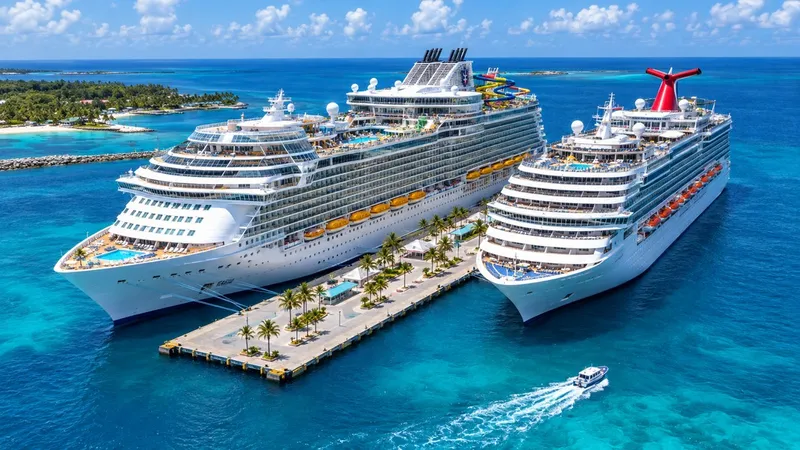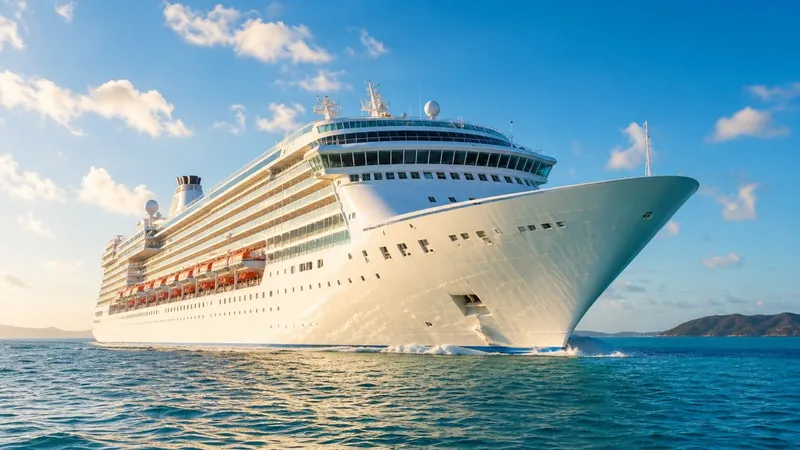
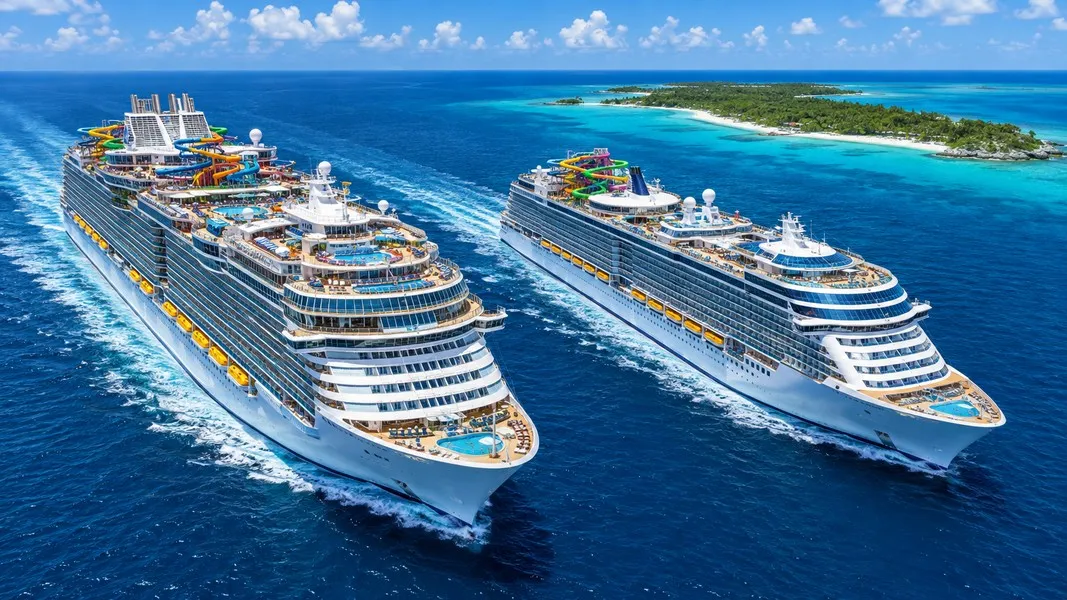
Norwegian cruise vs Royal Caribbean is a choice between freedom and spectacle. Norwegian Cruise Line built its brand on Freestyle Cruising, with no assigned dinner times and no formal dress code, and it bundles drinks, dining and Wi-Fi into its Free at Sea offer. Royal Caribbean builds far bigger ships and fills them with waterparks, shows and neighborhoods, then sells most extras separately.
Both lines sail the Caribbean, The Bahamas and Europe, and both now have a big new beach destination in The Bahamas. So the region rarely decides it. What decides it is how you like to eat, dress, drink and spend a sea day. This guide compares the two lines on each of those points with current figures, then says which traveler each one suits.
Norwegian Cruise vs Royal Caribbean: The Quick Verdict
If you only have a minute, this table covers the main differences.
| Category | Norwegian Cruise Line | Royal Caribbean |
|---|---|---|
| Best for | Flexible schedules, adults, groups | Families who want big-ship thrills |
| Dining style | Freestyle, no set times | Set seating or My Time Dining |
| Dress code | No formal nights | One to four Dress Your Best nights |
| Drinks | Free at Sea open bar on qualifying fares | Deluxe Beverage Package, bought separately |
| Daily crew charge | USD 20 standard, 25 suites | USD 18.50 standard, 21 suites |
| Bahamas destination | Great Stirrup Cay and Great Tides Waterpark | Perfect Day at CocoCay and Royal Beach Club |
Pick Norwegian if you want to set your own pace and get more included up front; pick Royal Caribbean if the ship itself is the destination. The sections below explain where each line earns that verdict and where it falls short.
Overview of Norwegian Cruise Line
Norwegian Cruise Line, usually shortened to NCL, sails to nearly 350 destinations with a fleet of 20 ships, according to a parent company press release from October 2026. The same release sums up the brand: no assigned dining and entertainment times and no formal dress codes.
The newest ships belong to the Prima Plus Class. Norwegian Aqua entered service in 2025 and carries 3,565 guests at double occupancy with a crew of 1,597, on a hull 1,056 feet long. It introduced the Aqua Slidecoaster, which NCL calls the first hybrid rollercoaster and waterslide at sea. Norwegian Luna, its sister, followed in March 2026 and sails mostly to the Caribbean.
NCL's main strengths are flexibility, a generous bundled package, and a private island that now rivals anything in The Bahamas. Its ships are smaller than Royal Caribbean's biggest, which some guests prefer because each pool and restaurant is shared by fewer people.
The weaknesses sit in the fine print. Free at Sea depends on the fare you book and carries its own service charge, and NCL's daily crew charge is a little higher than Royal Caribbean's.
Overview of Royal Caribbean
Royal Caribbean is the line of giant ships. Its Icon Class, Icon of the Seas, Star of the Seas and Legend of the Seas, are the biggest in its fleet. Legend of the Seas measures roughly 1,196 feet and about 248,000 gross tons, and carries 5,610 guests at double occupancy, according to Cruise Cotterill.
The onboard offer is built around activity. Royal Caribbean's own Icon Class guide lists 17 complimentary dining spots per ship, and the family-focused Surfside neighborhood adds a carousel, splash areas and an infinity pool. Older classes, such as the amplified Voyager ships, still offer ice rinks, rock climbing walls and laser tag.
Royal Caribbean's main strengths are scale, variety and two Bahamas destinations, Perfect Day at CocoCay and the new Royal Beach Club in Nassau. If a cruise is mostly about what you do on board, few lines match it.
The trade-offs are crowds and a longer list of extras. A ship that carries more than 5,000 guests at double occupancy will feel busy on sea days, and drinks, specialty restaurants and premium island areas all cost extra.
Ships and Onboard Attractions
Ship size shapes almost everything: the number of pools, how many people share them, and which ports a ship can reach.
Royal Caribbean thinks big
An Icon Class ship is a floating resort split into neighborhoods. Cruisemapper counts 15 water activities across the class, and the ships stage high-diving shows and ice spectaculars. If you want to fill every hour, this is the stronger line.
The legacy fleet matters too. Royal Caribbean still sails ships from the late 1990s and early 2000s, so a cheap short cruise may put you on a far older vessel than the brochure suggests. Check the ship name before you compare prices.
Norwegian keeps it mid-sized
Norwegian Aqua is about two thirds of Legend of the Seas by guest count, yet it carries its own headline features: the Aqua Slidecoaster, a glowing sports complex and three-bedroom duplex suites.
If you want the biggest ship possible, Royal Caribbean wins easily; if you prefer a ship that feels like a resort rather than a small city, Norwegian fits better. Our Carnival vs Royal Caribbean comparison covers how the Icon Class stacks up against a third line.
Dining and Dress Code
This is where the two lines differ most, and where many cruisers make up their minds.
Freestyle dining on Norwegian
Norwegian dropped assigned dinner seating long ago. You eat when you want and with whom you want. There are no formal nights, so a polo shirt or a sundress works every evening. Specialty restaurants cost extra, though Free at Sea includes a set number of specialty meals depending on the length of your cruise.
Set seating or My Time on Royal Caribbean
Royal Caribbean gives you a choice at booking. Traditional dining assigns you a table and a time, usually an early seating around 6:15 p.m. and a late one around 8:30 p.m. My Time Dining lets you eat in the main dining room any time during dinner hours, subject to availability, and reservations are recommended.
The dress code is relaxed by day but asks for more at dinner. Royal Caribbean's dress code page sets one Dress Your Best night on a five-night cruise, two on six to ten nights, three on 11 to 14 nights, and three to four on longer sailings. Tank tops are not allowed in the main dining room or specialty venues at dinner.
If you dislike packing a dinner outfit or eating at a fixed hour, Norwegian removes both problems. If you like the ritual of the same table and the same waiter each night, Royal Caribbean's traditional seating gives you that.
Drink Packages and What Is Included
The two lines handle drinks in opposite ways.
Norwegian's Free at Sea
On qualifying fares, Norwegian's Free at Sea offer bundles several extras into the booking:
- Unlimited drinks for every guest 21 and over in the stateroom, including cocktails, wine and draft beer
- Specialty dining meals, with the number of nights based on the length of the sailing
- 150 minutes of Wi-Fi
- A USD 50 shore excursion credit at every port for the first guest on the reservation
The open bar also applies on Great Stirrup Cay, NCL's private island. Free at Sea covers all qualifying sailings except Pride of America in Hawaii. An upgrade called Free at Sea Plus adds unlimited Starbucks drinks, premium wines, unlimited streaming Wi-Fi and prepaid service charges for USD 49.99 per person per day.
Included does not mean free of charges. NCL adds a 20% gratuity and beverage service charge to beverage purchases and packages, and that charge falls on you even when the drinks themselves are part of the promotion.
Royal Caribbean's Deluxe Beverage Package
Royal Caribbean sells its drinks package separately. The Deluxe Beverage Package covers any single drink up to USD 14 and gives 40% off bottles of wine priced up to USD 100. Every guest of drinking age in the same stateroom must buy the same alcoholic package.
Norwegian tends to win if you drink every day and book a fare that includes Free at Sea; Royal Caribbean can work out cheaper if only one person in the cabin drinks.
Gratuities and Service Charges
Both lines add a daily charge per guest for the crew, and the difference adds up over a week.
Norwegian's service charge is USD 20 per person per day for Club Balcony Suites and below, and USD 25 for The Haven and suites. It applies to every guest aged 3 or older, so toddlers sail without it.
Royal Caribbean charges USD 18.50 per guest per day in non-suite cabins, including Junior Suites, and USD 21 in suites, according to Deep Arrival. There is no published age exemption, so children pay the same rate as adults.
For two adults on a seven-night cruise in a standard cabin, that works out to USD 259 on Royal Caribbean and USD 280 on Norwegian. A family with a two-year-old pays nothing for the toddler on Norwegian but the full rate on Royal Caribbean, which narrows the gap.
Private Islands: Great Stirrup Cay vs CocoCay
Both lines now give you a Bahamas beach day built around their own guests.
Great Stirrup Cay and Great Tides Waterpark
Norwegian has spent heavily on Great Stirrup Cay. A new two-berth pier means you walk ashore instead of taking a tender boat, and entry to the island is free for every guest. Great Tides Waterpark covers nearly six acres, with 19 waterslides and water experiences, including the cruise industry's first cliff jumps at 10 and 15 feet and a family slide that takes four riders at once.
The waterpark costs extra, though the Free at Sea open bar works at its two bars. Outside the park you get the Great Life Lagoon, a heated pool with two swim-up bars, a free splash zone for children and Vibe Shore Club, an adults-only beach area.
CocoCay and Royal Beach Club
Royal Caribbean answers with two destinations. Perfect Day at CocoCay remains its private island in The Bahamas. Royal Beach Club Paradise Island in Nassau welcomed its first guests on December 23, 2025, according to the Royal Caribbean press center. It sells an all-inclusive day pass with an open bar, dining and Wi-Fi, and it is open only to Royal Caribbean and Celebrity guests and to Bahamian residents.
Families chasing waterslides will be happy on either island; the real difference is that Norwegian's open bar carries over to its island, while Royal Caribbean sells a separate all-inclusive pass.
Norwegian vs Royal Caribbean for Families
Royal Caribbean has the edge for children who want constant activity. The Icon Class Surfside neighborhood is designed around young families, with a carousel, splash areas, an infinity pool and the Adventure Ocean kids club in one part of the ship.
Norwegian runs Splash Academy, a free drop-off program for children aged 3 to 12, and the Great Tides Waterpark gives kids a full day of slides on the island. The service charge exemption for children under 3 also helps the budget.
Older kids tend to want whichever ship has more to do. An Icon Class ship usually wins on volume, though Norwegian Aqua's Slidecoaster gives it one ride Royal Caribbean cannot match.
Who Should Choose Norwegian Cruise Line
Norwegian suits travelers who dislike schedules. If you want dinner at 9 p.m. one night and a burger by the pool the next, Freestyle Cruising fits you without any planning.
It also suits couples and groups of adults who drink every day. When Free at Sea is part of the fare, the open bar, specialty meals and excursion credits cover costs you would otherwise pay on board. Guests who hate packing formal clothes will appreciate that every night is casual.
Who Should Choose Royal Caribbean
Royal Caribbean suits families and first-time cruisers who want the ship to be the main event. The Icon Class packs in more attractions than any Norwegian ship, and the neighborhood layout helps a big ship feel manageable.
It also suits travelers who like structure. Traditional dining, a regular table and a couple of dress-up nights give a week at sea a familiar rhythm. If only one person in your cabin drinks, paying for drinks as you go or buying one package may cost less than a bundled fare.
Following Either Ship From Home
Whichever line you book, the people you leave behind will want to know where you are. Cruise line apps are built for the onboard experience and cover only their own fleet, so relatives at home usually have no simple view of the ship.
Primo Nautic tracks any vessel by name, MMSI or IMO number, so a Norwegian or Royal Caribbean ship can be followed with the same app. Families can choose the Loved One on Cruise purpose and get warm, plain-language updates on the journey's progress, the weather at the ship's location and arrival alerts at each port. Primo Nautic also shows the captain's reported ETA next to its own calculated one, which helps when a port call runs late. Our guide to tracking a cruise ship explains how to set this up before departure.
Conclusion
Norwegian and Royal Caribbean reach many of the same ports, but they deliver different holidays. Norwegian gives you freedom: no set dinner times, no formal nights and a Free at Sea bundle that can include drinks, specialty meals, Wi-Fi and excursion credits. Royal Caribbean gives you scale: much bigger ships, more onboard attractions and two Bahamas beach destinations.
Daily crew charges are close, at USD 20 on Norwegian and USD 18.50 on Royal Caribbean for a standard cabin, though Norwegian waives them for children under 3. Both private islands now have major waterparks. Choose Norwegian if flexibility and included extras matter most, and Royal Caribbean if the ship itself is why you are going.