Motion sickness on a cruise happens when your inner ear detects the ship's movement but your eyes see a stable cabin, sending conflicting signals to your brain. The result is nausea, dizziness, and sweating that can derail an otherwise perfect voyage. Studies suggest between 30 and 50 percent of first-time cruise passengers experience some level of seasickness, though most cases are preventable with the right preparation.
If you're nervous about rough seas, knowing the science behind motion sickness and which routes carry the highest risk makes a real difference. This guide covers the causes, the worst offenders among cruise routes, and the most effective remedies backed by clinical evidence.
Why Your Body Reacts to Ship Motion
Your vestibular system, the fluid-filled structures in your inner ear, is constantly tracking movement and orientation. On land, it agrees with your eyes: you're still, both sensors confirm it. On a ship, the agreement breaks down.
The mismatch is the problem. Your inner ear feels the vessel pitching and rolling while your eyes focus on a stationary table or cabin wall. The brain interprets this contradiction as a sign of poisoning, triggering nausea as a protective reflex. It's an ancient biological response working against you in a very modern setting.
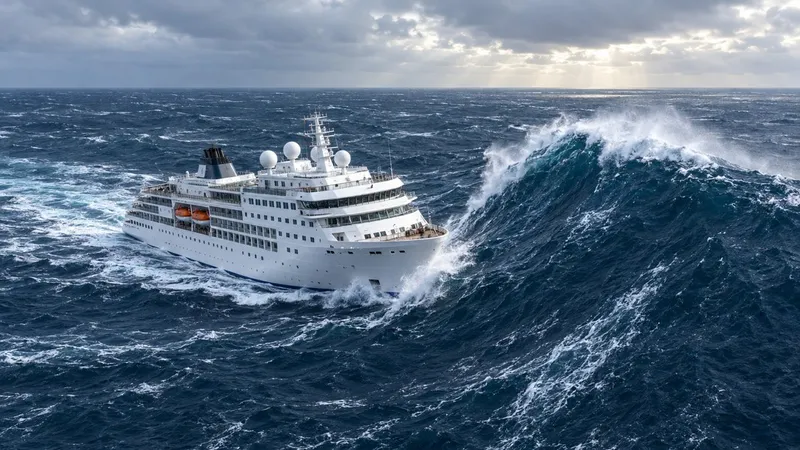
Sea conditions make the conflict worse. Waves over five feet with short periods (under six seconds between crests) challenge smaller vessels the most, creating a rapid, irregular motion that's harder for your body to adapt to. Steep waves driven by strong winds or opposing currents amplify the pitching felt in the bow and stern, the worst places to be during rough patches.
Individual susceptibility varies widely. Some people adapt within hours; others struggle for entire voyages. Women, people under 50, and those with a history of migraines tend to be more prone, but there's no reliable way to predict your sensitivity until you're actually at sea.
Which Cruise Routes and Ships Have the Roughest Seas
Ship size is the first variable to understand. Larger vessels are inherently more stable because their mass resists wave energy better, and most modern cruise ships above 50,000 gross tons are fitted with active stabilizers that reduce rolling in moderate seas. Smaller expedition ships, river ferries, and vessels under 200 feet offer far less protection when conditions deteriorate.
Route matters just as much as ship size. Atlantic crossings, particularly in autumn and winter, expose passengers to long-period swells generated by North Atlantic storms. The southern hemisphere offers even more dramatic conditions: routes crossing the Drake Passage between South America and Antarctica are among the roughest open-water transits in the world, with 20-foot seas not uncommon.
In the Caribbean, the Northeast Trade Winds are generally benign, but when they exceed 21 knots (Beaufort Force 6), they generate swells of 2.5 meters or more. For smaller vessels and catamarans, this means a noticeably rough ride, especially near shoals, islands, or exposed headlands where wave patterns become irregular.
Reading Sea Forecasts Before You Depart
The Beaufort scale gives you a practical way to interpret sea forecasts before you depart. Force 3 to 4 describes a typical calm Caribbean day with light breezes and small waves. Force 5 means fresh breezes and moderate whitecaps. Force 6 and above is when most susceptible passengers start to struggle. You can monitor marine forecasts through NWS marine zones before departure, or check buoy data at NDBC stations for wave height and period at specific ocean locations.
Wave period is often more useful than wave height. A four-foot swell with a 12-second period is gentle and rhythmic, easy to adapt to. The same four-foot wave with a four-second period creates a lurching, uncomfortable motion. If the wave period in seconds is less than the wave height in feet, expect a rough ride.
Apps like Primo Nautic show live weather at the vessel's exact position, so you can check real conditions at sea before your family boards. Knowing the forecast in advance gives you the lead time to prepare medications and choose the right cabin.
Prevention Methods That Actually Work
Starting prevention before you board is the single most effective strategy. Once seasickness sets in, it's much harder to treat.
Prescription and over-the-counter medications are the most reliable option for people with high susceptibility. Scopolamine patches (brand name Transderm Scop) are the gold standard for multi-day cruises: apply the patch behind your ear at least eight hours before boarding and it delivers a slow, continuous dose that prevents the vestibular system from triggering nausea. Side effects include dry mouth and occasional blurred vision, and it requires a prescription in most countries.
For shorter day trips or excursions, meclizine (sold as Bonine in the US) offers full-day coverage with less sedation than older antihistamines. Dimenhydrinate (Dramamine) works faster, within 30 to 60 minutes, but wears off sooner and causes more drowsiness. Both are available over the counter.
Ginger capsules and acupressure wristbands have clinical support as mild adjuncts, but they are not adequate as stand-alone treatment if you expect rough conditions. Think of them as a backup layer, not a replacement for medication.
Cabin location has a measurable effect on how much motion you feel. Midship cabins on lower decks experience the least movement because they sit closest to the ship's center of gravity, away from the amplified pitching at the bow and stern. If you're booking late and midship is taken, lower decks are better than upper decks even near the ends.
A few habits reinforce the medication:
- Avoid alcohol, heavy meals, and strong food smells before and during rough weather
- Stay hydrated; dehydration worsens nausea symptoms
- Keep your gaze on the horizon whenever possible, especially on deck
- Avoid reading, screens, or any visual task that pulls your attention inside
What to Do If Seasickness Hits Mid-Voyage
The worst thing you can do is stay in your cabin staring at the ceiling. Fresh air and an external horizon reset your vestibular-visual conflict faster than anything else.
Get to an outside deck, fix your gaze on the horizon, and breathe slowly. If you can sit or stand midship, do so. Eat something plain if you can manage it: plain crackers or bread slow nausea progression better than an empty stomach. Avoid lying flat on your back, which worsens disorientation in many people.
If you're already past nausea and into vomiting, hydration becomes the priority. Sip water consistently rather than drinking large amounts at once. Most cruise ships carry anti-nausea medications at the medical center, including injectable options for severe cases. Don't hesitate to visit if symptoms persist beyond a few hours or you can't keep fluids down.
Most passengers adapt within 24 to 48 hours as the body recalibrates. The medical term for this adjustment is "sea legs." If you're on a short cruise, that timeline matters: start prevention medication before boarding rather than waiting to see how you feel.
How to Check Sea Conditions Before You Sail
Knowing what weather awaits your route gives you time to prepare rather than react. This is where real-time maritime data makes a practical difference.
Check the forecast 24 to 48 hours before departure using NWS marine zone forecasts, which are organized by region and describe expected wave heights, wind speeds, and swell periods. Cross-reference with recent buoy readings for the specific ocean area your ship will cross.
Live vessel tracking takes this further. When you track your cruise ship in real time, you can see its current position, speed, and the weather conditions at that exact location. This is useful not just for curiosity but for practical preparation: if the live data shows your ship heading into a zone with Force 6 winds and building seas, you have advance notice to take your medication early, plan a lighter dinner, and choose a lower cabin deck next time.
Primo Nautic overlays live sea weather at the vessel's current location alongside position data, so you can check wind speed, wave information, and temperature at exactly where the ship is right now. If you have a family member on a cruise or you're following your own itinerary from shore, this gives you the clearest possible picture of what conditions are like rather than relying on itinerary guesses.
For passengers already on board, most ships broadcast weather updates over the public address system in the morning, but these are often vague. Combining official forecasts from marine weather services with a live tracking app gives you a more complete and current picture.
Understanding the forecast also helps you plan excursions. If the ship is sailing through rough weather overnight but the port day looks calm, you can time your anti-nausea medication around the worst window and feel functional when you arrive at the destination.
Conclusion
Motion sickness on a cruise is common but rarely inevitable. The vestibular-visual conflict at its root is predictable, and so are the conditions that trigger it. Choosing a midship lower-deck cabin, starting medication before boarding rather than after symptoms appear, and checking sea forecasts before departure all reduce risk significantly. If rough conditions do hit, fresh air and horizon gazing work faster than staying below. Most passengers find their sea legs within a day or two. With the right preparation, the crossing becomes the experience rather than something to endure.