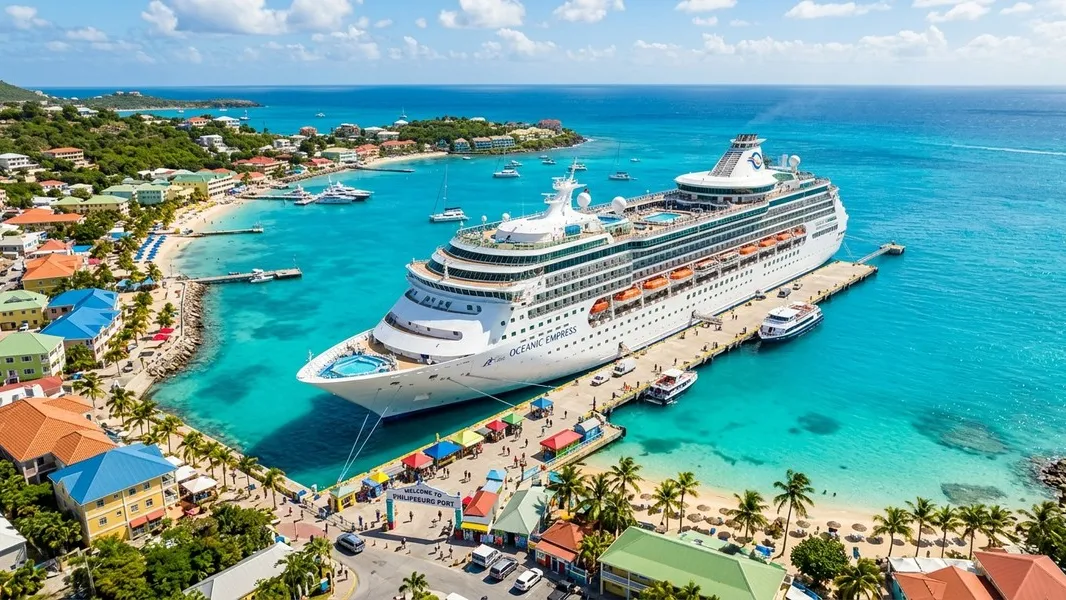
A port of call is any scheduled stop on a cruise ship's itinerary where the vessel docks or anchors so passengers can go ashore. It differs from your home port (where you board and disembark): a port of call is a destination visited during the voyage, typically for 6 to 10 hours.
If you're new to cruising or waiting at home while a family member sails, understanding ports of call will help you make sense of the itinerary, anticipate the logistics, and know what to expect each day the ship stops. This guide covers everything: the terminology, how ships schedule stops, what actually happens when your cruise ship arrives in port, the most visited destinations worldwide, and how to track your ship's location in real time.
What Is a Port of Call?
The phrase has roots in 17th-century nautical language, where sailors recorded every port they "called at" during a voyage, meaning every stop for passengers, cargo, or resupply. In modern cruising, the term refers to any destination your ship visits between departure and return. The home port (also called the embarkation port) is where you board at the start and disembark at the end. Everything else on the itinerary is a port of call.
Most 7-day Caribbean cruises include 3 to 5 ports of call. Longer Mediterranean voyages of 14 days typically average 6 to 10 stops, according to Cruise Lines International Association data on mainstream itineraries. The number of ports depends on distance between destinations, the cruise line's travel philosophy, and the ship's operational speed. Some itineraries prioritize depth over breadth, spending longer in fewer places; others maximize the number of flags passengers can see.
Private Islands and Sea Days
Two terms come up often alongside "port of call" and are worth understanding separately. A private island is a destination owned or leased by a cruise line exclusively for its passengers. CocoCay (Royal Caribbean), Half Moon Cay (Holland America), and Disney's Castaway Cay are examples. Technically these are ports of call, but they function differently: no local shops, no independent taxis, no competing crowds from other cruise lines.
A sea day is any day the ship sails without stopping, giving passengers time to enjoy onboard amenities. Many itineraries include one or two sea days on longer crossings. Some travelers prefer sea days; others want port-heavy schedules. Knowing the ratio before you book shapes the experience significantly.
Who Uses the Term "Port of Call"?
The phrase appears constantly in cruise line materials, onboard announcements, and passenger communication. You'll see it in your daily schedule as "today's port of call," hear it in the captain's morning briefing, and find it as a filter in cruise booking tools when you want to search itineraries by specific destinations. Understanding what it means saves confusion when you see it repeated throughout your voyage.
How Cruise Ships Schedule Port Calls
Itinerary planning is far more involved than it looks. Cruise lines negotiate berth slots with port authorities months or years in advance. Popular ports like Cozumel or Nassau are heavily booked, and lines submit bids for specific dates, arrival times, and departure windows. Port authorities balance competing ships, tourist capacity, and local infrastructure before confirming.
Seasonal demand drives much of the scheduling. The Caribbean peaks from December through April, Alaska runs May through September, and the Mediterranean high season falls between May and October. Ships rotate between regions as seasons shift.
Typical Port Day Timing
A standard port day follows a predictable rhythm. Ships typically arrive between 7 and 9 AM, giving passengers the early hours ashore. Departure time is usually between 4 and 6 PM. That's 6 to 10 hours in port, though the actual time ashore is shorter once you account for disembarkation queues and getting back to the gangway in time.
All-aboard time is strictly enforced, typically 30 minutes before the ship departs. Missing it is a real risk, not just a travel cliché, and the consequences fall entirely on the passenger (more on that later).
When Ships Skip Ports
About 2.5% of all scheduled cruise port calls are altered each year, per Cruise Market Watch. Weather is the most common reason: hurricane advisories, high winds making anchoring unsafe, or swells preventing tender operations. Port congestion, mechanical issues, and medical emergencies at sea can also force itinerary changes.
When a port is skipped, the captain announces it the evening before. The ship substitutes a sea day or an alternative destination. Passengers typically receive onboard credit as compensation, though the amount and policy vary by cruise line.
Docking vs. Tendering
This distinction matters practically because it affects how much of your port day you actually spend on land.
Docking means the ship pulls directly alongside a pier and passengers walk off via a gangway. This is the norm at major ports with deep-water infrastructure. You step off the ship and you're in the destination.
Tendering happens when no suitable berth is available or the water is too shallow for the ship's draft. The vessel anchors offshore and small tender boats ferry passengers to shore, a ride that takes 15 to 30 minutes each way. Tender operations prioritize passengers with shore excursions booked through the cruise line, then suites and loyalty-tier members, then general boarding. If you want to be ashore early at a tender port, booking a ship-organized excursion is the fastest way.
Iconic tender ports include Grand Cayman (the island's harbor isn't deep enough for large ships) and Santorini (the volcanic caldera makes docking impossible). At both, plan for the extra travel time each direction.
Most Popular Cruise Ports of Call
Tens of millions of cruise passengers visit ports of call every year, and a handful of destinations consistently top the list. Here's a regional breakdown.
Caribbean Ports
The Caribbean accounts for the majority of global cruise traffic. Cozumel, Mexico sees more than 1,200 ship calls and four million passengers annually, making it the most-visited cruise port in Mexico according to the Cozumel Port Authority. Its coral reefs (Palancar Reef is among the best snorkeling in the Caribbean), beach clubs, and Mayan ruin day trips make it a consistently strong itinerary stop.
Nassau, Bahamas draws roughly 1,500 ship visits per year and over five million cruise passengers, per the Bahamas Ministry of Tourism. The Prince George Wharf was rebuilt in 2019 to handle up to 30,000 passengers per day. Atlantis Resort, Straw Market, and the nearby Blue Lagoon Island are the most popular draws.
Grand Cayman is an all-tender port: no pier can accommodate today's mega-ships, so every passenger arrives by boat. Around 1,100 ship visits bring approximately 1.5 million passengers yearly. Stingray City, where you can wade with wild stingrays in shallow water, remains one of the most-booked excursions in the Caribbean. Seven Mile Beach is nearby for those who prefer a quieter afternoon.
St. Maarten sees about 1,000 ship visits per year. The island is split between Dutch and French territories, and most cruise terminals are on the Dutch side in Philipsburg. Maho Beach, where aircraft land metres above sunbathers, draws enthusiasts from all over the world. Orient Bay on the French side is a quieter alternative.
| Port | Annual Ship Visits | Tender or Dock | Notable Activity |
|---|---|---|---|
| Nassau, Bahamas | 1,500 | Dock | Atlantis Resort |
| Cozumel, Mexico | 1,200 | Dock | Reef snorkeling |
| Grand Cayman | 1,100 | Tender only | Stingray City |
| St. Maarten | 1,000 | Dock | Maho Beach |
| St. Thomas, USVI | 900 | Dock | Duty-free shopping |
Mediterranean Ports
Barcelona is the busiest cruise port in the Mediterranean, logging over 800 ship calls and 3.2 million cruise passengers per year according to Port de Barcelona. It serves as both a home port for MSC and Royal Caribbean itineraries and a popular port of call for ships beginning their routes elsewhere. A single port day puts Sagrada Familia, La Rambla, and Park Güell within reach, though the city rewards those who choose to linger.
Dubrovnik, Croatia sees about 600 ship visits and 1.2 million cruise passengers annually. Its UNESCO-listed Old Town, medieval walls, and association with filming locations from popular television series have made it one of the most-requested Mediterranean stops. The city has introduced visitor limits during peak times to protect the Old Town from overcrowding.
Santorini, Greece anchors offshore in the volcanic caldera: the dramatic view of white-walled villages on the cliffs is part of the arrival experience. Around 700 ships call here each year, bringing roughly 1.5 million visitors to black sand beaches, wine tasting in Oia, and sunset viewpoints that routinely rank among the most photographed places on earth.
Naples, Italy serves as the gateway to Pompeii, the Amalfi Coast, and the island of Capri. About 500 ship calls per year bring 1.4 million passengers through the port. It's a port where independent exploration requires planning: driving the Amalfi Coast road in a port day is possible but tight, and some passengers prefer booking a structured tour.
Alaska Ports
Alaska's cruise season runs May through September, and three ports handle the bulk of traffic: Juneau, Ketchikan, and Skagway. Each sees between 700 and 900 ship visits and close to a million passengers during the peak season, per Alaska Department of Transportation data.
Juneau is Alaska's capital and sits adjacent to the Mendenhall Glacier, one of the most accessible glaciers in North America. Whale-watching excursions depart directly from the dock. Ketchikan is known as the Salmon Capital and serves as the base for Misty Fjords floatplane tours and Alaska Native totem-pole culture. Skagway preserves the history of the 1898 Klondike Gold Rush: the narrow-gauge White Pass and Yukon Route railway is one of the most popular port experiences in the entire region.
What Happens When Your Cruise Ship Arrives in Port
The process between the ship approaching land and you walking out the gangway is more involved than most passengers realize. Understanding it helps you plan your day better.
The Arrival Process
Ships often position themselves near the port overnight and move into berth in the early morning. Customs and immigration clearance happens before any passengers leave: port agents board the vessel, verify the ship's manifest, and inspect as required. For larger ships, this process takes 20 to 60 minutes.
Once cleared, the captain or cruise director announces "all ashore" via the ship's app, onboard television channel, and PA system. Shore excursion groups organized by the cruise line disembark first, followed by priority boarding groups, and then independent travelers.
Shore Excursions: Ship vs. Independent
Cruise-organized excursions cost more (typically $50 to $200 per person) but include one significant benefit: the ship will not leave without you if you're on a cruise line-booked tour that runs over. That protection doesn't apply if you book independently.
Independent exploration is cheaper and often more interesting. Local guides, smaller group sizes, and off-the-beaten-path experiences are all more accessible outside the cruise line ecosystem. The trade-off is responsibility: you own your own timeline, and if something goes wrong, getting back to the ship is your problem.
Missing the Ship
The cruise ship will sail without you if you're not back by all-aboard time. CLIA reports roughly 500 incidents per year of passengers missing their ship at a port of call. The aftermath is expensive: passengers typically need to book their own flight or ferry to the next port and cover any hotel nights in between, often at short notice. Travel insurance with "missed port" coverage makes sense if you plan on independent exploration in unfamiliar destinations.
The simplest precaution is setting a phone alarm two hours before all-aboard time, giving yourself a buffer for traffic, queues, and unexpected delays.
Tendering Step by Step
At anchor ports, the process works in stages. Tender boats are numbered; passengers receive a ticket for a specific tender departure. Passengers with ship-organized excursions and those with mobility needs board first. Once you have your tender ticket, wait in the designated lounge area until your number is called. The ride to shore takes 15 to 30 minutes. Coming back, last tenders leave 75 to 90 minutes before the ship's departure time, so plan accordingly.
Port of Call vs. Home Port: Key Differences
If you're booking a cruise, understanding this distinction shapes where you fly into, which hotel you book the night before, and how long you should plan to be at the terminal.
Your home port is the operational base for the voyage: the terminal where you check in, drop off luggage, clear security, and complete embarkation. On return, you clear US Customs (for international voyages), collect your bags, and either drive, taxi, or fly home. Major home ports in the United States include Miami (7.3 million passengers per year), Fort Lauderdale (4.5 million), and Port Canaveral (6.5 million), which serves Disney and Royal Caribbean. In Europe, Southampton and Barcelona function as major home ports for transatlantic and Mediterranean routes.
Home ports offer infrastructure specifically built for cruise passengers: parking garages, shuttle connections to airports, luggage storage, hotels within walking distance of the terminal, and pre-cruise hotel packages sold by the cruise lines themselves.
A port of call has none of this. There's no luggage facility, no customs processing for passengers (that happens at home port), and no embarkation terminal. The ship may share a pier with other vessels, and the local facility is typically a simple arrivals building. You're there to see the destination, not to set up logistics.
Some ports serve both roles depending on the itinerary. Barcelona functions as a home port for MSC and Royal Caribbean's Mediterranean voyages, but it's a port of call for ships that begin in other European cities. Civitavecchia (Rome's main port) works the same way. The services available to you differ based on which role the port plays in your specific cruise.
How to Track Your Cruise Ship at a Port of Call
For families at home while a loved one is on a cruise, knowing when the ship arrives safely at a port of call matters. Modern vessel tracking apps make this easy, pulling live data from the AIS network that every commercial vessel broadcasts continuously.
How AIS Shows Ships in Port
AIS (Automatic Identification System) was developed as a collision-avoidance system for commercial shipping. Every vessel over 300 gross tons transmits its position, speed, heading, and navigation status in real time via radio signal, picked up by both shore-based receivers and satellites. When a ship is docked at a port, its AIS status changes to "moored," its speed reads zero, and its position shows the exact berth or anchorage location.
This data updates every few minutes and is publicly accessible through vessel tracking services. You can see exactly when a cruise ship arrives in port, verify its position, check the local weather conditions at the vessel's location, and monitor the scheduled departure time.
Why Families Track Cruise Ships at Port
Tracking a ship in port gives families a kind of digital signal that someone is safe: the ship arrived on schedule, it's docked where it's supposed to be, the weather at sea is calm. Primo Nautic takes this a step further by translating raw AIS data into plain-language updates adapted to your specific reason for tracking. A family following a loved one on a cruise gets warm, reassuring updates about the ship's progress, port arrivals, and weather conditions rather than technical maritime coordinates.
For a practical guide on how to follow any ship's real-time location, the cruise ship tracking guide covers the full process step by step. For finding out which ships are currently in port at a specific city, the cruise ships in port today guide explains how to search by destination.
What Tracking Shows You at Each Port
When a cruise ship arrives at a port of call, a tracking app with live AIS data can show you:
- Current position on a map with the berth labeled
- Navigation status (moored, at anchor, or underway)
- Scheduled departure time (from the vessel's AIS ETA broadcast)
- Local weather: wind speed, visibility, sea state at the ship's exact location
- Weather forecast for the next 24 hours at the port
Primo Nautic adds AI-generated summaries to this data, so instead of reading raw numbers, you get an update like: "Harmony of the Seas has arrived at Cozumel. The ship is docked at International Pier 4. It's a warm morning with calm seas and light winds. Scheduled departure is 5:30 PM local time." For families who aren't comfortable reading maritime data, that kind of human-friendly output changes the experience entirely.
Tips for Making the Most of Your Port Stop
A port day is short. Six to eight hours sounds generous until you subtract time for disembarkation lines, transportation to your destination, and getting back to the ship on schedule. Planning ahead makes the difference.
Book early for popular excursions. For destinations like Cozumel's reef snorkeling, Grand Cayman's Stingray City, or Skagway's White Pass railway, availability tightens 6 months before sailing. If these are on your list, book as soon as the cruise line opens excursion reservations.
Research independently before booking through the ship. Cruise line excursions are convenient and guaranteed, but third-party operators often offer smaller groups, lower prices, and more flexibility. Cruise Critic forums are a reliable source for vetted port recommendations from experienced travelers.
Plan your timeline backward. Start from the all-aboard time and work backward: how long to get back to the ship, how long for your last activity, how long to travel from the dock. Leave a 30-minute buffer for unexpected delays. If you're at a tender port, add at least 45 minutes for the ride back.
Keep your ship card accessible at all times. You'll need it to reboard, and it serves as your ID within the port terminal area. Some ports also require it at the gangway check-out when you leave. Carry a photo of your ship card on your phone as a backup.
Stay aware of local safety advisories. Most ports of call are safe and well-traveled by tourists. Your ship's daily schedule and shore excursion desk provide any specific advisories for that day's destination. In warm-weather ports, dehydration is the most common cause of medical incidents, so carry water from the ship.
Finally, keep an eye on the ship's departure status while you're ashore. Tracking tools that show live vessel data can tell you if the ship's schedule changes: if a medical situation requires early departure, for example, you want to know while you still have time to act. For families at home, this same data gives real-time reassurance that the voyage is going as planned.
Conclusion
A port of call is where a cruise itinerary becomes a collection of experiences. Whether you're stepping off in Nassau for a beach morning, tendering into Santorini for its legendary sunset, or walking Ketchikan's totem trails in the Alaskan wilderness, each stop is a distinct piece of the journey.
Understanding the logistics: how ships schedule port visits, the difference between docking and tendering, what actually happens during arrival, and how to keep track of your ship's status, turns a confusing itinerary into a clear map. For families following a loved one's voyage from shore, knowing when a ship safely reaches each port of call is a form of connection that now fits in your pocket.