If you want to know which cruise ships are in port today, you're not alone. Port towns from Cozumel to Seattle draw thousands of visitors who want a live view of which vessels are docked, when they arrive, and when they sail. With live AIS tracking, you can see cruise ships in port for any city in under a minute, without guessing or calling the port authority.
This guide covers how to track cruise ships in port for the most popular cruise cities, what data to look for, and how to get real-time updates that go beyond a static schedule.
Why People Search Cruise Ships in Port by City
There's a specific kind of curiosity behind "cruise ships in port city" searches, and it's more personal than it might look.
Some people are meeting a ship. If a friend or family member is disembarking in Galveston or Fort Lauderdale, knowing whether the vessel is on time matters. AIS data shows the exact navigation status and ETA for any cruise ship approaching port.
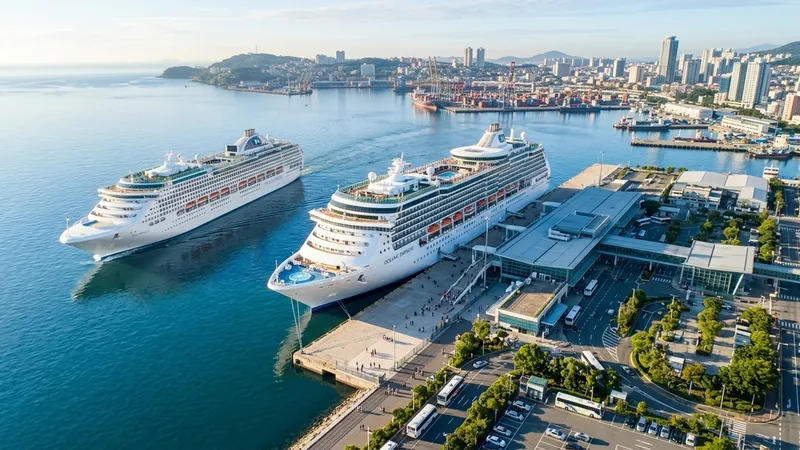
Others are watching from shore. Port towns like Cozumel, Vancouver, and New Orleans attract visitors who simply enjoy watching ships come in. Locals near Port Everglades in Fort Lauderdale can spot multiple vessels docked on a busy Saturday morning if they know where to look.
A third group is tracking a loved one on board. Cruise ship families often want to know where a ship is right now, not just the official itinerary. Live tracking gives them a way to follow the voyage in real time.
How AIS Cruise Tracking Works
Every cruise ship broadcasts its position, speed, heading, and status through AIS, the Automatic Identification System. AIS signals are picked up by a global network of satellite and terrestrial receivers, which feed real-time data to tracking platforms.
When a ship is "in port," its AIS status reflects that. The navigation status field in the AIS broadcast distinguishes between a vessel that's moored, anchored, underway, or maneuvering. A ship sitting at a pier in Cozumel or Seattle will show a different status than one heading into port.
The practical upside: you can check any port, any time, without needing access to official port authority records. Free AIS sites track hundreds of cruise ships globally, though they sometimes carry a data delay of a few minutes or show incomplete data in remote coverage areas.
Apps like Primo Nautic layer AI-powered context on top of raw AIS data. Instead of a row of coordinates and status codes, you get a readable update: whether the ship is docked, how far it is from port, and what conditions look like at its current location.
Cruise Ships in Port: What to Expect in Each City
Different ports operate on different scales. Here's a breakdown of the major cruise cities and what you can expect to find on any given day.
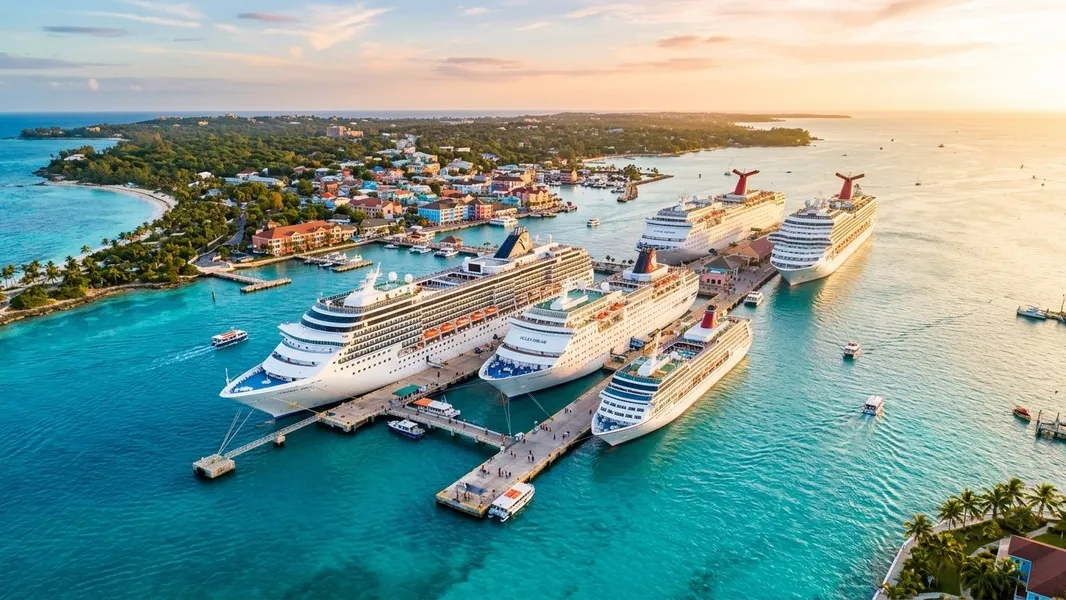
Cozumel, Mexico is consistently one of the world's busiest cruise ports, handling over 1,500 ship calls per year. During peak season, four to six ships may be docked simultaneously across multiple piers, including Puerta Maya and SSA International. Carnival, Royal Caribbean, Celebrity, and Princess all make regular calls here, often for six to eight hour stops with some overnight options.
Galveston, Texas is a major embarkation port for Gulf and Caribbean routes. Carnival and Royal Caribbean use it as a homeport, meaning ships base there and start itineraries from its terminals. On a busy weekend, five to seven ships can be docked or awaiting departure.
Seattle, Washington serves as a gateway for Alaska Inside Passage cruises. Princess and Royal Caribbean both operate from its terminals, running around 250 ship calls per year. The season concentrates between May and October, so summer weekends are the busiest periods for port watchers.
Vancouver, British Columbia pairs with Seattle for many Alaska roundtrips. The Port of Vancouver expects around 360 ship calls and 1.4 million passengers in 2026, making it one of North America's busiest cruise ports. Canada Place terminal is the main hub, and monthly schedules are published by the port authority.
New Orleans, Louisiana runs a smaller cruise operation, with roughly 200 ship calls per year. Carnival and Norwegian are regulars. The Mississippi River location makes New Orleans arrivals especially scenic from the riverfront, and the port sees consistent activity from fall through spring.
Fort Lauderdale (Port Everglades), Florida is the busiest U.S. embarkation port. With 800-plus ship calls per year and ten or more ships active on a peak week, it handles essentially all major lines. According to the Port Everglades authority, the port consistently ranks among the top three cruise ports globally by passenger volume. If you're searching for cruise ships in port today with maximum activity, Port Everglades is usually the answer.
How to Track Cruise Ships in Any Port: Step by Step
Here's how to find which ships are docked in any city right now using a live vessel tracker:
- Open a live AIS tracking app. Apps like Primo Nautic display real-time vessel positions globally. You can search by vessel name, port city, or zoom to a specific harbor on the map.
- Search for the port city. Type the city name or port name in the search field. The map zooms to that location, showing all vessels in the area.
- Filter by vessel type. Most trackers let you filter by ship category. Select "Cruise" or "Passenger" to hide cargo traffic and focus on passenger vessels.
- Read the navigation status. Tap or click a vessel to see its AIS details. The navigation status tells you whether it's moored, anchored, underway, or approaching. A status of "moored" means it's currently at a pier.
- Check the ETA for arriving ships. If you're waiting for a specific ship, the ETA field shows the captain's reported arrival time alongside an AI-calculated route estimate. When both align, the prediction is reliable. When they diverge, it usually means the ship is running ahead or behind schedule.
- Set up arrival notifications. For ships you're following over time, schedule alerts for departure and arrival. This is especially useful when tracking a family member's ship across multiple port stops.
The Difference Between In Port, At Anchor, and Underway
One thing that trips people up: a ship appearing near a port on the map isn't always docked. There are three distinct positions to recognize.
At anchor means the ship has dropped anchor in open water near the port, usually waiting for a berth or for weather. Passengers are often tendered ashore by small boat in this case.
Moored means the ship is tied to a pier or dock. This is what most people mean when they say "in port."
Underway using engine means the ship is actively moving, even at very low speed inside a harbor. This is common during the docking process itself.
AIS trackers with clear status labels help you distinguish between these positions instantly. Without them, you'd have to infer position from a dot on a map, which can mislead if a ship is anchored just offshore rather than docked at a terminal.
Tips for Better Tracking Results
Satellite AIS coverage is complete in open ocean. Terrestrial AIS coverage, using land-based receivers, is very dense near major ports, so tracking accuracy near Galveston or Fort Lauderdale is typically excellent. Coverage in smaller or remote ports may carry a few minutes of delay.
Cruise ships showing an older AIS position near a busy port like Cozumel are often anchored offshore before their pier slot opens. An "anchored" status close to a port usually means the ship is waiting for an available berth, not experiencing a problem.
Using a purpose-aware tracker means getting explanations, not just data points. Primo Nautic's AI adapts its updates based on why you're tracking: a family following a loved one's ship gets warm, reassuring language about port arrivals rather than raw coordinate readouts. The difference between seeing "4.2 km from port at 8 knots" and "your ship is about 30 minutes out and conditions look calm" is significant for the people who care most.
For a broader look at port arrival patterns over time, you can cross-reference live tracking with published port schedules. The cruise ship port schedule guide covers how to read and use official port calendars alongside live AIS data.
For global context: the cruise industry carried around 30 million passengers in 2023 and continues growing, which explains why port activity in cities like Vancouver and Fort Lauderdale reaches record levels in 2026.
Conclusion
Tracking cruise ships in port comes down to access to real-time AIS data and knowing how to read it. For the most popular cruise cities: Cozumel, Galveston, Seattle, Vancouver, New Orleans, and Fort Lauderdale, dozens of ships move through on any given week. Live tracking tools put that information in your hands without needing to call the port or check outdated schedules. Whether you're watching from shore, meeting a ship, or keeping an eye on a family member's voyage, combining AIS status data with AI-driven context turns raw position data into something genuinely useful.