



Cruise Ship Port Schedule: How to Track Arrivals Live
A cruise ship port schedule is a published timetable that lists the planned arrival and departure times for cruise ships at a specific port. Port authorities, cruise lines, and aggregator websites all publish these schedules, usually months in advance.
If you're trying to figure out when a specific ship will arrive, which ships are calling at your home port this weekend, or when to meet a loved one returning from a cruise, this guide covers everything you need. You'll learn where to find official schedules, how to read them, and how to use real-time AIS tracking to go a step further.
What Is a Cruise Ship Port Schedule?
A cruise ship port schedule is a document or webpage that shows planned vessel movements at a port. Each entry typically includes the vessel name, its scheduled arrival time, the departure time, and sometimes the terminal or berth assignment.
Schedules are static by nature. They represent planned itineraries, not live positions. A ship listed as arriving at 07:00 on a Tuesday might arrive at 06:40 or 08:15, depending on weather, sea conditions, or port congestion the night before. The schedule gets you in the right window; real-time tracking tells you exactly where the ship is right now.
Port authorities publish schedules on their official websites, often as monthly calendars. Cruise lines also post itinerary details for booked passengers. Third-party aggregators like CruiseMapper compile schedules across dozens of ports into a single searchable interface, which is useful when you want to compare multiple ports at once.
Schedules are typically published six to twelve months in advance and updated monthly as changes arise.
The Busiest Cruise Ports in the US
The United States handles more cruise passengers than any other country, with a handful of major homeports dominating traffic. Knowing where to find each port's official schedule is the first step.
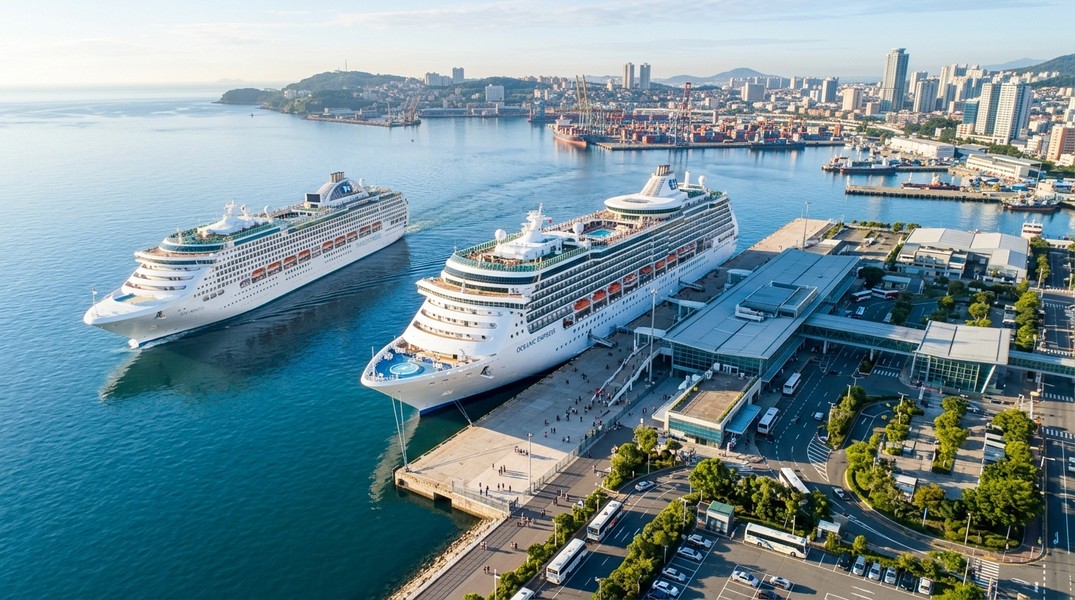
PortMiami is the world's busiest cruise homeport. Peak turnaround days can see up to ten ships simultaneously in port. Arrivals typically come in during the early morning window, between 06:00 and 08:00, with most ships departing in the afternoon between 15:00 and 18:00. The port authority publishes its schedule at miamidade.gov/portmiami, and CruiseMapper also maintains a detailed Miami port calendar.
Port Canaveral in Florida is another major homeport, handling primarily three- to seven-day Caribbean routes. Its official schedule is at portcanaveral.com. Port Everglades in Fort Lauderdale publishes its arrivals at porteverglades.net, while Port Tampa Bay lists its schedule at porttb.com.
Port of Galveston in Texas serves Royal Caribbean and Carnival ships running Gulf of Mexico and Caribbean itineraries. Its schedule is available at portofgalveston.com. For Caribbean stops, the Port of Nassau in the Bahamas sees multiple ships daily, making it one of the most visited cruise ports in the world.
The pattern is consistent across nearly all major ports: morning arrivals for debarkation, roughly an eight- to ten-hour turnaround, then afternoon departures.
How to Find a Cruise Ship Port Schedule
What you'll need: the name of the ship you're interested in (or the port name), a computer or smartphone, and the approximate date of the voyage.
Here are the steps to locate the schedule:
- Go to the port authority website. Each major US homeport has a dedicated cruise schedule page. Use the list above as your starting point. For international ports, search the port authority name plus "cruise schedule."
- Navigate to the cruise or vessel schedule section. Most port authority sites have a direct link in their main navigation. Look for "Cruise Schedules," "Ship Schedules," or "Port Calendar."
- Filter by month and vessel name. Port calendars are usually organized by month. Scan for the ship you're tracking. If the schedule shows terminal or berth information, note it down since it tells you exactly where to expect the ship.
- Cross-check with an aggregator. If the port authority site is hard to navigate, CruiseMapper or MarineTraffic often has the same data in a cleaner format. Search by port name and filter the calendar to your target month.
- Verify the latest update date. Schedules change. A ship may swap itinerary routes or a port call might be added or dropped. Check when the schedule was last updated and note that closer to the sailing date, times tend to solidify.
How to Track a Cruise Ship Arrival in Real Time
Static port schedules give you a planned time. AIS tracking gives you a live position. Here is how to go from the schedule to real-time monitoring.
- Note the vessel name from the port schedule. This is your primary search identifier. Cruise ships have official IMO numbers as well, but searching by name is usually enough.
- Open a vessel tracking app and search for the ship. Ship tracking apps pull live AIS data and show the vessel's current position on an interactive map. Search by the vessel name you found in step one.
- Read the live position, speed, and course. The vessel's speed in knots tells you a lot. A ship at 18-20 knots is cruising normally. A ship at 8-12 knots is slowing for approach. A ship essentially stopped is either anchored offshore or maneuvering into berth.
- Check the ETA. AIS data includes two ETAs: the time the captain has manually reported to port authorities, and an AI-calculated estimate based on the vessel's current speed and remaining distance. The AI-calculated ETA is usually more precise because it updates continuously as conditions change. Primo Nautic shows both, along with a confidence indicator.
- Set an arrival notification. Most tracking apps let you configure alerts for when a ship enters a port zone or drops below a speed threshold. This means you don't need to keep checking the map.
- Check weather at the vessel's location. AIS trackers that integrate weather data show real-time conditions where the ship actually is, not just at the port. This helps you understand if a delay is weather-related and how long it might last.
Why Schedules Alone Are Not Enough
Port schedules are planning tools. They work well for general preparation, but they do not reflect what's happening at sea in real time. A ship that left its last port two hours late will not appear differently on the schedule until the port authority manually updates the entry, which often happens only once or twice a day.
Weather is the most common source of unplanned delays. Rough seas slow a ship down even when the captain wants to maintain schedule. Port congestion adds another variable: if the berth assigned to an arriving ship is still occupied, the incoming vessel circles offshore or anchors until the space clears.
Real-time tracking closes this gap. Because AIS position updates happen every few minutes, the vessel's live data reflects its actual progress. Primo Nautic recalculates a ship's ETA continuously based on its current speed and remaining distance, so if a ship is running behind, the app shows the updated arrival time hours before any official documentation changes.
For families waiting at the pier, this means the difference between showing up at the right time and waiting for two hours in the sun. For cargo monitors and logistics teams, it means earlier visibility into supply chain disruptions.
Tips for Planning Around a Cruise Ship Arrival
Getting the timing right takes a little practice. These tips make the process more reliable.
- Check the AIS data 12 to 24 hours before the scheduled arrival. This window gives you the most accurate snapshot. The ship is close enough that its trajectory is settled, but early enough to adjust your plans if it's running late.
- Watch for the speed drop. When a ship starts reducing speed from cruising pace to maneuvering pace, you're usually one to three hours from docking, depending on the port approach.
- Know the terminal assignment. Large ports like PortMiami have multiple cruise terminals spread across different parts of the port complex. The schedule's berth information tells you which terminal to head to.
- Arrive early for departures, not just arrivals. Most cruise lines require passengers back aboard one to two hours before the posted departure time. If you're dropping someone off or saying goodbye at the pier, plan for that cutoff, not the sail time.
- Use weather data at sea, not at the port. Conditions five hundred miles offshore can be very different from what the weather app on your phone shows for Miami or Tampa. A tracking app that shows real-time weather at the vessel's actual location gives you a more accurate picture of what's causing any delay.
Conclusion
Cruise ship port schedules give you the planned timetable: vessel name, arrival time, departure, and berth assignment. Official schedules are published by port authorities at sites like portcanaveral.com, portofgalveston.com, and individual port authority pages for Tampa, Miami, and Everglades. Third-party aggregators like CruiseMapper consolidate these into a single calendar.
The limitation of any published schedule is that it does not update in real time. Ships slow down, ports get congested, and weather changes course. AIS-based tracking fills that gap by showing live position, current speed, and a continuously calculated ETA. For anyone waiting at the pier, managing a shipment, or just following a favorite vessel, combining the official schedule with live tracking gives you the clearest picture of when a ship will actually arrive.
Most Recent Posts
Discover more articles from our blog.