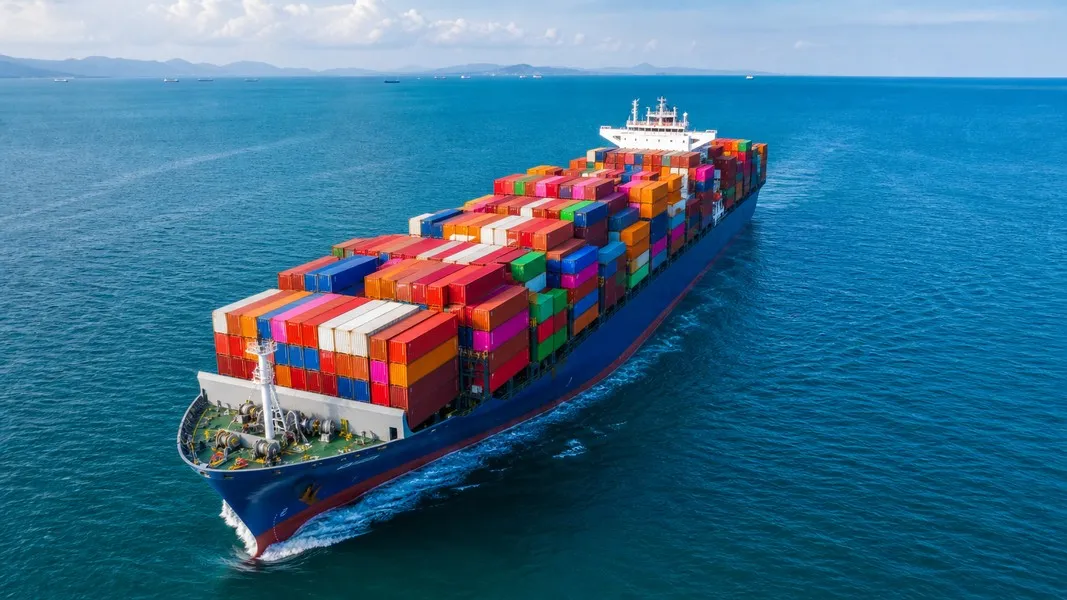
ONE container tracking lets shippers follow their Ocean Network Express shipments through a milestone timeline tied to a container number, B/L number, or booking reference. That system tells you what has officially happened to your cargo. What it doesn't do is show you where the vessel is right now, between ports, or how close it is to arriving. For that, live AIS vessel tracking fills the gap.
Understanding both systems, what each one shows and where each one stops, gives you a clearer picture of your shipment from loading to delivery.
What Is ONE (Ocean Network Express)?
ONE, short for Ocean Network Express, is a global container shipping line that began operations in 2018. It was formed by merging the container businesses of three Japanese carriers: NYK, MOL, and "K" Line. The result is one of the largest container shipping companies in the world, with services spanning the major east-west trade lanes and regional routes connecting Asia, Europe, North America, and beyond.
Shippers working with ONE deal in the standard range of container types: dry 20-foot and 40-foot units, refrigerated containers for temperature-sensitive cargo, and flat-racks for oversized loads. With ONE handling such a broad range of routes and cargo types, reliable shipment tracking is a practical necessity for importers, exporters, and freight forwarders alike.
How ONE Container Tracking Works
ONE's tracking portal is built around shipment reference numbers. You enter a container number, bill of lading number, or booking number to pull up the status of your shipment. Each reference type works differently depending on where you are in the shipment lifecycle.
A booking number works from the earliest stage, before a container is packed or assigned to a specific unit. A container number tracks the physical box itself. A bill of lading number ties to the documentation side of the shipment and becomes the primary reference once cargo is loaded and the document is issued.
What you see when you search is a milestone timeline. Events like gate-in at the origin terminal, loaded on vessel, departed origin port, arrived at transshipment hub, discharged at destination, and gate-out for delivery are logged as they occur and attached to your reference. The portal also shows the vessel name and voyage number once your container is loaded, which is the first connection point to understanding where your cargo physically is at sea.
The system works well for what it's designed to do. When you need to confirm that your container was loaded, verify a gate-out for customs purposes, or check transshipment timing, ONE's portal gives you an authoritative record.
What ONE's Portal Actually Shows
Carrier milestone tracking is event-based, not continuous. Each update reflects a discrete action logged at a port facility: container received, loaded, discharged, released. Between those events, when the vessel is at sea and no terminal is touching the cargo, the portal typically shows nothing new.
This is by design. ONE's portal isn't built to show nautical movement. It's built to capture and document the handoffs in your cargo's journey. That distinction matters in practice because the ocean leg of a shipment, which can span two to four weeks on a transpacific or Asia-Europe route, is precisely where the portal goes quiet.
ETA accuracy is a related constraint. ONE's published arrival estimate is usually based on the carrier's schedule or the last confirmed milestone. If the vessel slows mid-voyage, reroutes around weather, or queues outside a congested port waiting for a berth, that ETA may not update until the next port event is logged. A shipper watching only the portal can arrive at the planning phase with stale timing information.
This isn't a flaw in ONE's system specifically. It's a structural characteristic of how carrier tracking works across the industry. The portal confirms what happened; it doesn't stream what's happening.
Where Live AIS Tracking Adds a New Layer
AIS, or Automatic Identification System, is a maritime broadcast technology built into commercial vessels. Ships continuously transmit their position, speed, course, and navigation status via VHF radio. Both coastal receivers and satellite AIS networks capture these broadcasts, feeding position data into tracking platforms in near real time.
This is the layer that carrier portals don't access. When you know the vessel name from ONE's portal, you can look up that ship on an AIS-based platform and watch it move. You can see whether it's steaming at expected speed, whether it's slowing, or whether it's anchored offshore waiting for a berth.
Apps like Primo Nautic turn that raw AIS data into practical updates. Instead of interpreting nautical coordinates on a raw map, you get context: where the vessel is, what sea conditions are like at that location, and a projected arrival time based on actual movement rather than the carrier's published schedule.
For shippers with active ONE shipments, the vessel name from ONE's portal is the key link between the two systems. Find the vessel by name in an AIS app, and you can follow it live for the rest of the voyage.
When AIS Tracking Matters Most for ONE Cargo
The value of live vessel visibility concentrates around specific moments in a shipment's journey.
Delay detection is the most immediate. If a ONE vessel is running behind schedule, AIS often reflects that before the carrier portal catches up. A vessel moving at 10 knots when it typically makes 18, or sitting at anchor offshore when it should be in berth, signals a delay in progress. Catching that early lets you notify customers, adjust warehouse bookings, or reschedule drayage before the delay compounds into a logistics problem.
Port congestion is a second scenario where AIS adds value. When congestion builds at major hub ports, vessels queue at anchorage before being assigned a berth. AIS shows the vessel waiting and gives you a rough sense of how the queue is moving. The carrier portal may still show the scheduled arrival date while the ship sits offshore for several additional days.
Arrival planning is the third. Even on normal voyages, AIS tracking gives you a tighter arrival window than a static scheduled date. Knowing that your ONE vessel is 80 nautical miles out and steaming at 17 knots is more actionable than an arrival date that was published a week ago and hasn't updated since. You can coordinate customs, drayage, and warehouse staffing around a real position rather than an estimate.
How to Use Both Systems Together
The two systems solve different parts of the same problem, and they work best when used in combination rather than as substitutes for each other.
ONE's official portal owns the documentary record: confirmed milestones, official ETAs, and the reference data you need for customs and compliance. It's where you verify that cargo moved as planned. AIS provides the live nautical layer during the ocean leg, where the portal has nothing new to show.
A practical workflow starts with ONE's portal once your cargo is loaded. You confirm the vessel name and voyage number from the milestone data. You then find that vessel in an AIS-based tracking app and follow it through the voyage. When the vessel approaches the destination port, you check ONE's portal for discharge and gate-out milestones as those events are logged.
Primo Nautic supports this workflow with a cargo-focused lens. The app presents AIS data in a way that's useful for people tracking shipments rather than for maritime professionals reading raw data. You see the vessel's position, how conditions look at sea, and a projected arrival time that adjusts as the ship moves. Smart notifications can alert you when the vessel enters a port zone or departs a waypoint, so you're not checking manually throughout the voyage.
For a broader view of how this kind of tracking works across carriers and vessel types, container ship tracking covers the full mechanics of live vessel visibility for ocean freight.
Limitations Worth Knowing About AIS
AIS is a strong tool, but it isn't infallible. Coverage can vary in mid-ocean and polar regions, though satellite AIS has significantly expanded what's reachable. In rare cases, vessels may transmit no AIS signal, transmit delayed data, or appear stationary when they're actually moving. This is uncommon for major commercial vessels, but it's a reason to treat AIS as a strong operational signal rather than a guaranteed real-time feed.
The more common scenario is brief gaps or slight delays in satellite AIS data rather than extended blackouts. For practical cargo tracking, the vessel position is usually accurate enough to support planning decisions. If you see the vessel stationary offshore for an unusual length of time, it's worth cross-referencing with the carrier portal or a logistics contact before drawing conclusions.
These are also the situations where using both systems together pays off. If AIS shows something unexpected and the carrier portal hasn't updated, a quick check with ONE's customer service or your freight forwarder can clarify whether a delay is real or a data gap.
Conclusion
ONE container tracking provides an accurate, carrier-verified record of every terminal event in your shipment's lifecycle. Live AIS vessel tracking shows you what happens in between, while the container is aboard a vessel at sea. Neither system alone tells the complete story. Combining ONE's portal for milestone confirmation with AIS for live voyage visibility gives cargo owners a fuller, more responsive picture of their shipment from port to port.