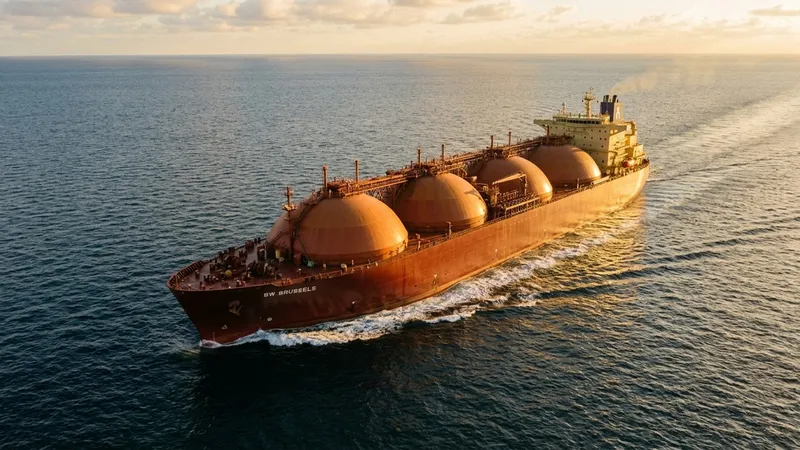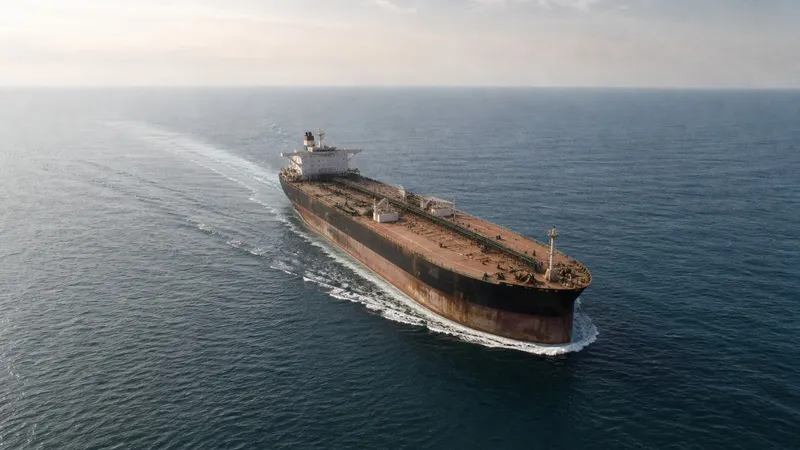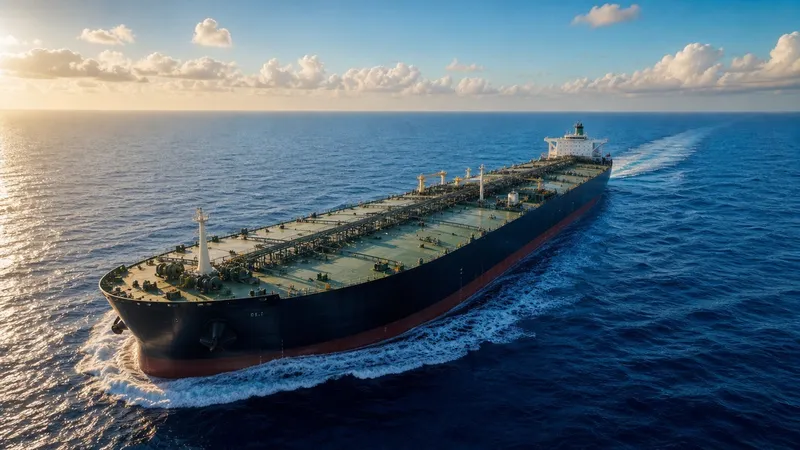
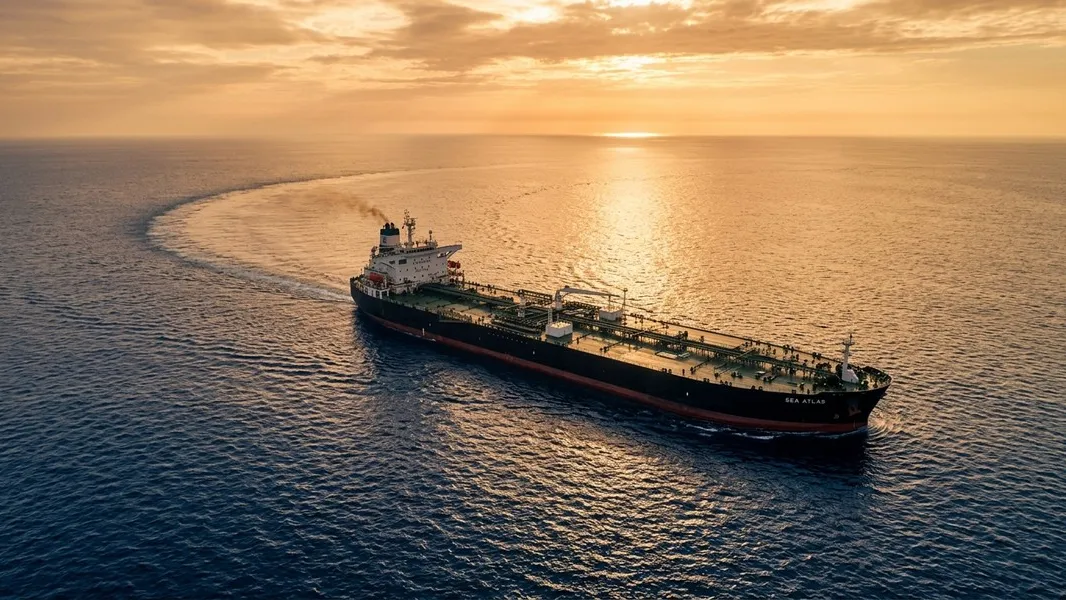
Oil tankers carry roughly 60-70% of the world's traded crude oil and refined petroleum products by sea, making them a cornerstone of global energy supply. An oil tanker is a merchant vessel purpose-built for bulk liquid transport, distinguished from container ships or dry bulk carriers by its network of pressurized internal tanks and double-hull construction.
This post breaks down the six main oil tanker classes by size, DWT capacity, and use case, along with fleet statistics, major trade routes, and how to track these vessels in real time.
What Is an Oil Tanker?
An oil tanker is a ship designed to carry crude oil or refined petroleum products in bulk. Unlike general cargo vessels, oil tankers are built with a network of internal tanks divided by bulkheads, a double-hull structure for spill prevention, and dedicated pumping systems for loading and discharge.
Two broad categories define the market: crude tankers transport unprocessed oil from production fields to refineries, while product tankers carry refined fuels like gasoline, diesel, and jet fuel to end markets. The distinction matters because product tankers require coated tanks to avoid contamination, and their commercial patterns differ from crude tankers.
The first modern oil tanker, the Zoroaster, launched in 1877 and shifted the industry from individual barrels to bulk liquid transport. The design has evolved continuously since then, with double-hull construction becoming mandatory under IMO standards following the Exxon Valdez grounding in 1989.
Oil Tanker Classes: Six Tiers from Coastal to Ultra-Large
Oil tankers are classified primarily by deadweight tonnage (DWT), which measures how much cargo, fuel, water, and ballast a vessel can carry. The six main oil tanker classes span a remarkable range, from GP vessels under 10,000 DWT serving coastal ports to ultra-large crude carriers exceeding 320,000 DWT that require deep-water terminals.
| Class | DWT Range | Approx. Length | Primary Trade |
|---|---|---|---|
| General Purpose (GP) | <10,000 DWT | 100-150 m | Coastal and short-sea |
| Medium Range (MR) | 25,000-55,000 DWT | 180-230 m | Refined product distribution |
| LR1 (Long Range 1) | 60,000-80,000 DWT | ~250 m | Panamax-compliant routes |
| LR2 (Long Range 2) | 80,000-200,000 DWT | 250-274 m | Aframax and Suezmax trades |
| VLCC | 200,000-320,000 DWT | 300-330 m | Long-haul crude routes |
| ULCC | >320,000 DWT | 330+ m | Dedicated deep-water terminals |
Understanding these classes is essential when reading a vessel tracker. A VLCC dwarfs an MR tanker by a factor of six or more in cargo capacity, and the class determines which ports, canals, and shipping lanes the ship can access.
General Purpose and Medium Range Tankers
GP tankers (under 10,000 DWT) handle short coastal routes, supplying smaller ports with heating oil, bunker fuel, and refined products. They rarely appear on long-haul trade routes, operating instead in regional distribution roles where larger vessels cannot fit.
MR tankers (25,000-55,000 DWT), roughly 180-230 meters in length, are the most numerous product tankers globally. They connect major refining hubs to regional markets across Atlantic and Pacific trade lanes. Their size fits most commercial ports without draft restrictions, making them the workhorse of refined product distribution.
LR1 and LR2: Mid-Range Crude and Product Tankers
LR1 tankers at 60,000-80,000 DWT are sized for the original Panama Canal locks, making them a key vessel class on Pacific routes between the US Gulf Coast and Asian markets. This Panamax sizing is a deliberate commercial constraint that opens specific trade corridors.
LR2 tankers cover the Aframax (80,000-120,000 DWT) and Suezmax (120,000-200,000 DWT) segments. Aframax vessels are well-suited for the North Sea, Caribbean, and Mediterranean, while Suezmax tankers are dimensioned specifically to transit the Suez Canal at full load. The Suezmax class emerged precisely because the canal's width and depth set a practical ceiling for vessels on Europe-Asia crude routes.
Oil Tanker Sizes: DWT, Dimensions, and Draft Constraints
Size in shipping is more nuanced than overall length. DWT, or deadweight tonnage, is the standard metric for oil tankers because it reflects actual earning capacity. For context on how DWT relates to other volume and size metrics used in maritime reporting, see our overview of gross tonnage.
The largest oil tanker ever built was the Jahre Viking (formerly Seawise Giant), with a displacement of 650,000 tons and a length of 458 meters. She was too large to transit the English Channel and required specially dredged channels at her loading terminals. She was scrapped in 2010. Current operational limits sit around 320,000 DWT for VLCCs.
Physical chokepoints along major shipping lanes impose hard size limits on the vessels that can use them:
- The Malacca Strait imposes a maximum draft of 22 meters, defining "Malaccamax" VLCC sizing
- The Suez Canal accommodates Suezmax tankers (up to ~200,000 DWT) when fully loaded
- The original Panama Canal gates restricted ships to Panamax sizing (~80,000 DWT); the expanded locks now handle Neo-Panamax vessels
These constraints explain why so many distinct tanker classes exist. Shipping economics reward using the largest vessel that fits the route's physical limitations.
How Much Oil Do Tankers Carry?
Cargo capacity in oil shipping is typically expressed in barrels rather than tons. A VLCC at 300,000 DWT carries approximately 2 million barrels of crude oil per voyage. The Exxon Valdez, at 214,861 DWT, carried 1.48 million barrels when she grounded in Prince William Sound.
Approximate barrel capacity by class:
- General Purpose: 50,000-100,000 barrels
- Medium Range: 200,000-400,000 barrels
- LR1: approximately 500,000 barrels
- LR2 (Aframax/Suezmax): 600,000-900,000 barrels
- VLCC: up to 2 million barrels
- ULCC: over 2 million barrels
Seaborne transport accounts for approximately 60-70% of global crude trade. According to EIA figures, the Malacca Strait sees about 23.2 million barrels per day, while the Strait of Hormuz handles around 20.9 million barrels per day in 2025. These two chokepoints together move more oil daily than most entire countries consume in a year.
Global Oil Tanker Fleet Statistics
The global tanker fleet includes several thousand active vessels across all classes. VLCCs represent the most aggregate capacity but a smaller vessel count, while MR tankers are the most numerous by number of ships. Fleet ownership is heavily concentrated, with major operators like Euronav, Frontline, and Teekay managing hundreds of vessels each.
Fleet renewal activity accelerated sharply in early 2026. According to BIMCO, Q1 2026 saw record tanker contracting, with orders tripling year-over-year, driven by demand growth in Asia and the need to retire aging tonnage.
Vessels over 30 years old face elevated scrapping pressure due to stricter port state control inspections, rising maintenance costs, and emissions compliance requirements under current IMO frameworks. The mandatory transition to double-hull designs, fully phased in by 2010, eliminated all single-hull tankers from commercial service. Any tanker you see on a live vessel map today operates with double-hull protection as a baseline.
Flag state registration is concentrated in Panama, the Marshall Islands, and Liberia. This reflects favorable regulatory environments and tax structures rather than where the vessels actually operate or who owns them.
Key Oil Tanker Trade Routes
The direction of global oil flows has shifted considerably over the past decade. US shale production growth and the rise of Asian refining capacity have rerouted large crude volumes away from traditional Atlantic Basin trades.
The dominant route remains the Middle East Gulf to Asia, connecting loading terminals near the Strait of Hormuz to discharge ports in China, Japan, South Korea, and India. This voyage covers roughly 5,000-6,000 nautical miles and takes approximately six weeks for a laden VLCC. Freight rates on this route ranged from $117,000 to $485,000 per day in Q1 2026, reflecting seasonal demand and fleet availability.
West Africa to Europe and North America forms another major corridor, while South American crude exports to Asian refineries have grown consistently. The US Gulf Coast has become a significant export origin rather than purely an import destination, a reversal from patterns just a decade ago.
These route structures are why different tanker size classes dominate specific trades. A VLCC loading at Ras Tanura bound for Ningbo will transit the Malacca Strait; the same cargo routed to Mediterranean refineries requires a Suezmax to clear the Suez Canal. Understanding the relationship between vessel size and route geography helps explain why a VLCC never appears at a small coastal terminal. For a broader overview of how vessel types are organized, see our breakdown of types of ships.
How to Track Oil Tankers in Real Time
Every commercial oil tanker is required to operate an AIS transponder, broadcasting its position, speed, heading, destination, and estimated arrival time continuously. This data is receivable by coastal stations and satellites, making global tanker tracking possible from any device.
People track oil tankers for a range of reasons. Families with seafarers working aboard tankers want to know where their loved one's ship is, what conditions are like at sea, and when the vessel is due in port. Logistics teams monitoring cargo shipments track ETAs to coordinate downstream operations. Ship enthusiasts follow vessels out of curiosity, reading voyage histories and watching global crude flows in real time.
Primo Nautic provides live AIS tracking for oil tankers and all other vessel types, translating raw position data into personalized updates based on your reason for tracking. A seafarer family tracking a VLCC in the Middle East Gulf receives warm, context-aware updates about journey progress and sea conditions rather than raw coordinates. Cargo monitors get precise ETA comparisons between the captain's reported arrival and Primo Nautic's AI-calculated estimate, with delay alerts when timelines shift.
You can search any tanker by vessel name, MMSI number, or IMO number, filter results by vessel type to focus on tankers specifically, and receive arrival and departure notifications. Primo Nautic also provides real-time weather data at the vessel's exact location, giving families a direct sense of conditions on board.
Conclusion
Oil tankers range from small GP coastal vessels under 10,000 DWT to ULCCs exceeding 320,000 DWT, with each class sized for specific trade routes and port constraints. VLCCs carry up to 2 million barrels per voyage and dominate the long-haul crude trade between the Middle East and Asia. The global fleet is in active renewal, with record ordering in Q1 2026 reflecting long-term demand growth and fleet age. Thanks to mandatory AIS transponders, every oil tanker on the water is trackable in real time, giving observers a live window into the movement of the world's energy supply.