




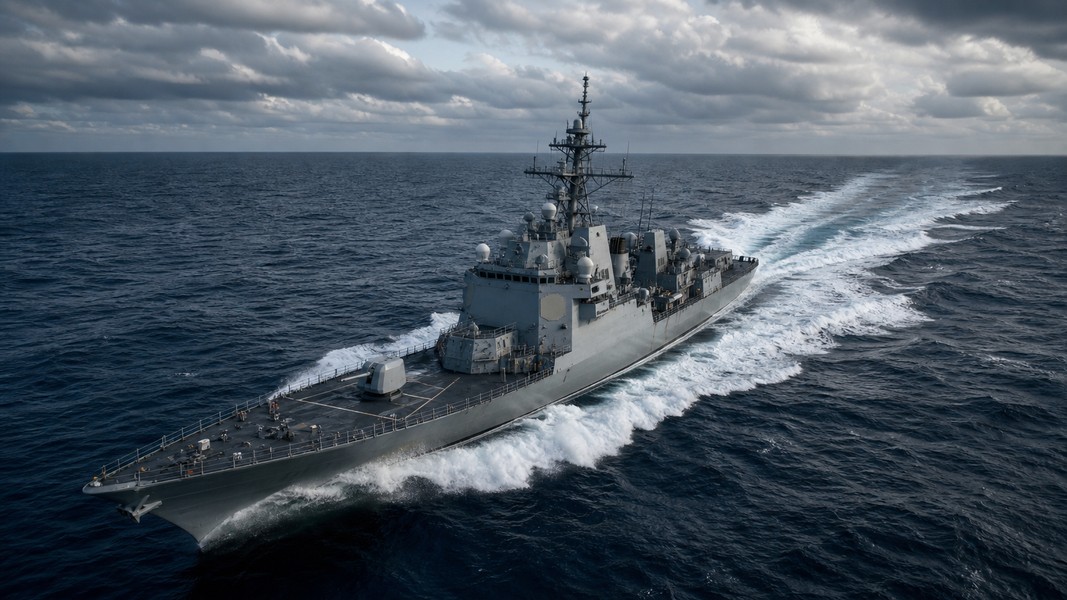
Navy Ship Tracker: Why Military Vessels Are Hard to Track
You open a ship-tracking app hoping to find a destroyer or aircraft carrier, and the map shows nothing. No navy ship tracker live feed, no position dot, no trail. That is not a bug in the app. It is how the system works - and understanding why makes the whole picture of ship tracking much clearer.
The core answer is this: military vessels are legally exempt from the AIS (Automatic Identification System) rules that commercial ships must follow, and navies deliberately exploit that exemption for security reasons. No public ship tracker reliably shows real-time positions of active warships, and that is by design.
Why Navy Ships Don't Appear on Ship Tracker Maps
Every ship tracker website or app you have ever used runs on the same underlying technology: AIS. Vessels fitted with AIS transponders broadcast their identity, position, speed, and course over VHF radio. Nearby ships receive the signal for collision avoidance, and shore stations and satellites pick it up to feed the live maps people see online.
The AIS system explained is built around a simple rule: commercial ships above a certain size must broadcast continuously. Under SOLAS regulations, AIS is mandatory for cargo ships of 300 gross tonnes or more on international voyages, cargo ships of 500 gross tonnes not on international voyages, and all passenger ships regardless of size. That covers container ships, tankers, bulk carriers, cruise ships, and ferries - everything you reliably see on a civilian map.
Warships are carved out of those requirements. Military vessels are not bound by SOLAS in the same way commercial ships are, and flag states grant their navies broad discretion over when and whether to use AIS. The US Navy, for example, equips its ships with AIS hardware but is not required to keep it active continuously. A destroyer operating in the Western Pacific can simply turn the transponder off, and no civilian tracker will ever know it was there.
Military Vessels and OPSEC: Why the Signal Goes Dark
Even when a warship has AIS hardware ready, switching it off is often the correct tactical decision. Broadcasting your exact GPS position to anyone with a smartphone is genuinely dangerous for a combat vessel.
Modern military doctrine includes operations security (OPSEC) and military deception as core principles. For a navy, controlling what an adversary can see about ship positions and movements is not a minor administrative concern - it is a fundamental part of warfighting. A destroyer's location could inform an anti-ship missile targeting solution, reveal the timing of an amphibious operation, or expose a carrier strike group's route through a sensitive chokepoint.
The behavior shows up clearly in open-source data from contested regions. In the Strait of Hormuz, analysts tracking AIS signals have found that US Central Command sensors counted roughly 35% more commercial ship transits than what AIS data alone captured, because many vessels were operating without a publicly visible signal. Warships operating in the same waters leave even less trace on public maps.
The same pattern appears in the Red Sea and Eastern Mediterranean. Analysts tracking ship movements in those areas document GPS interference that has created AIS position errors of over 6,300 kilometers - far beyond any normal signal glitch - pointing to deliberate jamming or spoofing activity near naval operations.
What a US Navy Ship Tracker Map Actually Shows
When you do see something labeled "navy" on a ship tracker, it is usually not a frontline warship. A few categories of military-adjacent vessels do appear on AIS, and understanding the difference helps set realistic expectations.
Military Sealift Command (MSC) ships are logistics and support vessels that often operate with civilian crews. These include oilers, cargo ships, replenishment vessels, and some hospital ships. Because they function more like commercial ships, they are more likely to use AIS in normal operating conditions, at least outside high-risk zones. A USNS-prefixed vessel on your tracker map is an MSC support ship, not a USS combatant.
Coast guard cutters are another category that sometimes appears on AIS, particularly in peacetime law-enforcement roles where visibility supports rather than undermines their mission.
For broad regional information about actual warships, the closest thing to an official navy ship tracker comes from the US Naval Institute. USNI News compiles approximate positions of US carrier strike groups and amphibious ready groups based on official Navy statements, released photos, and ship-spotter reports. Those positions are delayed and given at the regional level - "operating in the Western Pacific" or "in the Mediterranean" - not precise coordinates you can zoom into. Port visit announcements and Fleet Week schedules offer similar information: confirmed locations, but timed around public events rather than operational movements.
How AIS Can Be Manipulated
Even the occasional military vessel that does appear on AIS may not be showing its real position. The AIS system transmits over unencrypted VHF radio, which makes it technically straightforward to manipulate.
Spoofing - broadcasting a false position, identity, or both - is well documented in commercial contexts. Ship-tracker analysts have recorded vessels that appear to sail through mountain ranges on AIS maps, which is a reliable sign that the GPS data being transmitted is fabricated. Ghost vessels with no ownership records and physically impossible tracks appear periodically, likely as decoy signals or test beacons. In one documented case from North Korea sanctions monitoring, a tanker was found to have loaded cargo at a North Korean port while simultaneously broadcasting AIS positions in Russian waters - suggesting months of coordinated, deliberate deception.
Navies have access to far more sophisticated versions of these techniques. A warship could generate decoy AIS tracks showing it in one location while operating elsewhere entirely. The same jamming equipment that disrupts enemy radar can create cascading errors across AIS position data in an entire region. For all these reasons, even when a military vessel does briefly appear on a public tracker, its displayed position may not be trustworthy.
What OSINT Analysts Do Instead of a Navy Ship Tracker Live Map
Professional analysts who need to follow naval activity use methods that go well beyond AIS apps. Commercial satellite companies offer optical and radar imagery that can detect metal hulls on water even when AIS is off, under cloud cover, and at night. Synthetic aperture radar (SAR) satellites in particular can image naval bases, count ships, and identify carrier strike groups at sea from radar returns and wake patterns.
Organizations monitoring sanctions evasion have developed techniques for cross-referencing AIS data with aerial imagery to identify ships that are spoofing their signals or going dark deliberately. These same methods get applied to naval activity: counting ships in ports, tracking amphibious groups forming up before exercises, spotting unusual concentrations of vessels near conflict zones.
Ship-spotter communities contribute a crowd-sourced layer on top of all this. Enthusiasts photograph ships entering and leaving ports around the world, sharing time-stamped images on naval news sites and social media. Those photos can confirm where a carrier was on a given day, even with no AIS signal to reference.
None of this is a simple real-time app. It requires analytical effort, subscription data services, and specialized knowledge. For a general reader wanting to follow a particular warship, these methods are informative but not the instant answer a consumer tracker provides.
What You Can Actually Track Well
If you cannot reliably track a destroyer, what can you do with a ship tracker app?
The honest answer is that AIS-based tracking works exceptionally well for the kinds of vessels most people actually want to follow. Cruise ships, ferries, container ships, oil tankers, and bulk carriers are all legally required to broadcast AIS continuously on international voyages, and they do. The live vessel tracking that works is civilian tracking, and it covers the vast majority of ships on the world's oceans at any given moment.
That distinction matters for the actual use cases most people have. If you have a family member on a cruise, a cargo shipment crossing the Pacific, or a friend working on a merchant vessel, AIS tracking gives you reliable, real-time information. The position dots on your map are accurate. The ETAs are based on actual course and speed data.
Apps like Primo Nautic go further by layering AI-generated context on top of that raw data. Rather than just showing you a position dot, Primo Nautic adapts its updates to why you are tracking: a loved one on a cruise gets warm, reassuring information about the journey and sea conditions; a cargo shipment gets precise logistics-focused updates. The underlying AIS data is the same, but the experience is built around what you actually need to know.
If your goal is to follow a merchant ship, a tanker, or a passenger ferry - live vessel tracking works reliably for all of those. The tools exist, the data is accurate, and the experience has improved significantly with AI-driven apps that turn raw position data into something genuinely useful.
Conclusion
A navy ship tracker in the real-time consumer sense does not exist, and the reasons are built into the legal and operational foundations of how AIS works. Military vessels are exempt from the broadcasting requirements that apply to commercial ships, navies treat their positions as classified information, and the AIS system itself can be turned off or spoofed when security demands it.
What does exist is a layered picture: delayed, regional information from official Navy communications; ship-spotter photos that confirm port visits and transits; and commercial satellite imagery that analysts use to track naval activity at a professional level. For the general public wanting to know where a specific warship is right now, none of those provide a simple answer.
The flip side is that civilian ship tracking, covering everything from container ships to cruise liners to tankers, is comprehensive, accurate, and increasingly sophisticated. If the ship you want to follow operates under civilian AIS rules, you can track it precisely and in real time. That covers the overwhelming majority of the world's commercial fleet.
Most Recent Posts
Discover more articles from our blog.