While there's no question about the critical importance of lifeboats, no passenger or crew would want to find themselves in a situation where they would ever need to use one.
Lifeboats are considered an integral aspect of safety and emergency procedures at sea. A mandated number of lifeboats should be on board and easily accessible during an emergency. For a deeper look at all the safety equipment ships carry, see our guide to life-saving appliances at sea.
A lifeboat is a small boat kept aboard ships. Its primary purpose is to allow emergency abandonment if mishaps occur, including ship accidents, man overboard, and life. Their primary function is to ensure effective and swift evacuation from the ship of people in distress and transport them to a safer location.
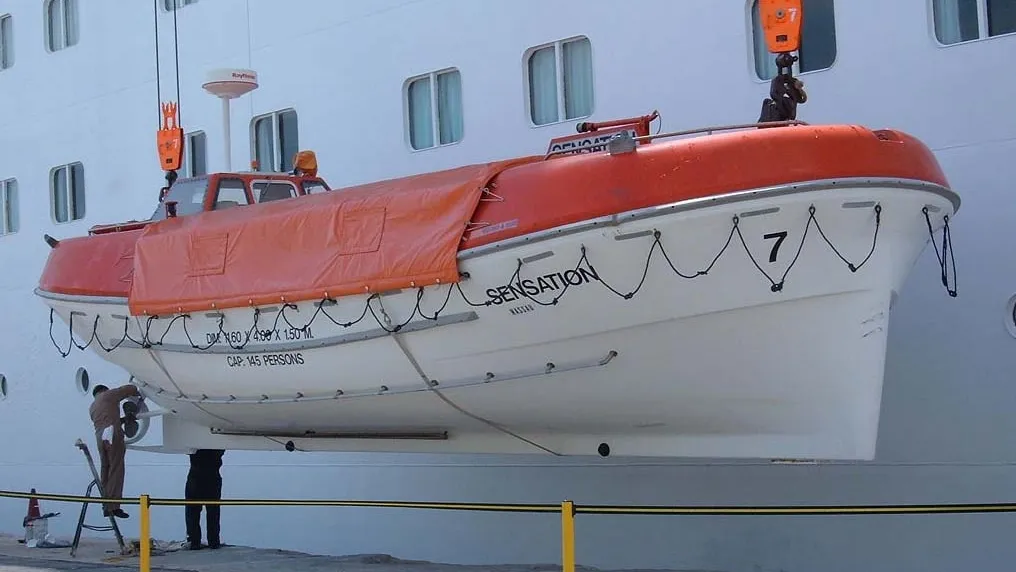
Davit systems, fixed on the sides of a ship, ensure the quick deployment of lifeboats from the vessels. These boats come with a motor that sets them apart from inflatable boats and rafts, which are noticeably slower and smaller. Inflatable lifeboats comprise an auto-inflation system that makes their deployment faster and easier, which is essential for distressed people.
Most Popular Lifeboat Types
SOLAS Regulations state that every vessel must carry enough lifeboats for 37.5% of the passengers and crew on both sides. Meanwhile, rigid or inflatable lifeboats should be able to accommodate 25% on each side of the ship.
Three major lifeboat types are available today with specific areas of application, uses, and levels of effectiveness.
- Open Lifeboats
As their name suggests, open lifeboats are open boats without a roof. Oars are often used to propel them manually. There are also instances when a compression ignition engine is used to navigate these lifeboats.
But because of the existing stringent norms on safety, open lifeboats are no longer widely used and accepted. You might be able to have rare sightings of these lifeboats in older ships.
- Closed Lifeboats
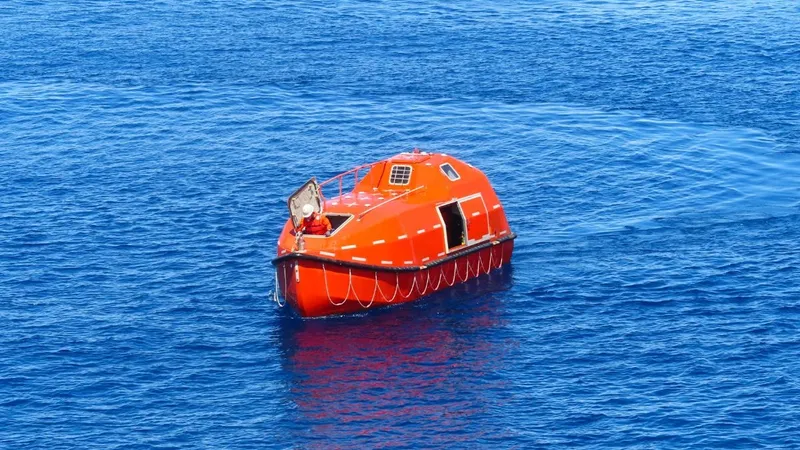
A closed lifeboat is enclosed with a roof that offers shelter to people inside from solid winds, seawater currents, and rain. Even when toppled, these boats can stay upright all by themselves.
Closed lifeboats have two classifications: enclosed motor lifeboats (TEMPSC) and free-fall lifeboats.
- Free-fall Lifeboats
A free-fall lifeboat is kept and deployed from the downward-sloping slipway to ensure maximum clearance. These lifeboat types are more robust and heavier to help sustain the impact they make against the water once they are released and dropped directly from the ship.
- Enclosed Motor Lifeboats
Enclosed motor lifeboats (TEMPSC) feature a high-strength hull with excellent resistance to impact, preventing external forces from damaging the hull, thus protecting the passengers from cold and dampness.
These lifeboats are also made of materials known to resist corrosion and have good durability. They can also effectively resist seawater error to help prolong the boat's service life. The unique hull design of totally enclosed motor lifeboats (TEMPSC) allows good stability to effectively ensure the boat's stability and resist wave impact, which can help lower maintenance costs.
The comfortable design of the interior space of totally enclosed motor lifeboats can also offer passengers the sense of comfort and safety they need during distressful situations.
Aside from the two major lifeboat types, two additional advanced types are also available in some vessels, namely hyperbaric and fireproof lifeboats.
- Fireproof Lifeboats
A fireproof lifeboat is used when oil spills occur. They feature heavy insulation to help them endure flaming substances. Their high sustenance nature also shields the boat from flames and heat for a maximum of 8 minutes once waterborne.
- Hyperbaric Lifeboats
Hyperbaric lifeboats feature a sealable diving chamber with hatches big enough to allow people to come and go without experiencing any decompression. These pressure vessels supply compressed breathing to increase the internal air pressure.
Lifeboat Deployment Procedures
Regardless of the specific lifeboat types being used, the most crucial factor here is ensuring they are released correctly and quickly to help people in distress at the soonest and fastest possible. Knowing the full abandon ship safety protocols is essential for every crew member before any emergency arises.
There are three primary types of lifeboat release and deployment mechanisms, and these are the following:
- On Load Mechanism
The main focus of the loading mechanism is to release the lifeboat from the wire while the crew members are still in the boat. This is operated once the ship almost touches the water to guarantee that it will land safely without causing harm or damage to the crew inside and the boat itself.
- Off-Load Mechanism
The off-load mechanism releases the lifeboat once it is entirely on the sea. This features a hydrostatic piston unit connected to an operating lever at the bottom. When the lifeboat is waterborne, water pressure will move the lever up to release the fall wire.
- Free-Fall Lifeboat Release Mechanism
Free-fall lifeboats use a release mechanism in which the lifeboat gets launched or released from the stowed position by operating the lever found in the boat that deploys it. This allows the ship to slide onto the water's surface through a tilted ramp.
Critical Survival Equipment in Lifeboats
A lifeboat alone might be able to transport people to a safer location. However, lifeboats are expected to have some essential pieces of survival equipment to further ensure the safety of people in them. Modern survival craft innovations have significantly improved how this equipment performs under extreme conditions.
- Compass
Lifeboats must have a portable compass to help check the direction where it should be steered. Carrying a compass is mandatory as it is essential to stick to the course during rescue operations.
- Dipper
Potable water is a precious commodity when stranded on a lifeboat; understandably, it should be used sparingly to ensure it will last longer. But there is always the risk of spilling the water accidentally while pouring because of the boat's swaying motion. A dipper can help reduce the spillage of drinking water in a lifeboat.
- Embarkation Ladder
During evacuation procedures, embarkation ladders have two ropes fixed with metal or wooden steps and are used for descending from or ascending from one ship to another. Also called pilot ladders, these should be stored and secured properly at the most vital point midway along with the vessel. The ladders should cover the whole length from the ship's deck to the water level. The ladder should also stay clear of all the ship discharges.
- First Aid Kits
First aid kits should contain bandages, essential medicines, and other items that can be used to treat major injuries.
- Food Rations
Emergency food rations are stored in lifeboats if the people on it need to stay for several days. These rations should include freshwater, soya fat, wheat flour, glucose, and vitamins.
- SART Devices
Search and rescue radar transponders or SART devices locate ships in distress or their survival. Ships must carry SARTs on board. The SART is a tiny omnidirectional and battery-operated radar transmitter and receiver.
- Signaling Devices
Signaling devices such as distress flares and pyrotechnics are also essential survival equipment in lifeboats as these help attract the attention of any nearby vessel or aircraft.
The Bottom Line
No matter what lifeboat types are found in a shipping vessel, one fact remains unchanged: they serve as the ultimate survival pod at sea, offering security, safety, and comfort to distressed people.
The sea can be treacherous sometimes, and lifeboats can make a big difference between life and death among passengers and crew members.
However, it is not enough to have a lifeboat handy. It's also vital that everyone knows how to use and deploy them properly, which can be achieved through regular lifeboat drills.