



Survival Craft Explained: Types, Equipment & SOLAS Rules
SOLAS requires every ship to carry sufficient survival craft for all persons on board. The three main types are lifeboats, liferafts, and rescue boats, each designed for different emergency scenarios and governed by international regulatory standards. Since the 1912 Titanic disaster prompted the original SOLAS convention, survival craft technology has advanced significantly, from open wooden boats to enclosed, self-righting lifeboats with integrated GPS, AIS, and satellite communication systems.
Historical Context
Survival crafts date back to ancient times, when rudimentary rafts and small boats were used in emergencies. However, the 1912 Titanic disaster highlighted the dire need for reliable and adequate survival craft.
This tragedy led to adopting the International Convention for the Safety of Life at Sea (SOLAS) in 1914, mandating sufficient lifeboats for all passengers and ship crew. Since then, survival craft have evolved continuously, driven by technological advancements and lessons learned from maritime accidents.
Types of Survival Craft
Several types of survival craft are designed to meet different emergency scenarios. The primary categories include lifeboats, liferafts, and rescue boats.
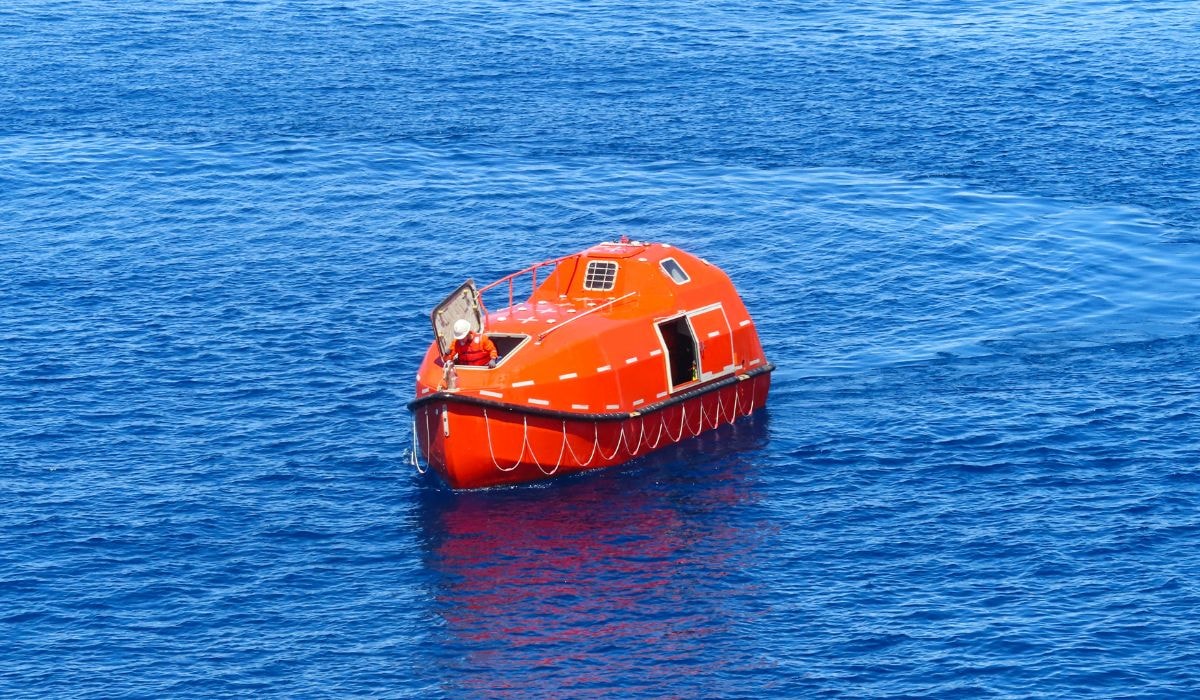
- Lifeboats: Rigid, enclosed, or partially enclosed boats designed to be launched from a distressed ship. Modern lifeboats are equipped with engines, navigational aids, and provisions to support survivors for an extended period. They are often designed to be self-righting, ensuring they can return upright if capsized.
- Liferafts: Typically inflatable, liferafts are compact and can be deployed quickly. They are equipped with essential survival gear such as water, food, signaling devices, and first aid supplies. Their lightweight and easy deployment makes them suitable for various vessels.
- Rescue Boats: Smaller, fast boats designed to aid in recovering persons from the water and to marshal liferafts and lifeboats. They are crucial for search and rescue operations during maritime emergencies.
Innovations in Lifeboats
Modern lifeboats have seen numerous innovations to enhance safety, comfort, and survivability.
- Advanced Propulsion Systems: Many lifeboats now have advanced propulsion systems, including diesel engines and battery-powered electric motors. These systems provide reliable power for longer durations and in more challenging conditions.
- Enclosed Lifeboats: Unlike the open lifeboats of the past, enclosed lifeboats protect from harsh weather conditions and waves. This design significantly improves survival by shielding occupants from the elements.
- Free-Fall Lifeboats: These lifeboats are designed to be launched from a height, typically the stern of a ship, by free-falling into the water. This quick deployment method ensures the lifeboat is immediately away from the sinking vessel, reducing the risk of being trapped.
- Integrated Survival Systems: Lifeboats are now equipped with integrated survival systems that include GPS, VHF radio, AIS (Automatic Identification System), and EPIRBs (Emergency Position Indicating Radio Beacons). These technologies enhance the ability to locate and rescue survivors.
- Self-Righting Capability: Modern lifeboats are often designed to be self-righting. If they capsize due to rough seas, they can automatically return upright, preventing the occupants from being trapped underwater.
Innovations in Liferafts
Liferafts have also seen significant advancements, making them more reliable and effective in emergencies.
- Automatic Inflation: Modern liferafts have automatic inflation mechanisms that deploy the raft within seconds of hitting the water. This rapid deployment is crucial in emergencies where time is of the essence.
- Communication Systems: Some liferafts are now equipped with integrated communication systems, including VHF radios and satellite phones, to facilitate contact with rescuers.
- Enhanced Stability: Liferafts are now designed to prevent capsizing, with stability features such as weighted ballast bags and canopies ensuring the raft remains upright and stable even in rough seas.
- Survival Equipment: Liferafts are equipped with comprehensive survival kits, which include water, food, medical supplies, signaling devices, and fishing gear. These provisions are critical for sustaining life until rescue arrives.
- Thermal Protection: Innovations in materials have led to the development of liferafts with improved thermal protection. These rafts help maintain a stable internal temperature, protecting occupants from hypothermia in cold waters.
Technological Integration
Integrating advanced technology into survival craft is one of the most significant trends in recent years. This includes using GPS, AIS, and other communication and navigation systems to enhance the chances of rescue.
- EPIRBs: Emergency Position-Indicating Radio Beacons (EPIRBs) are crucial for signaling distress. When activated, they send a distress signal to satellites, which relay the position to search and rescue authorities.
- AIS and GPS: Including GPS and AIS in survival craft allows rescuers to pinpoint the exact location of the lifeboat or liferaft. This is particularly important in vast ocean areas where visual detection is challenging.
- Satellite Communication: Advanced lifeboats and liferafts now have satellite communication systems that enable direct communication with rescuers. This technology is vital for coordinating rescue efforts and real-time survivor condition updates.
Training and Drills
While technology plays a critical role in enhancing the effectiveness of survival craft, the importance of proper training and regular drills cannot be overstated. Crew members must be proficient in the use of lifeboats, liferafts, and survival equipment on board.
- Drills and Simulations: Regular simulations and drills ensure that crew members are familiar with emergency procedures. These exercises help identify potential issues and improve the efficiency of evacuations.
- Training Programs: Comprehensive training programs for maritime personnel cover the operation of survival craft, communication equipment, and first aid. These programs are essential for preparing crews to handle real-life emergencies effectively.
Regulatory Standards
Regulatory bodies such as the International Maritime Organization (IMO) set stringent standards for survival craft. These regulations ensure that all equipment meets high safety and performance criteria.
- Testing and Certification: Manufacturers of survival craft must adhere to rigorous testing and certification processes. This ensures that all equipment can withstand the harsh sea conditions and provide reliable performance in emergencies.
- Regular Inspections: Survival craft are subject to regular inspections and maintenance to ensure they remain in optimal condition. This includes checking inflation mechanisms, communication systems, and the integrity of the craft.
- SOLAS Convention: The SOLAS Convention outlines lifeboats, liferafts, and other survival equipment requirements. Compliance with these standards is mandatory for all seagoing vessels.
The Future of Survival Craft
The future of survival craft is likely to be shaped by ongoing technological advancements and a growing emphasis on sustainability. Innovations such as renewable energy sources, improved materials, and enhanced communication systems will continue to drive the evolution of these critical life-saving devices.
- Advanced Materials: Developing new materials that are lighter, stronger, and more resistant to the elements will enhance the durability and performance of survival craft. These materials can also improve the comfort and safety of occupants.
- Artificial Intelligence: AI in survival craft is an emerging trend. AI can assist in navigation, monitor occupant health, and optimize the use of available resources.
- Improved Communication: Advances in satellite and communication technology will further enhance the ability of survival craft to maintain contact with rescuers. This includes the potential for real-time video communication and data sharing.
- Renewable Energy: Integrating renewable energy sources like solar panels into survival craft can provide a sustainable and reliable power supply. This can power communication systems, lighting, and other essential equipment.
Wrapping It Up
Survival craft innovations have come a long way since the early days of maritime travel. Modern lifeboats and liferafts are equipped with advanced technology and features that significantly enhance the chances of survival in emergencies. However, proper training, regular drills, and adherence to regulatory standards cannot be overlooked.
As technology continues to evolve, the future of survival craft promises even more incredible advancements, ensuring that lives can be saved at sea with increasing efficiency and reliability. The continued focus on innovation and safety will be vital to safeguarding the lives of those who navigate the world's oceans.
Most Recent Posts
Discover more articles from our blog.