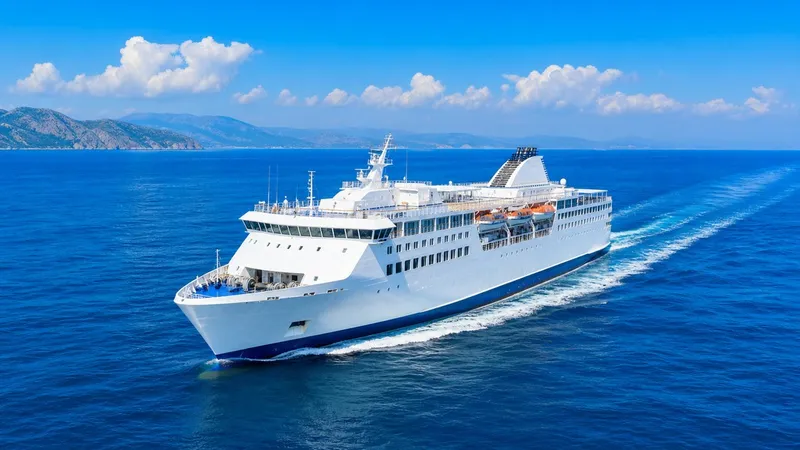

A ferry tracker is any app that shows a vessel's live position using AIS data broadcast from the ship itself. Open the app, search by ferry name or route, and you can see exactly where the vessel is, how fast it's moving, and when it's likely to arrive, whether you're a passenger onboard, waiting at the dock, or tracking a family member crossing alone.
This guide walks you through how ferry tracking works, which tools cover which routes, and how to get real-time updates tailored to your situation.
Why Passengers Track Their Ferry
For most passengers, the question is simple: is the ferry running on time? A 30-minute delay at a major port is an inconvenience. On a remote Alaska route in rough weather, that same delay can mean missing a flight connection or arranging overnight accommodation at short notice.
Ferry delays are more common than people expect. Weather, heavy traffic, mechanical checks, and seasonal conditions all affect schedules. On routes like the Alaska Marine Highway, where some sailings stretch across multiple days, knowing the vessel's current position is the difference between showing up at the right time and waiting hours at a cold terminal.
Passengers also track ferries for safety reassurance. When a family member is crossing the Aegean on an overnight sailing, or a colleague is on the Sete to Tangier Mediterranean route, a live position update is far more reassuring than a departure confirmation with no follow-up. Unlike airline tracking, there is no centralized system that sends real-time alerts to non-passengers. Ferry tracking apps fill that gap.
The use case extends beyond the passenger themselves. Families waiting onshore use ferry tracking the same way they would track a flight: to know when to leave for the port, to get ahead of a delay, and to stay informed without relying entirely on the operator's communications. Port pick-ups are much easier to time when you can see the vessel approaching in real time.
How Ferry Tracking Technology Works
Most passenger ferries use AIS tracking, the same radio-based system used by cargo ships and tankers. AIS transponders broadcast a vessel's position, speed, course, and identification data every few seconds over VHF radio. Shore stations and satellites receive those signals and relay them to tracking platforms worldwide.
Under IMO regulations, all vessels over 300 gross tons, which includes the overwhelming majority of commercial passenger ferries, are required to carry and operate AIS transponders. Coverage gaps can occur in remote coastal areas without nearby shore stations, but satellite AIS has largely closed those blind spots on the routes where passengers are most likely to travel.
What the data shows you: live position on a map, current speed, reported heading, next scheduled port, and the estimated time of arrival. Most tracking apps update every few minutes using terrestrial AIS, with satellite data filling in the gaps for offshore segments.
What it cannot always show: the reason for a delay, real-time onboard conditions, or operator-specific announcements. For that context, you need a tool that layers additional information on top of the raw position data, translating coordinates and speed into something a non-maritime user can actually act on.
How to Track a Ferry in Real Time
The process is the same across all major tracking platforms. You do not need a maritime background or specialized equipment, and setup takes about two minutes.
Start by finding the ferry's name. This is usually printed on the ticket, the booking confirmation, or the operator's website. Ferry names are specific to the vessel rather than the route, so "Spirit of British Columbia" or "M/V Columbia" will get you a direct result. Searching by route name alone often returns multiple vessels operating on the same corridor.
Open a tracking app and search by vessel name. Most apps return a result within seconds. Tap the vessel to see its current position, recent track, reported speed, and ETA. If the ferry is in port or tied up at a terminal, it will show as stationary until departure.
Set a notification for arrival or departure if you need one. Apps vary in how granular these alerts can be. Some send a push notification when the vessel enters a port's exclusion zone; others let you customize the distance threshold or trigger the alert when speed drops below a certain threshold on approach.
If you are tracking from onshore, the live map view gives you enough to plan around. If you are already onboard and want to understand the conditions outside, a tool that translates position data into plain language updates is more useful than a navigation chart. The raw numbers, speed over ground, course over ground, distance to destination, are accurate but they require interpretation.
Tracking by Use Case: What You Actually Need
The practical requirements differ depending on your reason for tracking.
Waiting at the dock. You mainly need the ETA and any indication of delay. A live map is useful but a single notification is enough for timing your arrival. Apps like MarineTraffic and VesselFinder cover this well with their free tiers, and both are available on iOS and Android.
Following a family member crossing alone. Here you want more than a dot on a map. You want to know what conditions are like on that specific crossing, how far the vessel has traveled, and when they are expected to arrive. Primo Nautic addresses this directly: when you set your tracking purpose to "Loved One Traveling," the app generates personalized updates adapted to that context rather than raw AIS data. A family member waiting at home receives a message like "the ferry is about halfway across, expected in 2 hours" rather than "speed 14 knots, COG 220."
Onboard and curious. Some passengers enjoy knowing exactly where the ship is relative to landmarks or other vessels nearby. Any general-purpose tracker works here. The map view during a crossing gives you a live sense of the route, nearby maritime traffic, and the remaining distance to port. On longer crossings like Mediterranean overnight sailings, the map becomes a useful orientation tool.
Multi-leg journey planning. If a ferry connection feeds into a train or flight, you need delay detection early. Setting up a departure alert on the vessel's previous port of call tells you if the ferry left late, giving you time to adjust connecting transport before it arrives and before you are already waiting at the terminal.
Ferry Tracking by Region
Demand for ferry tracking tools is highest where services are most frequent, routes are long, or weather disruptions are common. Several regions account for the majority of ferry tracking search activity.
Alaska and the Pacific Northwest. The Alaska Marine Highway operates one of the most geographically complex ferry networks in the world, with routes stretching from Bellingham, Washington to remote communities in Southeast Alaska. Delays from weather, wildlife, and seasonal ice conditions are routine. The official AMHS website provides schedules, but third-party AIS trackers give you a live vessel position that no published schedule can. Washington State Ferries, the busiest ferry system in the United States, generates significant search volume for washington state ferry tracker queries. Because both systems operate commercial passenger vessels above 300 gross tons, they broadcast AIS and are fully visible in any major tracking app.
Mediterranean. Greek island ferries, Blue Star Lines, and operators running the Sete to Tangier route are all covered by AIS. On longer crossings, like the 42-hour Sete to Tangier Med sailing, real-time position data is the only way to stay informed during the overnight passage. The alaska ferry tracker use case and the Mediterranean one share the same core need: knowing where the vessel is when schedules alone are not enough, and when the next port of call is hours away.
UK, Ireland, and Scandinavia. The Dover to Dunkirk crossing is one of the busiest maritime corridors in the world. Dense AIS coverage across the English Channel means tracking data updates frequently and reliably. Irish Sea crossings between Dublin and Holyhead, and Scandinavian fjord routes linking Norwegian coastal towns, are equally well-served. In these regions, ferry tracking is less about reassurance and more about precision scheduling: catching the right connection when ferries run every few hours.
Southeast Asia and the Pacific Islands. Ferry travel is a primary mode of transport across the Philippines, Indonesia, and Fiji. Coverage is generally good on main inter-island routes but can be patchy on smaller vessels between remote islands. For these routes, satellite AIS matters more than terrestrial receiver networks.
Getting Started with Ferry Tracking
Three practical steps to follow before your next sailing.
First, get the vessel name before you travel. Your booking confirmation usually includes it. If not, search the operator's website for the specific ship assigned to your sailing. Large operators run multiple vessels on the same route, and only the vessel name gives you a specific result in a tracking app.
Second, choose your tool based on how much information you want. For a simple ETA check, the free tier on MarineTraffic or VesselFinder handles the job with no account required on the web version. For a full-crossing experience with personalized updates, Primo Nautic lets you set a tracking purpose that shapes what you receive throughout the journey: warm family-focused updates if you are tracking a loved one, or precise logistics-style data if you need connection timing. The app is available on iOS and Android.
Third, set a notification before departure, not after. A departure alert from the vessel's previous port of call is the most useful trigger: it confirms whether the ferry left on time, giving you a window to adjust plans before you are already at the terminal.
Conclusion
Ferry tracking works because the vessels themselves are broadcasting their position continuously, and because the technology to receive and display that data is now available on any smartphone. The harder question is not how to access the data, but how to make it useful. A raw position on a map is accurate but impersonal. Whether you need a simple arrival notification, a running commentary for a family member onshore, or precise departure timing for a connecting journey, the right tool translates that position data into something you can act on.