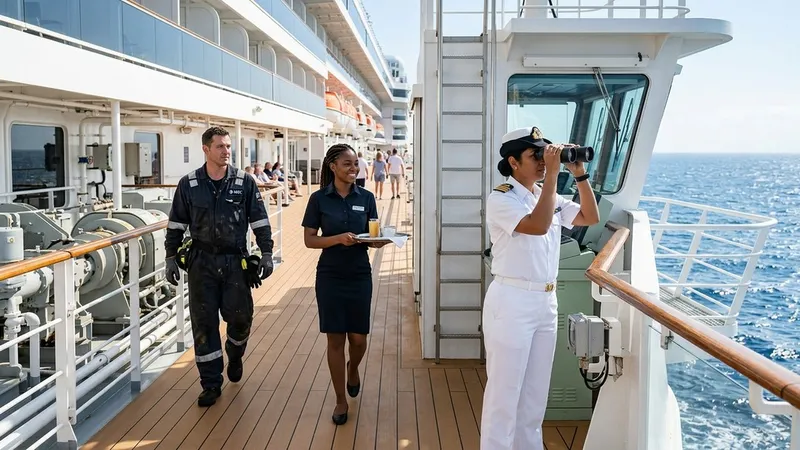
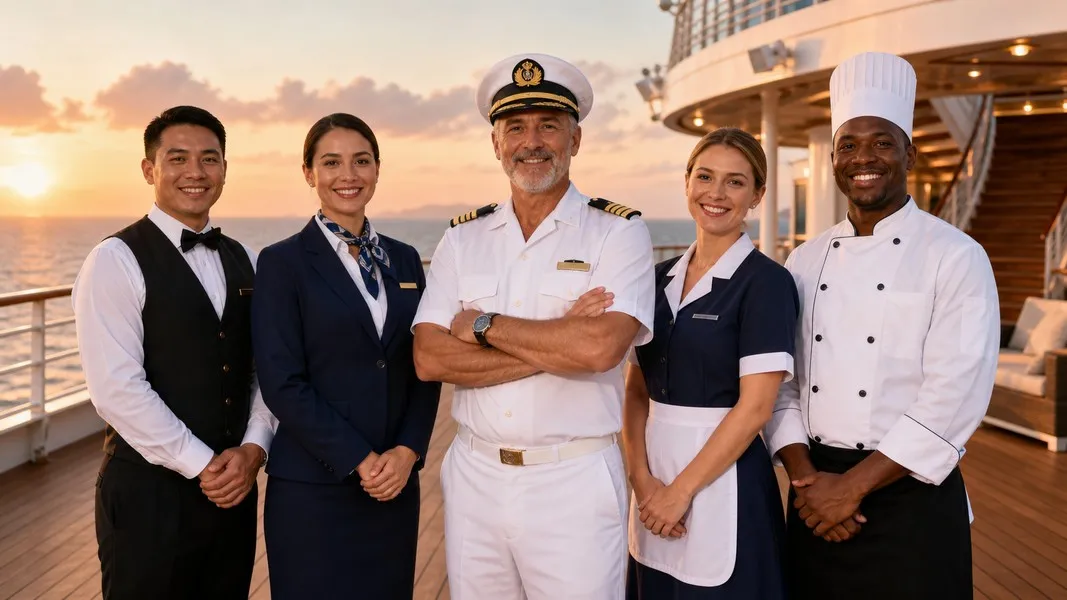
A modern cruise ship is essentially a floating city, and cruise ship jobs span everything from bridge navigation to Broadway-style performance. If you've ever wondered what it takes to keep a vessel with thousands of passengers running smoothly 24 hours a day, the answer comes down to a highly organized crew structure that covers four core departments: deck, engine, hotel, and entertainment.
This guide breaks down every major role on board, what each position involves day-to-day, what you can expect to earn, and how to land your first job at sea.
How Cruise Ships Are Organized
Every large cruise ship operates through four main departments, each responsible for a distinct function.
The deck department handles navigation, safety, and the physical operation of the vessel. Deck officers maintain the bridge around the clock and manage everything from mooring procedures to lifeboat inspections.
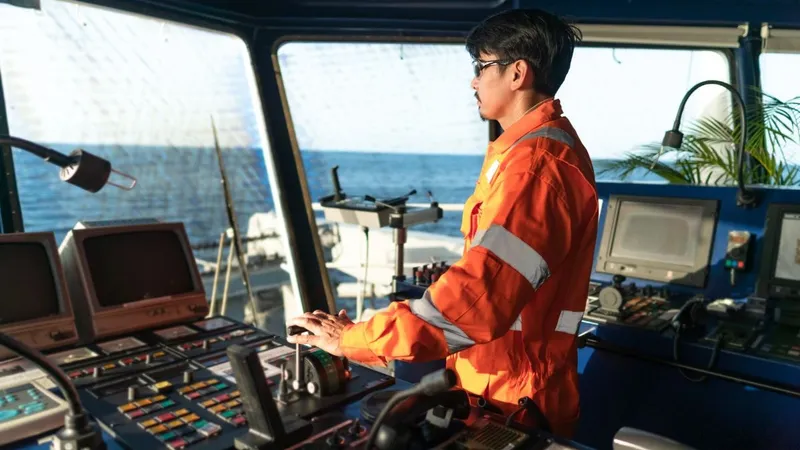
The engine department keeps the ship's mechanical systems running, including propulsion, power generation, HVAC, and water systems. Without this team, the ship doesn't move and the lights don't stay on.
The hotel department is the largest on most ships and covers all passenger-facing services: accommodation, food and beverage, housekeeping, and guest relations. On a large mainstream ship carrying 3,000 to 4,500 passengers, this department alone can employ 700 to 1,200 staff.
The entertainment and activities department runs shows, youth programs, fitness classes, excursions, and social events throughout each voyage.
A typical large cruise ship with 3,000 to 4,500 guests carries between 1,200 and 1,700 crew. Mega-ships carrying over 5,000 passengers can exceed 2,000 crew members representing 50 or more nationalities. The captain sits at the top of this hierarchy, with senior department heads reporting directly to them.
Deck Department: Navigation and Safety Roles
The deck department is responsible for getting the ship where it needs to go safely and on time. Every watchkeeping officer holds relevant certifications under the STCW convention, which sets international training standards for seafarers.
Captain (Master)
The captain has ultimate authority over everything on board, from navigation to crew discipline to passenger safety. In practice, the captain delegates day-to-day bridge operations to watch officers and focuses on high-level decisions: route planning, weather management, port coordination, and representing the ship to guests and port authorities. It's a role built on decades of sea time, and on large ships it commands a monthly salary in the range of $12,000 to $25,000.
Staff Captain
The staff captain is second in command and the head of deck operations. They oversee mooring, lifeboat drills, security watches, and the overall performance of deck officers. While the captain handles the command layer, the staff captain manages the daily machinery of the deck department.
Navigation Officers
Most large ships carry a chief officer plus second and third officers, providing enough licensed personnel to maintain three rotating bridge watches around the clock. Navigation officers monitor radar and AIS systems, update charts, stand helm watches, and manage deck maintenance schedules when not on the bridge. A 6-on/6-off watch rotation is common, meaning each officer stands six hours on duty followed by six hours off.
Bosun
The bosun is the senior deck rating who supervises the AB seamen. Day-to-day duties include organizing mooring operations, managing paint and maintenance schedules, and acting as the bridge between deck officers and the ratings who carry out physical work on deck.
Able Seaman (AB)
AB seamen handle the hands-on work: handling mooring lines, cleaning exterior areas, operating winches, performing lookout duties, and assisting during port arrivals and departures. The role requires documented sea time plus basic STCW safety courses.
Engine Department: The Mechanical Core
The engine department runs continuously regardless of whether the ship is at sea or in port. Large cruise ships are powered by diesel-electric systems, where multiple large generators produce electrical power that drives propulsion motors and feeds every system on board. The combined generating capacity of a mega-ship can reach tens of megawatts, enough to power a small city.
Chief Engineer
The chief engineer is the most senior technical officer, responsible for all machinery, systems, and technical compliance across the vessel. They manage maintenance planning, spare parts procurement, and engineering staff, while working closely with the captain on decisions that affect power availability and propulsion.
First, Second, and Third Engineers
Junior engineering officers share watch-keeping duties in the engine control room and carry out hands-on maintenance on main engines, auxiliary generators, boilers, purifiers, and HVAC systems. First engineers typically act as deputies to the chief and oversee specific major systems. Second and third engineers take on specific machinery sections and respond to faults during their watch.
Electro-Technical Officer (ETO)
The ETO specializes in the ship's electrical and electronic infrastructure: power distribution, navigation electronics, communications systems, elevators, and the IT networks that run guest entertainment and point-of-sale terminals. As ships become more technologically complex, ETO roles have become increasingly critical.
Motormen and Oilers
Engine ratings form the hands-on layer of the department. Motormen assist engineers with inspections, overhauls, and machinery checks. Oilers focus on lubrication and monitoring moving components for heat or vibration anomalies. Both roles work under direct engineering supervision.
Port time is often the busiest period for the engine department. With propulsion at reduced load, engineers use port calls to carry out major maintenance work that's impractical underway.
Hotel Department: Hospitality at Scale
The hotel department runs what guests actually experience: their cabin, their meals, their drinks, and every interaction at the front desk. It's the largest department on any mainstream cruise ship and the one with the highest volume of job openings.
Hotel Director
The hotel director leads all guest-facing operations and reports directly to the captain. They oversee budgets, service standards, staffing, and guest satisfaction across every hotel function on board.
Chief Purser
The chief purser manages shipboard accounts, crew payroll, onboard revenue reporting, and sometimes immigration paperwork for port arrivals. Think of this role as the ship's CFO and compliance officer combined.
Cabin Stewards
Cabin stewards are responsible for daily cleaning and service of a set section of guest cabins. Their work covers making beds, cleaning bathrooms, restocking supplies, and turning down cabins in the evening. Most cabin stewards look after 15 to 20 cabins per shift and often serve the same guests for the entire voyage, building a level of personal service that differentiates cruise hospitality.
Executive Chef and Culinary Team
The executive chef oversees menus, food costs, kitchen staffing, and food safety compliance across all dining venues. On large ships with multiple specialty restaurants and a main dining room serving thousands of guests at a time, this is a complex management role. Sous chefs run individual galleys or sections, while line cooks and galley utility staff handle the volume.
Waiters and Bar Staff
Dining staff serve guests across all restaurant venues and buffet areas, and often build a relationship with guests they serve throughout the cruise. Bartenders manage inventory, mix drinks across multiple bars, and upsell beverage packages. Tips and service charges make a significant difference to total earnings in both roles.
Guest Services Officers
Guest services officers staff the front desk around the clock. They handle embarkation check-in, onboard account queries, complaint resolution, excursion bookings, and general passenger information. For many guests, these are the most memorable faces of the crew.
Families tracking a loved one's cruise can use Primo Nautic to follow the ship's position in real time and get AI-generated updates on conditions at sea.
Entertainment and Activities: Keeping the Ship Alive
The entertainment department gives a cruise ship its personality. On a modern mega-ship, this can mean dozens of performers, musicians, youth counselors, fitness instructors, and activity hosts spread across multiple venues.
Cruise Director
The cruise director is the public face of entertainment. They host major events, design the daily activity schedule, manage the entertainment budget, and lead a team that keeps guests engaged from morning to night. It's equal parts performer, manager, and logistics coordinator, and it demands years of experience in live entertainment or hospitality management.
Production Performers
Singers and dancers fill the main theater for Broadway-style shows several nights per cruise. Their day involves rehearsals, costume fittings, vocal warm-ups, safety drills, and evening performances, often multiple shows per sailing. Major cruise lines hold formal auditions, requiring video reels and sometimes in-person callbacks in major cities. Contracts typically run six to eight months, with two months off between assignments.
Musicians
Ship musicians perform in lounges, at pool deck events, during sail-away parties, and sometimes in theater productions. Most earn $2,000 to $4,000 per month depending on experience and the cruise line, with free accommodation and meals included. Specialist musician agencies and crewing platforms run dedicated auditions and maintain rosters for ship contracts year-round.
Youth Counselors
Youth counselors run structured programs for children and teens across age-segmented groups throughout each sea day. The role involves crafts, games, movie nights, scavenger hunts, and supervised activities, while maintaining child safety protocols and communication with parents. On busy family sailings, youth programs run from morning until late evening.
Fitness, Spa, and Casino Staff
Fitness instructors lead group classes and manage gym facilities. Spa therapists provide treatments through a contracted spa operator, combining a service role with sales targets. Casino dealers manage table games, explain rules to guests, and handle chips. Photographers capture embarkation moments, formal nights, and port activities, then sell packages through the ship's photo gallery.
Shore Excursions Manager
This role coordinates the ship's relationship with tour operators at every port of call. The shore excursions manager plans itinerary options, sells tours to guests through presentations and the excursions desk, handles scheduling, and ensures every guest is back on board before departure.
Cruise Ship Job Salaries
Pay on cruise ships varies widely by department, rank, and whether the role earns gratuities. The following figures reflect typical ranges from industry sources, including data from the BLS occupational data and maritime salary surveys.
Officers and senior positions work on straight salary without gratuities:
- Captain: $12,000 to $25,000 per month
- Chief Engineer: approximately $72,000 to $94,000 per year
- Navigation Officer: approximately $80,000 per year
- Hotel Director: approximately $58,000 to $70,000+ per year
- Cruise Director: $50,000 to $100,000 per year, depending on ship size
Hotel and food service staff earn lower base pay but receive a share of pooled gratuities. Cruise lines typically charge passengers $16 to $21 per day in automatic service charges, which are distributed across cabin, dining, and bar teams according to internal formulas.
Typical combined pay for entry and mid-level hotel roles:
- Cabin steward: $1,000 to $1,700 per month (base plus tips)
- Waiter/waitress: $1,050 to $2,050 per month, rising to $1,800 to $2,500 on second contracts
- Bartender: $1,000 to $1,800 per month; bar managers can reach $3,500 to $5,000
- Musician: $2,000 to $4,000 per month
No rent, no grocery bills, and no commute mean that crew members can save a significantly higher proportion of their income than in equivalent land-based roles. This is particularly meaningful for crew from countries where the dollar or euro converts favorably against local currencies.
Life at Sea: What Working on a Cruise Ship Is Really Like
Cruise ship work is demanding. Most crew work approximately 12 hours per day, seven days a week, for the entire duration of their contract. Days off are rare, though lighter duty days may occur during slower itineraries.
Crew accommodation is functional rather than comfortable. Most staff share confined cabins in the lower decks, often below the waterline. Cabins are smaller than guest quarters, sometimes windowless, and shared with a fellow crew member. Ships provide crew-only areas for socializing: a crew mess for meals, a crew bar, and recreation rooms with TVs and games.
Guest areas are generally off-limits during working hours, and access policies during downtime vary by cruise line. Most companies restrict crew from pools and restaurants to preserve the guest experience.
Port time is one of the genuine benefits. When the ship docks, off-duty crew can go ashore to explore, shop, find local internet access, or simply take a break from the ship environment. Some roles, such as entertainers with evening-focused schedules, have more shore time than hotel or deck crew.
The challenges of cruise ship employment are real. Long contracts away from family, limited personal space, and continuous work days are all part of the deal. At the same time, crew members gain stamps in their passport from dozens of countries, build strong professional networks within the maritime industry, and often progress quickly from entry-level roles to supervisory positions across multiple contracts.
Families who have a loved one working at sea can stay connected through vessel tracking tools. Primo Nautic provides AI-generated updates on a ship's position, weather conditions at sea, and estimated arrival times, giving families meaningful insight into where their person is and what the voyage looks like from the water.
How to Get a Cruise Ship Job
The cruise industry employs tens of thousands of crew members across hundreds of ships, with constant recruitment driven by contract turnover. Entry-level hotel and food service roles see the highest hiring volume. Officer and entertainment positions are more competitive.
The main application pathways are direct cruise line career portals (Royal Caribbean, Norwegian, Carnival, Disney, Princess, and MSC all maintain dedicated hiring pages), specialist job boards focused on the maritime and hospitality industries, and crewing agencies that handle recruitment for specific categories including officers, entertainers, and spa staff.
The recruitment process generally follows these steps. Seafarers working on international ships must also meet the minimum standards set by the Maritime Labour Convention, which covers working hours, accommodation, and pay.
- Submit an online application with your CV and, for performance roles, a video reel or audio sample.
- Complete a screening interview by phone or video.
- For some roles, attend an in-person or virtual audition.
- Receive a conditional offer pending a pre-employment medical examination, background check, and seafarer documentation including a valid passport and, for US-affiliated lines, a C1/D visa.
- Complete any required STCW safety training if not already certified.
- Receive joining instructions and travel to your embarkation port.
Most contracts run six to nine months, followed by two months of leave before the next assignment. If you're exploring which ships are currently recruiting and where they're sailing, you can track any cruise ship live to get a sense of the routes major lines operate.
Hiring competition is strongest for entertainment and officer positions. For entry-level hotel roles, fluent English, relevant hospitality experience, and physical fitness for emergency duties are the core requirements. Multiple languages are a strong advantage for guest-facing positions on international itineraries.
What Cruise Ship Jobs Have in Common
Across every department, cruise ship employment shares a few constants. The pay often feels modest in absolute terms, but the elimination of housing and food costs shifts the value equation. Career progression within the industry is genuine: many hotel directors and chief engineers started in entry-level roles and worked up over multiple contracts.
The lifestyle is not for everyone. Long stretches at sea, shared cabins, and the rhythm of contract work demand a particular kind of adaptability. But for people who want to travel, build a maritime career, or simply experience life from a different vantage point, working on a cruise ship remains one of the most unusual and varied ways to earn a living.