



10 Caspian Sea Facts That Will Surprise You
The Caspian Sea defies easy classification. It is technically the world's largest enclosed body of water, bigger than Japan, yet it behaves like a sea rather than a lake. It holds 44% of all inland water on Earth. Its water level just dropped to the lowest point in 400 years. And five nations share its shores while disagreeing on its legal status.
This article covers 10 facts about the Caspian Sea that reveal just how unusual and consequential this body of water really is.
1. The World's Largest Enclosed Body of Water: Sea or Lake?
The Caspian Sea spans approximately 371,000 km², making it larger than Germany. It holds roughly 44% of all global inland water volume. By size alone, it dwarfs every lake on Earth. The next largest, Lake Superior, is less than a quarter of its surface area.
But the sea-or-lake debate is genuinely unsettled. The answer depends on which definition you use. Geologically, it has a hybrid structure: the northern basin sits on Precambrian continental crust over 541 million years old, while the southern basin rests on oceanic basalt reaching depths of over 1,025 meters. This split origin means neither "sea" nor "lake" fully applies.
The legal question was partially resolved in 2018, when the five bordering nations signed the Convention on the Legal Status of the Caspian Sea. The treaty created a unique legal framework, treating the surface as shared international waters and the seabed as divided national sectors, but deliberately avoided calling it a sea or a lake, since each classification carried different rights under international law.
2. Its Salinity Is Nothing Like the Ocean's
Ocean water has an average salinity of about 35 parts per thousand. The Caspian Sea averages 1.2-1.3%, roughly one-third of ocean salinity, but the distribution is not uniform.
The northern section, where the Volga River delivers the majority of the sea's freshwater inflow, is brackish and relatively shallow. The southern sections near Iran are deeper and saltier due to higher evaporation rates and limited freshwater input. This salinity gradient creates distinct ecological zones within a single body of water.
The Caspian's water chemistry also differs from oceans in composition: it is proportionally higher in sulfates, calcium, and magnesium carbonates, and lower in chlorides than typical seawater. This makes it chemically unusual even within the category of brackish inland seas.
3. Water Levels Have Dropped to a 400-Year Low
This is the most urgent fact about the Caspian Sea today. As of 2026, water levels have fallen to the lowest recorded point in approximately 400 years, and the decline is accelerating.
The causes are multiple: climate change is intensifying evaporation; river diversions have reduced freshwater inflow from the Volga and other sources; and oil and gas extraction in the northern basin has contributed to land subsidence. Scientific models project an additional 8 to 30 meters of level drop by 2100 under current warming scenarios, which would radically reshape the sea's shoreline.
The consequences are already visible. Ports along the Kazakh and Azerbaijani coasts are stranding in shallow water, forcing infrastructure investment. The Trans-Caspian International Transport Route (the Middle Corridor connecting China to Europe via Central Asia, bypassing Russia) is threatened by navigability issues at key Caspian ports like Aktau. In 2026, international summits are actively addressing data sharing and coordinated response to the crisis.
4. It Sits on Top of 50 Billion Barrels of Oil
The Caspian basin contains an estimated 50 billion barrels of proven and probable oil reserves, along with approximately 8.3 trillion cubic meters of natural gas. This makes it one of the world's most significant hydrocarbon regions, rivaling the North Sea in scale.
The Baku-Tbilisi-Ceyhan (BTC) pipeline, which runs from Azerbaijan through Georgia to Turkey, is the most important export route from the region. In 2025, Azerbaijani crude supplied roughly 46.4% of Israel's total crude oil imports via this route, a figure that illustrates how Caspian energy has shifted global supply patterns, particularly as conflicts disrupted Russian and Iranian oil flows.
Energy extraction in the Caspian has also driven ongoing geopolitical tensions among the five bordering states over the division of offshore fields and pipeline routing rights.
5. Home to Over 400 Fish Species, Including the World's Largest Sturgeons
The Caspian Sea is one of the most biodiverse inland waters on Earth. Its brackish conditions support more than 400 fish species, many of which are endemic (meaning they exist nowhere else on the planet). The sea accounts for the majority of the world's remaining wild sturgeon population, including the beluga sturgeon (Huso huso), which can live over 100 years and reach 7 meters in length.
Sturgeon have made the Caspian Sea the historic source of the world's highest-quality beluga caviar, a product worth thousands of dollars per kilogram. However, a combination of overfishing, habitat loss from falling water levels, and pollution has severely stressed sturgeon populations. Commercial wild-catch sturgeon fishing in the Caspian has been restricted or banned across most of the bordering nations.
The declining water level is now threatening spawning grounds that cannot be replicated artificially, raising concerns about whether the ecological conditions supporting these ancient fish will survive the coming decades.
6. The Caspian Seal Is the World's Only Freshwater Pinniped
The Caspian seal (Pusa caspica) is one of the smallest seals in the world and the only pinniped species endemic to an inland body of water. It is classified as vulnerable by the IUCN, with population estimates ranging from 70,000 to 100,000 individuals, down from hundreds of thousands a century ago.
Threats include hunting (which was historically intense), pollution from oil development, and the disruption of breeding habitat caused by falling water levels. The seal breeds on ice floes in the northern basin during winter, a habitat increasingly threatened by warmer temperatures reducing ice formation.
In 2026, a World Bank project totaling $8.24 million (plus $11.74 million from the Global Environment Facility) is funding monitoring programs and protected area establishment across Azerbaijan, Kazakhstan, and Turkmenistan specifically targeting Caspian seal populations and other endemic species.
7. It Has Over 140 Active Mud Volcanoes
The seabed beneath Azerbaijani Caspian waters contains more than 140 mud volcanoes, one of the highest concentrations on Earth. These geological structures form when gases and fluids from deep within the crust force their way upward through sediment layers, creating temporary islands when they erupt. Some eruptions in the Azerbaijani sector have been documented creating islands visible above sea level for short periods before erosion returns them below the surface.
This volcanic activity is connected to the same hydrocarbon deposits that make the Caspian economically important. The gas driving the mud volcanoes is often associated with oil and natural gas accumulations below the seafloor. The northern basin, by contrast, is geologically quieter, sitting on older continental crust.
8. Five Nations Share Its Shores, With Competing Interests
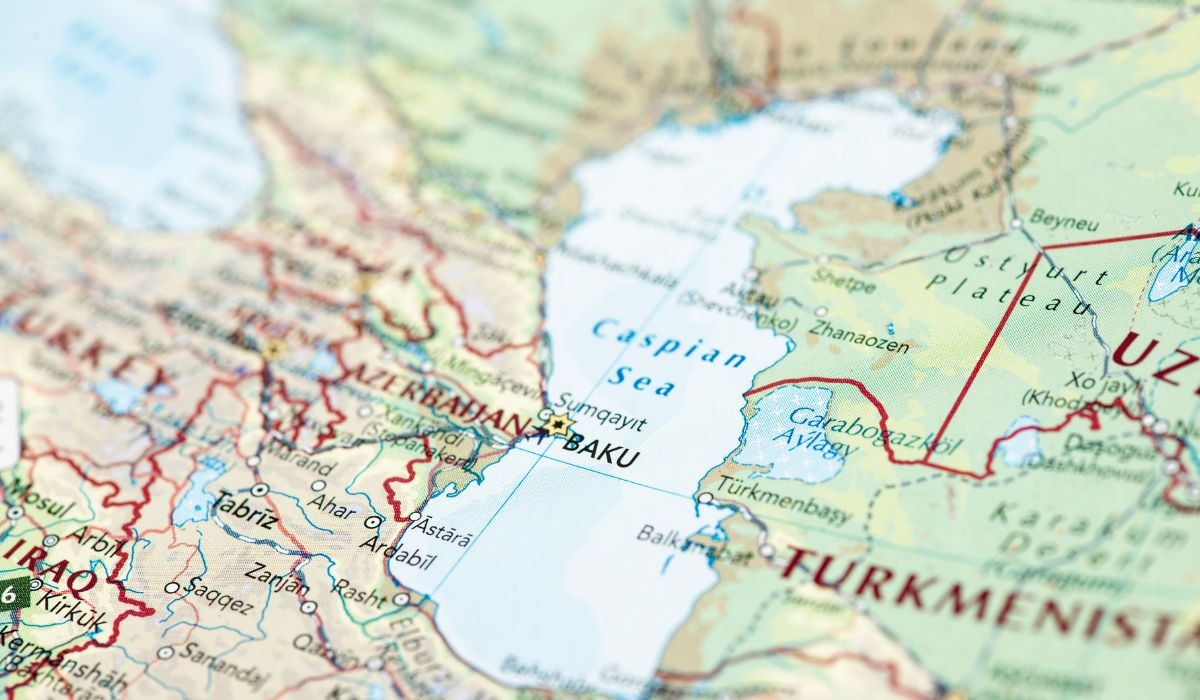
The Caspian is bordered by Russia (northwest), Kazakhstan (northeast), Turkmenistan (east), Iran (south), and Azerbaijan (west). Each nation has a distinct relationship with the sea and competing interests in its resources, trade routes, and legal status.
Russia and Iran, historically the dominant powers, prefer frameworks that minimize Western access to Caspian resources. Azerbaijan and Kazakhstan have aggressively developed offshore oil infrastructure with Western investment. Turkmenistan has sought trans-Caspian pipeline rights for its gas, opposed by Russia and Iran on environmental grounds.
The 2018 legal convention established national 15-nautical-mile exclusive fishing and resource zones around each nation's coast, with a shared maritime zone beyond that. But disputes over specific offshore fields (particularly between Azerbaijan and Turkmenistan) remain unresolved.
9. The Caspian Is a Remnant of the Ancient Paratethys Sea
The Caspian Sea's origins trace back roughly 5.5 million years, when tectonic movements closed the connection between the ancient Paratethys Sea and the Mediterranean. Before that closure, what is now the Caspian, Black Sea, and Aral Sea were all part of a connected inland sea that stretched across Eurasia.
Over geological time, the Caspian has undergone dramatic expansions and contractions. During the Quaternary period (last 2 million years), glacial cycles in the Russian Plain drove phases of flooding (the Baku, Khazar, and Khvalyn transgressions) that extended the sea's boundaries far beyond its current shoreline, leaving elevated terraces and ancient coastal formations visible today in surrounding countries.
This isolation from the world's oceans for millions of years explains the extraordinarily high endemism of Caspian species: organisms evolved in a closed system, diverging from their ocean relatives into distinct species.
10. The Caspian as a Transcontinental Trade Route, Now Under Pressure
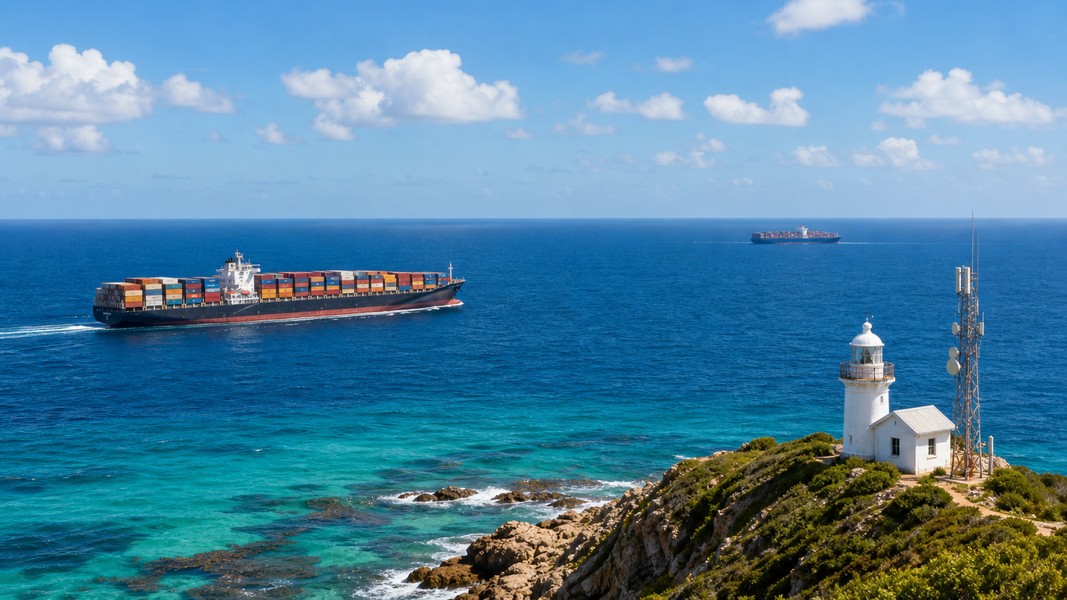
Since the 2022 disruption of Russian land routes, the Trans-Caspian International Transport Route (also called the Middle Corridor) has seen dramatic growth as a freight path connecting China to Europe via Kazakhstan, the Caspian Sea, Azerbaijan, Georgia, and Turkey. Container volumes on this route surged post-2022 as shippers sought alternatives to routes crossing Russia.
However, the falling water levels are creating serious logistical problems. Ports at Aktau (Kazakhstan) and Turkmenbashi (Turkmenistan) are experiencing navigability issues as water recedes from loading docks. Shipping costs on the route have risen, and the long-term viability of the Middle Corridor depends in part on whether the water level crisis can be addressed.
The Caspian sits at the intersection of energy geopolitics, biodiversity crisis, and transcontinental trade. It is one of the most consequential bodies of water most people know little about.
If you're interested in tracking vessels crossing the Caspian or monitoring real-time ship positions on commercial routes, tools like vessel tracker apps use live AIS data to follow ships across international waters. For more on how global shipping routes work, see our guide to types of ships and what each carries.
Most Recent Posts
Discover more articles from our blog.