




Air Pollution
Air Pollution
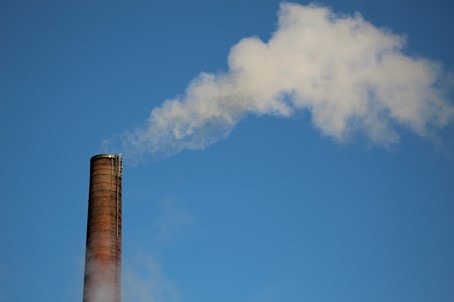
Commercial ships burn fuel for energy and, in doing so, emit several types of air pollutants as by-products. At the global level, the marine shipping industry’s percentage of total emissions from human sources is: carbon dioxide - 2.2% per year, nitrogen oxides - 15% per year and sulphur oxides - 13% per year¹.
In 1997, a new annex was added to the MARPOL Convention. The regulations for the Prevention of Air Pollution from Ships (Annex VI) attempt to minimize airborne emissions from ships (SOx, NOx, ODS, VOC shipboard incineration) and their contribution to the overall air pollution and environmental problems. Annex VI entered into force in 2005. In 2010, a revised Annex VI with considerably tightened emissions limits came into force².
According to the revised Annex, the subpar content in fuel use should not exceed 4.50 % m/m until 1 January 2012; 3.50 % m/m from 1 January 2012; and 0.50 % m/m from 1 January 2020.
The Annex-VI has a provision for declaring certain sea areas as ‘Emission Control Areas’ for the purpose of regulating sulphur. In those areas, sulphur content in fuel oil must not exceed 1.50 % m/m until 1 July 2010; 1.00 % m/m from 1 July 2010; and 0.10 % m/m from 1 January 2015.
Correspondingly, the Annex includes a provision for progressive reduction of emission of nitrogen oxides, introducing a more rigid emissions reduction target for emission control area designated under this Annex for the purpose of nitrogen oxides.
It also Requires the tankers to be fitted with a vapour emission control system to diminish the emissions of volatile organic compounds (VOCs). Crude oil-carrying tanker must have and implement a VOC Management Plan. The Annex bans deliberate emissions of ozone-depleting substances and shipboard incineration of certain substances, including polychlorinated biphenyls (PCBs).
The revised Annex also contains elaborate provisions for fuel oil availability and quality and regulations for the reception for ozone-depleting substances and equipment containing such substances in repair ports and shipbreaking facilities.
[1] Clear Seas (2020, November 06). Air Pollution; Marine Shipping (Retrieved January 26, 2021)
[2] IMO. Air Pollution, Energy Efficiency and Greenhouse Gas Emissions (Retrieved January 26, 2021)
Energy Efficiency
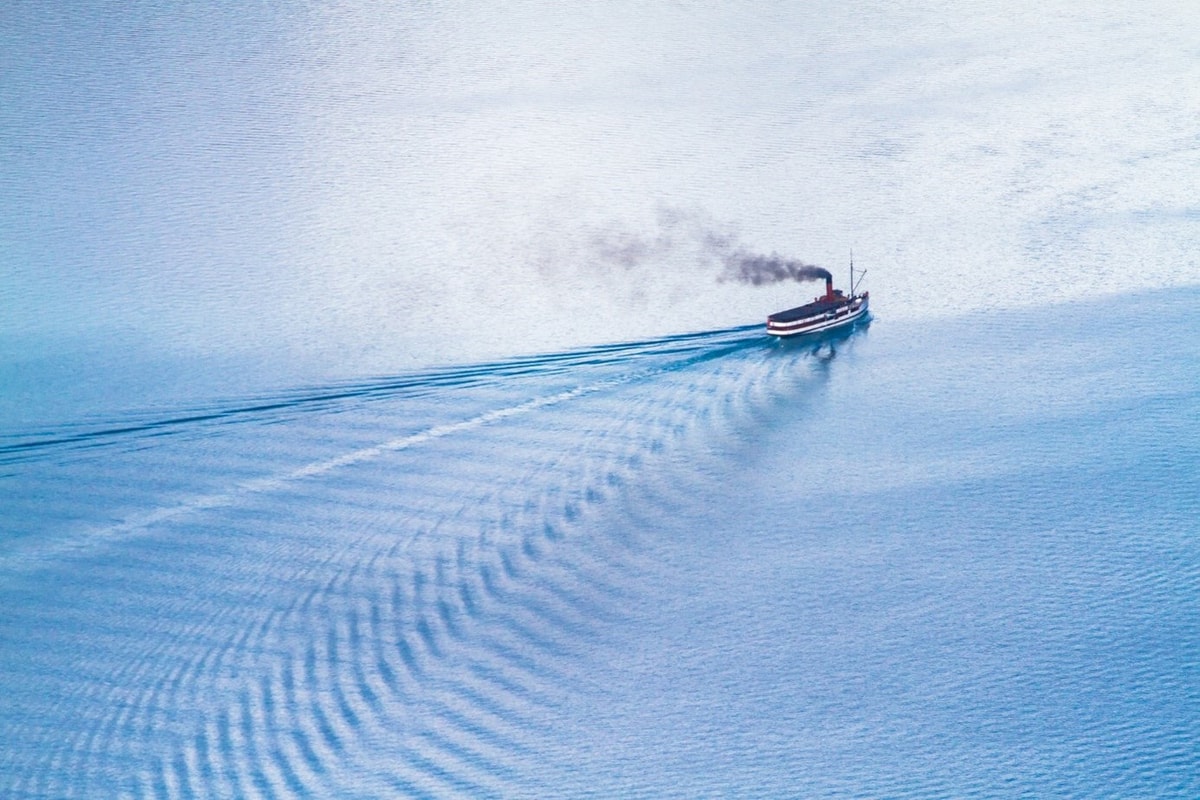
Improved energy efficiency in shipping means use of less fuel, leading to less harmful emissions to the environment.
In 2011, IMO adopted mandatory technical and operational energy efficiency measures which should significantly reduce the amount of CO2 emissions from international shipping. These measures (EEDI/SEEMP) came into force on 1 January 2013.
IMO has adopted important guidelines designed to support the implementation of the mandatory measures to increase energy efficiency and reduce GHG emissions from international shipping, thus facilitating the Administrations’ and the industry’s implementation of EEDI and SEEMP.
Due to the expected growth of world trade, the IMO has already begun considering further technical and operational measures to enhance the energy efficiency of ships.
[1] IMO. Air Pollution, Energy Efficiency and Greenhouse Gas Emissions (Retrieved January 26, 2021)
Reduction of GHG Emissions from Ships
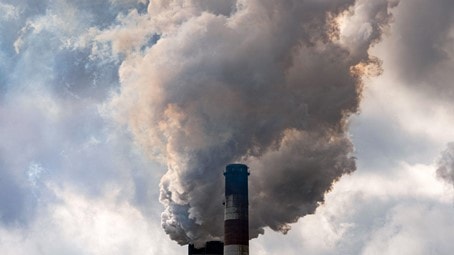
The maritime sector was responsible for nearly 3.3 % of the global greenhouse gas (GHG) emissions during 2007 with the international shipping industry being responsible for about 2.7 % of the global emissions of CO2¹.
In the absence of appropriate actions, emissions from the maritime sector could grow by 150–250 % by 2050.
Even though international shipping is the most energy efficient way of mass transport and a moderate contributor to overall CO2 emissions, a global approach to improve its energy efficiency and effective emission control is necessary since sea transport will only continue to grow².
The 1997 Kyoto Protocol of the United Nations Framework Convention on Climate Change (Kyoto Protocol) calls upon States to engage in limitation or reduction of emissions of GHG from bunker fuels working through the IMO.
As already acknowledged by the Kyoto Protocol, CO2 emissions from international shipping cannot be attributed to any particular national economy due to its global nature and complex operation. Therefore, IMO has been energetically pursuing the limitation and reduction of greenhouse gas (GHG) emissions from international shipping, in recognition of the magnitude of the climate change challenge and the intense focus on this topic.
[1] IMO, Second IMO GHG Study Summary, IMO Doc. MEPC 59/4/7 (9 April 2009)
[2] IMO. Air Pollution, Energy Efficiency and Greenhouse Gas Emissions (Retrieved January 26, 2021)