




Emergency radio equipment
GMDSS
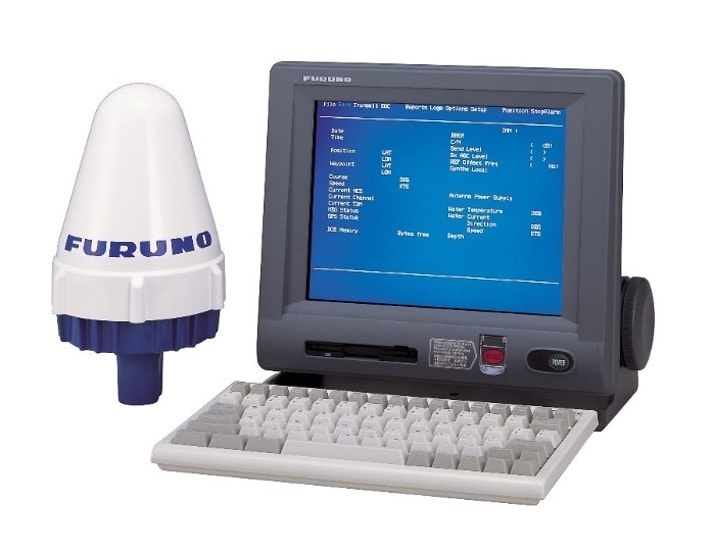
According to IMO (1999) the Global Maritime Distress and Safety System (GMDSS) is an internationally determined and acknowledged set of safety procedures, types of equipment, and communication protocols used to reinforce the safety and facilitate the rescue of distressed ships, boats and aircrafts.
The SOLAS convention Chapter IV proscribes that all ocean-going passenger and cargo ships and cargo of 300 gross tonnage and upwards must carry radio equipment that corresponds to international standards.
The main types of equipment used in GMDSS are:
- Emergency position-indicating radio beacon (EPIRB)
- NAVTEX
- Satellite
- High frequency
- Search and rescue locating device
Digital selective calling
Emergency position-indicating radio beacon (EPIRB)
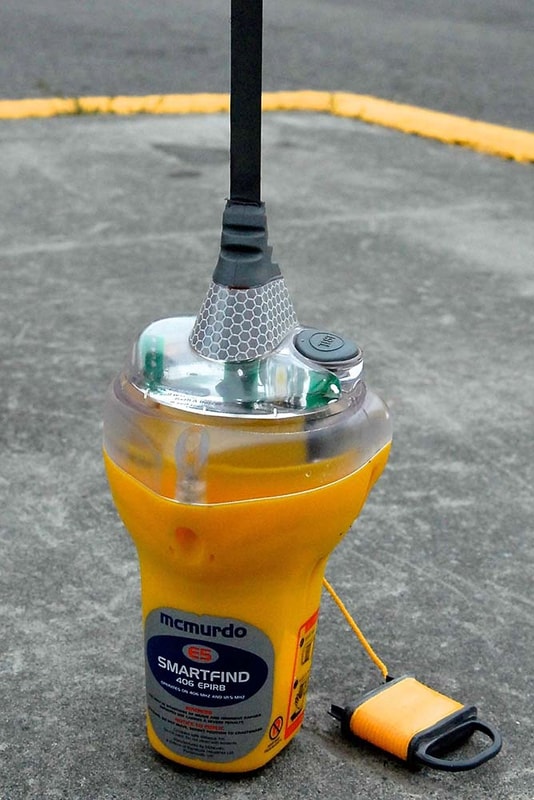
EPIRB is an emergency locator beacon, a portable radio transmitter powered by a battery and used in cases of emergencies to help locate vessels and persons in distress. In the event of an emergency the transmitter is activated and starts transmitting a continuous radio signal used by search and rescue teams to locate the emergency and provide assistance. Satellites operated by an international consortium of rescue services catch the transmitted radio signal. The basic purpose of this system is to help rescuers find survivors as soon as possible.
NAVTEX
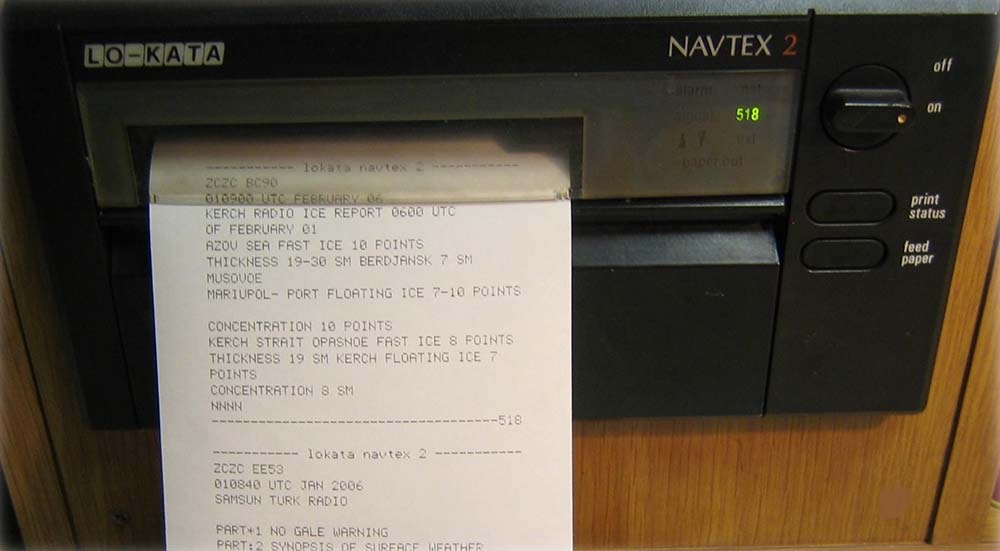
Navigation warnings to ships are most commonly transmitted via the NAVTEX (NAVigational TEleX) system. It is a fundamental means of transmitting coastal alerts. It runs at 518kHz. It consists of a network of coastal stations and dedicated ship receivers.
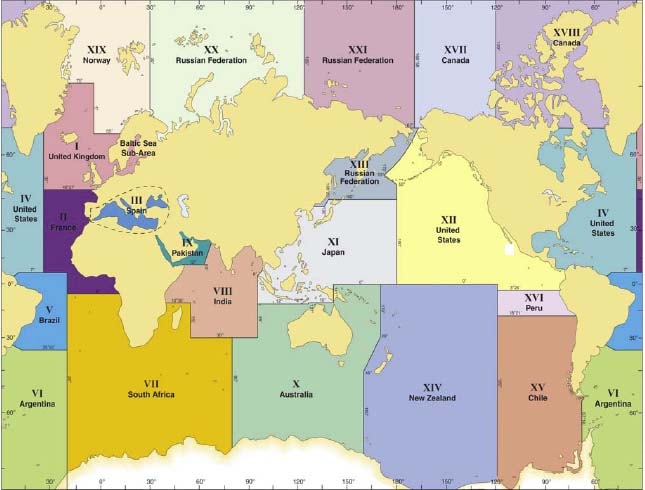
NAVTEX broadcasts the messages it receives from the official coordinator. There can be up to 25 in one NAVAREA area. They are organized into 4 groups. Each station transmits messages 6 times a day. The range of each is about 400 m.
In terms of benefits, the NAVTEX system supports three types of messages: ROUTINE (transmitted on a regular transmission), IMPORTANT (transmitted immediately after receiving, at a time when no other NAVTEX station in that NAVAREA area is transmitting), and VITAL (preceded by a signal that reports to other stations to stop broadcasting. When the frequency is released - VITAL transmission starts).
Satellite
The satellite system includes the INMARSAT and COSPAS - SARSAT systems.
INMARSAT is an international satellite organization whose mission is to provide a ship-to-land, land-to-ship and ship-to-ship connection for all kinds of communications, operating at the frequencies of 1.6GHz ship-satellite and 1.5GHz satellite-ship. It consists of three components: space part (satellite), ground part (CES, NES, NOC) and ship station (SES).
COSPAS - SARSAT is a search and rescue system with satellite support and is intended to locate EPIRBs distress signals, transmitting at 121.5MHz and 406.025MHz. The system is intended for all services in the world that perform search and rescue services for the needs of ships, aircraft or other land-based needs. It is classified into 4 subsystems: transmitter, satellite subsystem, local LUT user terminal and MCC control centre.
High frequency
A GMDSS system can include high-frequency (HF) radio equipment, with calls initiated by digital selective calling (DSC). HF narrow-band direct printing channels also allow worldwide transmissions of maritime safety information. All ships trading in polar regions must carry HF DSC and NDBP equipment which are able to operate from the ships reserve energy supply.
Search and rescue transponder (SART)
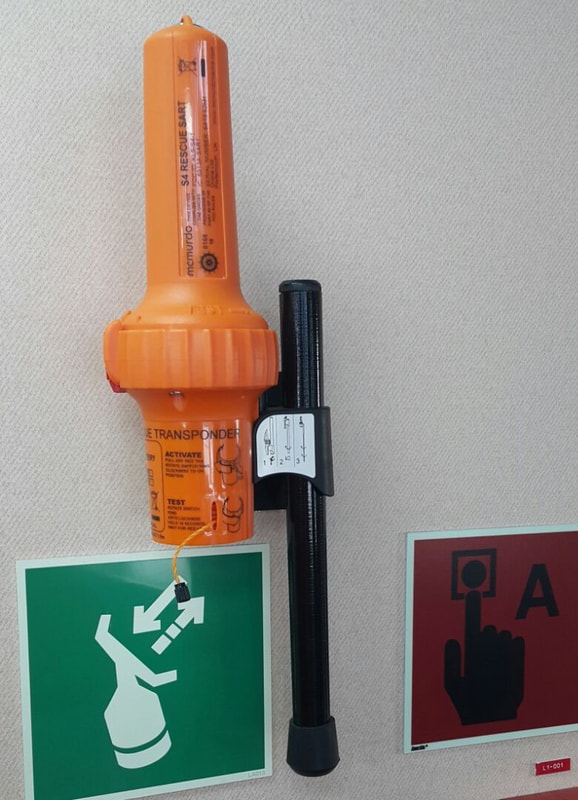
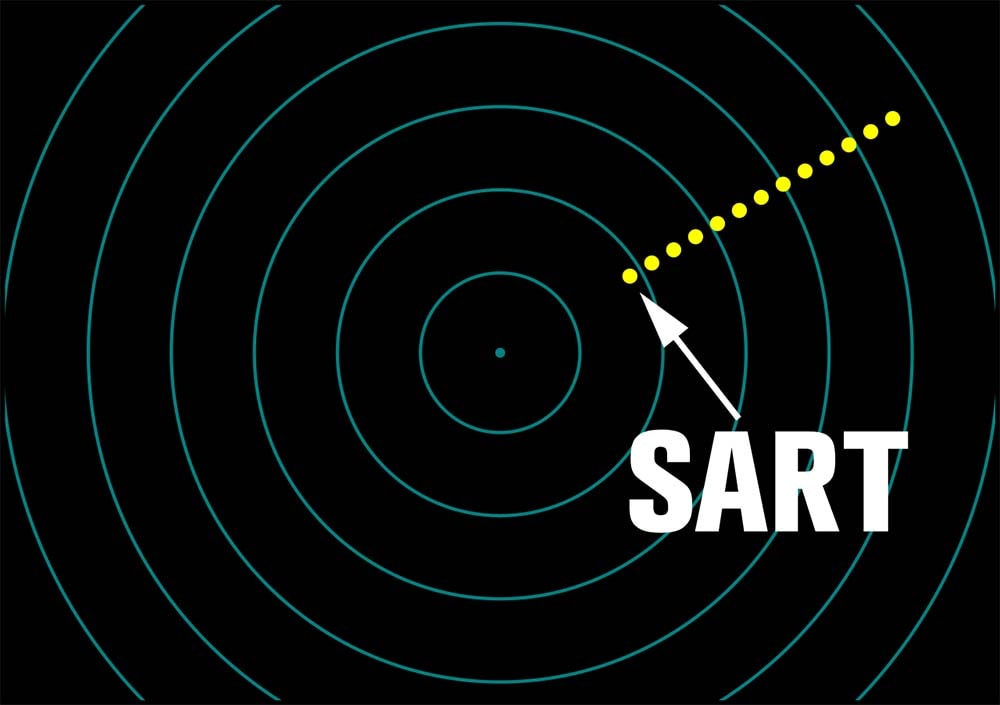
SART is a small portable device that emits signals (radar waves at f = 9GHz). They are received by the radar and are displayed on the screen as twelve evenly spaced dots in one direction, indicating the direction from which the signal was sent. The range of the device depends on the height of the radar antenna and the power of the radar. The device has a built-in power supply, so it can receive signals for up to 96 hours and transmit for up to eight hours.
The SART device is orange in colour, has a light and acoustic indicator of operation and the ability to manually switch it on for testing. It must be waterproof and sturdy enough to withstand a 20m drop. The device is powered by a built-in battery. The body of the device must clearly state the brief operating instructions and the life of the power source.
The range of SART devices is at least 5M for radars with antenna heights greater than 15 m, and 30 m for aircrafts exceeding 1000 m in height.
During navigation, the device is held in girders on the navigating bridge, in a clearly visible position. There must be a fluorescent self-adhesive SOLAS tag for the SART device next to it.
Digital selective call (DSC)
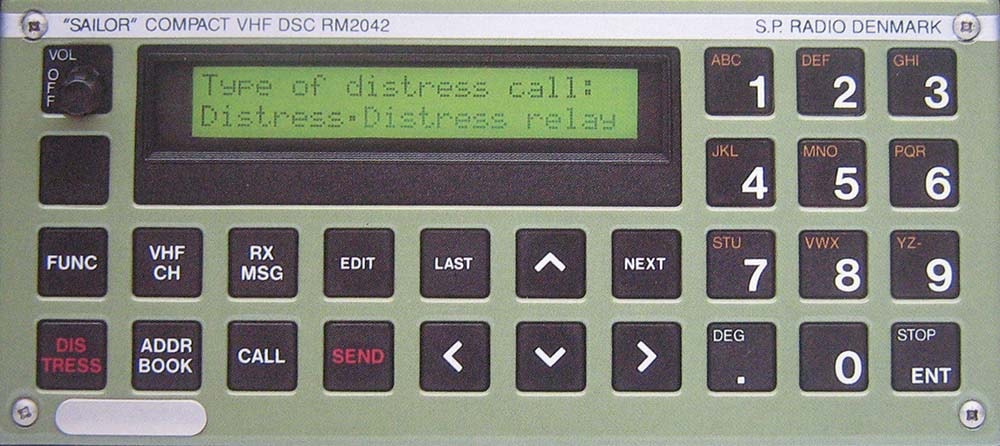
The following can be sent through the DSC system:
- Distress call
- All ship call
- Selective call to one ship
- Selective group call
- Selective area call
- ORP; Selective call to coast station
Generally, these calls can be classified into DANGER CALLS (each message can have the meaning of a safety, emergency, or distress call) and OTHER CALLS (Ship's business, Routine).
The standard format of a DSC alert message (except for the degree of urgency and MMSI of the station transmitting the message contains:
- Standardized type of accident
- position (ϕ and λ)
- time (UTC) and
- a proposed method of communication.
Standardized accidents include: Fire and Explosion, Flooding, Collision, Grounding, Listing and Capsizing, Sinking, Disabled and Adrift, Undesignated Distress, Abandoning and EPIRB Emissions.