



Survival at sea
The importance of morale
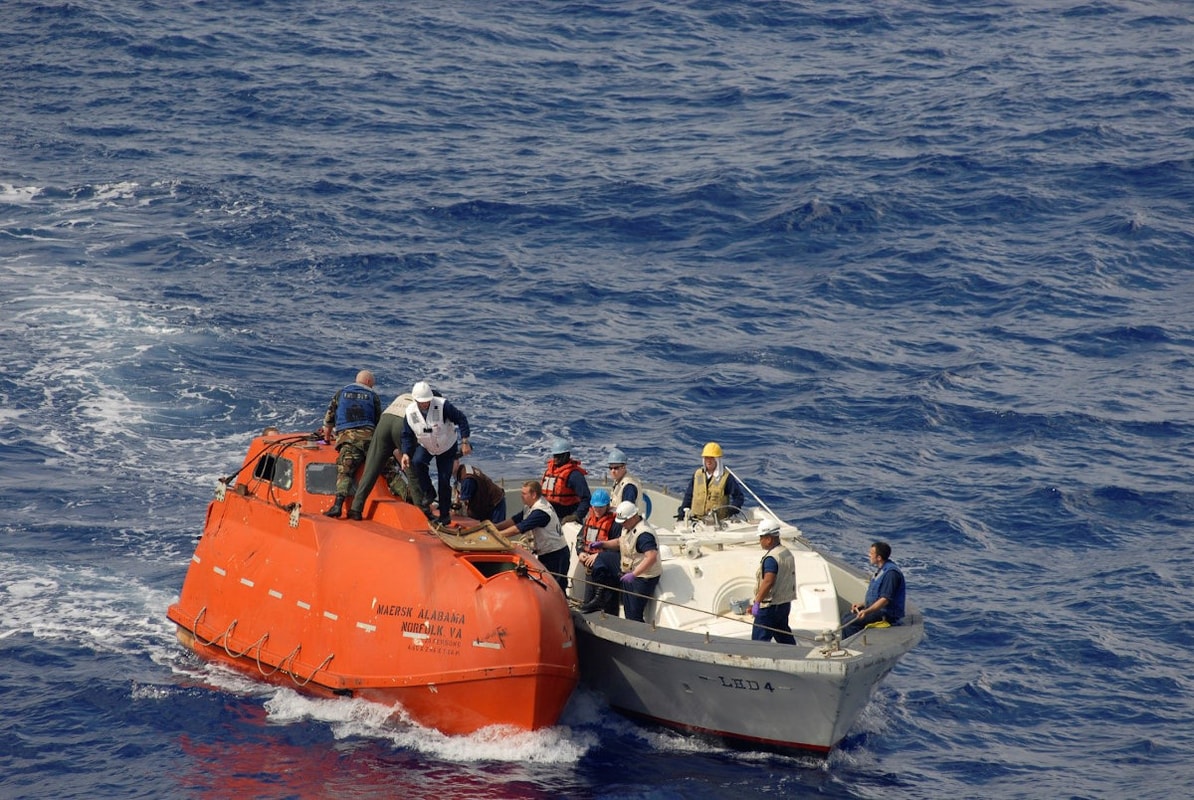
After leaving the ship, during their stay in a boat or raft, people are exposed to extreme mental and physical exertion caused by an unusual and life-threatening situation and must act reasonably, timely and organized.
The morale of people in such a situation is one of the basic conditions for successful survival at sea. People on board vessels must be thoroughly familiar with handling life-saving appliances, which an untrained person should also be able to use by following the appliances written instructions.
One person needs to organize and coordinate the efforts of all people and accept responsibility for the decisions and actions taken. In the absence of the captain and his deputy (according to the alert schedule), it is logically imposed that the most experienced ship crew member among the people on board take command. He must make the right decisions and rely on his authority and ability, which he had as a crew member or the authority he will create with his behaviour.
The person in charge must prevent panic, hysterical outbursts, and a drastic decline in self-esteem, so he must make decisions judiciously and decisively, not letting extraordinary conditions undermine his authority. Over time, people's confidence will drop dramatically, especially when they become aware of limited amounts of water (without water for 3 - 14 days), food (up to 40 days) and atmospheric influence (heat, cold, frostbite, frostbite).
Organization of life at sea
In order to create and maintain a favourable psychological state, the commander must appropriately organize life on board the vessel and assign tasks. Collective awareness of interdependence should be created by:
- Establishing permanent services (crew members that care for others),
- Creating a vigil service for the wounded and injured,
- Organizing continuous monitoring of radio programs,
- Organizing continuous monitoring of food and water usage,
- Install permanent observers on the bow and/or stern,
- Organizing a get-together,
- Putting several individuals in charge of the care of equipment,
- Putting several individuals in charge of fishing, etc.
Visual Distress Signal Appliances
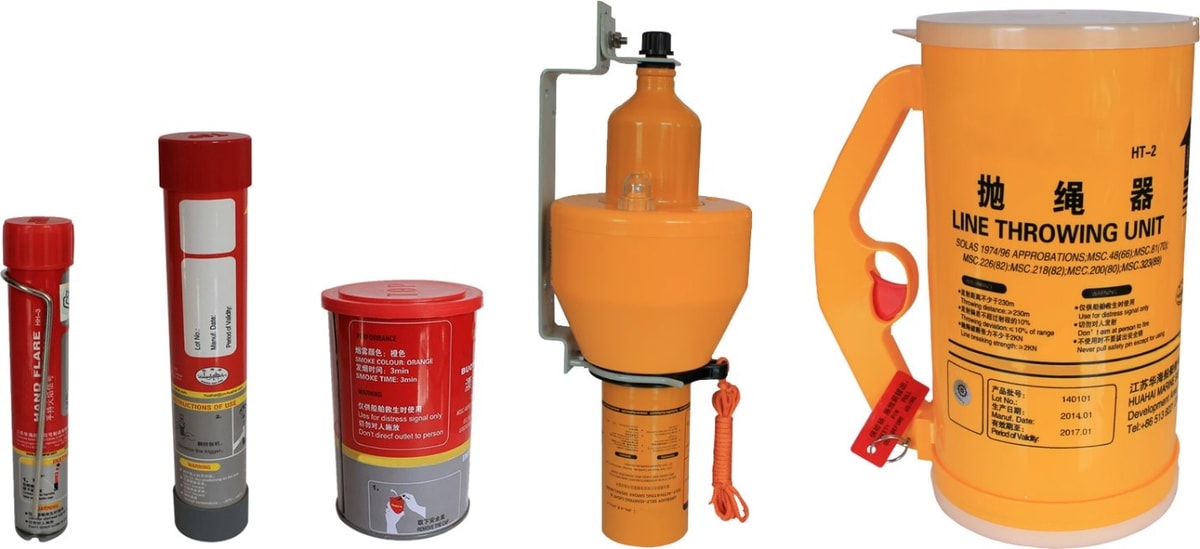
The basic principle in their employment is reasonable and timely use. They are only used in cases when there is someone in the narrower/wider area who may spot them. It should be taken into account to ensure that smoke signals are used primarily during the daytime to attract aircraft attention. At night they have no effect. Parachute and hand-held flares should be used at night, and a heliograph by day.
Rocket parachute flares
They are light distress signalling rockets used for attracting attention. They are most commonly fired from the hand and reach a height of at least 300 m. After 300 m they open their parachute and light up the torch. The torch burns with a bright red light for at least 40 seconds. Due to their low falling speed (5m/s), the torch is extinguished before falling into water, so as not to ignite a possible spilled flammable liquid.
Hand flares
Hand flares accurately indicate the position of the lifeboat or raft. After ignition, they light up evenly in bright red colour for at least 60s. They will not be extinguished if briefly immersed in water (waves) and do not present a hazard to the boat/raft.
Floating Smoke Signal
Floating smoke signals evenly emit a vibrant smoke for 3 minutes after ignition. They are able to catch the attention of an aircraft. They are not extinguished by immersion in water and can only be used during the day since the wind does not allow them to show their exact position.
Line-throwing appliance
The line-throwing appliance is a rocket gun which throws a rocket flare to which a line is attached, long at least 230m, stacked in a separate box. Each vessel is equipped with a line-throwing apparatus with at least four sets of spare rockets and lines. Before using, the end of the line has to be tied to a solid part of the vessel.