




Temperature
What is temperature?
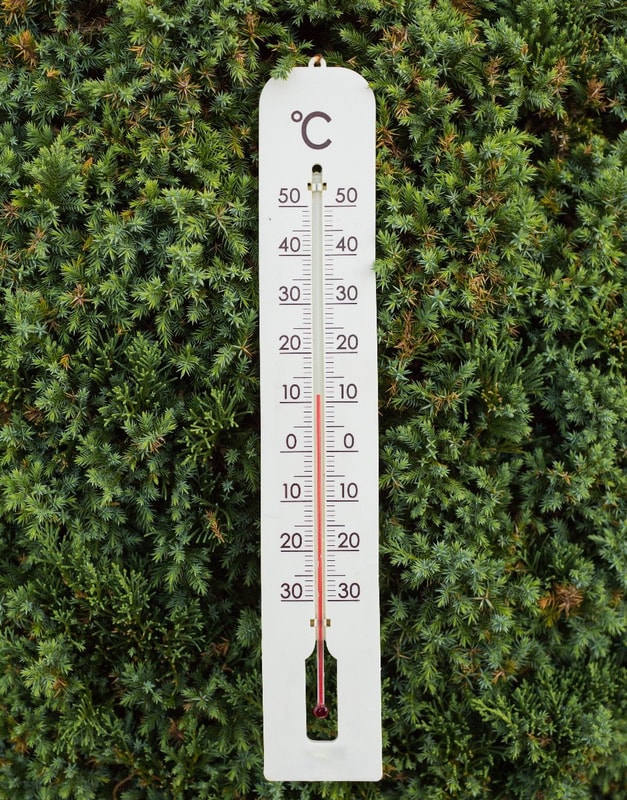
Heat is a transitional form of energy that is transferred between two bodies as a result of differences in their temperatures. Temperature gives a measure of heat as the energy state of a substance. The unit for temperature is kelvin (K).
T (K) = 273.15 + t (° C)
In meteorology, the term air temperature refers to the temperature of the ground layer of the atmosphere which is not conditioned by the solar radiation or ground heat flux. It is measured at a height of 2 meters. Air temperature changes depending on the time of day or season. Daily measurement, which depends on the time of day and the type and amount of the overcast, can easily change by sudden outbreaks of cold or hot air, or by very strong winds. The annual measurement depends on the position of the Sun and the Earth, their distance, climate changes and geographic location of particular sites.
Temperature range
The air temperature, as well as the temperature of the Earth's surface, change during the day and throughout the year, periodically (regularly) and irregularly. Periodic (regular) changes largely depend on the Earth's radiation and insolation, and they depend on altitude, latitude and surface. Irregular changes, on the other hand, are dependent on the weather changes (snow, wind, rain, etc.). When determining daily and annual medium values, the statistical theory of secondary values is taken into account.
Large bodies of water (oceans, seas and large lakes) change their temperature slowly due to their high specific heat, they heat up a little and cool down a bit. Higher salinity also means they have a lower freezing point. Sea water freezes at temperatures below 0 ° C (water with 35 ‰ salt freezes at - 1.9 ° C).
Annual temperature range
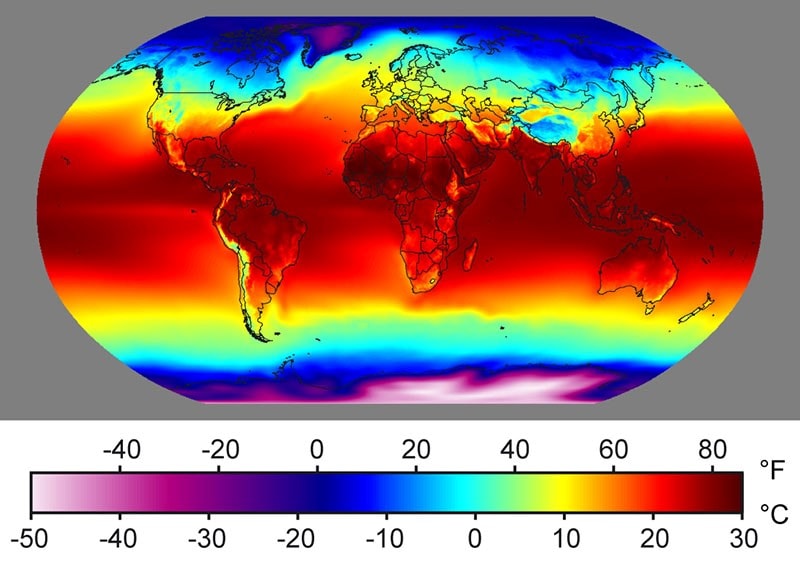
There are several types of annual temperature ranges generally categorized into:
- Equatorial climate (between 12 ° N and 12 ° C): has a small range (1 to 5 ° C), 2 highs and 2 lows, with a fairly large medium (25 to 30 ° C).
- Monsoon climate: occurs in monsoon areas, the range is larger than in the equatorial type.
- Oceanic climate: has a large delay of maximum (September), and occurs along the western coasts of continents in lower latitudes (15 - 40 °), where cold sea currents flow;
- Temperate climate: occurs in temperate latitudes, has pronounced extremes that occur 1 to 2 months after the solstice, ranges are large, above sea 10 - 15 ° C, above land 20 - 40 ° C, there are 4 different seasons.
- Polar climate: has regularly the smallest middle and the biggest range (especially above land), short summer (2 months) and long winter (6 months), while the extremes relative to the solstice are 2 to 3 months late.
Influence of sea and land on the annual change of air temperature

If the earth's surface were homogeneous and flat and if the atmosphere was of the same airiness everywhere, the temperature would depend only on astronomical factors and latitude. This is the so-called solar - mathematical climate. In reality, this is not the case. We have a real, physical climate. It expresses the action of other factors. These are the distribution of land and sea, orography, diversity of atmosphere, clouds, air currents, etc. On Earth, the northern hemisphere is 2 ° C warmer than the southern, with warmer summers in the northern hemisphere, and colder winters. This is the result of the division of the land and the sea.
Earth's average temperature is 14.3 ° C.
Generally, with the increase in latitude, the temperatures decrease.
The thermal equator (the warmest belt on Earth) is not located at the geographic equator but slightly further north (about 10 ° N).
In the lower layers of the atmosphere, the temperature usually decreases with altitude. The average temperature gradient is - 0.65 ° C / 100 m, which is slightly higher in summertime (- 0.7 to - 0.9 ° C / 100 m), and lower during the winter (- 0.4 ° C to - 0.6 ° C).
Daily land temperature changes

Daily land temperature changes mainly depend on the Earth's radiation and insolation. From sunrise until about 13 hours, the temperature of the mainland increases because during the day the amount of radiation is at a lower level than the insolation. After 13 o'clock, the level of radiation increases above the level of insulation, so the temperature of the mainland decreases and the decrease continues until the next sunrise (the following day). In other words, the minimum land temperatures occur until sunrise, while maximum temperatures occur at about 13 o'clock.
Daily amplitudes decrease with the increasing latitude. In winter, the amplitudes are lower than in summer. Daily amplitudes increase with elevation. Temperatures which refer to the annual land temperature changes depend on the annual changes in the intensity of the Earth's radiation and insolation, as well as on all the factors which influence the daily changes. The sites located around the Equator have the lowest annual amplitudes of temperature, while the amplitudes increase towards the Poles only because the changes increase due to the increase of latitude.
Daily sea temperature changes
Daily water (sea) temperature changes are not excessively great. With the increase of the sea depth, the changes lessen and disappear at a depth of 25 meters. In the lakes, the average daily amplitude is 2° C, while in the seas it is approximately 0.04° C. The minimal sea warmth occurs before sunrise, it reaches its maximum between 15 and 16 o'clock, after which it gradually decreases. Annual water (sea) temperature changes increase with latitude and are more evidently expressed than daily temperature changes. Maximum and minimum land temperatures occur prior to maximum and minimum sea temperatures.
Daily and annual air changes are similar to changes that occur on land or in the water (the sea). Consequently, daily air changes over the Earth show their minimum before sunrise, and its maximum at about 14 o'clock. Due to the equal duration of days and nights at the Equator, the largest daily amplitudes of air temperature occur there, while there are no amplitudes at the Poles. Rapid air temperature changes in summer may occur due to turbulent air flow (wind from the land, wind from the sea).
Daily air temperature changes

Daily air temperature changes related to those above the water (sea) are a lot different than those over the land, because the physical characteristics of water differ from the physical properties of the Earth. Over the ocean, the minimum air temperature occurs between 1 and 3 o'clock after midnight (which is 2 hours before the occurrence of the minimum temperature of the ocean's surface).
The maximum air temperature over the water occurs at about 13 - 14 o'clock, which is also considerably earlier than on the ocean surface. With the increase of latitude, the annual air temperature changes grow. Over the surface of water, located in the Equatorial belt, temperature amounts 1° C, in the polar latitudes 20° C, and in moderate widths between 10 and 15° C.
Temperature measurement
Earlier, the fundamental temperature gap was defined as a difference between the temperature of boiling and freezing point of water of a specific chemical composition. Freezing and boiling points of water are defined in relation to the normal pressure of 101325 (Pa). In case the specified temperature range is divided into hundred parts, the obtained result is a display in Celsius degrees (° C). Lord Kelvin, in honor of the actual lower limit of temperature, suggested a new way of measuring expressed in kelvin (K). Kelvin represents the 273.16-part of the thermodynamic temperature of the triple point of water. Only a few countries use uses a different degree for temperature measurement (the United States, Belize, Palau, the Bahamas and the Cayman Islands) called Fahrenheit degree (°F). Freezing point of water on the Celsius scale is at 0° C and the boiling point at 100° C. On the Fahrenheit scale, the freezing point of water is at 32°F and the boiling point at 212°F.
Widgets used for measuring temperature are called thermometers and thermographs.
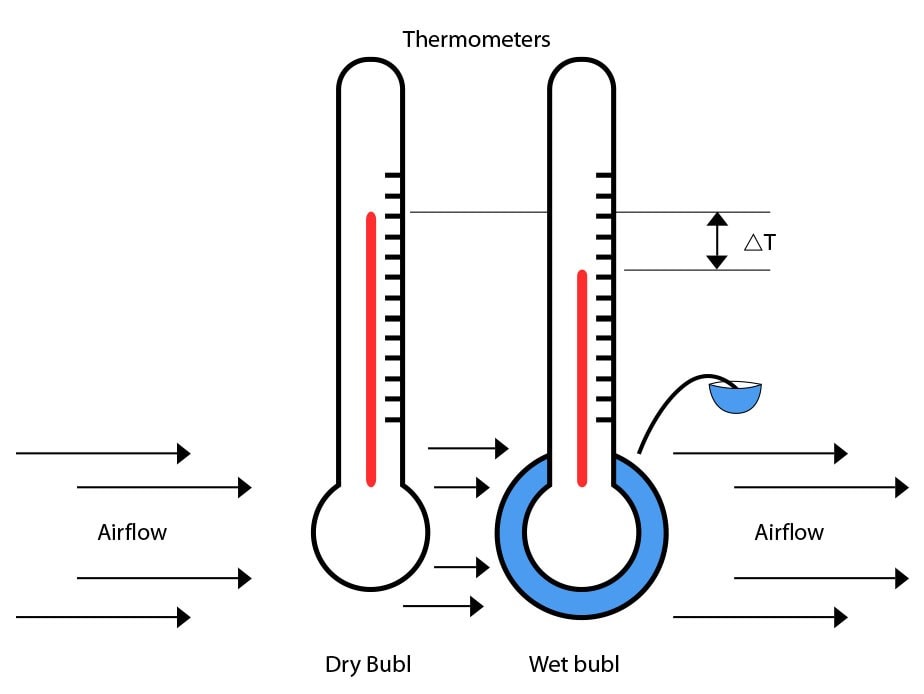
Thermometers used for meteorological purposes are:
- Dry-bulb thermometer, i.e. an ordinary thermometer that measures the air temperature, which comes with a wet thermometer used for measuring air humidity. An ordinary thermometer is filled with mercury and shows the air temperature in Celsius degrees.
- Extreme, minimum, and maximum thermometer. The minimum thermometer is filled with toluene (alcohol). His capillary consists of a wand around which the alcohol (liquid) passes in the case of temperature increase, while in the case of temperature decrease, the wand declines together with the decline of the amount of alcohol. The lowest temperature is shown at the right end of the stick.
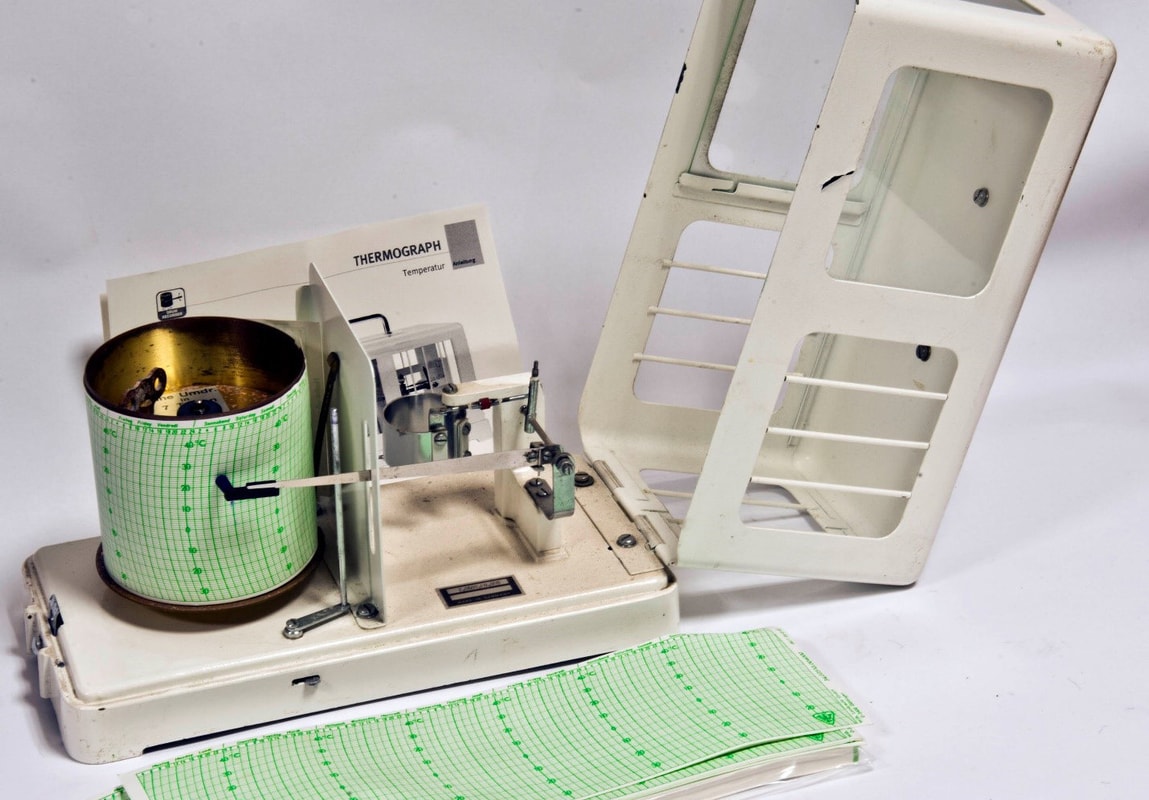
Thermograph constantly measures the air temperature change. It consists of a printer and a sensor. The sensor is actually a bar (bimetal ring) or "Bourdon" tube stuffed with gas which responds to temperature changes, which are then recorded on a printer. The printed tape of the thermograph is called a thermogram.
The thermometric house (shelter on board) serves to protect thermometers, thermographs and hygrographs from external influences. It is wooden with shutter walls and painted white (to keep it as warm as possible). It is located on the observation deck at a height of about 2 m. The door of the house faces north so that the Sun does not beat directly into the instruments when the door is open.