




Air pressure and humidity
Air pressure
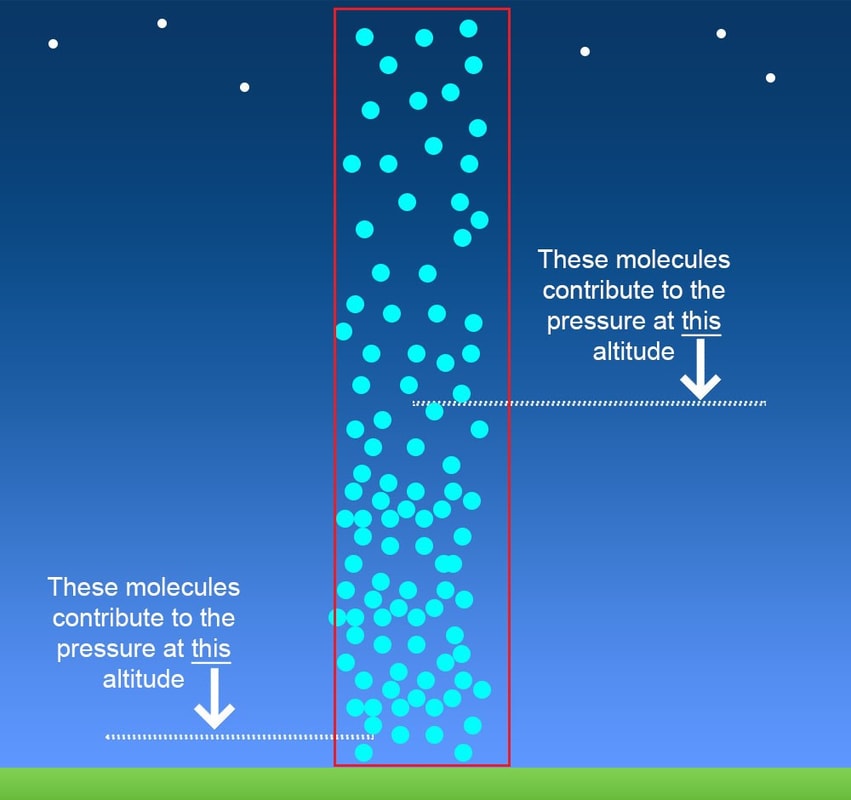
The action when the atmosphere molecules and atoms hit a particular surface manifests itself as the force that is, calculated to a surface unit, called air pressure. The unit of pressure is Pascal (Pa). Baric rate is the change in pressure with height, it is the largest in the lowest layers of the atmosphere where it amounts to 1 hPa/8 m. Atmospheric pressure is the air pressure immediately above the Earth's surface. For comparing the values of pressure, it is necessary to exclude the differences in altitude and the air pressure reduction to a particular reference level. Reference level is usually mean sea level (MSL). Isobars are imaginary lines that connect the dots of the same pressure. The inscription of isobars on the map results in a weather map showing the field of atmospheric pressure. Centre of the low pressure, i.e. the barometric minimum, is marked on the map by symbols N (low), C (cyclone), L (low) or T (Ger. Tiefdruckgebiet). Centre of the high pressure, i.e. the barometric maximum, is marked by V (high), A (anticyclone), H (high), H (Ger. Hochdruckgebiet). A more expressed minimum or maximum is called main or primary, while less expressed is called side or secondary. An area of low pressure is a valley of low pressure (trough; Tiefdrucktrog), an area of high pressure is referred to as a ridge of high pressure (ridge; Hochdruckkeil). The area opposite to the two minimums and maximums is called a saddle (col; Sattelpunkt).
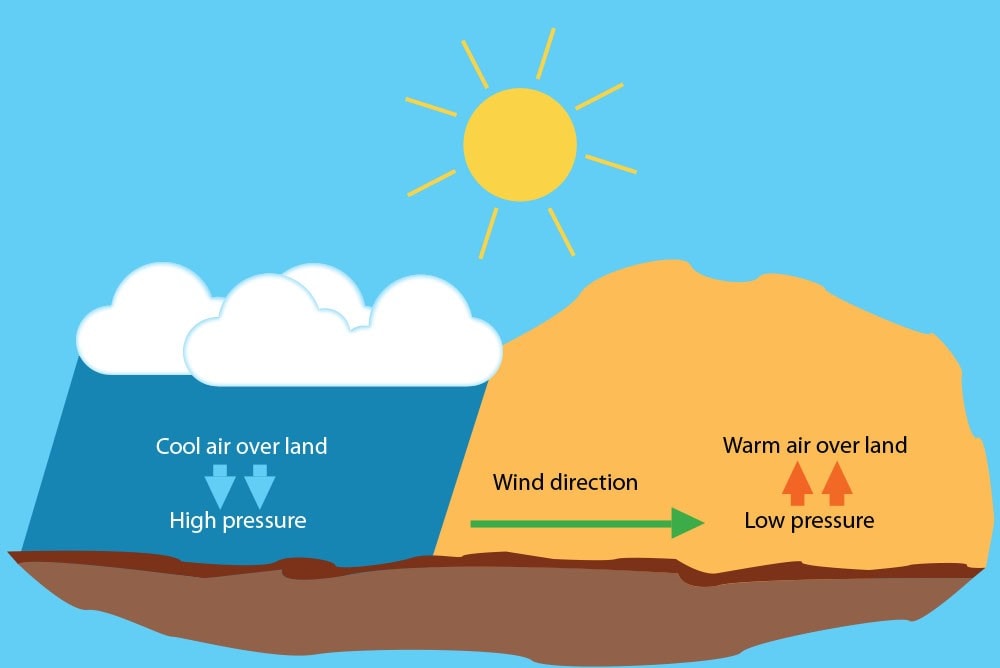
Air heating and cooling above the hot or cold surface affects the changes of atmospheric pressure. Heating reduces the pressure; cooling increases the pressure. These changes are a result of thermal changes. The atmosphere does not rest, i.e. the air is moving. In the areas where the air rises and dissipates, the atmospheric pressure falls, while in the areas in which air descends and piles up, the pressure rises. These changes of the atmospheric pressure are of the dynamic nature. The atmospheric pressure changes during the day because of periodic and irregular changes. Periodic changes have a form of double wave, with the highest pressure values 1 to 2 hours before the noon or midnight, and the lowest values before the sunrise or sunset. Daily amplitude is mostly expressed in the tropical belt with daily ranges from 3 to 4 hPa with poorly expressed irregular changes. Daily range decreases with increasing latitudes, in moderate latitudes it amounts to about 1 hPa, while in higher latitudes around 0.5 hPa. Irregular fluctuations are frequent and expressed, they amount between 5 and 10 hPa.
Air pressure measurement
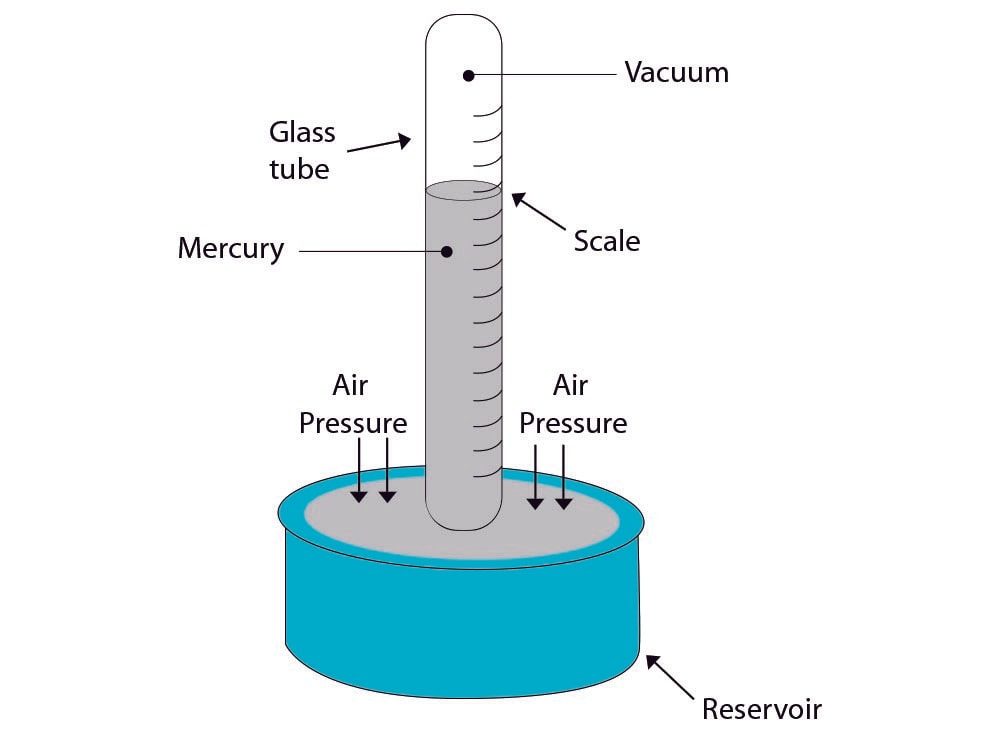
Air pressure is measured as the weight of the air column, that is, it is compared with the weight of the column of any other liquid. Mercury is used due to its high specific weight, because, in order to get the balance, it is enough to take a mercury column long approximately ¾ m. For comparison, a water column would be about 10.29 m long. Torricelli (1643) performed the first pressure measurement by a mercury column.
Air pressure is measured by barometers, aneroids and barographs. Barometers and aneroids give the current value of the pressure, while barographs continuously record its values. The record of the time change of pressure is called barogram. The measured pressure must be corrected because of the temperature (temperature correction) and it must be reduced to mean sea level (MSL) in order to obtain the atmospheric pressure whose values are inscribed to the meteorological map.
The barometer is a basic instrument for measuring air pressure. It consists of a mercury container and a glass tube, around 90 cm long (barometric tube). The upper end of the tube is liquated, while the bottom is immersed in the mercury. On the barometer, there is a thermometer (measuring the barometer temperature). The height of the mercury column is exactly 0.1 mm.
Aneroid measures distortions (deformations) of the hollow elastic metal bodies (Vidi box) due to the change in pressure. Aneroid barometer can be used to determine the altitude (altimeter is actually an aneroid that has a scale marked in meters).
Barograph continuously measures the values of pressure (the principle of measurement is the same as in aneroid). The sensor is a series of Vidi boxes. Changes in the volume of boxes, due to pressure changes, are passed on to the pen that writes on the roller powered by clock mechanism.
Air humidity
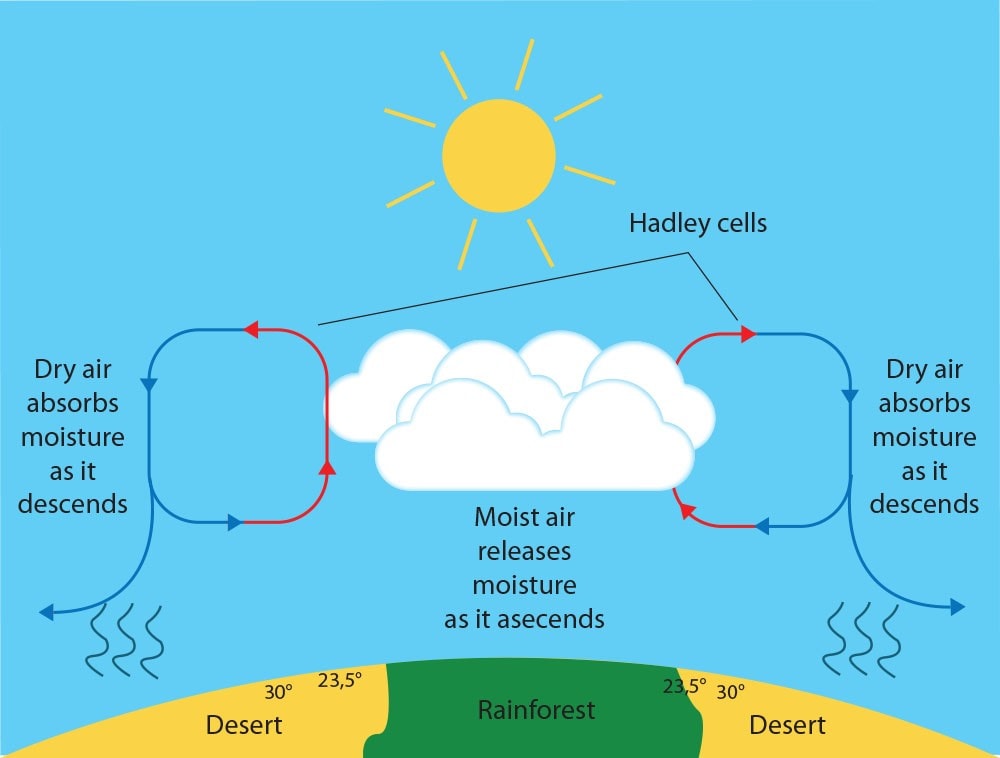
Air humidity is defined as the amount of water vapor which is admixed to the constant air composition. The warmer the air is, the more water vapor it can receive. All the water vapor is mainly located in the lower layer of the atmosphere and gradually weakens with regard to the increase in hight.
Evaporation intensity refers to the amount of evaporated water in the unit of time from a particular surface. Evaporation from freshwater surfaces is stronger than in the evaporation from salty water surfaces in the same conditions.
There are three types of air humidity:
- Continental type, which has the lowest value of the relative humidity in warmer periods of the year, while having the highest value of the relative humidity in colder periods.
- Monsoon type, which is characterized by the lowest value of the relative humidity in the colder period of the year, and the highest value during the warmer period of the year. It is connected with the quantity of rainfall.
- Mountain type is similar to monsoon type, except the highest level of humidity is related to the increased convention.
Air humidity measurement
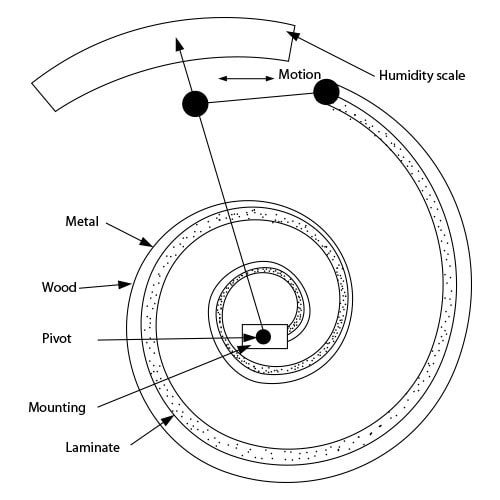
The air humidity is measured by hygrographs, psychrometers and hygrometers.
Hygrographs continuously record the value of air humidity. An extension or shortening of hair beam that occurs due to changes in humidity is recorded by ink on the bar powered by the clock mechanism (lever system). Hygrogram is the time record that shows the change of humidity.
The basic instrument for measuring air humidity is the psychrometer, which consists of wet and dry thermometer. The wet thermometer has a mercury tank, wrapped in a moist cloth, while the dry thermometer is actually an ordinary thermometer that measures air temperature. Before the measurement, the cloth must be moistened with distilled water. Distilled water evaporates and thus wastes a latent heat, what further leads to a temperature drop. The greater the difference in temperature between the dry and wet thermometer, the air humidity is smaller.