TEU is the universal unit of measurement in container shipping. Every time you book a shipment, check a freight quote, or read a port report, you're working with TEU, even if the term isn't spelled out. Understanding what a teu container actually represents, and what the numbers mean for your cargo, gives you a clearer picture of costs, schedules, and delays before they hit your supply chain.
Fact 1: TEU Stands for Twenty-Foot Equivalent Unit
TEU is short for Twenty-foot Equivalent Unit. The term took hold in the 1970s as containerization standardized global trade, giving carriers, ports, and logistics firms a consistent unit to describe vessel capacity, port throughput, and freight volumes.
The abbreviation appears everywhere in logistics: freight forwarders quote rates per TEU, port authorities measure throughput in TEUs, and shipping companies rank fleet size by total TEU capacity. One TEU represents one standard 20-foot shipping container. According to Encyclopaedia Britannica, that container holds between 9 and 11 standard pallets and carries a payload of up to 25,000 kilograms.
As a unit of measure, TEU tells you how large a ship is, how busy a port is, and how freight rates compare across routes. It doesn't describe the physical container you rent; it describes the industry's standard unit of scale for counting them.
Fact 2: One TEU Container Equals One Standard 20-Foot Box
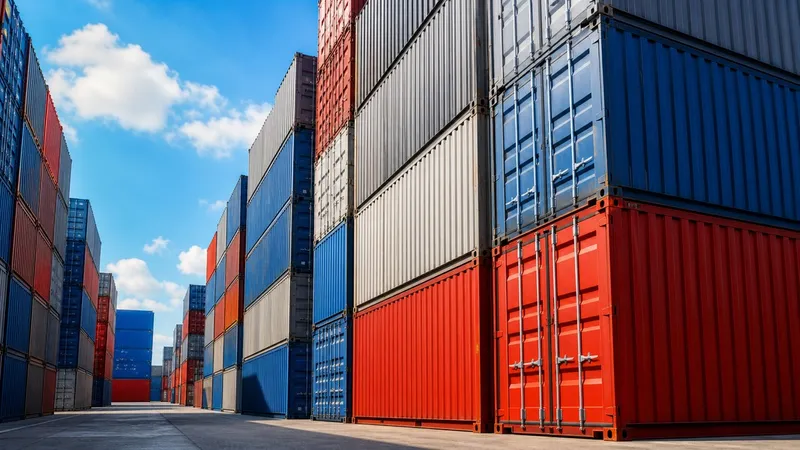
The standard teu container measures 20 feet long, 8 feet wide, and 8 feet 6 inches tall, roughly 6.1 by 2.4 by 2.6 meters. Total interior volume is approximately 33 cubic meters. These dimensions became a global standard through ISO (International Organization for Standardization) specifications, which govern container manufacturing worldwide.
Not all TEU-counted containers are identical. High-cube containers, which add a foot of height for bulkier cargo, and half-height containers used for dense commodities, both still count as 1 TEU each. The designation covers the footprint, not the specific variant.
The teu container is the building block of modern global trade. The global container ship fleet held a total capacity of roughly 31 million TEU as of 2025, and major ports processed over 800 million TEUs in 2024, a figure projected to grow 5 to 7 percent in 2025 according to UNCTAD data.
Fact 3: FEU Is Two TEUs - How That Changes Your Cost Equation
FEU stands for Forty-foot Equivalent Unit. One FEU equals 2 TEUs and fits 20 to 24 standard pallets, roughly double the pallet count of a single TEU. But the weight relationship is not perfectly proportional: an FEU can typically carry about 1.25 times the payload of a TEU, not twice as much.
Most importers find that shipping one FEU costs less than two separate TEUs for the same cargo volume. Handling fees, documentation charges, and terminal costs are all calculated per container regardless of size, so consolidating into one larger box saves on those fixed costs. The main constraint is whether your cargo volume justifies filling a 40-foot unit. A half-empty FEU often costs more in total than a full TEU.
The practical choice comes down to cargo type and destination. TEUs offer more flexibility when shipments split across multiple delivery addresses or when cargo is too light to fill a 40-foot container efficiently. FEUs make sense for large, consistent volumes on a single route.
Fact 4: A Vessel's TEU Capacity Shapes Your Cargo Arrival Timing
Container ships range from small feeder vessels carrying a few hundred TEUs to ultra-large container vessels like the MSC Irina, which holds 24,346 TEUs and represents the current record for the world's largest container ship. The average vessel carries around 4,600 TEU. Ship size matters to importers because it determines which ports a vessel can call at and how long it stays there.
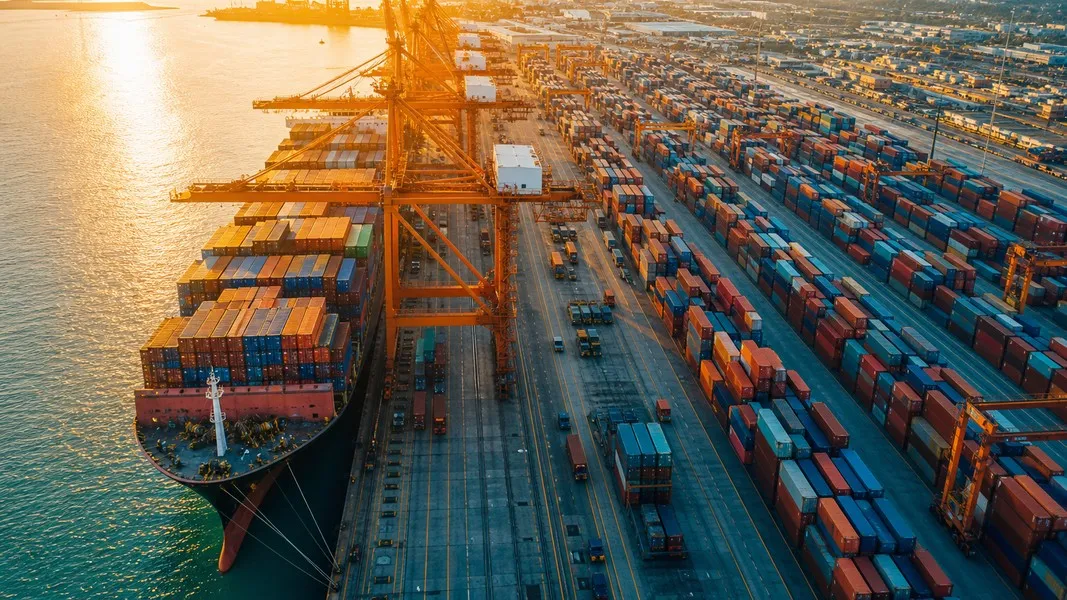
Only a handful of the world's ports can berth a 24,000-TEU ship and work it efficiently. When an ultra-large vessel docks, it discharges thousands of containers in a single call, creating a surge that terminal yards, truck slots, and rail connections have to absorb. A container that would normally clear a terminal in two days can sit for four or five while the yard processes the discharge wave.
If you use a vessel tracking app like Primo Nautic, you can see in real time which ship carries your cargo, its size class, and its current estimated arrival. Knowing whether your container is on a mega-vessel or a smaller regional feeder service helps you anticipate where delays are likely to come from, so you can brief your warehouse team before the ship berths.
Fact 5: Port Congestion Locks Up Millions of TEUs at a Time
Port congestion is one of the least visible sources of delivery delay for importers. Ships arrive on schedule but containers sit at the terminal waiting for truck appointments, equipment, or simply space to clear. In 2024 and into 2025, the World Bank's supply chain stress index showed over 2 million TEUs of capacity effectively locked in port waiting times at peak periods, equivalent to more than 7 percent of the entire global fleet being held in queues rather than moving cargo.
Global schedule reliability was running at just 52 percent in early 2025, meaning barely half of vessels arrived within one day of their scheduled berth time, with average delays close to five days, according to UNCTAD tracking data. Individual ports saw far worse: Singapore saw container waiting times stretch to nine days at peak periods in late 2024, and Durban recorded average anchor and berth times exceeding 9.8 days in June 2024.
If your teu container ships on a reliable vessel but lands in a congested port, the delay happens after arrival, not during the voyage. Tracking your shipment live through Primo Nautic gives you ETA updates with confidence scoring, so you can see in real time when the captain's reported arrival time diverges from the AI-calculated route estimate. That early signal lets you reschedule delivery appointments before the problem reaches your dock.
Fact 6: Freight Rates Are Always Quoted Per TEU
When a freight forwarder or shipping line quotes you a rate, it is almost always priced per TEU for 20-foot containers and per FEU for 40-foot containers. As of 2025-2026, standard full-container-load (FCL) rates on major routes sit roughly between $1,500 and $4,000 per TEU, though specific routes diverge sharply from that range based on demand and disruptions.
The Shanghai-South America route, for example, peaked at over $9,000 per TEU in mid-2024 due to routing disruptions and demand concentration, according to Freightos market data. Several surcharges layer on top of base rates, including bunker adjustment factors (BAF) that fluctuate with fuel prices. In Q1 2026, BAF surcharges were running at $400 to $600 per TEU on many trade lanes.
Understanding how the TEU unit maps to your actual container size helps you read freight quotes accurately. A rate quoted as "$2,000 per TEU" on a 40-foot container effectively means $4,000 for that box, since it counts as 2 TEUs. Always confirm whether a quote is per TEU or per container to avoid surprises when the invoice arrives.
Fact 7: Bigger Ships Don't Always Mean Faster Cargo Delivery
The conventional logic is that larger, newer ships are more efficient, and efficiency translates to speed. But for importers, the picture is more complicated. Ultra-large container vessels call at fewer ports, operate on tighter port pairs, and create more concentrated yard surges when they arrive. The ocean leg might be fast, but port dwell time on both ends extends your actual cargo transit far beyond the sailing time.
Ocean transit times from China to Northern Europe reached close to 75 days in early 2025 when measured from cargo readiness to final port clearance, per ING Think analysis. The ocean voyage itself is only part of that number. Terminal dwell, inland transport, and customs all contribute, and each becomes harder to predict when your cargo is on a mega-vessel route.
The bill of lading your freight forwarder issues specifies the vessel name, which you can look up to find the ship's TEU class and typical port call schedule. Combining that with live vessel tracking lets you anticipate whether your cargo is on a route with potential congestion risk or on a smaller regional service with more predictable timing.
Conclusion
TEU is more than industry shorthand. It's the lens through which container shipping pricing, vessel capacity, port performance, and cargo timing are all measured. A 20-foot container equals 1 TEU. A 40-foot container equals 2 TEUs. Freight rates are quoted per TEU. The world's largest ships now exceed 24,000 TEU capacity. And when port congestion strikes, it ties up millions of TEUs in terminal queues, adding days or weeks to delivery windows that look fine on the ocean schedule.
Knowing these mechanics lets you ask better questions of your forwarder, read freight quotes accurately, and anticipate where delays are likely to come from. The more clearly you understand the TEU framework, the better you can plan your inventory, warehouse capacity, and customer commitments around the realities of container shipping.