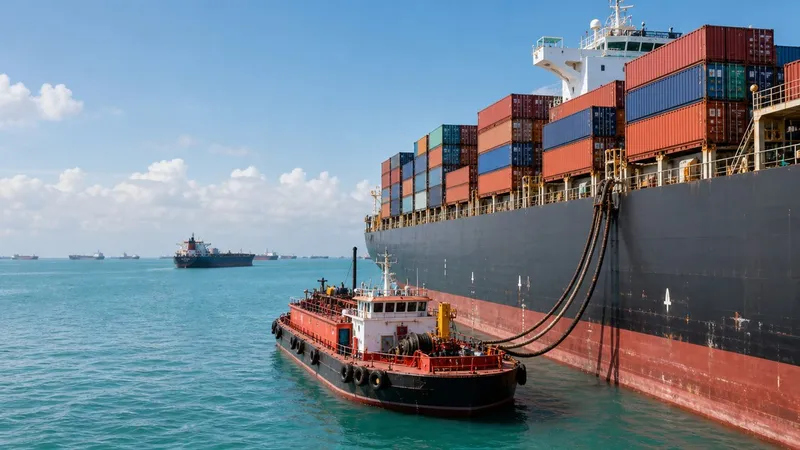

Shipping container cost depends on which cost you mean. Buying a used 20ft box starts at roughly 1,300 to 3,000 USD, a new 40ft unit runs about 3,500 to 6,500 USD, and renting one starts around 120 USD a month. Moving a full 40ft container by sea is a different number entirely: on 1 October 2026, a spot slot from Shanghai to Los Angeles cost about 7,835 USD.
Most searches for this topic mix those three prices together, and so do many quotes. This guide separates them: the price of the steel box, the price of renting one, and the price of shipping cargo inside one, along with the surcharges and delay costs that turn a quote into a much larger invoice.
How Much Does a Shipping Container Cost to Buy?
The purchase price of a container comes down to four things: size, condition, location and timing. The container marketplace xChange publishes average price bands that make a useful baseline, and its price guide puts the typical ranges here:
| Container | Used | New (one-trip) |
|---|---|---|
| 20ft standard | 1,500 to 3,000 USD | 2,500 to 5,000 USD |
| 40ft standard | 2,000 to 4,500 USD | 3,500 to 6,500 USD |
| 40ft high cube | 2,500 to 5,000 USD | 4,000 to 7,000 USD |
Those bands are averages across markets. A specific depot can sit well below or above them. The US seller Conexwest, for example, advertises a used 20ft container from 1,299 USD and a new 20ft unit from 2,619 USD, with delivery to 48 states quoted separately.
Delivery is often the line that surprises buyers most, because a box sitting at a port depot 300 miles away needs a truck with a tilt bed or a crane to reach you.
New, Used and Wind and Water Tight
"New" in the container trade almost always means one-trip: the box was built in Asia, carried a single load of cargo to its destination, and was then sold. It has minimal wear and the longest service life.
Used containers come in grades. Cargo worthy units are certified fit to ship goods internationally again, though dents, rust spots and faded paint are normal. Refurbished cargo worthy units have been sanded, primed and repainted. Wind and water tight (WWT) units keep the weather out but are no longer certified for ocean transport, which makes them the cheapest choice for storage and a poor choice for export.
20ft, 40ft and High Cube
A 40ft container gives you twice the floor space of a 20ft unit but does not cost twice as much, which is why it is the default for most full container loads. A high cube adds about 12 inches of interior height on the same footprint, and Conexwest lists a 40ft high cube at roughly 2,700 cubic feet against about 2,390 for a standard 40ft box. For the exact measurements of each size, see our container dimensions guide.
Why Container Prices Are Moving in 2026
Box prices follow the factories and the freight market. In its June 2026 outlook, xChange reported that container purchase prices in China and global shipping rates were rising again, with new 40ft high cube units expected to keep climbing because of limited space for shipper owned containers on carrier vessels and higher factory prices.
The same report warned that the picture is uneven. Some depots in traditional markets still hold plenty of stock, so local competition keeps wholesale prices under pressure there. A national average can mislead you when one region is short and the next is oversupplied, so compare quotes from at least two depots near your delivery address before committing.
Timing matters too. xChange pointed to the June to August lull as a negotiating window in oversupplied markets, which means buying in the quieter months can save more than haggling over a single unit in peak season.
Renting a Shipping Container: Monthly Costs
Renting makes sense when you need storage for months rather than years, or when you cannot justify the upfront price. Conexwest advertises rentals of a used 20ft unit from 119 USD a month, and most rental companies add delivery and pickup charges on top of the monthly rate.
The break-even point is simple arithmetic. Divide the purchase price of a comparable used container, plus delivery, by the monthly rent. If the result is shorter than the period you need the box for, buying is cheaper. For a used 20ft unit priced around 1,300 USD and rented at about 120 USD a month, that point arrives in under a year, before delivery and resale value are counted.
Renting still wins on flexibility. You avoid the effort of reselling, and you can swap sizes if your needs change.
Container Shipping Cost: What It Costs to Move One by Sea
Shipping cost is where the numbers get large and change weekly. The most widely quoted benchmark is the Drewry World Container Index, a composite of spot rates per 40ft container on major East-West routes.
On 1 October 2026, the Drewry index fell 1% to 4,434 USD per 40ft container. Shanghai to New York rose 1% to 10,428 USD, and Shanghai to Los Angeles held at 7,835 USD.
Those figures are a long way from the spring. Drewry's composite stood at 2,309 USD on 9 April and 2,553 USD in mid-May, when Shanghai to Los Angeles cost 3,357 USD. By 9 July the composite had climbed to 4,639 USD, its highest level since September 2024.
| Route (40ft container) | Mid-May 2026 | 1 October 2026 |
|---|---|---|
| Shanghai to Los Angeles | 3,357 USD | 7,835 USD |
| Shanghai to New York | 4,252 USD | 10,428 USD |
| Drewry composite index | 2,553 USD | 4,434 USD |
Why Freight Rates Jumped
The main driver this year has been the crisis around the Strait of Hormuz. In early July, Xeneta reported Far East to US West Coast spot rates up 253% compared with the end of February, before the crisis began. In its 2 October update, the analytics firm said US-bound rates had reached their post-crisis peak for 2026, while adding that no collapse is in sight.
Capacity management keeps rates firm. Carriers cancel scheduled voyages, known as blank sailings, when demand dips, and Drewry counted 10 announced for the week after its 1 October reading. C.H. Robinson's September market update also flagged typhoon disruption at Chinese ports and Panama Canal draft restrictions that limit how much a vessel can load on affected services.
The Surcharges Behind a Freight Quote
A quoted ocean rate rarely arrives as a single number. The base freight sits alongside a set of surcharges, and the freight software firm GoFreight lists the four that stack in Q4 2026:
- BAF (Bunker Adjustment Factor): covers fuel price swings, typically 500 to 1,500 USD per TEU on major trades, reset monthly or quarterly against low sulphur fuel prices.
- GRI (General Rate Increase): a mid-quarter increase to the base rate, typically 500 to 1,200 USD per TEU, usually announced with 30 days of notice.
- PSS (Peak Season Surcharge): the August to November capacity fee, typically 300 to 800 USD per TEU, and 500 to 800 USD per 40ft container on the transpacific in a normal peak.
- CAF (Currency Adjustment Factor): a 3 to 8 percent add-on on lanes priced in currencies other than the US dollar.
On top of these come local charges at each end: terminal handling at origin and destination, documentation fees for the bill of lading, and the truck that moves the container between the port and your warehouse. When you compare quotes, ask whether each one is all-in or base rate only, because two quotes that look 1,000 USD apart can turn out identical once every line is added.
Hidden Costs: Delays, Demurrage and Detention
The freight invoice is not the final bill if the container sits too long. Terminals and carriers give a set number of free days. After that, demurrage is charged for a container left at the terminal, and detention is charged for keeping the carrier's container outside the terminal beyond the agreed period.
Both are daily charges, and both are triggered by timing you do not fully control. A vessel that skips a port, waits at anchor or arrives early on a quiet weekend can leave you scrambling to book a truck and clear customs before free time runs out.
The other half is knowing when the ship will actually arrive. Primo Nautic lets you follow the vessel carrying your container by name, MMSI or IMO number and compares the captain's reported ETA with an AI-calculated route ETA, so you can spot a slip early and line up your trucker accordingly. With the Cargo Shipment purpose selected, Primo Nautic keeps those updates precise and logistics focused, and sends a notification when a delay is detected.
Buy, Rent or Ship: Which Option Makes Sense
The right choice depends on what you need the container for, not on which price is lowest.
Buy if you need permanent on-site storage, a workshop or a base for a conversion project. A used cargo worthy or WWT unit gives you the most space per dollar, and the box keeps a resale value afterwards.
Rent if the need is temporary, such as a renovation, a seasonal inventory overflow or a move. Run the break-even calculation first; for a used 20ft box, anything beyond about a year usually favours buying.
Ship if your goal is moving goods, not owning steel. You do not need to buy a container to import a full load, because the carrier supplies the equipment as part of the freight. If you only have a few pallets, sharing a box through LCL shipping is often cheaper than paying for a whole 40ft container you cannot fill.
The one case where owning and shipping meet is shipper owned containers. Some exporters buy a one-trip box in Asia, load it, ship it, and then use or sell it at destination. xChange's note about limited space for shipper owned containers on carrier vessels is a sign that this route is getting tighter in 2026.
Key Takeaways
The phrase "shipping container cost" covers three different prices. Buying a used 20ft box typically costs 1,500 to 3,000 USD and a new 40ft high cube 4,000 to 7,000 USD, with delivery charged on top. Renting starts around 120 USD a month and stops making financial sense after roughly a year.
Moving a full 40ft container by sea is the most volatile cost of the three. Spot rates from Shanghai to the US West Coast more than doubled between May and October 2026, and surcharges such as BAF, GRI and PSS can add several hundred to over a thousand dollars per box. Demurrage and detention are the costs most often missed, and they depend on arrival timing more than on the rate you negotiated.