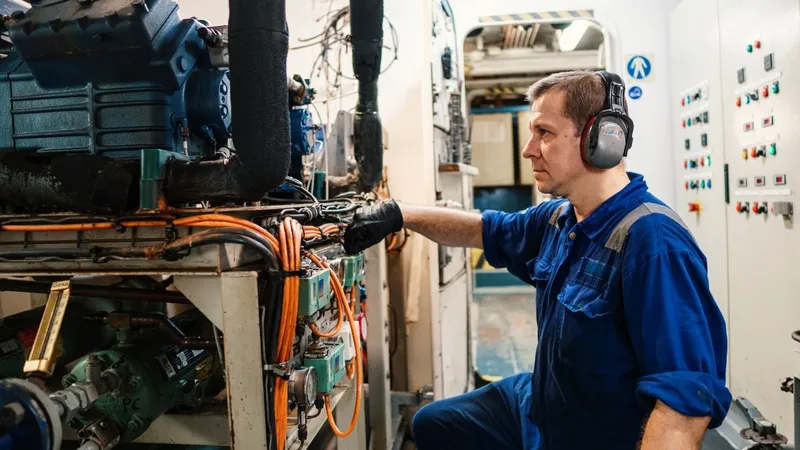
Marine vessels play a critical role in transporting people and goods. Because of this, maritime maintenance is essential, as even the most minor damage to them caused by natural disasters or accidents can be costly.
Proper vessel upkeep, or maintaining marine vessels performed by professional ship mechanics, can protect and preserve them so that they can continue performing their critical functions for many years to come.
What is maritime maintenance?
Vessels refer to any type of watercraft, including ships, boats, or anything that floats. Maritime maintenance pertains to the activities related to caring for marine vessels. Maintenance work can involve fixing engine, electrical, and pump system issues, updating navigational technology, cleaning, and performing daily tasks such as clearing lockers or removing debris.
Maritime maintenance is an essential aspect of vessel operations. The primary parts of the vessels that require upkeep include the engine and electrical system, to mention a few. Maintenance programs are implemented to maintain the boat’s proper operating conditions constantly without hindering routine operations.
Maritime Maintenance Plan
The primary purpose of a maritime maintenance plan is to complete the repair and maintenance work with minimum costs in the shortest possible time.
Maritime maintenance is an all-inclusive service that includes various activities to ensure that the machinery is updated and running smoothly and that the vessel’s excellent shape is preserved.
Proper maritime maintenance is the best way to extend the overall lifecycle of the different ship components and minimize the machinery’s degradation or complete failure.
Vessel upkeep should adhere to all regulations on prevention and safety to help attain optimal reliability across the different systems.
How to Produce a Maritime Maintenance Plan
A maritime maintenance plan must include all the necessary protocols and tasks to retain the efficacy of the vessel. The plan should indicate the following:
- Improve the efficiency of the ship in all activities.
- Maintain optimal performance levels of all equipment and machinery.
- Please keep track of all failures and breakdowns and reduce the frequency and time required to repair them.
- Please list all the tasks that should be performed at the different facilities and their respective frequencies.
- Avoid forced downtimes as the result of failure or severe damage.
The Maritime Maintenance Process
A maritime maintenance plan carried out by ship mechanics consists of five steps. Completing the steps below can optimize vessel performance and prevent failure or severe damage.
Information
The first step involves collecting data and information on the ship’s equipment, machinery, and maintenance needs. The manufacturer should provide this information, including the assembly schematics and instructions on parts replacement and repairs.
Details regarding the specific protocols for the machine must also be obtained. Information from the ship’s breakdown log and data obtained from the crew’s personal experiences can also come in handy.
Planning
Planning maritime maintenance means properly scheduling every task and assigning a crew member to handle each task. Some repair and maintenance must be performed in the dry dock. These should also be planned accordingly ahead of time to reduce vessel downtime.
The workload distribution among the crew members is highly critical. Specialist ship mechanics must also be requested for mechanical or electrical inspections. Tasks relevant to a similar system must also be appropriately grouped in the maritime maintenance plan.
Assignment of duties
Familiarity with the capacities and abilities of the crew members is essential to identifying the proper course of all maintenance tasks. Separate mechanical work from electrical work and designate every worker to a task where they are more prepared and suitable. These tasks should be scheduled correctly, and the functions under administrative inspection should be prioritized.
Execution
After assigning all the tasks, the workers will carry out their duties with the assistance of the matching material resources. The execution step consists of several processes. First, the Chief Engineer will oversee the monthly maintenance and be accountable for any delayed task.
All crew members assigned maintenance duties will see them. The maintenance log will have a record of these duties. This will include every relevant detail, including the parts replaced and the imperfections or defects found.
Analysis
The vessel’s owner must be notified of every information indicated in the maintenance log. This will give them a complete understanding and overview of the ship’s condition and, at the same time, keep a repair log of the vessel.
Types of Maritime Maintenance
There are four levels of maritime maintenance covering all the established protocols that ship mechanics should adhere to for proper vessel upkeep.
Condition-based maintenance
Condition-based maintenance is a systematic process that measures, monitors, and analyzes data on equipment conditions over time. The resulting assessment of the condition allows for predicting the remaining components.
Corrective maintenance
Corrective maintenance, also known as reactive, breakdown, or run-to-failure maintenance, is quite simple. It occurs if something goes wrong and ship mechanics need to fix it. This type of maritime maintenance is described as non-planned and occurs after detecting a failure.
This is an action performed due to deficiencies or failure occurring. More generally speaking, it repairs an item to its proper operating condition.
The corrective maintenance process should include pinpointing the existing issue, identifying the cause, and recommending, evaluating, and implementing feasible solutions.
Predictive maintenance
Predictive maintenance is when ship mechanics can proactively evaluate a machine’s health before a problem occurs. It is one aspect of every ship’s lifecycle.
This form of maritime maintenance happens before breakdown or failure. It is the best maintenance necessary for any breakdown of parts where a failure can be tolerated while the system is in operation.
This process regularly monitors the condition of the equipment or item and guarantees optimal interviews between repairs. One of the primary benefits of predictive maintenance is offering actual data for planning repair activities, reducing unscheduled repairs, early detection of possible failure modes, and maximizing the system’s operability and availability.
Preventive maintenance
Also known as scheduled, time-driven, or on-condition maintenance, preventive maintenance necessitates changes in the machinery or equipment to ward off failures in the future. Maintenance is performed to check the machinery’s condition. The parts should be replaced even if they are still usable as long as indicated in the schedule.
Shipbuilders highly recommend this type of maritime maintenance for vessel upkeep. Preventive maintenance addresses scheduled inspections to determine whether equipment or components can continue operating adequately or identify deterioration.
Possible benefits include decreasing downtime and the costs relevant to it, increasing available equipment, and improving quality and safety. Decks and hulls are the main barriers on the vessel that are exposed to different environmental hazards. This is why hull maintenance is crucial to ensure endurance and prevent steel corrosion.
Risk-based maintenance
Risk-based maintenance focuses on high-value assets and considers potential failure throughout the equipment’s remaining service life.
More Tips for Maritime Maintenance
The procedures in the ship’s book must be followed for proper maritime maintenance and vessel upkeep. This will inform you what regular inspections are required on the boat.
When inspecting the mechanical equipment, it’s essential to refer to the ship’s book to determine what should be done and then do it accordingly. If needed, assistance should be requested from the ship mechanics or higher-ranking officers.
Maritime maintenance is critical for a ship’s smooth operation and pleasing appearance. It can be carried out as scheduled maintenance or as part of an inspection.
Inspections occur often, but scheduled maintenance must be performed according to the ship’s book, which details the required frequency for inspection or maintenance.
These can include routine inspections to identify the damage, intervals of a lube oil change, and major overhauls that take apart and reassemble all equipment.
The cost of maritime maintenance may vary from one ship to another. Maritime maintenance and vessel upkeep costs a lot of money, but these costs can go higher if a piece of equipment breaks down suddenly at sea and unexpected repairs are required.
Always stay up to date with maritime maintenance to eliminate expensive unplanned repairs. Be sure to have skilled ship mechanics onboard to keep the necessary vessel upkeep and keep the ship running smoothly, efficiently, and safely.