

Cruise Packing List: What to Bring and What to Leave Home
A good cruise packing list comes down to four things: documents and medication in your carry-on, clothes for sea days, port days and one or two dressier dinners, electronics that pass the terminal scanner, and a clear idea of what your cruise line bans. Get those right and everything else is comfort.
Packing for a cruise is not the same as packing for a hotel stay. Your checked bags leave your hands at the pier, security screens everything against rules that differ from line to line, and a cabin gives you less storage than most hotel rooms. This guide walks through what to bring, what to leave at home, and where the big lines disagree.
What Goes in Your Carry-On for Embarkation Day
Your checked luggage goes to a porter at the terminal and is delivered to your cabin later in the day, sometimes hours after you board. Anything you need before then, or anything you cannot afford to lose, travels with you.
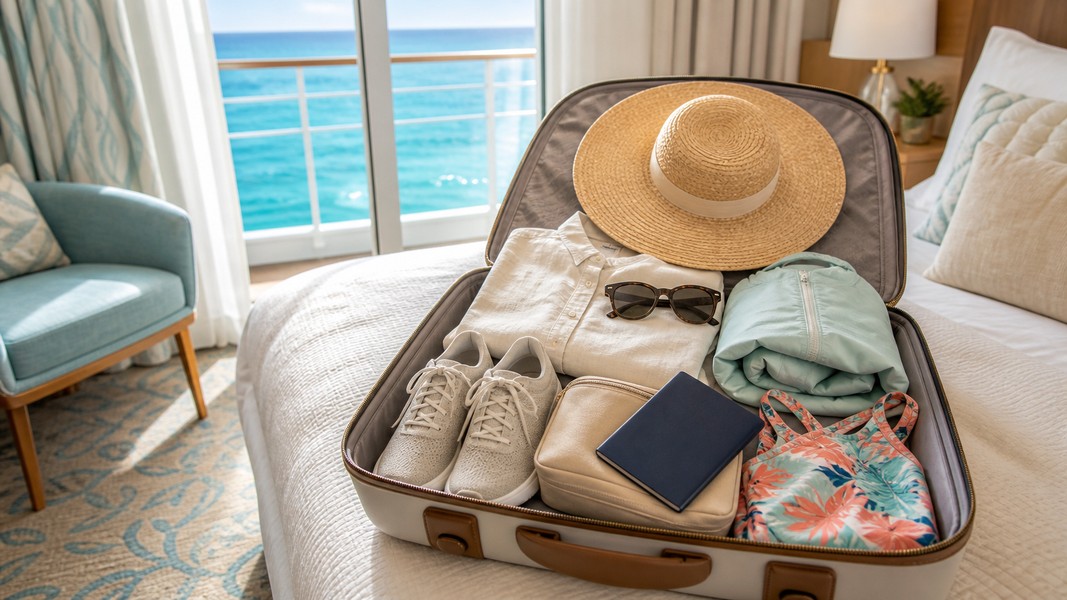
Treat your carry-on as the bag that saves the cruise if the suitcase goes missing. Pack it with the items below.
| Item | Why it stays with you |
|---|---|
| Passport or birth certificate and photo ID | Checked at the terminal before you board |
| Boarding documents and cruise app login | Needed for check-in and your onboard account |
| Prescription medication for the full trip | Hard or impossible to replace at sea |
| Swimsuit and a change of clothes | Pools open while bags are still in transit |
| Phone, charger and a power bank | Your ticket, camera and map on day one |
| Sunscreen and sunglasses | First afternoon is usually on deck |
| Wine bottle, if your line allows it | Most lines only accept it in hand luggage |
Carnival's own guidance is blunt about medical items. Its special requirements form tells guests to hand carry medication, equipment and supplies, and not to pack them in checked luggage.
Travel Documents: Passport or Birth Certificate
The document question depends on where your cruise starts and ends. For U.S. citizens, a closed-loop cruise is one that begins and ends at the same U.S. port. Under the Western Hemisphere rules, those travelers can re-enter the United States with a birth certificate and a government-issued photo ID.
That rule covers re-entry only. U.S. Customs and Border Protection warns that the countries your ship visits may still ask for a passport, and tells travelers to confirm requirements with their cruise line. A passport also gives you options if something forces you off the ship in a foreign port and you have to fly home.
Carry copies too. The CDC's travel guidance recommends you pack smart by bringing copies of travel documents and keeping both a printed and a digital version where possible. A photo of your passport page, your booking confirmation and your insurance policy on your phone, plus paper copies in a separate bag, takes five minutes and covers the worst case.
Clothes for Sea Days, Port Days and Dinner
Most packing mistakes on a cruise are clothing mistakes: too many outfits, not enough of the right ones. Plan around three kinds of time rather than around the number of days.
| Time on the trip | What works |
|---|---|
| Sea days | Swimwear, cover-up, shorts, light layers for air-conditioned lounges |
| Port days | Walking shoes, breathable clothes, a hat, a light rain layer |
| Evenings | Smart casual for the main dining room, one dressier outfit |
| Cold or windy decks | A fleece or light jacket, even in the Caribbean |
Dress codes vary by line and by ship. Many lines hold at least one dressier evening, so check your line's dress code page before deciding between a suit, a cocktail dress or simply a nicer shirt. Cabins are small and closets are shallow, so outfits that mix and match beat single-use pieces.
Two items get forgotten more than anything else. The first is a pair of comfortable walking shoes for ports, because tender boats, cobblestones and long piers are hard on sandals. The second is a light jacket, because open decks at night and air-conditioned theaters are cooler than most people expect.
Toiletries, Medicine and Seasickness Remedies
Cabins usually include basic soap and shampoo, but little else. Bring your own conditioner, skincare, deodorant, a razor, and a small first aid kit with plasters, pain relief and anything for stomach trouble.
Medication deserves extra care. Pack enough for the whole trip plus a few extra days in case of delays, and keep it in your carry-on. Carnival's brand ambassador John Heald has publicly confirmed that guests can bring medication in a daily pill organizer, after rumors claimed original bottles were required. If your medicine needs refrigeration, Carnival notes that stateroom mini-bars are designed for drinks and should not be used for temperature-sensitive medication, and that portable refrigerators are available in limited numbers.
If you are unsure how your body handles the sea, pack remedies before you need them. Our guide to motion sickness at sea covers what causes it and which options work best before symptoms start.
Electronics and Chargers That Pass Security
Cabins have few outlets, which tempts people to pack a power strip. That is the single most common electrical item confiscated at the terminal.
Disney Cruise Line lists extension cords, power strips, multi-plugs and surge protectors among its prohibited items, along with heating pads and hot plates. A 2026 comparison of line policies found that Royal Caribbean and Celebrity ban power strips as well, while Carnival allows strips and cords without surge protection and Princess allows non-surge strips after an onboard electrical inspection.
The safer choice is a single wall charger with several USB ports, which charges a phone, a watch and a power bank from one outlet without any surge protection circuitry. Power banks are generally fine: Disney allows lithium batteries that are not punctured, swollen or damaged.
A few more items earn their place in the bag:
- A waterproof phone pouch for beach days and tender rides
- A lanyard or card holder for your cruise card
- Headphones for sea days and flights
- A small night light, since interior cabins are completely dark
What Cruise Lines Ban: Leave These at Home
Every major line bans items that could start a fire in a cabin. Royal Caribbean's rules, summarized in a September 2026 guide drawn from its own FAQ pages, prohibit clothing irons and steamers, candles, incense and anything with an open flame, while hair dryers, curling irons and flat irons are allowed. Security has the final say at the scanner, and confiscated items are either stored until the end of the cruise or discarded.
| Leave at home | Why | Bring instead |
|---|---|---|
| Clothing iron or steamer | Fire risk in cabins | Wrinkle release spray, hang clothes in the shower |
| Surge-protected power strip | Banned on most major lines | One wall charger with several USB ports |
| Candles and incense | Open flame | Battery-powered candle |
| Hard liquor and beer | Banned in luggage by most lines | Buy onboard or check your line's wine allowance |
| Large cooler | Slows boarding and screening | Small personal cooler where allowed |
| Drone | Operation is restricted onboard | Check your line before packing it |
Carnival also updated its list in 2026 to state that collapsible wagons must be folded during boarding and cannot be used on the ship or at its private destinations. Families who rely on a wagon for beach gear should plan to carry it closed.
Drinks and Snacks: What You Can Bring Onboard
Alcohol rules are where the lines differ most, and where a suitcase search is most likely. Royal Caribbean allows each guest of drinking age to bring one sealed 750 ml bottle of wine or champagne on embarkation day. Boxed wine and other containers are prohibited, and bottles bought onboard or in port are stored by the ship and returned on the last day.
Carnival allows one 750 ml bottle of wine or champagne per guest aged 21 and over in carry-on luggage and a small quantity of non-alcoholic drinks in cans or cartons. Water, soda and other drinks in plastic or glass bottles are not permitted. Beer and hard liquor are banned on both lines.
Snacks are simpler. Royal Caribbean accepts non-perishable, pre-packaged food in limited quantities, which covers the granola bars and crackers most travelers bring for port days.
Carnival, Royal Caribbean and Disney Cruise Packing List Differences
If you sail with more than one line, the differences above are the ones that catch people out. A Carnival cruise packing list can include a basic power strip without surge protection; a Royal Caribbean cruise packing list or Disney cruise packing list cannot. Wine allowances look similar on paper, but check the fine print on age limits and where you can drink it.
Disney is the strictest of the three on electrical items, since its list names multi-plugs alongside power strips and surge protectors. Carnival, for its part, updated its list in 2026, so an older blog post or a friend's advice from a past sailing may already be out of date. Check the prohibited items page for your specific line within a few weeks of sailing, because the lists change.
Alaska Cruise Packing List: Layers and Rain Gear
An Alaska cruise needs a different wardrobe from a Caribbean one. The National Park Service describes Glacier Bay, a highlight of the Inside Passage, as a place of glaciers, fjords and temperate rainforest, and rainforest means rain and cool air are part of the trip even in summer.
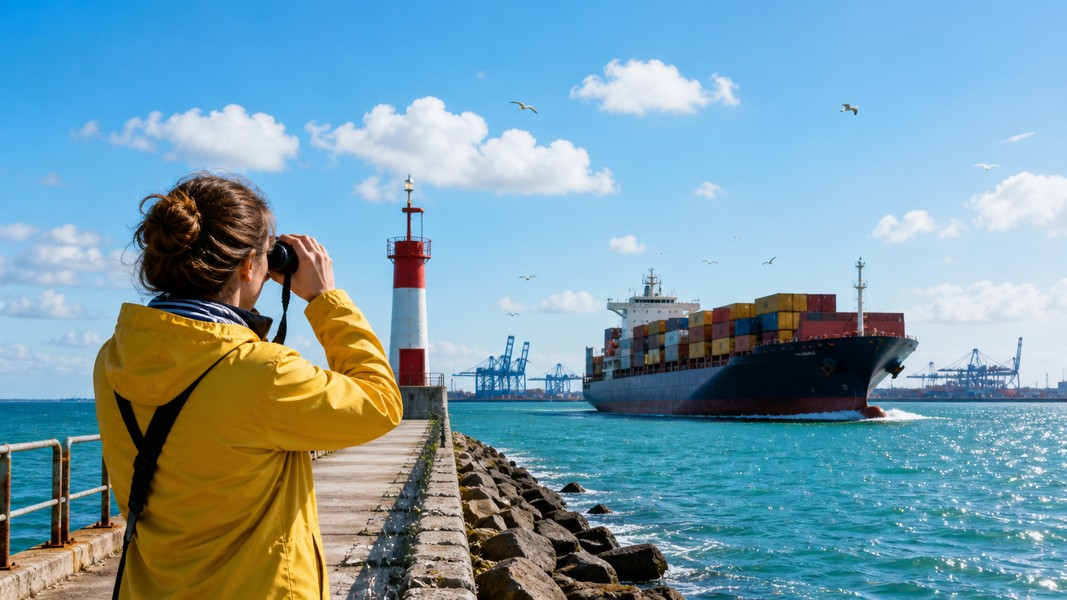
Pack layers you can add and remove through the day rather than one heavy coat. A base layer, a fleece and a waterproof shell cover almost every port and glacier viewing day. Add a warm hat, light gloves, waterproof walking shoes and binoculars for wildlife and glaciers from the deck.
The weather at your ship's location changes quickly in Alaska, so check it the evening before each port instead of relying on the forecast you saw at home. In Primo Nautic you can follow your own ship and see live conditions at its position, which makes the call between a fleece and a full rain shell a lot easier on busy port mornings.
What to Leave with Family at Home
Packing is not only about your bag. The people you leave behind will want to know where you are, and at sea your phone may be off or on an expensive plan.
Before you leave, share your ship name, the itinerary with port dates, the cruise line's emergency contact number and a copy of your passport page with someone you trust. With the ship name, family can follow the ship from home without waiting for you to find Wi-Fi.
Primo Nautic was built for exactly this. A relative who sets the tracking purpose to a loved one on a cruise gets plain-language updates about the ship's progress, the weather where it is, and when it is expected in the next port, instead of raw coordinates.
Putting Your Cruise Packing List Together
The lists above work best as a system rather than as separate piles. Start two weeks out by checking documents, since a passport renewal cannot be rushed at the last minute. A week out, read your line's prohibited items and beverage pages, then decide on chargers and drinks.
Three days before departure, pack the checked bag by time of day: sea days, port days and evenings. Pack the carry-on last, on the principle that it has to carry you through the first afternoon and survive a lost suitcase:
- Documents, copies and boarding pass
- Medication, a day of clothes and swimwear
- Phone, charger, power bank and sunscreen
On the final evening, check the weather for the first port and move one layer into the carry-on if the ship is heading somewhere cool.
Conclusion
A cruise packing list is less about volume and more about placement and rules. Documents, medication and the first day's essentials belong in your carry-on. Clothes should cover sea days, port days and a dressier evening without filling the cabin. Irons, surge-protected power strips, candles and spirits stay home on most lines, and wine allowances differ enough between Carnival, Royal Caribbean and Disney that the official pages are worth a read before sailing. For Alaska, layers and rain gear matter more than outfits. Leave your ship name and itinerary with family, and the people at home can keep up with the voyage while you enjoy it.
Most Recent Posts
Discover more articles from our blog.