



Lifeboats, liferafts and rescue boats
Lifeboats
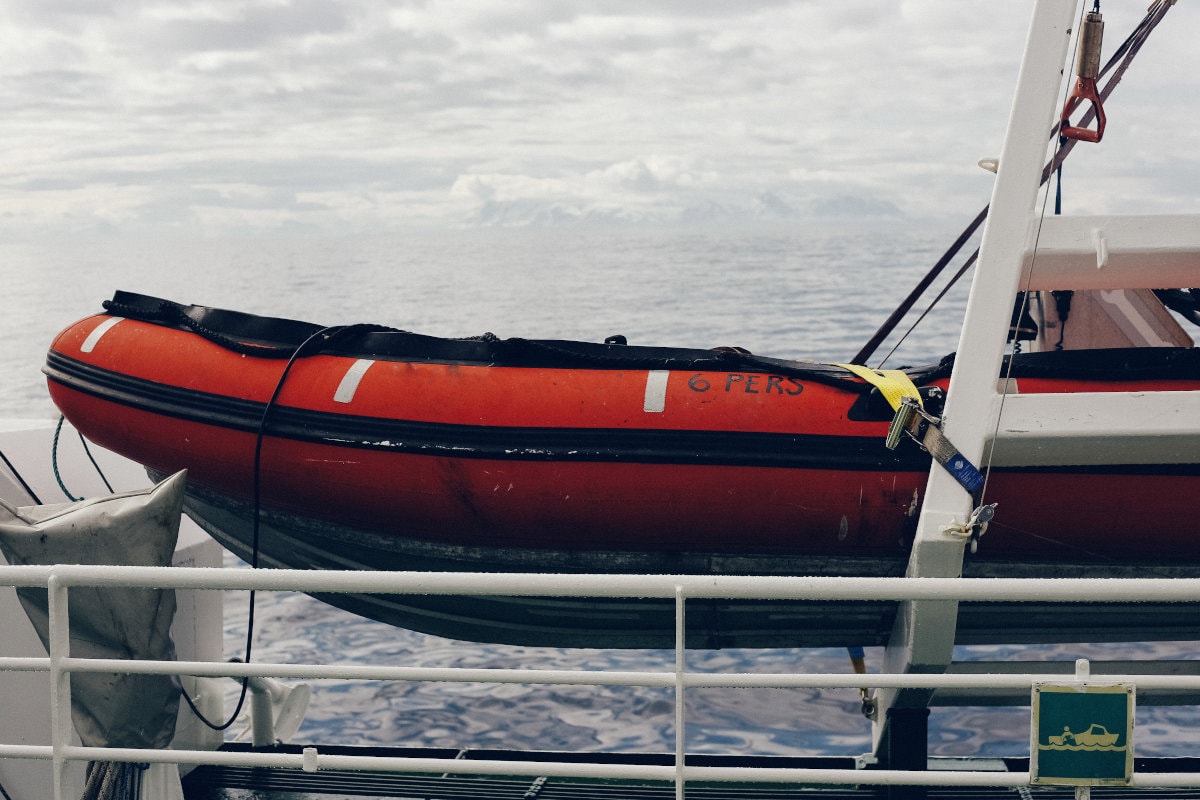
Lifeboats allow people to stay longer at sea after the ship sinks. Lifeboats are made of wood, aluminum, steel or fiberglass. The wooden ones are no longer in use today since they are difficult to maintain. Aluminum, and especially steel, require constant maintenance. They are unfit due to overheating in warm areas, corroding, so they should be constantly painted. They are less commonly used.
Nowadays, the basic material for the production of lifeboats is Glass Reinforced Plastic (GRP). Lifeboats made out of GRP are resistant to rotting, fire and corrosion. They are also easy to maintain.
Most life raft air tubes are made from either PVC, nylon reinforced butyl rubber or polyurethane. Some also have an outer cover of welded PVC that protects a PVC bladder.
Lifeboat consists of the hull, bench and cover. The free (unused) space is filled with polyurethane foam which gives extra buoyancy to the boat and serves as a great thermal insulator.
Lifeboats are sturdy enough that they can be lowered from the boat filled with the intended number of people and equipment. They can be towed at speeds of up to 5 knots per calm sea. The hull and hood are non-flammable.
A single lifeboat is allowed to board a maximum of 150 people (one person = 75kg in sitting position + lifejacket). The size of the boat and the maximum number of persons allowed to board are indicated on the side of the boat. The name of the ship and the port of entry has to be indicated in Latin on both sides of the bow. If there are more lifeboats on board, they are numbered by their position, from bow to stern, with even numbers on the right flank.
Each lifeboat must have a motor propulsion. It is powered manually or by a starter system (two separate sources of electricity required). The engine has a forward - stern - rear clutch. The speed of the loaded boat is at least 6 knots. The fuel must be sufficient for uninterrupted operation of the engine for 24 hours.
Unlike lifeboats, rafts do not have any propulsion (propulsion system). In terms of construction, they can be rigid and pneumatic and last for 30 days at sea.
Types of lifeboats
Semi-enclosed lifeboats
They are used only for passenger vessels and can accommodate 100-150 people. This type of lifeboat allows for faster boarding of people due to a larger opening on the ceiling which is particularly important for passenger ships. Ceiling of such vessel, made of solid materials, is set to at least 20% of the length from the stern and the bow toward the center.
Enclosed lifeboats
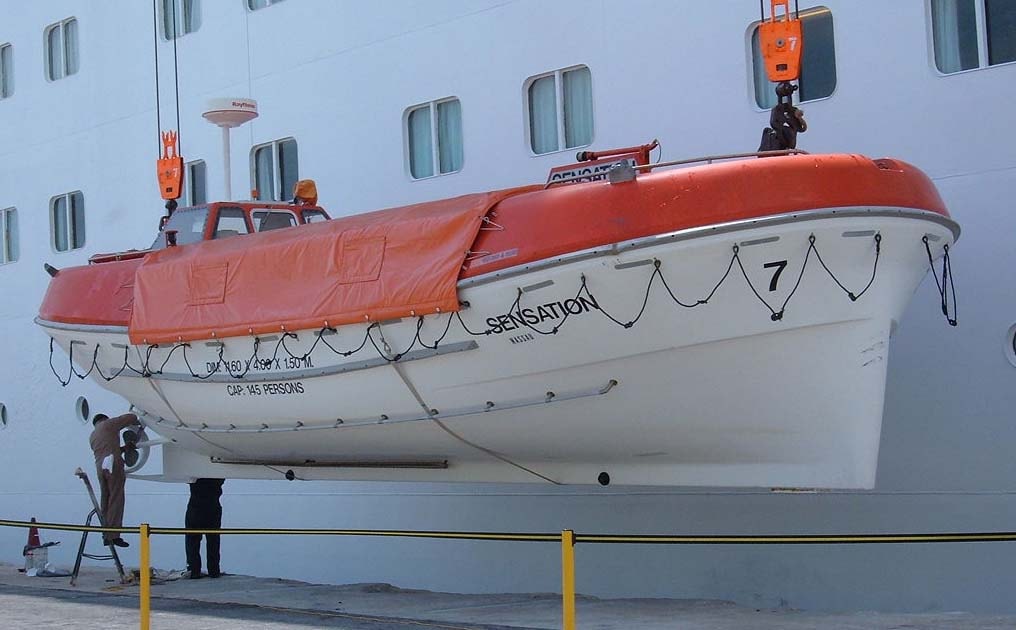
These boats must provide watertight closure and protection of persons from the outside influences. A slip gear is situated inside the boat. Each seat is equipped with a safety belt.
Boats with toxic gas protection
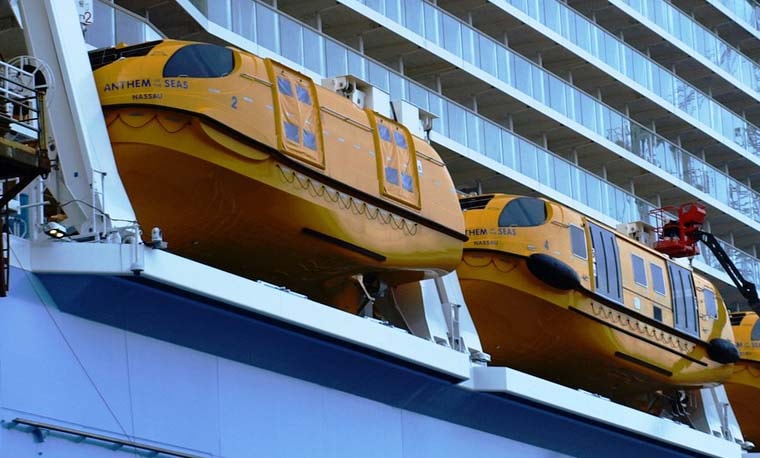
They are used on ships carrying dangerous goods or occasionally generating/releasing toxic gases. These boats do not penetrate gases (the interior is pressurized) and normal breathing is possible for all persons for at least 10 minutes. This provides sufficient time to move away from the danger area.
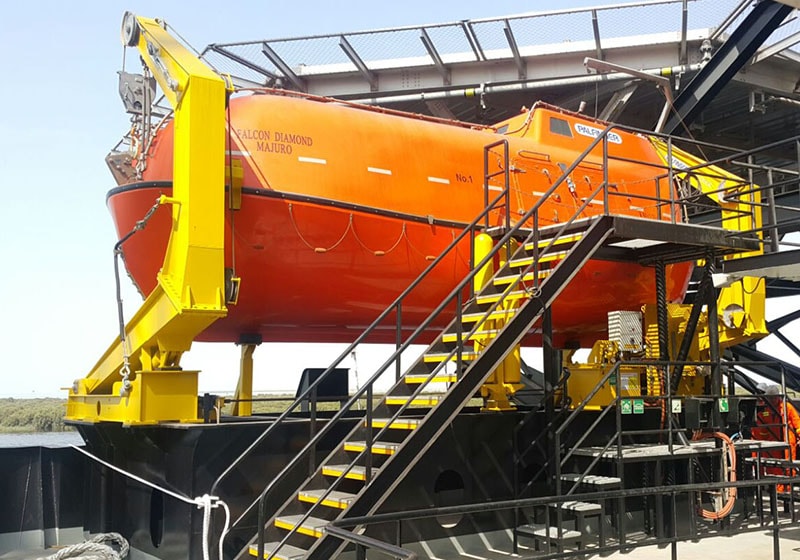
Closed fire-resistant lifeboats
They are used on tankers where the risk of fire is increased. Vessels are equipped with a system for the safe departure from the ship, which consists of a pump and of a system for soaking the outer surface of an enclosed vessel with sea water.
Lifeboat equipment
The boat must have a rudder ore, regardless of the ability to remotely control the rudder. A rope with wooden handrails around the flanks is used for possible shipwrecks that cannot be boarded (filled). In addition to the rope, there is a tubular handrail along both sides used to re-align the boat after a possible rollover. Watertight spaces for storing equipment, water and food, and for collecting rainwater are usually below the bench. Some boats are equipped with a desalinator (manual launch, does not use solar energy, or chemical agents). Boats are lowered from the boat davits on steel ropes, and their release (hooks) is a critical moment. Caution!
There's a lamp on the cover. It lights up for at least 12 hours and can be seen up to two miles away. There is also one lamp inside the boat (it must not be a petroleum lamp). There is also manual/machine ejection equipment in the boat. Boat equipment:
- floating oars
- two boathooks
- floating bailer and two water buckets
- survival instructions
- compass
- drogue
- two berths (30m)
- two axes (bow and stern)
- water containers (31 per person)
- container for fetching seawater with rope
- food (hermetically packed)
- four parachute rockets
- six torches
- two floating smoke signals
- waterproof electric Morse signal lamp, with backup battery and bulb
- heliograph with instructions for use
- a copy of the rescue signals
- a whistle for sounding
- first aid
- medicines for seasickness for at least 24 hours
- pocketknife attached to the boat
- three tin openers
- two floating rescue ropes, with ring (longer than 30m)
- manual pump, if the boat does not empty automatically
- fishing equipment
- repair tools
- portable fire extinguisher
- reflector (power supply for at least three hours of continuous operation)
- radar reflector and
- heat loss protection, sufficient for 10% of persons (or at least two).
Rescue boats
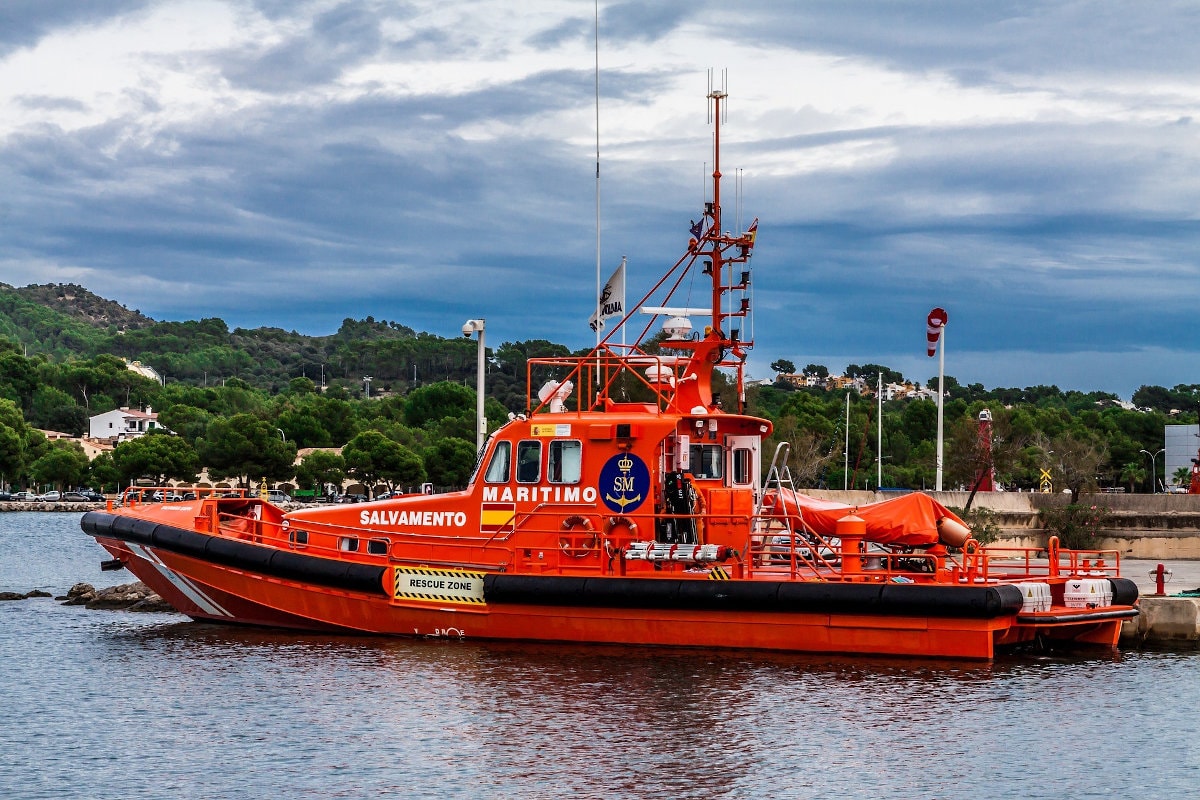
3.8 to 8.5 m in length, for at least five people in a sitting position and one in a recumbent position. This type of boat is used for offshore interventions when difficult or impossible with lifeboats. It may have a rigid or pneumatic bottom. It must be maneuvered quickly, easily and successfully, so that external or internal motors are installed for speeds greater than six knots when towing the largest fully loaded life raft for a continuous four hours.
Unlike lifeboats, gas engines and even jet engines may be built into rescue boats. The hull and shackles must be strong enough to lower/lift the boat fully. It must be able to stay at sea for at least 30 days. The descent is done by dedicated cranes (purchased with the boat).
RO-RO passenger ships must have fast rescue boats. They are 6 to 8.5 m long and 20 knots faster (crew of three). With the full number of persons it can handle, the speed is at least 8 knots. The boat is operated from the bow.
Liferafts
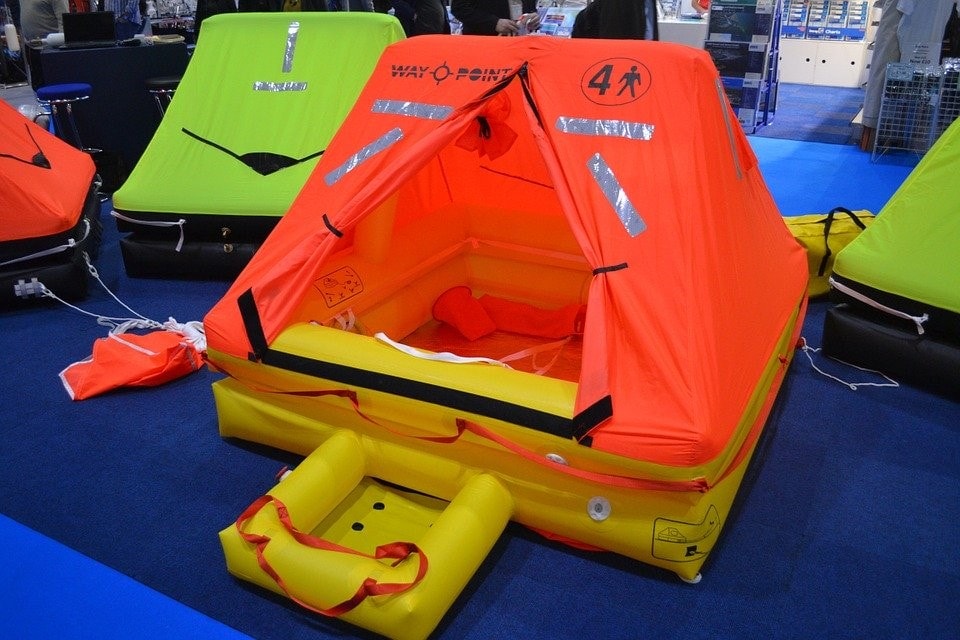
Unlike lifeboats, rafts do not have any propulsion (propulsion system). In terms of construction, they can be rigid and pneumatic. Their last for 30 days at sea. They are lowered by cranes, boat davits, but also by free fall, so they have to withstand the impact of falling from at least 18m in height, or more, depending on their location on the ship. A fully loaded raft must be able to be towed at a speed of at least 3 knots.
The cover must withstand the jump of a person from a height of more than 4.5m. Openings for entry/exit and ventilation are located on the cover. The cover allows rainwater to pour from it and to be collected. Each raft can hold at least six people. If its weight is more than 185kg, the boat falls are lowered. There is a floating rope around the body to hold people in the sea. The raft mooring is at least 15m long, or at least twice the height of its location on board.
Types of liferafts
Pneumatic liferafts
They are made of rubberized canvas, bright red colour. They are packed into solid plastic containers or in bags made of rubberized canvas. They are located on pedestals or on slope ramps on the deck, separately or in sets. Blow-up is performed from the bottle, which is located at the bottom of the craft through the non-refundable vent pipe by nontoxic gas (CO2) in less than 1 minute.
Boarding the raft from the sea is carried out through an opening by the semi-solid ramp or ladder, which must be immersed in water for 40 cm. A collector of rainwater is situated on the sides of the ceiling, and ballast pockets are situated at the bottom. Activating of the craft automatically turns on a light at the top of the ceiling visible for 2 Nm.
Rigid rafts
Buoyancy of such rafts comes from solid matter (usually expanded plastic foam). They are used less often than pneumatic ones because they take up more space and are easier to damage on board. The equipment and conditions in which it can be used are the same as for pneumatic. The tags are also the same.
Before descending, the raft should be released, dropped into the sea and heavily pulled. In this way, its cover gets lifted and the lamp gets lit. Boarding is done by ropes, jackets, or from the sea.