




Past Tenses
A quick overview
Past Simple
The Past Simple, also known as the simple past tense, the past tense or the preterite, expresses completed actions in the recent and distant past. It is the basic past tense in English grammar. We form this tense with the past simple form of the main verb and did, the past simple form of the auxiliary verb do. The duration of an action is not important in the simple past, instead, we emphasise when an action took place.
Examples
The MV Cannibal sailed from Perth to Hong Kong last year.
We stayed in port for several days.
He worked at Piraeus from 1990 to 1995.
Yesterday it rained all morning. It stopped in the evening.
The ship left the port on 5 April and was at sea for three days.
Did you notify the authorities? What did they do to contain the spill?
The leak did not cause dangerous pollution.
Where did the messmates go after lunch?
Usage
The simple past is the basic form of the past tense in English grammar, we use it for:
- actions that happened once or repeatedly in the past
- actions that happened one after the other in the past
- a new action interrupting an action that was already taking place, together with the past progressive tense
- in the second conditional
Signal Words
The simple past is used to say when something happened, so it is common to use it with expressions of time and adverbs of frequency.
- Time expressions: yesterday, 2 minutes ago, in 1990, the other day, last Friday etc.
- Adverbs of frequency: always, often, sometimes, rarely, never etc.
- In the second (unreal) conditional.
Conjugation
The verb be
The verb be is irregular in the simple past:

We use the contractions wasn’t and weren’t in negative sentences with be in the simple past.
Examples: I wasn’t on time yesterday. We weren’t interested in the event.
Other verbs
The conjugation of verbs in the simple past is the same for all forms. We add -ed to the regular verbs, but the irregular verbs have to be learned by heart. In negative sentences and questions, we use the auxiliary verb did or did not together with the main verb in the infinitive. The table below shows examples of the conjugation of regular and irregular verbs in the simple past in positive, negative and interrogative sentences.
We use the contraction didn’t in negative sentences in the simple past.
*We always use the infinitive of the verb after the auxiliaries didn’t and did.
Examples: I didn’t know about the party (not: I didn’t knew …), Did you have a nice weekend? (not: Did you had …), Did she say anything? (not: Did she said …)
Spelling Rules
Regular verbs are conjugated by adding -ed to the base infinitive of a verb. However, there are some exceptions to this rule:
1. When a verb ends in -e , we only add -d.
Example: love – loved (not: loveed)
2. The final consonant is doubled after a short stressed vowel.
Example: admit – admitted
3. The final consonant -l is always doubled after a vowel in British English but not in American English.
Example: travel – travelled (British), traveled (American)
4. A -y at the end of the word is replaced by an -i.
Example: hurry – hurried
Contractions
We can only use contractions in the negative form of the simple past. We do this by combining the form of be/did and not.
Past Progressive
The Past Progressive Tense, also called the Past Continuous Tense, emphasises a continuing or incomplete action in the past. We can use this tense to describe what was in progress at a specific moment in time in the past. It is formed with the past form of the auxiliary verb be (was/were), and the present participle or -ing form of the main verb.
Examples
At five o’clock, the vessel was sailing in position Lat 23°30'21''N.
Tommy was sitting on the bench at six o’clock yesterday.
While Jack was relaxing in the berthing compartment, Peter was assisting with the maintenance.
He was talking on the VHF when the collision happened.
Was I talking to you?
Where were you standing when the trouble started?
Why wasn’t he waiting at the meeting point?
Usage
There are a few ways to use the past progressive tense in English grammar. We can use it to express:
- an action that was in progress at a specific time in the past
- two actions that were taking place at the same time
- a past action that was interrupted by a second past action
Signal Words
Signal words can help you to identify which verb tense is being used in a sentence. The signal words for the past progressive are:
- while, as long as
Conjugation
To conjugate the Past Progressive Tense, we use the past tense form of the auxiliary verb be and the main verb in its -ing form. The table below provides an overview of the conjugation of the past progressive tense in positive, negative and interrogative sentences.
Spelling Rules
The present participle or -ing form is usually formed by adding -ing to the base infinitive of the verb. However, there are a few exceptions to the rule.
1. An -e at the end of the word is removed, but -ee, -oe and -ye remain unchanged.
Example: come – coming (but: agree - agreeing)
2. For words that have a short stressed vowel before the final consonant, the final consonant is doubled, but not -w, -x and -y.
Example: sit – sitting (but: mix – mixing)
3. An -l as the final consonant after a vowel is always doubled in British English, but not in American English.
Example: travel – travelling (British), traveling (American)
4. An -ie at the end of the word is replaced with a -y.
Example: lie – lying
Past Perfect Simple
The Past Perfect Tense is used for actions that took place before a certain point in the past. It is often used together with the simple past tense. It is formed with the auxiliary verb had and the past participle of the main verb.
Examples
The ship had just left when I arrived at the port.
I had never seen such a beautiful beach before I went to Kauai.
They came here after you had left.
I helped him to do the task after I had finished my work.
He was very tired because he hadn't slept well.
When they arrived we had already started unloading the cargo.
The chief steward had written the complaint before I had a chance to apologize.
If you had followed the appropriate procedures, the fire wouldn’t have broken out.
Usage
The past perfect tense is common in written English and storytelling. We use it together with the simple past to express:
- actions that took place before a certain time in the past
- the third conditional (if clauses)
Signal Words
Signal words help us to recognise which tense is being used in a sentence. The signal words for the Past Progressive are listed below:
- already, just
- never, not yet
- once, until that day
- if-clause type III (If I had talked, …)
* Some of the signal words for the Past Perfect are the same as those for the Present Perfect. The difference is that the signal words for the Past Perfect refer to the past and not to the present.
Conjugation
To conjugate the Past Perfect tense in English, we follow the rule: had + past participle. The table below shows the conjugation of positive, negative and interrogative sentences in the English Past Perfect tense.

Spelling Rules
Regular verbs are normally conjugated by adding -ed to the base infinitive form of a verb. However, there are some exceptions to this rule:
1. Then a verb ends with in -e , we only add -d.
Example: love – loved (not: loveed)
2. The final consonant is doubled after a short stressed vowel.
Example: admit – admitted
3. The final consonant -l is always doubled after a vowel in British English but not in American English.
Example: travel – travelled (British), traveled (American)
4. A -y at the end of the word is replaced by an -i.
Example: hurry – hurried
Contractions
Contractions are a combination of certain pronouns, verbs and the word not. They are mostly used in spoken and informal written English. The table below provides an overview of contractions in the past perfect tense using the verb had.
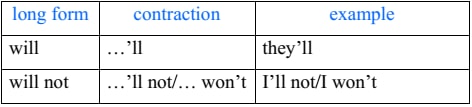
1. In written English, we usually form contractions with a pronoun and an auxiliary verb, but not with a noun and an auxiliary verb.
Example: He’d not eaten much of his lunch. (but not: The man’d/Tom’d not eaten much of his lunch.)
2. The negated contractions, in which the verb and not are combined, can always be used no matter what kind of word comes before them.
Example: He hadn’t eaten much of his lunch. The man/Tom hadn’t eaten much of his lunch.
Past Perfect Progressive
The Past Perfect Progressive, also Past Perfect Continuous, is used for actions that were in progress shortly before or up to a certain past time. It emphasises the process of an action rather than the completion. It is similar to the present perfect progressive tense but is used to express past actions. We form this tense with had + been + present participle or -ing form of the main verb.
Examples
Tom had been cleaning the tanks for hours when Mark came to take his place.
He just couldn't summon the energy. He had been working at the dock all afternoon.
When have they been painting the hold?
Why was he so tired? Why had he been working at the dock all afternoon?
They had been sailing for a month before they finally reached Boston.
You had been sitting there for more than an hour before he arrived.
We were thirsty because we had been working on the deck in the heat.
I had been working at the company for five years when I got the promotion.
Usage
*We don’t use the Past Perfect Progressive often in spoken English – it is much more common in written texts.
We use the Past Perfect Progressive tense to express the following:
- an action that started before a certain time in the past and was interrupted by a second action
- an action that started and ended before a certain time in the past but the effect of this action was still important at that moment
- an action that started before a certain time in the past and wasn’t completed at that time
* Sometimes, we can use the Past Perfect instead of the Past Perfect Progressive without completely changing the meaning of the sentence, instead, we change the focus of the sentence from the duration of an action to its completion.
Example: Tom had been cleaning for three hours. (focus is on the duration of the action), Tom had cleaned for three hours. (focus is on the completion of the action)
Signal Words
Signal words can help us to recognise the tense in a sentence. The signal words for the Past Perfect Progressive are:
- for …, since …
- the whole day, all day
The signal words for the Past Perfect Progressive are the same as those for the Present Perfect Progressive. The difference is that the signal words for the Past Perfect Progressive refer to the past, not the present.
Conjugation
To conjugate the Past Perfect Progressive tense in English grammar, we need the auxiliary verbs have and be in the past participle: had + been + present participle or -ing form of the main verb. The table below provides an overview of conjugations of the past perfect progressive in positive, negative and interrogative sentences.

Spelling Rules
The present participle is generally formed by adding -ing to the base form of a verb. However, there are a few exceptions to this rule:
1. An -e at the end of the word is removed, but -ee, -oe and -ye remain unchanged.
Example: come – coming, but: agree - agreeing
2. The final consonant is doubled in words that have a short stressed vowel before the final consonant. However, -w, -x and -y are not doubled.
Example: sit – sitting, but: mix – mixing
3. An -l as a final consonant after a vowel is always doubled in British English but not in American English.
Example: travel – travelling (British), traveling (American)
4. An -ie at the end of the word is replaced with a -y
Example: lie – lying
Contractions
Contractions are a combination of certain pronouns, verbs and the word not. They are mostly used in spoken and informal written English. The table below provides an overview of contractions in the past perfect progressive tense using the verb had.
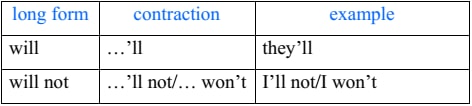
1. In written English, we usually form contractions with a pronoun and an auxiliary verb, but not with a noun and an auxiliary verb.
Example: He’d not been cleaning for a long time. (but not: The man’d/Tom’d not been cleaning for a long time.)
2. Negated contractions, formed with an auxiliary verb and not, can be used after nouns as well as pronouns.
Example: He hadn’t been cleaning for a long time. The man/Tom hadn’t been cleaning for a long time.