




Future Tenses
A quick overview
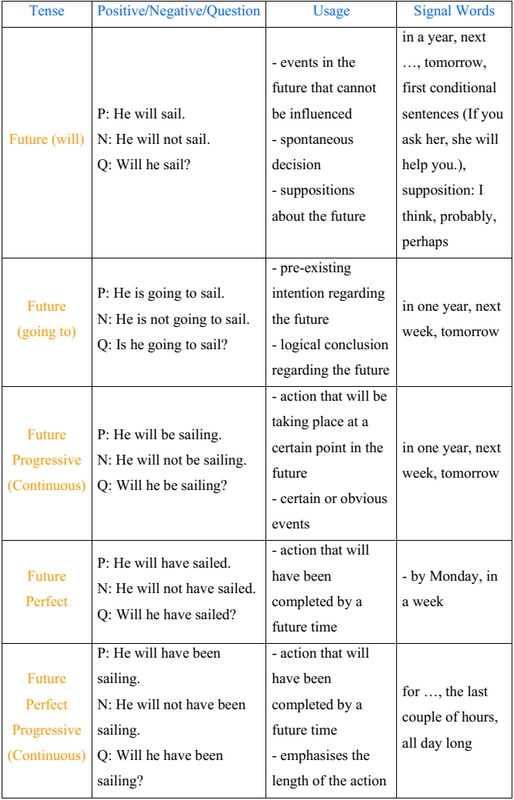
Future Simple
The future tense with will, also Simple Future, is one way of talking about future events in the English language. We can use the simple future with will to express a spontaneous decision, a prediction or a future event that cannot be altered. It is formed with the auxiliary verb will and the infinitive or base form of the main verb.
Examples
Come on, I will help you secure the moorings.
It will probably rain tomorrow.
Showers will break out later in the evening.
You won’t finish it in just one day.
I will call you at the north exit of the TSS.
We will wait for the pilot one mile from the buoy.
Welcome on board, Mr. Pilot. I will escort you to the bridge.
IMO will adopt a new convention on stowaways.
Usage
We can use the simple future tense with will to express:
- a spontaneous decision
- an opinion, hope, uncertainty, or assumption regarding the future
- a promise
- offers and requests
- the first conditional
Signal Words
Signal words help us to recognise the tense being used in a sentence. Below is a list of signal words for the Simple Future Tense:
- I think
- probably
- perhaps
Conjugation
The conjugation of the future simple with will is that same for all forms. We simply follow the rule: will + infinitve. The table below provides an overview of the positive, negative and interrogative conjugation of the English future simple tense.

Contractions
Contractions are a combination of certain pronouns, verbs and the word not. They are mostly used in spoken and informal written English. The table below provides an overview of contractions in the future tense using the verb will.
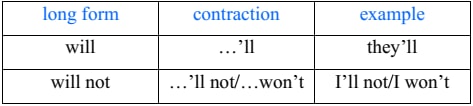
1. In written English, contractions are used after pronouns, but not after nouns.
Example: He_’ll_ not finish it in just one day. (but not: My colleague’ll/Phil’ll not finish it in just one day.)
2. Negated contractions, which are a combination of an auxiliary verb and not, can always be used.
Example: He won’t finish it in just one day. My colleague/Phil won’t finish it in just one day.
Future Simple
The future tense with going to, also Simple Future, expresses a logical prediction for the future or an intention or plan which has already been decided. This tense is constructed with: be + going to + infinitive.
Examples
The first thing you’re going to receive is an official notification from your company.
The weather forecast says it’s going to rain tomorrow.
When are you going to take the IELTS test?
I am going to take the test at 1100 tomorrow.
I’m going to drop anchor.
Look! The vessel is listing heavily. It is going to capsize.
Are you going to participate in the meeting tomorrow?
Who is going to pay the compensation?
Usage
Use the future with going to for:
- plans and intentions for the future when a decision has already been made.
- predictions for the future that are based on present evidence.
Signal Words
Certain expressions can help us to recognise the tense being used in a sentence. The following words indicate the use of a future tense:
- in one year, next week, tomorrow
However, there are no concrete signal words for going to. We have to examine the context to determine which future tense to use.
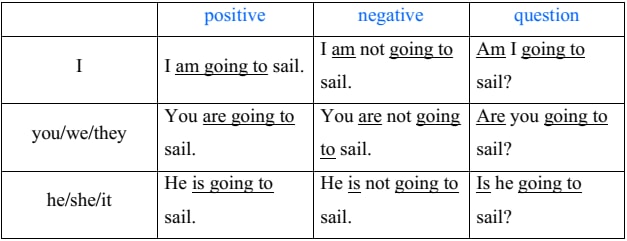
Conjugation
To conjugate the future with going to, we follow the rule: be + going to + infinitive. The table below provides an overview of positive, negative and interrogative conjugations for the simple future with going to.
Contractions
Contractions are a combination of certain pronouns, verbs and the word not. They are mostly used in spoken and informal written English. The table below provides an overview of contractions in the future with going to.
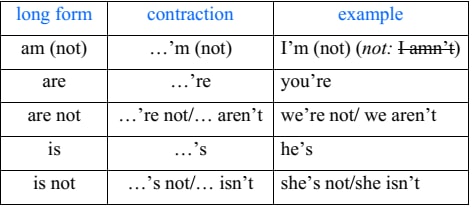
* In written English, the contracted form of are can only be used after pronouns, not after nouns and names.
Example: They’re going to meet in town. (but not: The women’re going to meet in town.)
Future Progressive
The Future Progressive tense, also Future Continuous tense, expresses a continuing action that will be in progress at a future time. The future progressive tense in English grammar is formed with will + be + present participle or ing-form.
Examples
In two months, I will be sailing around Australia.
They will be painting the hold in three hours.
By 3019, we will be driving spaceships.
Stena Line says it will be starting the conversion of its ferries to run on methanol main engine fuel in January 2022.
We will be celebrating like kings if it works.
Tom is getting ready for his watch. In an hour he will be sitting at his post with his college Jack. They will be talking.
Shipper can send the original documents to our office in St. Petersburg and we will be holding them until clear instructions from an authorized person.
Will we be sailing around Australia soon?
Jack will not be coming home for the holidays.
Usage
We use the English future progressive tense to:
- express that an action will be in progress at a certain future time
- express a future action that we expect to happen.
Signal Words
Signal words can help us to recognise the tense in a sentence. It is difficult to talk about any specific signal words which are used only with this tense. All the expressions which imply that we refer to a specific moment in the future can be seen as an indication that we should use this tense. Some of the signal words for the future progressive are:
- at 4 o’clock tomorrow
- tonight
- this time next week/tomorrow
Conjugation
To conjugate the Future Progressive tense we follow the rule: will + be + present participle or ing-form. The conjugation is that same for all forms. The table below provides an overview of the future progressive tense in positive, negative and interrogative sentences.

Spelling Rules
The present participle is generally formed by adding -ing to the base form of a verb. However, there are a few exceptions to this rule:
1. An -e at the end of the word is removed, but -ee, -oe and -ye remain unchanged.
Example: come – coming, but: agree - agreeing
2. A consonant that follows a short stressed vowel is doubled. However, -w, -x and -y are not doubled.
Example: sit – sitting, but: mix – mixing
3. An -l as a final consonant after a vowel is always doubled in British English but not in American English.
Example: travel – travelling (British), traveling (American)
4. An -ie at the end of the word is replaced with a -y
Example: lie – lying
Contractions
Contractions are a combination of certain pronouns, verbs and the word not. They are mostly used in spoken and informal written English. The table below provides an overview of contractions in the future progressive with the verb will.
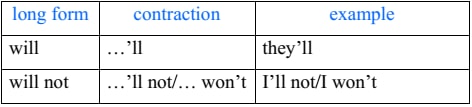
1. In written English, we usually use contractions after pronouns, but not after nouns.
Example: Unfortunately, she’ll not be sitting next to Charles. (but not: Unfortunately, the woman’ll/Mrs Nelson’ll not be sitting next to Charles.)
2. Negated contractions, which are a combination of an auxiliary verb and not, can always be used.
Example: Unfortunately, she won’t be sitting next to Charles. Unfortunately, the woman/Mrs Nelson won’t be sitting next to Charles.
Future Perfect Simple
The Future Perfect tense in English grammar indicates that an action will have been completed by a certain future time. It is constructed with the auxiliary verbs will + have + past participle of the main verb.
Examples
I will have finished painting the hold by 6 o’clock.
It will have stopped raining by 7 pm tonight.
They will have left the Muroran Port by tomorrow morning.
We will have sailed around the world before we come to Bangladesh.
I will have arranged all the necessary materials before the program starts.
I will not have finished this book by next week.
Will you have studied all the English verb tenses by tomorrow?
When will they have left their jobs?
Usage
We can use the English future perfect tense for:
- actions that will have been finished by a future time, usually with an expression of time
- assumptions about something that has probably happened
Signal Words
Certain expressions can help us to recognise the tense in a sentence. Some examples of signal words or expressions for the Future Perfect are:
- by tomorrow/Monday/9 o’clock, in a week, before (a future action)
Conjugation
To conjugate the Future Perfect Tense, we follow the rule: will + have + past participle. The table below shows the conjugation of positive, negative and interrogative sentences in the future perfect tense.

Spelling Rules
The past participle for regular verbs is formed by adding -ed to the base form of the verb. The past participle of irregular verbs is the third verb form (speak – spoke – spoken). However, there are a few exceptions:
1. When a verb ends with -e, we simply add a -d.
Example: love – loved (not: loveed)
2. The final consonant is doubled after short stressed vowels.
Example: admit – admitted
3. The final consonant -l is always doubled after a vowel in British English but not in American English.
Example: travel – travelled (British), traveled (American)
4. A -y at the end of the word is replaced by an -i.
Example: hurry – hurried
Contractions
Contractions are a combination of certain pronouns, verbs and the word not. They are mostly used in spoken and informal written English. The table below provides an overview of contractions in the English future perfect tense.
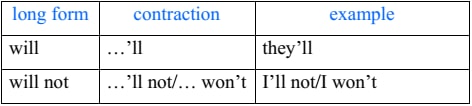
1. In written English, contractions are used after pronouns, but not after nouns.
Example: Unfortunately, she’ll not be sitting next to Charles (but not: Unfortunately, the woman’ll/Mrs Nelson’ll not be sitting next to Charles.). I’m afraid that he’ll not have repaired his bike by then (but not: I’m afraid that Matthew’ll not have repaired his bike by then.)
2. Negated contractions, which area combination of an auxiliary verb and not can always be used.
Example: I’m afraid that he won’t have repaired his bike by then. I’m afraid that the boy/Matthew won’t have repaired his bike by then.
Future Perfect Progressive
The Future Perfect Progressive, also Future Perfect Continuous, is used to emphasise the progression and duration of an action up to a certain time in the future. When we use the future perfect progressive, we look back at a past action from a future point in time. This tense also expresses assumptions about that will likely have happened by a certain time. The future perfect progressive is formed with will + have + been + present participle or -ing form of the main verb.
Examples
In ten minutes, you will have been cleaning the deck non-stop for six hours. You ought to take a break.
If it’s midnight, he will have been sleeping for four hours by then.
They will have been painting the hold for two days by Saturday.
In July, you will have been sailing for five months.
They will have been talking for two hours by then.
In July, you will not have been sailing for six months.
How long will you have been studying when you get your degree?
Will he have been sleeping for four hours by midnight?
I will not have been sailing professionally for one year by the time we get married.
Usage
We can use the English Future Perfect Progressive tense to:
- emphasise the length of an action in progress at a certain time in the future, usually with reference to the duration of the action
- express what we imagine or think is happening at a certain future or present time
- express an assumption about what was happening at a certain time in the past.
* When using the Future Perfect Progressive in English, we usually include a reference to a specific time such as next year, by this time, last week.
Conjugation
To conjugate the English Future Perfect Progressive tense, we follow the rule: will + have + been + present participle or -ing form of the main verb. The table below provides an overview of conjugations in the the positive, negative and interrogative form. The conjugation is the same for all forms.

Spelling Rules
The present participle is generally formed by adding -ing to the base of a verb. However, there are a few exceptions to this rule:
1. An -e at the end of the word is removed, but -ee, -oe and -ye remain unchanged.
Example: come – coming, (but: agree - agreeing)
2. The final consonant is doubled in words that have a short stressed vowel before the final consonant. However, -w, -x and -y are not doubled
Example: sit – sitting (but: fix –fixing)
3. An -l as the final consonant after a vowel is always doubled in British English but not in American English.
Example: travel – travelling (British), traveling (American)
4. An -ie at the end of the word is replaced by a -y.
Example: lie – lying
Contractions
Contractions are a combination of certain pronouns, verbs and the word not. They are mostly used in spoken and informal written English. The table below provides an overview of contractions of will in the English future perfect progressive tense.
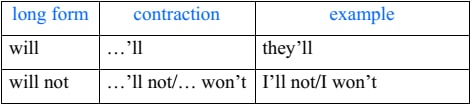
1. In written English, contractions are formed with a pronoun and an auxiliary verb, but not with a noun and an auxiliary verb.
Example: He’ll not have been driving for six hours. (but not: Her husband’ll/Marc’ll not’ve been driving for six hours.)
2. Negated contractions, formed with an auxiliary verb and not, can be used after nouns as well as pronouns.
Example: He won’t have been driving for six hours. Her husband/Marc won’t have been driving for six hours.