



Medical First Aid on Board a Ship
Priorities
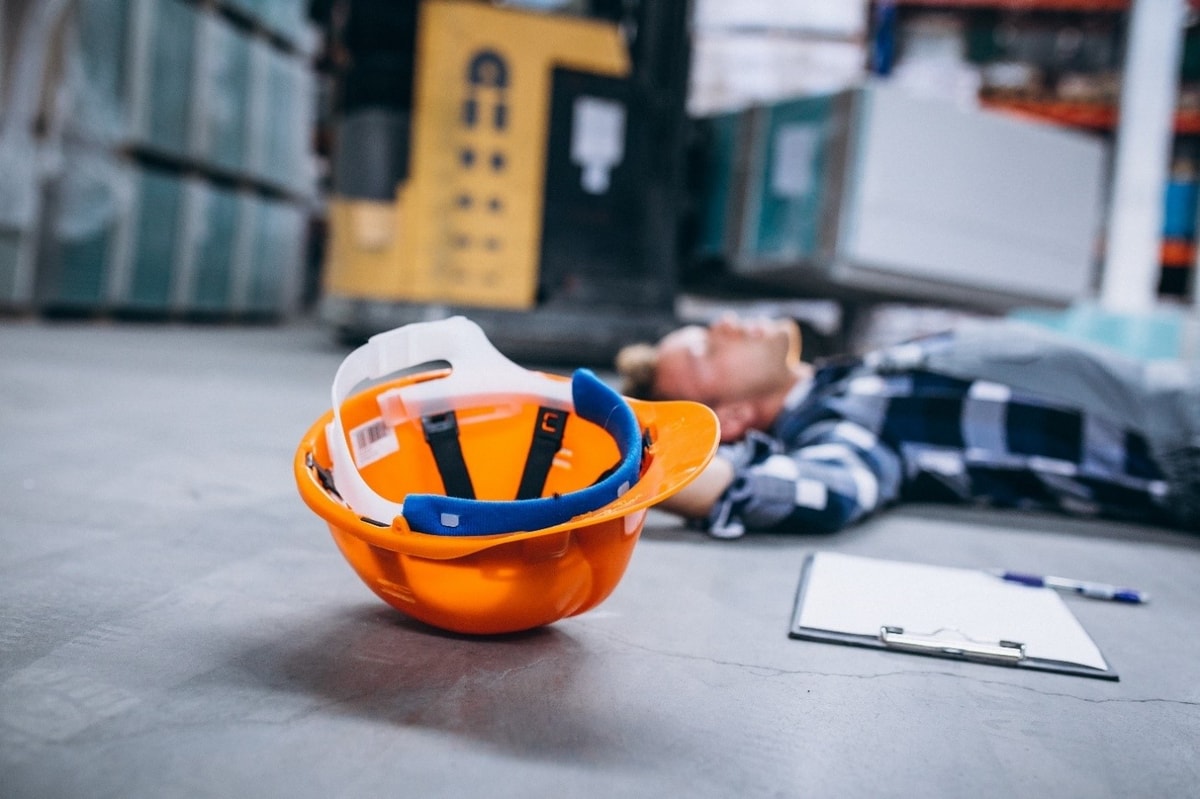
Upon finding a casualty:
- Check for safety: do not get injured yourself
- If necessary, remove the person in distress from danger or remove danger from the person.
- If there is only one unconscious or bleeding casualty, administer immediate aid to that person only, and then send for help.
If there is more than one unconscious or bleeding casualty:
- Send for help
- Start giving appropriate treatment to the worst casualty in the following order of priority:
- severe bleeding
- stopped breathing/heart
- unconsciousness
If the casualty is in an enclosed space, do not enter the space unless you are a trained member of a rescue team acting according to your instructions. Send for help and inform the master. The rescue team must not enter if they do not have a breathing apparatus which must also be fitted to the casualty as soon as possible. The casualty must quickly be removed to the nearest safe area outside the enclosed space unless his injuries and the estimated time of evacuation require for some immediate and vital treatment before he can be moved.
General principles of first aid abroad ship
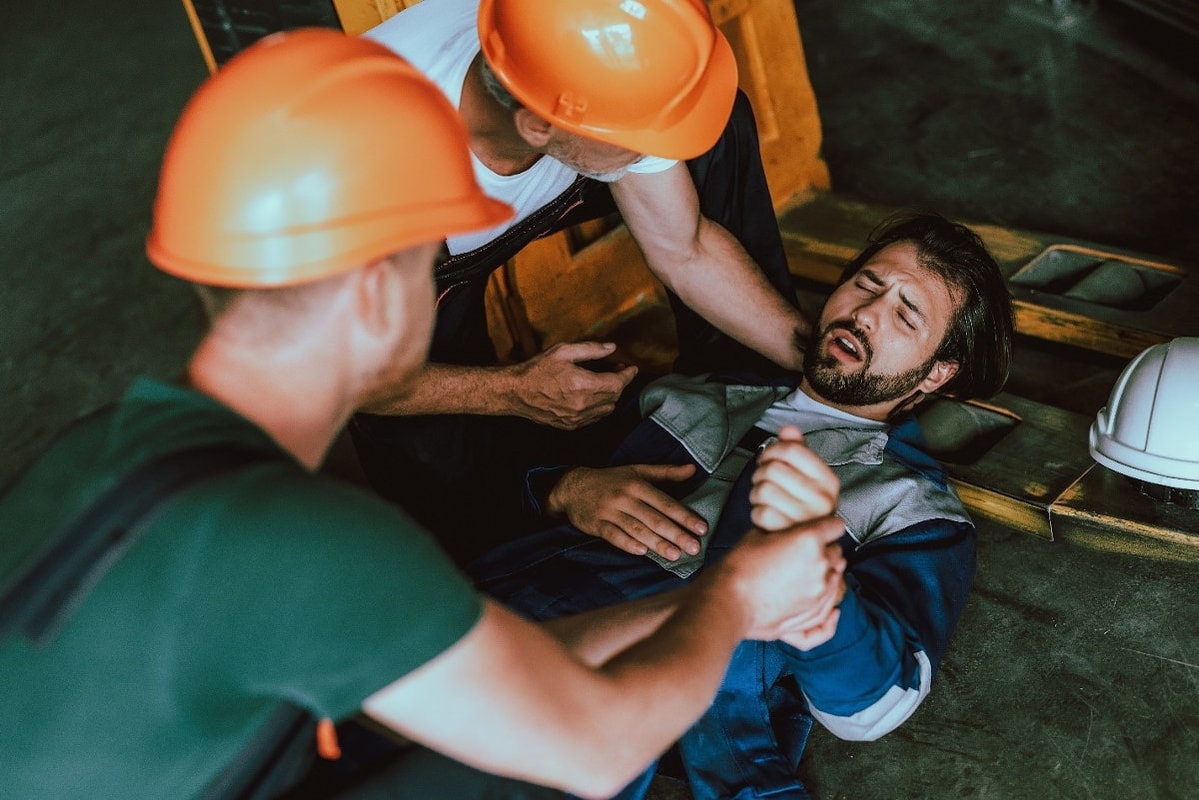
Emergency (urgent) conditions are those injuries or sudden emergencies that directly endanger the life of the injured or ill. The casualty must be quickly and urgently assisted, otherwise the person might die or suffer lasting consequences.
First aid must be administered immediately to:
- Restore breathing and heartbeat
- Control bleeding
- Remove poisons
- Prevent further injury to the patient (for instance, his removal from a room containing carbon monoxide or smoke).
In case of cessation or compromise of breathing and heart function, the first aid procedure of reanimation (the establishment and maintenance of these functions) should be administered. This condition may occur in cases of drowning, subcooling, invasion of the foreign body into the airways, electric shock, poisoning, severe wounding, hanging, etc. If breathing and heart function is not restored, death occurs in 3-5 minutes (brain death). It may be required, if so arranged by radio with a physician and onshore health service, to terminate travel and board the nearest port or helicopter transport.
Important notes when providing first aid
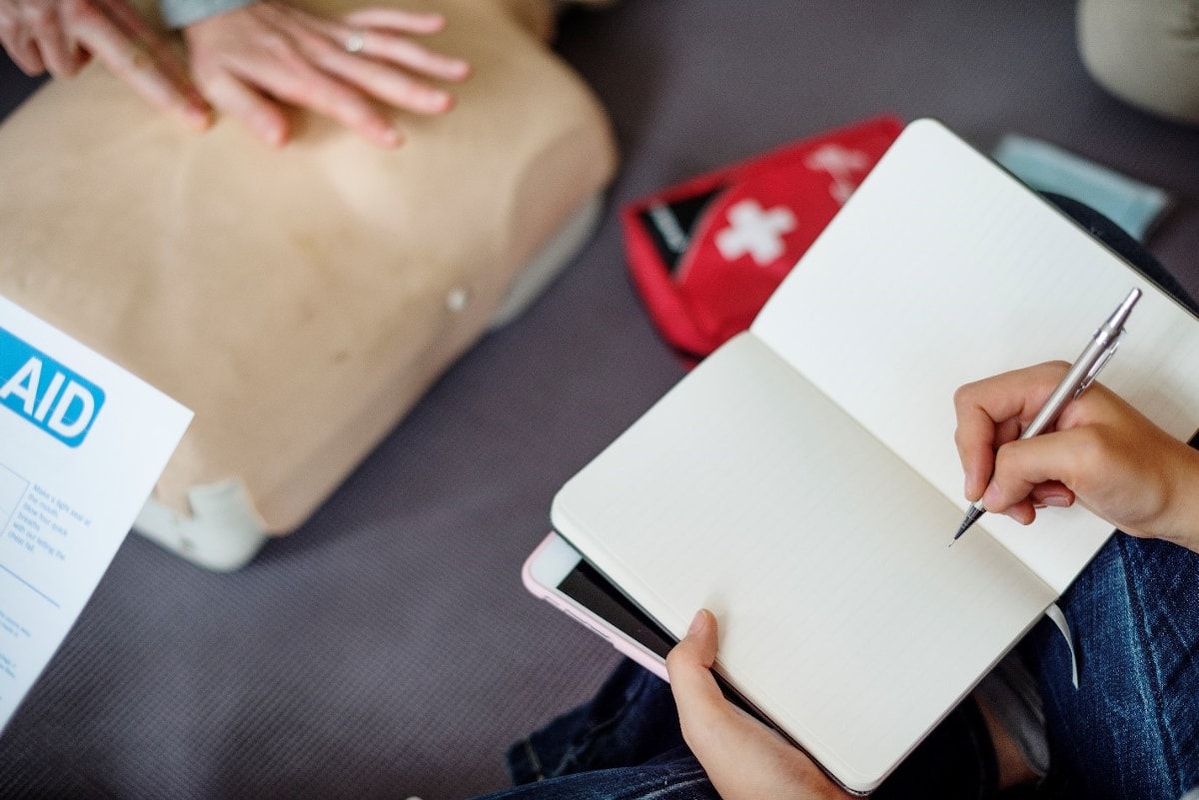
When we come across an unconscious person, we first need to make sure of the state of consciousness (call and shake carefully) and then act on the ABC principle:
- A - airway - airway patency
- B - breathing - existence of breathing
- C - circulation - the existence of a heartbeat
In cases of severe bleeding - stop it immediately!
First aid procedures:
- If the casualty is unconscious but is breathing - put him in a recovery position.
- If the casualty is not breathing - start artificial respiration.
- If there is no heartbeat - start cardiac massage (take off the person's clothes).
- Seating is only allowed if we are sure that the person has no spinal injuries.
- Check for other injuries!
Signs of death:
- impossible to feel or hear the heartbeat with the ear leaning against the chest
- the eyes are glassy and fallen
- sudden cooling of the body is present
Never consider someone dead unless these signs are present!
The most sensitive tissue to oxygen deficiency is the brain. If the brain runs out of oxygen due to cessation of breathing and heartbeat, death will follow in 3 to 5 minutes. Therefore, revival must be undertaken during this time. As a result of accidents, poisoning, hanging, drowning and heart disease, the following conditions are possible:
No breathing, no heartbeat: brain without oxygen = death in 3-5 min. In this case it is necessary to:
- lay the injured person on a hard surface
- check for airway obstruction
- start with artificial respiration
- begin an external heart massage
No breathing, heart beats. In that case:
- check for airway obstruction
- start artificial respiration
He is unconscious, breathes and his heart beats:
- position the injured person in the recovery position
ABC principle
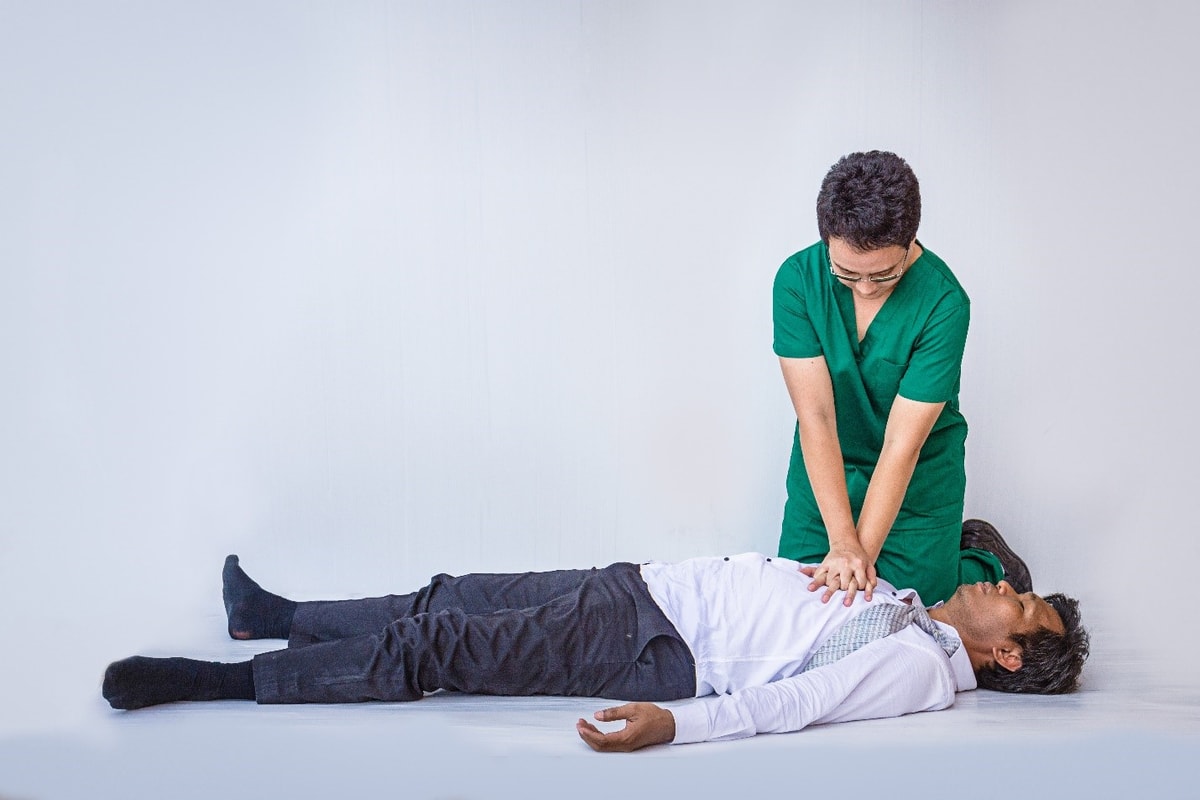
When we come across an unconscious person, we first need to make sure of the state of consciousness (call and shake carefully) and then act on the ABC principle:
- A - airway - airway patency
- B - breathing - existence of breathing
- C - circulation - the existence of a heartbeat
In cases of severe bleeding - stop it immediately!
First aid procedures:
- If the casualty is unconscious but is breathing - put him in a recovery position.
- If the casualty is not breathing - start artificial respiration.
- If there is no heartbeat - start cardiac massage (take off the person's clothes).
- Seating is only allowed if we are sure that the person has no spinal injuries.
- Check for other injuries!
Signs of death:
- impossible to feel or hear the heartbeat with the ear leaning against the chest
- the eyes are glassy and fallen
- sudden cooling of the body is present
Never consider someone dead unless these signs are present!
The most sensitive tissue to oxygen deficiency is the brain. If the brain runs out of oxygen due to cessation of breathing and heartbeat, death will follow in 3 to 5 minutes. Therefore, revival must be undertaken during this time. As a result of accidents, poisoning, hanging, drowning and heart disease, the following conditions are possible:
No breathing, no heartbeat: brain without oxygen = death in 3-5 min. In this case it is necessary to:
- lay the injured person on a hard surface
- check for airway obstruction
- start with artificial respiration
- begin an external heart massage
No breathing, heart beats. In that case:
- check for airway obstruction
- start artificial respiration
He is unconscious, breathes and his heart beats:
- position the injured person in the recovery position
Artificial respiration
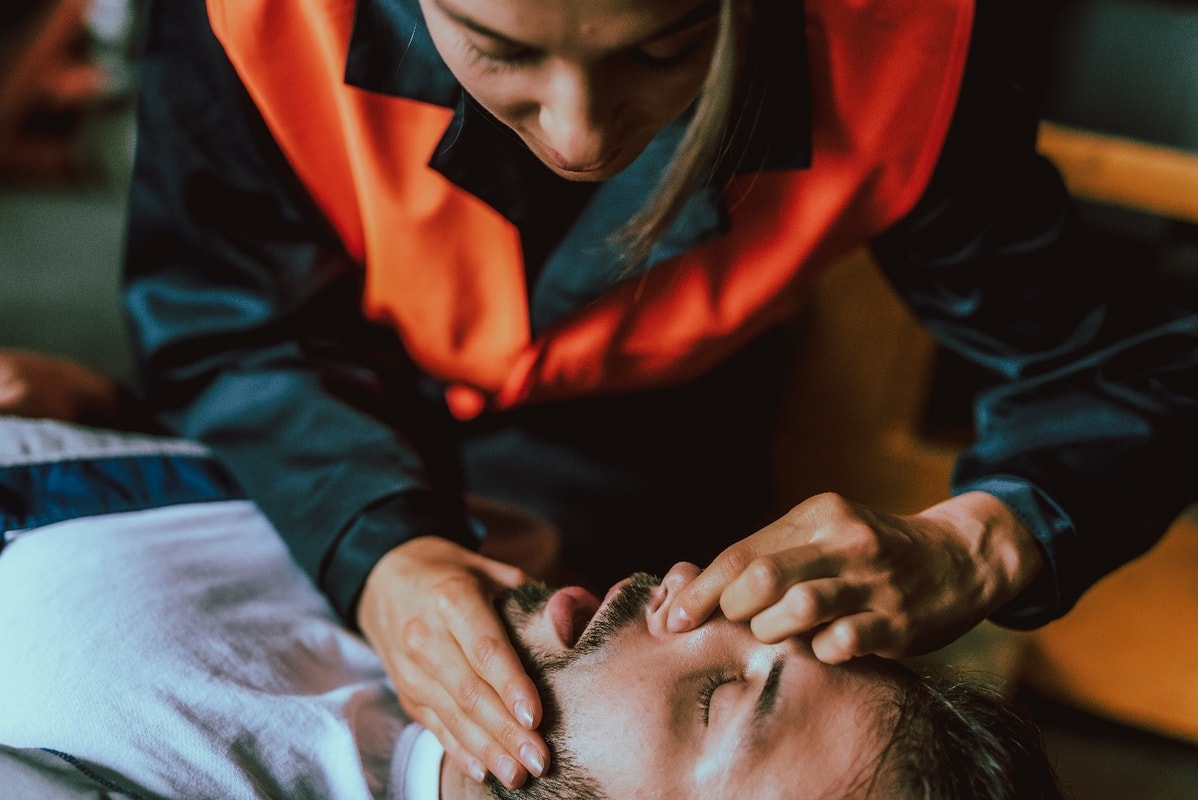
At the beginning of resuscitation, the nasal and oral cavities must be inspected and cleaned and obstructions (blood, saliva, food, etc.) removed. With a finger wrapped in gauze or handkerchief, an object or mass blocking the airways is quickly removed. In unconscious states, the tongue can numb, fall back and clog the larynx, so it should be pulled forward and held in this position until breathing is restored. The tongue is pulled with a gauze or a tissue because it is slippery.
Artificial respiration can be applied by the method of mouth-to-mouth, or mouth-to-nose, Sylvester or Holger Nielson methods (very rare) and with aids. Regardless of the method used, the first condition is that the airways are clear.
The most acceptable method for marine conditions is mouth-to-mouth. It can be done by one person, even with injured lungs, when other methods cannot be applied.
After clearing the airways, the head is tilted backwards. The first aider closes the victim's nose with one finger and thumb with one hand and raises his lower jaw up and forward with the other while opening his own mouth. He inhales heavily and breathes out into the victim's mouth. This air blowing is performed at a rhythm of 16 to 20 times per minute. After each rescue breath, the person moves his mouth away from the injured person's mouth to allow them to exhale.
When the mouth cannot be opened or when severely injured, the method of mouth to the nose is applied. The rescuer does the same as in the mouth-to-mouth method except that in this case the jaw-holding hand closes the victim's mouth and strongly blows air through the nose in the same rhythm as in the mouth-to-mouth method.
When force blowing air through the mouth or nose, it can get accumulated in the stomach, which manifests itself as bloating. In this case, the casualty is quickly, just for a moment, positioned sideways and pressed on the stomach. In doing so, the air goes out, but sometimes gastric contents as well which needs to be cleaned quickly.
In the Sylvester's method, the injured is laid on a hard surface on his back. A roll of cloth is placed under his neck and upper back so that the head is tilted backwards. The rescuer is positioned above the injured in a kneeling position so that the victim's head is between the rescuer's knees. The exhalation is performed by extending and raising the arms of the injured person in a wide arch, and the exhalation is achieved by pressing the crossed arms of the injured person on the lower part of his chest.
Larger ships must have basic aids for establishing breathing function on board. These include a balloon mask (AMBU mask) and/or a balloon mask with the possibility of attachment to an oxygen bottle. A respirator is an apparatus consisting of a tube, mask, aspirator and an oxygen bottle.
Cardiac massage
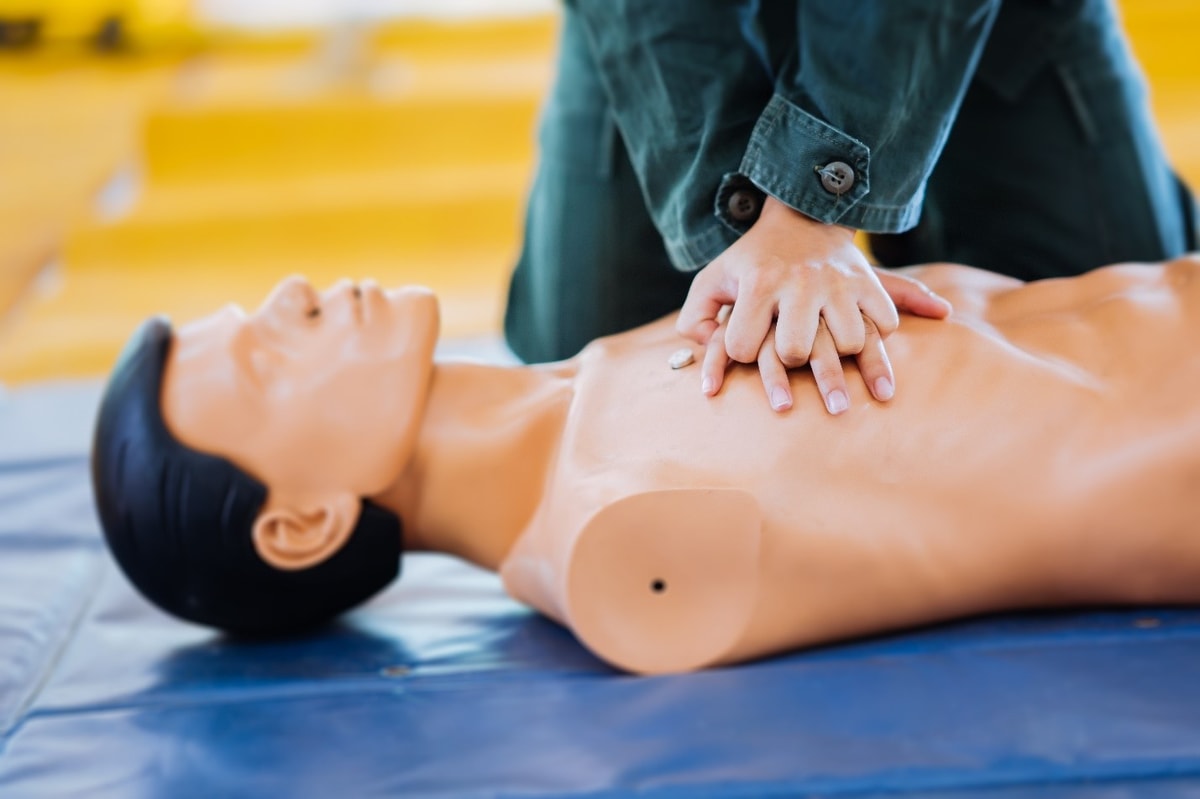
If the heart of the injured person stopped working, closed-chest cardiac massage (chest compressions) needs to start.
Cardiac massage is necessary for the brain to receive the needed amounts of oxygen. An effective massage replaces the natural work of the heart until the heart starts beating spontaneously.
To perform an external massage, the injured person should be undressed to the waist, laid on his back on a hard surface, and the pressure point needs to be determined. It is located at the junction of the middle and lower thirds of the sternum. Do not press right or left of this point as it would break the ribs. Do not press below this point as it would break the cartilage that ends the sternum, which can injure the abdominal organs (liver).
Cardiac massage is performed with two hands, so that the root of the palm of the lower hand is pressed rhythmically with the palm of the upper hand.
For the most effective pressure, the hands of the person performing the external massage are extended at the elbows, with the shoulders in a vertical position relative to the body of the injured person. The breastbone or the sternum should be depressed by 4-5 cm. Throughout the cycle of applying pressure and releasing, the palms should not be separated from the chest, and the pressure release must be complete. The number of thrusts must be 90 to 100 per minute. The cardiac massage in children requires one hand and only two fingers in infants.
Cardiopulmonary resuscitation (CPR)
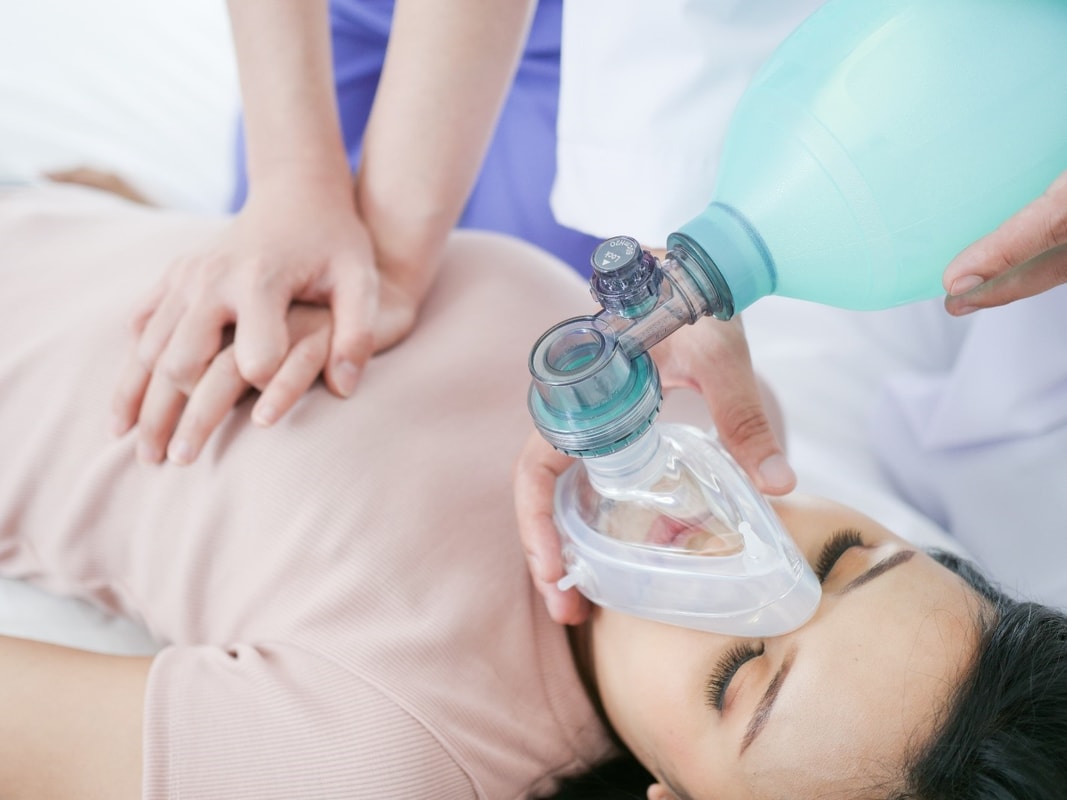
If the injured person does not breathe and shows no signs of heart activity, an external cardiac massage should be performed together with artificial respiration.
If help is given by one person, 15 pressures on the breastbone are followed by two rescue breaths. In this case, the rescuer takes a kneeling position on the side of the injured so that he can perform both actions without changing the position of his body. Otherwise, he will not have enough time to do both interchangeably and resuscitation will not be effective.
If the resuscitation is performed by two people, the procedure is easier and more efficient. The resuscitation is performed in the following rhythm: five chest pressures followed by one rescue breath. Artificial respiration and external heart massage are performed in this rhythm continuously, with a possible interruption of no more than five seconds (checking the pulse).
If there are two rescuers, it is important that the cardiac massage is performed continuously with a brief pause for artificial respiration, as each interruption of the cardiac massage is followed by a drop in blood pressure to zero.
When only one person is performing CPR, 15 chest presses are followed by two rescue breaths. When giving artificial respiration, do not wait for the injured person to breathe out, because there is no time for it. After 15 pressures on the sternum, two quick rescue breaths follow. To meet the minimum of 60 pressures per minute, the compression series must be repeated at least four times per minute (4 x 15 = 60). It is better, if possible, to maintain a rhythm of six series per minute (6 x 15 = 90).
Evaluating the effectiveness of CPR
The effectiveness of resuscitation is determined by checking the reaction of the pupils to light, checking for pulse and breathing, and taking into account the general appearance of the casualty.
Checking the reaction of the pupils to light
Narrowing of the pupils when exposed to light is a sign that the brain has received enough blood and oxygen.
Dilated pupils that react to light are a less alarming sign, while dilated pupils not reacting to light are a sign of serious brain damage.
Checking the pulse
Pulse should be checked after the first minute of heart massage and artificial respiration and after that every five minutes. The appearance of the pulse is a sign that the cardiac massage was effective or that the heart has begun to work spontaneously.
Other indicators of resuscitation success
The effectiveness of resuscitation is also indicated by:
- the expansion of the thorax with each rescue breath
- palpation of the pulse each time the sternum is pressed
- the return of normal skin colour
- occurrence of spontaneous breaths and/or
- occurrence of spontaneous heartbeats
Termination of resuscitation
Deep unconsciousness, the absence of spontaneous breaths, and fixed dilated pupils for over 15 to 30 minutes indicate brain death of the injured person and the futility of further recovery efforts.
In the absence of a doctor, artificial respiration and external cardiac massage should be continued until:
- spontaneous breathing and heartbeat occur
- the injured person is not transferred to a hospital or other health care facility onto the care of medical staff or until the rescuer does not give up due to fatigue. In cases of drowning, resuscitation measures are carried out for at least one hour.