



Bleeding
External bleeding – pressure, compression and elevation
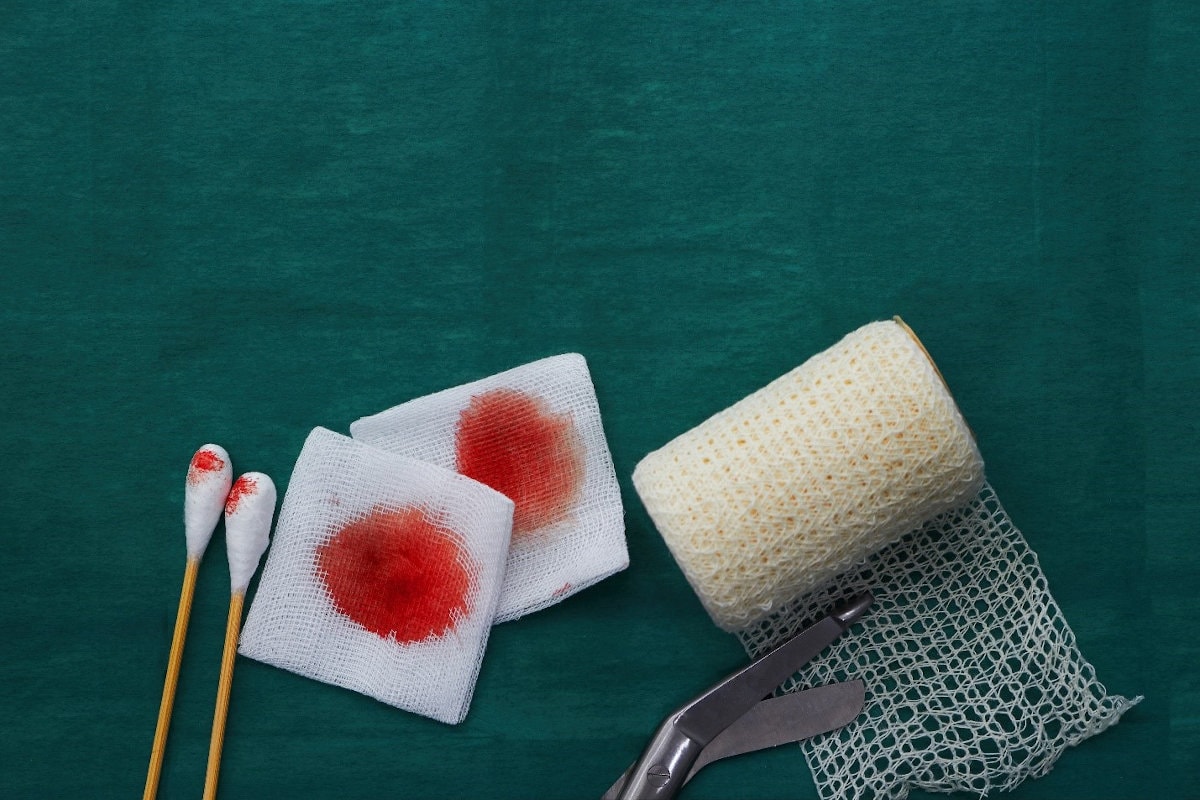
External haemorrhage can be stopped by direct pressure on the wound, applying pressure with fingers at "pressure points" (so-called digital compression) or with the help of compression bandages.
Direct pressure
The simplest and most desirable way to stop bleeding is by directly pressing the bleeding site with the palm of your hand over a thick layer of sterile gauze placed over the wound.
It is best to apply a sterile gauze to the wound before pressing. In the absence of sterile gauze, pieces of clean cloth at hand can be used. If the gauze or cloth is soaked in blood, a new layer of gauze or cloth is put over it. The gauze or cloth first applied to the wound does not need to be removed.
Digital compression - finger pressure to "pressure points"
This method is temporary (short-term) and is applied to stop arterial bleeding. Timely and proper application of this method can preserve the life of the injured person until professional care of bleeding is administered.
When direct pressure on the wound cannot stop the bleeding, or when there is nothing at hand to improvise the compression bandage, we can stop the bleeding by firmly pressing our thumb or other fingers at the locations where the arteries are on the surface and where there is a bone underneath.
The artery must be pressed between the wound and the heart, as close as possible to the wound, to minimize the suffering of the tissue due to impaired blood flow.
Compression bandage
Compared to finger pressure, this is a long-term method of stopping bleeding. The compression bandage can be applied immediately or after pressing with your fingers or pressing on the wound. The principle of the compression bandage is: a thicker piece of gauze ("pad") is placed over the wound covered with a thick piece of sterile gauze, after which the wound is firmly tightened by the bandage.
If the compression bandage is properly fitted, it should not be removed for 24 hours. When the bleeding does not stop, despite the use of a compression bandage, the first bandage should not be removed, but an additional "pad" of an uncoiled bandage should be added to the bandage and further tightened.
An original, factory-packaged "first bandage" also exists and is packed in a manner that maintains sterility. In the absence of this specialised first bandage, one can improvise with pieces of sterile gauze and plain bandages.
Limb elevation
Raising an injured arm or leg reduces blood flow and blood pressure, and therefore bleeding. Lifting alone will not be enough to stop the bleeding, but it helps to stop the bleeding when applying a compressive bandage or employing other methods.
External bleeding – hemostat, Esmarch bandage and tourniquet
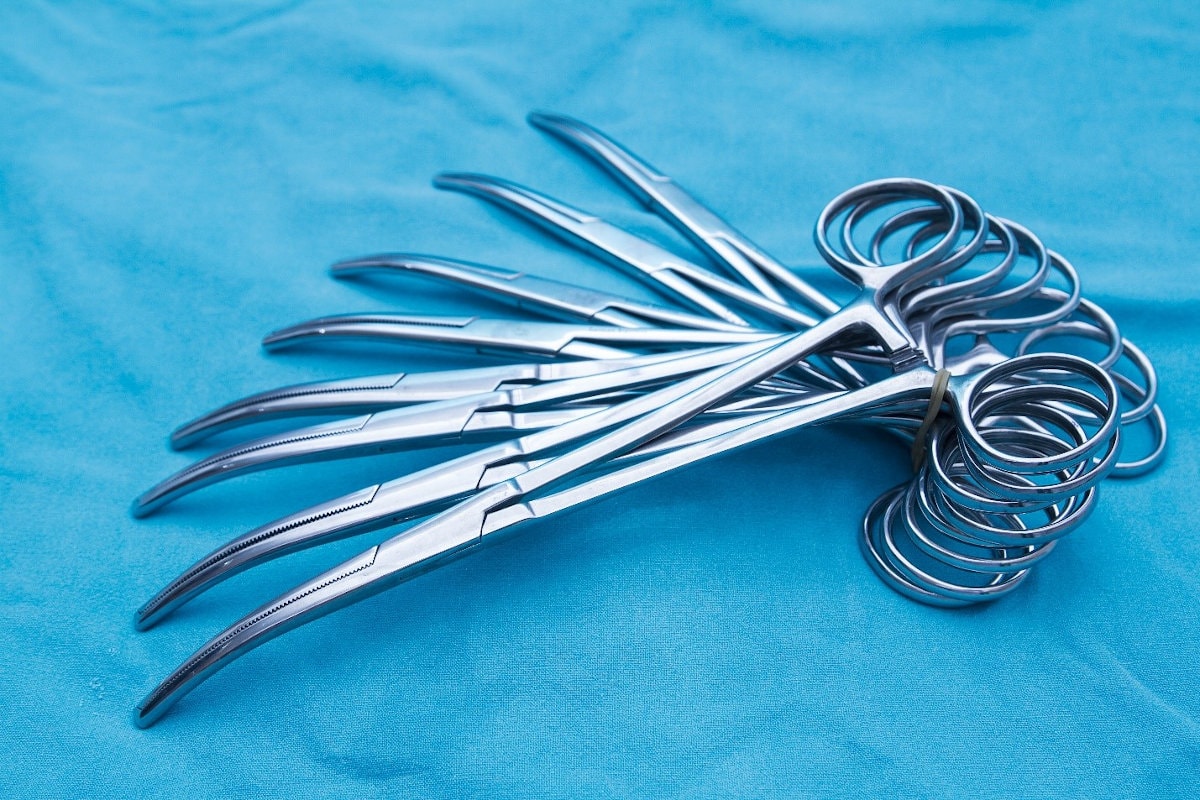
External haemorrhage, depending on location and intensity, can also be stopped by using hemostat clamps (Pean a demeur) and Esmarch bandage or tourniquet.
Esmarch tourniquet should only be used when other methods are not sufficient to stop the bleeding. The use of a hemostat clamp, if possible, is ideal for ship conditions.
Hemostat clamp (Pean a demeur)
A very effective method of stopping bleeding is to use a hemostat clamp, which captures and squeezes the bleeding blood vessel. This method takes precedence over the others (compression bandage, Esmarch tape) because it does not damage the secondary blood flow and does less damage to the remaining, uninjured tissue. It can also be applied in states where other methods cannot be applied.
It is used when the injured blood vessel is accessible by simply squeezing it with a sterile clamp. When the clamp is unavailable, bleeding is stopped by pressing a finger or tourniquet until the clamp is procured.
The handles of the clamp have sprockets that prevent spontaneous loosening. After the clamp is fastened, the wound is protected with sterile gauze. The injured person with a clamp, according to the doctor's instructions (via radio), should be transferred to the hospital as soon as possible.
Esmarch bandage and tourniquet
Esmarch bandage and tourniquet are methods for stopping bleeding that can be applied when the limb (arm or leg) is severed or nearly severed, or when other methods of stopping bleeding are ineffective and there is a risk of bleeding out.
The Esmarch bandage is specifically designed to stop heavy bleeding on the limbs from a firm, elastic material (rubber). It has a fastening system like a belt buckle or "Velcro" - a self-adhesive surface. Such tape completely interrupts circulation peripherally from the location it was applied. With complete amputation of the limb, the Esmarch tape is placed 2 to 3 cm from the wound edge and is not removed. The amputation wound is covered with sterile gauze.
Tourniquet is an improvisation that can be made from a wide layer of fabric, a triangular kerchief and bandage, any elastic piece of fabric, or long enough socks. Rope or wire should never be used. The tourniquet is tensioned with a piece of wood or other solid material. The time the strap was put on should be written down and attached to the injured person's clothing.
In the case of incomplete amputation, when tissue (skin, muscles, bones, nerves) is left peripherally from the injury, a tourniquet is usually used. Due to lack of circulation and oxygen, the tissue more peripheral to the bandage is at risk of dying out, so the tourniquet should be slowly released every twenty minutes. It must be loosened very carefully and slowly so that the blood pressure does not expel already formed blood clots, causing severe bleeding to recur.
If one of these bandages is placed, the doctor's advice should be sought immediately by radio and proceed as directed. Once placed, it must not be removed without consulting a doctor.
Such bindings should never be covered and wrapped with other material, as there have been cases where they have been placed and forgotten.
Nosebleed
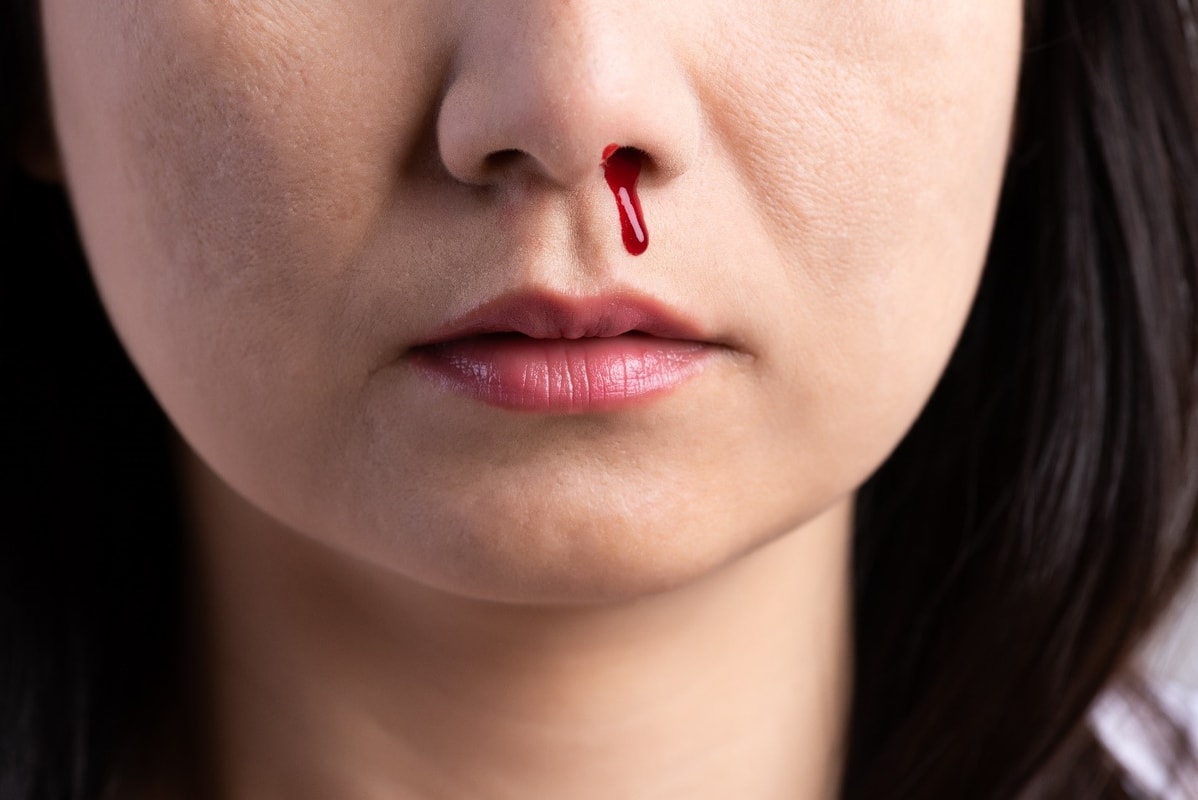
A person with a nosebleed must squeeze both nostrils with his fingers. The head should be tilted forward (over a sink or a container). The grip must be continuous and last for ten minutes, after which it should be loosened slightly.
If the bleeding does not stop after 10 minutes of squeezing, the soft parts of the nostrils should continue to be squeezed for a further 20 minutes and then slowly loosen the squeeze.
Thereafter, if the bleeding has stopped, the nose should not be touched until the condition has completely stabilized.
When nosebleeds cannot be stopped by squeezing the nostrils and applying cold compresses, a nose tampon should be made, which requires the advice of a doctor via radio.
The process consists of pushing a strip of gauze (better still a strip of Vaseline gauze or gauze soaked in iodoform) using tweezers into a bleeding nostril. The strap is about 1 cm wide and about 1 m long. The soaked gauze is kept in the nostril for 48 hours, after which it should be carefully removed. Removing the tampon too early, which is still adhered to the mucous membrane, causes new bleeding.
Internal bleeding
It occurs in various conditions (injuries, spraying gastric or duodenum ulcers, esophageal varices). It can be visible and hidden.
After careful examination, hidden bleeding can be identified by some signs and symptoms. Bleeding around a broken bone (closed fracture) can be recognized by the swelling and by the colour of the swelling. If bleeding comes from the digestive organs, the appearance of blood in the vomit or in the stool is significant. Bleeding from the airways is characterized by the appearance of blood in the spit.
Sometimes the appearance of harmless abdominal injury can cause serious internal bleeding.
An injured person, due to blood loss, may experience shock, the severity of which depends on the amount of blood lost and the rate at which it is lost. The pulse becomes fast and weak, the blood pressure drops. Progressive acceleration and falling blood pressure are signs that the bleeding has not stopped.
In people with suspected internal bleeding, the frequency and height of blood pressure should be measured and noted every 10 minutes. According to the change in the values of the blood pressure, after about one hour it will be clear whether or not there is internal bleeding. If the blood pressure remains approximately the same after one hour, there is no internal bleeding.
With the slightest suspicion of internal bleeding, the advice of a doctor via radio should be sought.
If the injured person has bled or is in shock, sufficient amounts of blood must be provided to the lungs and brain. This is achieved by raising the legs of the injured 30 cm (the so-called autotransfusion position). In severe pain and discomfort, if there are no serious head injuries, morphine can be given.
The infusion is given after consultation with the doctor via radio.
Ear bleeding

It usually occurs after a head injury or blast injury. Bleeding from the ear is ear drainage that contains blood. The discharge may be a combination of pus, wax, fluid and blood. Although there are many possible causes, the most common one is a ruptured or perforated eardrum.
First aid for ear bleeding consists of putting a wide bandage over the ear and tilting the head to the side of the injured ear.
If the injured person is unconscious, he or she should be placed in recovery position, with the injured ear facing downwards. Nothing needs to be pushed into the ear canal (cotton, gauze, etc.). Seek medical advice by radio.