



Parts of a Ship: Complete Anatomy Guide
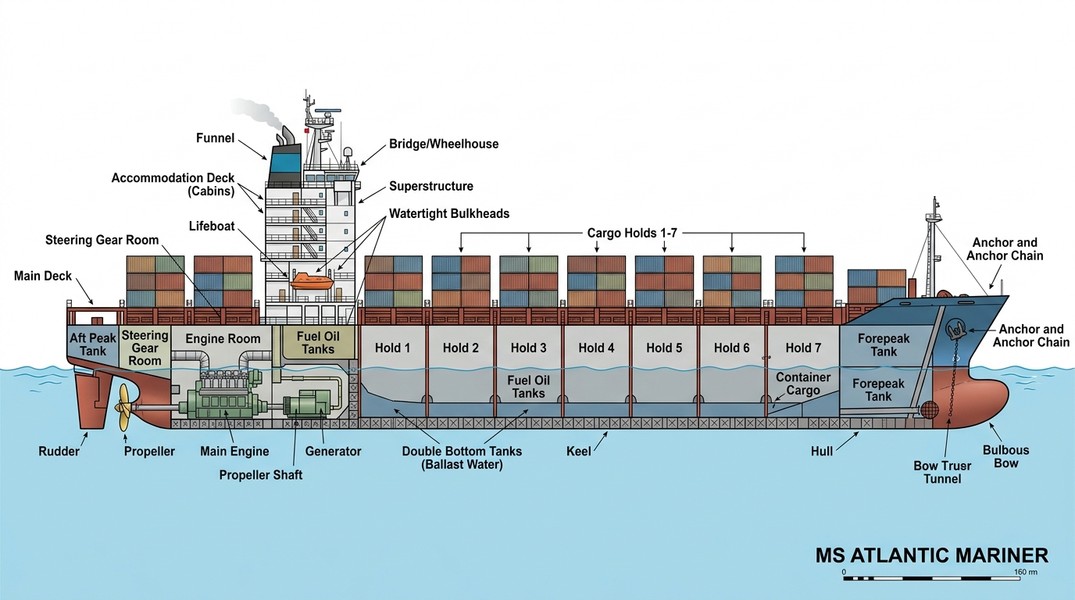
A ship is made up of dozens of interconnected parts, each serving a specific function. The hull provides buoyancy, the keel acts as the backbone, the bridge serves as the command center, and the engine room powers everything. Whether you work in the maritime industry, study naval architecture, or simply want to understand what you are looking at when a vessel passes by, knowing the anatomy of a ship makes the difference.
This guide covers every major part of a modern vessel, from the bow to the stern, with explanations of what each component does and why it matters.
Quick Reference: Major Ship Parts
| Part | Location | Function |
|---|---|---|
| Hull | Outer shell | Watertight body providing buoyancy |
| Keel | Bottom centerline | Structural backbone of the ship |
| Bow | Front | Cuts through water, reduces resistance |
| Stern | Rear | Houses rudder and propeller |
| Bridge | Upper forward | Navigation and command center |
| Deck | Horizontal surfaces | Operations, cargo handling, crew movement |
| Engine Room | Lower midship | Power generation and propulsion |
| Cargo Hold | Lower interior | Storage for goods and materials |
| Funnel | Upper rear | Exhaust venting from engines |
| Rudder | Stern, underwater | Steering mechanism |
| Propeller | Stern, underwater | Propulsion through water |
Bridge
The bridge is the ship's command center. It is equipped with advanced communication and navigation systems such as the following:
- Autopilot system: used for automatically controlling the course of the ship.
- Engine control console: used to control the vessel's engines.
- GPS: used for navigation.
- Radar: used to detect obstacles and other ships.
- VHF radio: used to communicate with port authorities and other ships.
Maritime enthusiasts can observe bridge operations remotely through vessel tracking platforms that display real-time ship positions, headings, and speed data sourced from the same AIS systems installed on every bridge.
Cabin or House
The house or the cabin is where the crew members live and work. The cabin often includes the following parts:
- Accommodation spaces: the crew members' sleeping quarters.
- Galley: the kitchen of the ship.
- Mess room: the dining area for the ship's crew members.
- Recreation room: the space where the crew can unwind and relax.
Cargo Hold
Cargo is stored and carried in the space known as the cargo hold. This is designed to maximize the capacity and, at the same time, maintain ship stability. Its key features are the following:
- Bulkheads: divide the cargo hold into several sections.
- Cargo handling gear: equipment for loading and unloading cargo.
- Hatch covers: offer access to the cargo hold.
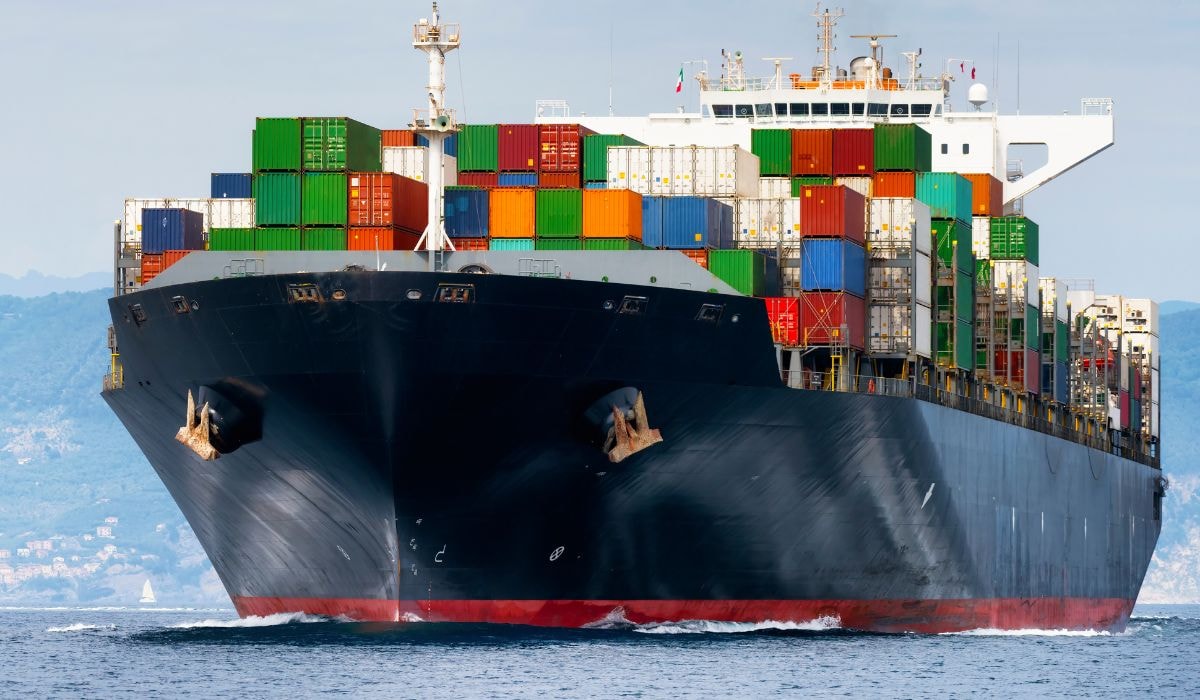
Bow
The bow is the ship's forward part designed to cut through the water efficiently. The bow reduces resistance and improves the ship's stability and speed. You can also find the following in the bow:
- Anchor: secures the vessel in place, a crucial part of the ship's mooring process.
- Bulbous bow: the protruding bulb right under the waterline that improves the ship's fuel efficiency and speed.
- Fore peak tank: the storage area at the very front of the vessel, used for ballasting and balancing.
Ship Deck
The ship deck is the flat surface covering the vessel's hull. This is where most of the operations occur on the ship. The deck houses different structures and equipment, including the following:
- Bollards: secure ropes while the vessel is docked to ensure ship stability at port.
- Capstans: haul heavy weights, such as anchors, a fundamental part of the ship's mooring process.
- Deck cranes: used to load and unload cargo, a fundamental aspect of the function of a merchant vessel.
- Hatches: openings under the deck that allow access to the cargo holds, critical to managing the ship's cargo.
- Liferafts and lifeboats: crucial emergency safety equipment that are a vital part of the layout of ships.
- Winches: handle wires and ropes, which are essential for different deck operations.
Engine Room
The ship's engine room is often considered the heart of the vessel. The engine room houses the main engine of the boat as well as other machinery required for operations. The following are the critical components of the engine room:
- Air compressors: provide the compressed air required by different systems of the vessel structure.
- Boilers: produce steam necessary for heating as well as other purposes.
- Oil and fuel purifiers: clean the oil and fuel before use.
- Generators: provide the ship with the required electrical power.
- Main engine: powers the propeller of the ship.
Ship Hull
The hull is the vessel's watertight body, offering buoyancy to ensure the ship stays afloat. It is divided into various sections, each playing a distinct role in the vessel's structure and function.
- Bilge: the hull's lowest part, collecting and pumping out water.
- Bow: the hull's forward part designed for efficient cutting through the water.
- Bulkheads: walls inside the hull that form separate compartments contributing to the ship's stability and safety.
- Double bottom: a safety feature that offers additional protection to the bottom of the ship, a fundamental aspect of modern ship anatomy.
- Freeboard: the distance between the main deck and the waterline, critical for the ship's stability and safety.
- Keel: the ship's backbone that runs along the vessel's bottom from the stern to the bow.
- Stern: the back part of the hull that houses the ship's steering and propulsion mechanisms.
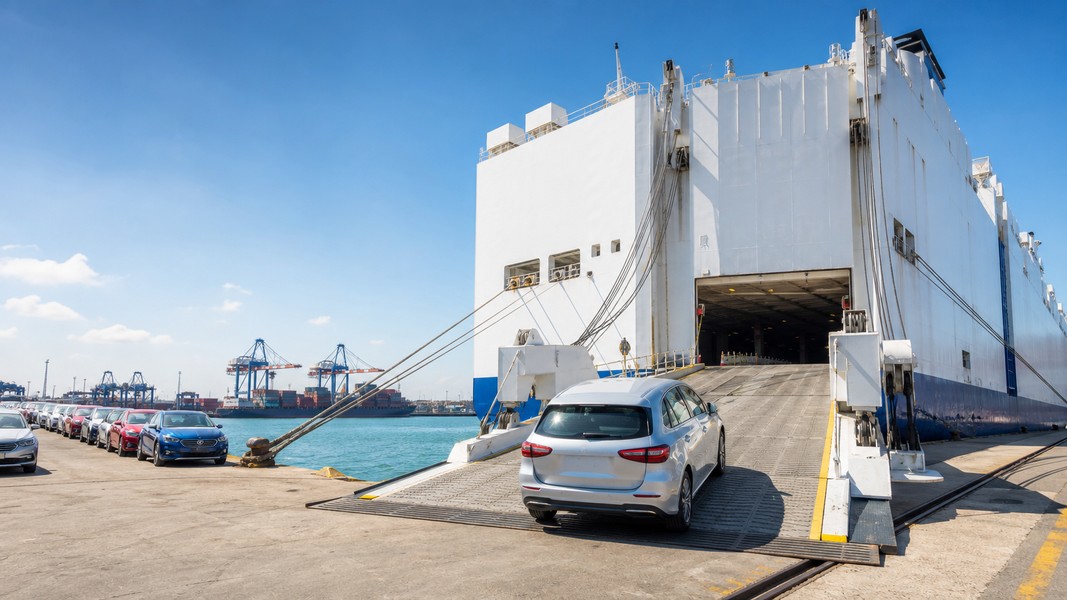
The RoRo Deck
The RoRo deck on Roll-on/Roll-off (RoRo) ships is where vehicles are driven off and onto the ship. This includes the following:
- Lanes: guide the vehicles to the designated areas.
- Ramps: allow vehicles to be driven on and off the vessel.
- Tie-down points: secure the vehicles during vehicles during shipment.
Ship Stern
The stern is the back part of the vessel that houses the rudders and propellers of the ship, which play a crucial role in steering the boat. Most of the time, the stern also houses the following parts:
- Aft peak tank: storage at the back of the vessel used for ballasting and balancing.
- Propeller: propels the vessel through the water, a critical aspect of the ship's movement.
- Propeller shaft: connects the propeller to the engine, a key part of the ship's propulsion system.
- Rudder: steers the ship, critical for the vessel's navigation.
Additional Parts of Modern Ship Anatomy
The following are other additional parts that make up a modern ship's anatomy:
- Boat deck: storage area for the lifeboats on the ship.
- Duct keel: passage that runs the ship's length at the bottom, allowing crew members to move from the back to the front without going above deck.
- Emergency generator room: contains the emergency generator that provides power when a main generator fails.
- Foredeck: the area of the deck at the front of the vessel.
- Funnel: the ship's exhaust stack that vents the engine gases.
- Funnel deck: the deck area surrounding the funnel.
- Paint room: stores paint and other supplies for maintenance.
- King post or Samson post: vertical beams supporting the cargo booms.
- Ship cargo gear: cranes, derricks, and equipment for loading and unloading cargo.
- Side thrusters: propellers on the ship's side that assist in maneuvering.
Other Specialized Parts of a Ship
Here are other specialized parts that make up a modern vessel structure:
Bow thrusters. Specialized propulsion devices in front of the vessel that provide lateral thrust to help maneuver. Bow thrusters improve the ship's maneuverability, especially during undocking and docking maneuvers. They are vital to the ship's safety systems because they let the captain adjust its position without relying only on the main propulsion system.
Fluke. A standard anchor feature that can dig into the seabed to help secure the vessel.
Monkey island. Found on bigger vessels, Monkey Island is a deck above the ship's bridge. It offers an elevated lookout position that allows the ship's crew to observe nearby vessels, navigational markers, and other vital details more effectively than from the lower deck.
Poop deck. A traditional raised platform at the back of the vessel. It serves several purposes, such as being a place for storing equipment like spare lifeboats and a vantage point where crew members can monitor the rear of the ship.
Superstructure. The ship's superstructure consists of visible non-hull parts that extend above the deck. The bridge wing is a primary part that extends from the bridge's sides outwards. The wings offer the crew a clear line of sight to monitor the ship's surroundings, specifically emphasizing docking operations and safe navigation.
Wrapping It Up
The ship's anatomy is fascinating, with all the parts and components that comprise the vessel structure.
Most Recent Posts
Discover more articles from our blog.