To import from China, you move through eight stages in a fixed order: confirm the goods are allowed and what duty they carry, verify the supplier, agree terms, inspect the goods before they leave the factory, book freight and file advance data, follow the ship, clear customs at home, and arrange the last mile. Skip one and the cost usually shows up later, at the port or in a carton of faulty stock.
Most first-time importers focus on the factory price and the freight quote. The money is more often lost in the gaps between stages: a supplier that turns out to be a trading shell, a filing missed before loading, a container that sits at the terminal because nobody planned the pickup. This guide walks through each stage, what to check, and how long it tends to take.
Import From China: The Process at a Glance
The workflow below is the same whether you ship one pallet or ten containers. Only the paperwork volume changes.
- Classify and cost: find the tariff code for your product and the duty your country charges on it.
- Verify the supplier: confirm the company legally exists and actually makes what it sells.
- Agree terms: price, Incoterm, payment schedule and quality standard, all in writing.
- Inspect: check a sample of the finished goods before the final payment.
- Book and file: reserve space on a ship and submit any advance cargo data your country requires.
- Track the voyage: follow the vessel and adjust plans when it runs late.
- Clear customs: declare the goods, pay duty and tax, and get them released.
- Deliver: collect the container, unload it and return the empty box on time.
The order matters because each stage feeds the next: your tariff code shapes the price you can accept, and your Incoterm decides who books the freight.
Stage 1: Know the Duty Before You Negotiate
Every product has a Harmonized System code, and that code sets the duty rate in your country. Look it up before you talk to suppliers, because a product that looks profitable at the factory gate can stop being profitable once duty and tax are added.
Each destination applies its own rates to goods from China. In the UK, the government's import guidance sets out the steps: get an EORI number starting with GB, find the commodity code, work out the customs value, then check whether any trade agreement lowers the duty. That commodity code also tells you whether you need a licence.
For goods headed to India, the rule is stricter at the start. According to the Directorate General of Foreign Trade, no import can be made without an Importer Exporter Code, a 10-character code tied to the company's PAN. Its customs procedures guide explains that India levies basic customs duty plus integrated GST, and can add anti-dumping or safeguard duties on specific goods. Electronics and IT goods notified under the Compulsory Registration Order also need BIS registration before they can be imported.
In the United States, import tariffs from China sit on top of the ordinary rate and change often. The US International Trade Commission keeps a reference list of the Section 301 duties on Chinese products, and a customs broker can confirm which ones apply to your code on the day you enter the goods.
Stage 2: Verify the Supplier Is Real
A polished website or a marketplace listing proves very little. The question is whether a legally registered company stands behind it, and whether that company is a factory or a trading firm reselling someone else's output.
Canada's trade commissioners recommend that companies conduct due diligence through China's National Enterprise Credit Information Publicity System, run by the State Administration for Market Regulation. A registry search lets you confirm:
- the registered legal person and the registered capital
- the business scope, which should include manufacturing if the supplier claims to own a factory
- the registered address, the registration date and whether the business licence is still valid
The same guidance warns that the person you negotiate with may not have authority to bind the company, so check who signs. Searches work best with the Chinese legal name or the Unified Social Credit Code, which a genuine supplier will give you without hesitation.
After the paper check, order samples. A sample tells you what the factory can make when it is trying hard; the inspection in Stage 4 tells you what it makes in volume.
Stage 3: Agree Terms, Incoterms and Payment
Write down everything the price depends on: materials, tolerances, packaging, labelling, the quality standard for inspection and the delivery date. A purchase order that says "same as sample" leaves you nothing to enforce.
The Incoterm decides where the supplier's responsibility ends and yours begins. Under FOB, the supplier delivers the goods onto the ship at the Chinese port and you control the ocean freight. Under EXW, you take over at the factory door, including Chinese export clearance, which is hard to manage from abroad. Our guide to Incoterms for importers covers each term and when it fits.
Tie the final payment to a passed inspection, not to a shipping date. Once the balance is paid and the goods are on the water, your hold over quality is close to gone.
Plan around the calendar too. Chinese New Year, in January or February, shuts many factories and causes a rush of bookings before the holiday, so orders placed late in the year need extra margin.
Stage 4: Inspect Before the Goods Leave the Factory
A pre-shipment inspection checks a random sample of the finished, packed order against your specification. Sampling usually follows ISO 2859-1, the standard that sets sampling plans by acceptance quality limit, known as AQL. Its third edition, ISO 2859-1:2026, replaced the 1999 version this year.
The logic is simple. You agree an AQL for critical, major and minor defects; the inspector pulls a sample sized to the lot; if defects in the sample exceed the limit, the lot fails. The standard describes its purpose as pressure on the supplier: the risk of a rejected lot pushes the factory to keep its process average at least as good as the agreed limit.
A failed inspection is not the end of the order. It is the moment to ask for rework, re-inspection at the supplier's cost, or a price adjustment, all of which are far easier while the goods are still in the factory.
Stage 5: Book Freight and File Ahead of Loading
Your forwarder books space on a sailing and arranges pickup to the port. A full container load suits orders that fill a box; smaller orders go less than container load and share space, which is cheaper upfront but adds handling at both ends.
Freight is not cheap this autumn. On the Shanghai to Los Angeles lane, Skypace listed ocean freight from $7,914 per 40-foot high cube container on 27 September 2026, 22% above the average of its weekly checks since late May.
US-bound shipments carry a hard deadline here. Under the Importer Security Filing rule, known as 10+2, the importer or its broker must submit eight data elements no later than 24 hours before the cargo is loaded on a vessel bound for the United States. CBP warns that failing to comply can bring penalties, more inspections and cargo delays. The filing must then be updated as better data arrives, no later than 24 hours before the ship reaches a US port.
Stage 6: Track the Ocean Leg
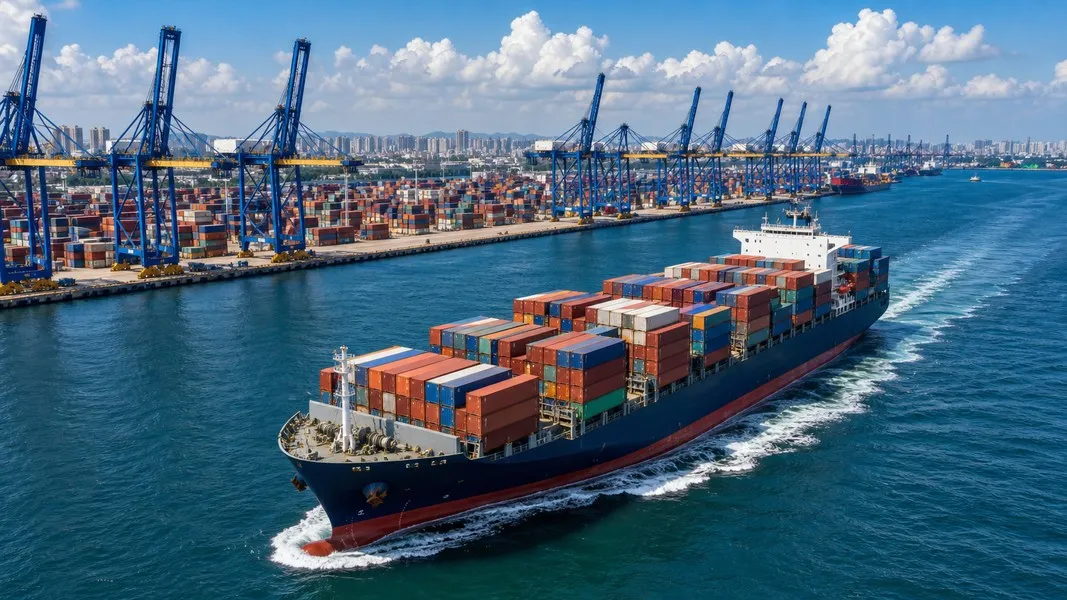
Once the container is loaded, the shipment becomes a vessel voyage, and the vessel's progress decides everything that follows. Typical port-to-port times on the main lanes from China look like this:
| Lane | Typical ocean transit | Source |
|---|---|---|
| Shanghai to Long Beach | about 16 days | SchedulesMCP, 218 sailings |
| Shanghai to Los Angeles | 12 to 18 days | CargoEnter |
| Shanghai to Rotterdam via Suez | 28 to 35 days | CargoEnter |
| China to USA, door to door | 30 to 40 days | AEB Logistics |
Routing via the Cape of Good Hope instead of Suez adds 7 to 10 days on the Europe lane, according to CargoEnter. Carriers also differ on the same route: SchedulesMCP measured CMA CGM at about 14 days from Shanghai to Long Beach and Maersk at 24.
Delays are real this season. In early October, analysts quoted by The Manila Times said congestion at major Asian container ports was tying up about 8.5% of the global containership fleet. A ship that waits at anchor before loading or discharge shifts your whole delivery plan.
This is where Primo Nautic fits the workflow. Search the vessel named on your booking by name, IMO or MMSI number, choose Cargo Shipment as your tracking purpose, and the app sends precise, logistics-focused updates on position, speed and progress. Its dual ETA compares the captain's reported arrival with an AI-calculated route estimate, which shows early when the two start to drift apart.
Stage 7: Clear Customs at Home
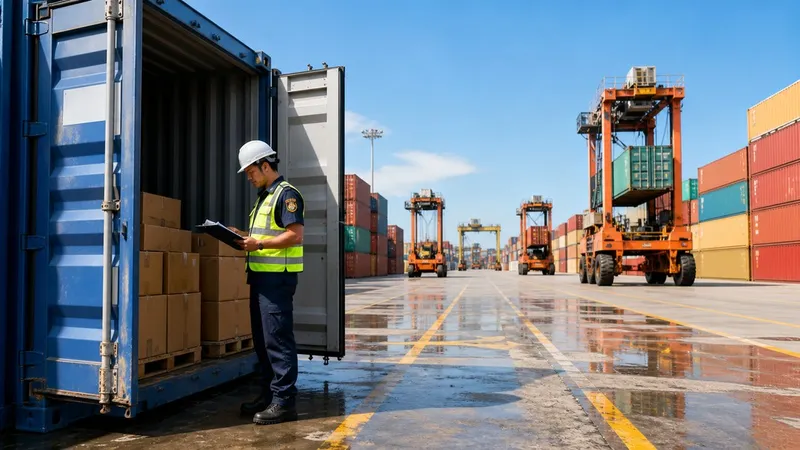
Customs clearance starts before the ship arrives. Your broker or customs agent prepares the declaration from the commercial invoice, packing list and bill of lading, then pays the duty and tax so the goods can be released. Our step-by-step look at customs clearance covers each check and hold in detail.
Most businesses do not do this themselves. The UK government notes that most importers use a transporter or customs agent to make declarations, and that a VAT-registered business can reclaim import VAT using its C79 certificate. In India, the importer files an integrated declaration with self-assessment through ICEGATE after registering there.
The arrival date matters for duty as well as logistics. For US imports, the rate that applies is the one in force on the day the entry is filed, so a change between loading and arrival can change what you pay.
Stage 8: Final Delivery and the True Cost
When customs releases the container, it still has to leave the terminal, travel to your warehouse, be unloaded and go back empty. Each of those steps runs on free days set by the terminal and the carrier, and charges start once they run out.
Waytron Logistics, a forwarder on the Shanghai to Los Angeles lane, breaks the full chain into stages: 1 to 5 days from factory pickup to the port, 1 to 3 days for export clearance, about 15 to 25 days at sea, 2 to 7 days for US customs and 1 to 7 days for final delivery. Add them up and the ocean leg is only part of the time between order and shelf.
The cost you should compare against your selling price is the landed cost: the factory price plus inland transport in China, ocean freight, insurance, duty, import tax, broker fees, terminal charges and delivery. Only that number tells you whether the product is worth importing.
What US Importers Should Watch This Autumn
Trade policy is part of the process when you import from China into the United States. Reuters reported on 28 September 2026 that the two countries extended their trade truce through 10 January 2027 and pledged tariff cuts on about $30 billion of goods in each direction. On the US side, the covered list includes toys, small appliances, bed and table linens, holiday decorations and sport equipment, but the form and timing of those cuts were not yet set.
Shipping costs face a separate deadline. FreightWaves reported that US port fees on Chinese-owned, Chinese-operated and Chinese-built vessels remain scheduled to resume on 10 November 2026, because they fall under a separate Section 301 action that the truce did not change. Carriers could pass those fees on through surcharges or all-in rates, so ask your forwarder how a booking that arrives after that date will be priced.
Goods that are on the water in early November deserve a close look. If entry slips past a policy deadline, the rate on entry day applies, not the rate on the day the container was loaded. Tracking the vessel with Primo Nautic gives you the arrival estimate you need to decide whether to push the broker to file early.
A Shipment From Order to Warehouse
Picture a small US retailer ordering a container of kitchenware from a factory near Shanghai. They look up the HTS code first and confirm the duty before accepting a quote. They search the supplier in the national enterprise registry, see a manufacturing business scope and a valid licence, and order samples.
They agree FOB Shanghai, an AQL for the inspection, and a final payment due only after the inspection passes. Their forwarder books the sailing and files the ISF two days before loading. Once the ship departs, they follow it day by day, see the arrival estimate slip by three days after a wait at anchor, and move the warehouse appointment instead of paying for an idle truck.
Their broker files the entry, duty is paid, the container is released, unloaded and returned inside the free days. Nothing about the shipment was unusual. It simply never had a stage where nobody was watching.
Conclusion
Importing from China follows eight stages: classify and cost, verify the supplier, agree terms, inspect, book and file, track, clear customs and deliver. The factory price is only the start; duty, freight, filings and port time decide whether the goods make money.
Three habits prevent most losses. Check the supplier in China's official registry before any deposit, hold the final payment until an inspection passes, and watch the vessel so you can act on a delay before it becomes a storage bill. US importers should also keep an eye on the November port-fee deadline and the truce that runs to January 2027, because both can change the cost of a container already on the water.