STCW basic safety training is the mandatory safety course every seafarer with safety or pollution prevention duties must complete before working on board. It has four parts: personal survival techniques, fire prevention and fire fighting, elementary first aid, and personal safety and social responsibilities. Most approved centres teach it in five days, and two of the four parts have to be refreshed every five years.
If you are planning a first contract on a cargo ship, a cruise ship or a superyacht, this is the certificate that gets you through the gangway. It is also the one that trips up experienced crew, because the renewal rules differ by administration and changed again in 2026. This guide walks you through what the course covers, what you need before booking, how to get certified step by step, what it costs, and how to keep it valid.
What STCW Basic Safety Training Covers
The requirement comes from Regulation VI/1 of the STCW Convention and Section A-VI/1 of the STCW Code. Each of the four elements has its own competence table, Tables A-VI/1-1 to A-VI/1-4, and attending the classes is not enough: you have to demonstrate each skill and pass an assessment. The US rules in 46 CFR 12.602 list the same four elements by the same table numbers, and the Philippine regulator MARINA lists basic training under the same references in its schedule of mandatory STCW courses.
Personal Survival Techniques (PST)
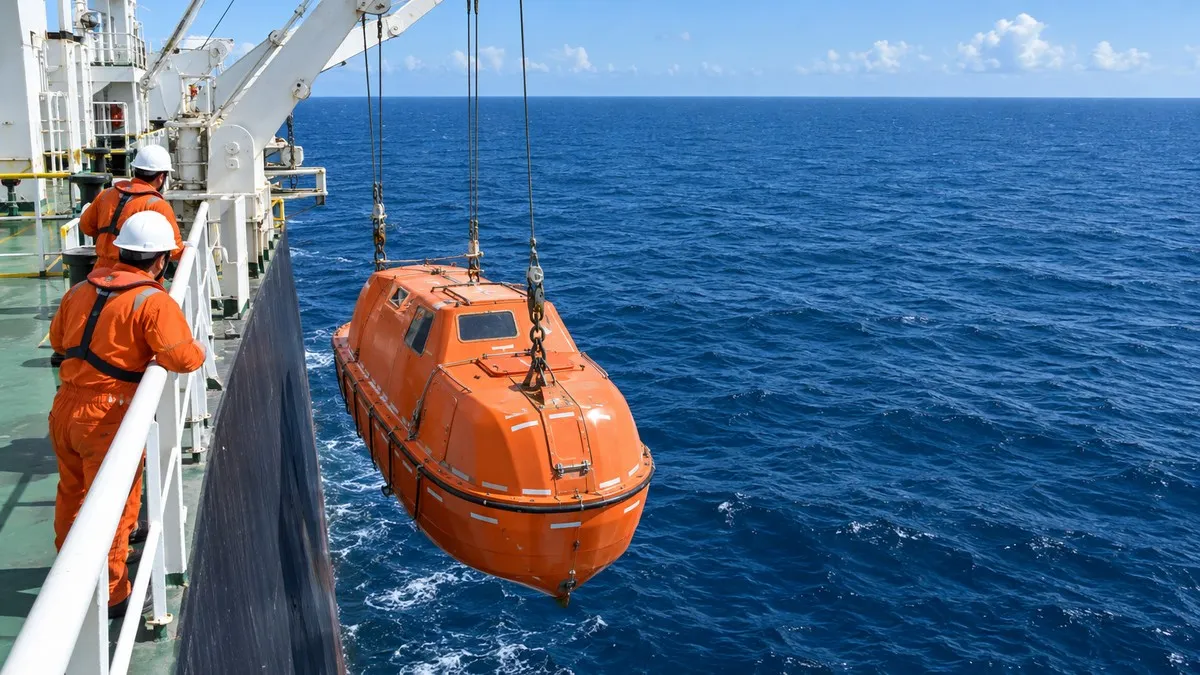
PST covers the types of emergency you can face at sea, the survival craft on board and the principles of staying alive until rescue. The practical part takes place in a pool. You put on a lifejacket and an immersion suit, jump safely into the water from a height, right an inverted liferaft, swim while wearing a lifejacket and stay afloat without one. If you want to know what that pool day looks like in practice, our account of a personal survival techniques course describes it in detail.
Fire Prevention and Fire Fighting (FPFF)
FPFF teaches shipboard fire organisation, the fire triangle, the classes of fire and the extinguishing agent each one needs. The practical days are as close to real conditions as the centre can make them. You use portable extinguishers of several types, put out small and larger fires with water, foam and powder, wear a self-contained breathing apparatus and carry out a rescue in a smoke-filled space.
Elementary First Aid (EFA)
EFA trains you to assess a casualty and the risks to your own safety, then act: positioning the casualty, resuscitation, controlling bleeding, and treating shock, burns, scalds and electric shock. It is basic by design. The goal is to keep someone stable until a person with medical training takes over.
Personal Safety and Social Responsibilities (PSSR)
PSSR covers emergency procedures and the muster list, pollution prevention, safe working practices, communication on board and fatigue. Since 1 January 2026 it also includes the prevention of and response to violence and harassment, including sexual harassment, bullying and sexual assault, which the IMO announced as part of a wider set of amendments in force from that date.
Who Needs STCW Basic Training
The rule applies to anyone employed or engaged on board in a capacity that involves safety or pollution prevention duties, and it has to be completed before you are assigned to any shipboard duties. The US Coast Guard puts it in practical terms: basic training is required for all mariners filling a position in the required crew complement or holding a responsibility on the muster list.
In practice that covers far more people than deck officers and engineers. Training centres such as UKSA describe the course as the legal minimum for commercial work on vessels over 24 metres, which includes superyachts and cruise ships. On a cruise ship, anyone with a role on the muster list falls under the rule, whatever their job in the hotel.
Basic training is not the same as safety familiarisation. Familiarisation is the briefing you receive on board a specific ship, and it does not replace the certificate. The certificate does not replace the briefing either: you need both.
If you are still deciding whether a career at sea suits you, our guide to getting hired as a merchant mariner shows where basic training sits among the other documents you will need.
What You'll Need Before You Book
The paperwork is light, but a few things are worth sorting out before you pay a deposit:
- A seafarer medical certificate. In the UK the ENG1 is not a prerequisite for the course itself, but it is required to work on yachts over 24 metres. Bluewater, which runs the course in Antibes and Palma, strongly advises getting the medical first, because some conditions rule out work on board.
- Working English. MRS Training & Rescue, an MCA approved provider, only runs its assessments in English, and most centres expect you to follow fast safety instructions in it.
- Swimwear and a towel. The survival module happens in a pool, and US provider Northeast Maritime lists both as required materials.
- A check on facial hair rules. Northeast Maritime warns of facial hair requirements at the fire academy it uses, so ask your centre before the breathing apparatus day.
How to Get STCW Basic Safety Training Certified, Step by Step
The process is similar everywhere. What changes is which authority approves the centre and issues or recognises your certificate.
Step 1: Work out which administration matters to you
Your certificate needs to be accepted by the flag of the ship you will work on, and by the administration that will later issue your certificate of competency, if you plan to become an officer. A UK CoC means MCA approved courses. A US Merchant Mariner Credential means Coast Guard approved courses. Some administrations accept courses from other countries: the MCA accepts some STCW short courses from other maritime administrations, and the Danish Maritime Authority recognises courses completed in IMO White List countries if they were issued under STCW rules.
Step 2: Get your medical
Book the seafarer medical before the course, not after. A failed medical after a paid course is the most expensive way to discover a problem.
Step 3: Pick an approved training centre
Check the administration's own list rather than the provider's website. The UK keeps its approved provider lists with a separate list for each basic training element, last updated on 5 November 2026. The MCA also warns that a company advertising approved courses may be a commercial partner rather than the actual provider, and that it does not accept online courses where the STCW Code requires face-to-face practical training.
Step 4: Complete the theory and the practical days
Most courses run as five consecutive days. MRS describes its course as 60% theory and 40% practical. Some US providers offer a blended route in which the theory is online and the practical assessment happens in person at a fire academy and a pool.
Step 5: Pass the assessments and collect your certificates
You are assessed by demonstration in each element, plus an exam or continuous assessment. When you pass, the centre issues your certificate of proficiency; in Denmark, approved providers also report it to the authority directly. Keep the originals safe and store clear scans, because every crewing agency and every renewal will ask for them.
STCW Basic Safety Training Course Cost and Length
Five days is the norm. The prices below come from the providers' own course pages as of November 2026:
| Provider | Location | Length | Price |
|---|---|---|---|
| MRS Training & Rescue | Southampton, UK | 5 days | from £597 |
| UKSA | Isle of Wight, UK | 5 days | £850, or £1,050 residential |
| Bluewater | Antibes and Palma | 5 days | €1,295 |
| Northeast Maritime | Online plus practical, US | Based on 40 hours | $1,025 |
The spread is wide, and the cheapest course is not always the best value. Check what the price includes. UKSA adds Proficiency in Security Awareness at no extra cost, a separate STCW requirement that all seafarers have needed since 1 January 2014. Its residential option adds £200 for accommodation, and Northeast Maritime leaves you to arrange your own transport to the fire academy.
How to Renew: The Five-Year Refresher Rule
Under the 2010 Manila amendments, enforced in the UK from 1 January 2017, you must show every five years that you still meet the standard in personal survival techniques and fire prevention and fire fighting. Elementary first aid and PSSR do not carry this five-year requirement under the STCW Code.
The refresher route
In the UK and much of Europe, you renew by completing an approved refresher course before your current certificate expires. The Danish Maritime Authority asks for courses to be completed before the previous certificate expires, and requires officers to show a valid refresher from the last five years when they apply for a new certificate of competency.
The US route: sea service plus revalidation
The US accepts onboard experience for part of the refresher. With 360 days of sea service in the last five years on a vessel that holds regular fire, emergency and abandon ship drills, you can renew with a Coast Guard approved revalidation course or recent PST and firefighting courses. Some skills can only be shown ashore, whatever your sea time:
- Donning and using an immersion suit, and jumping safely from a height into the water.
- Righting an inverted liferaft, swimming in a lifejacket and staying afloat without one.
- Using portable extinguishers and putting out fires with water, foam, powder or fog, including in smoke-filled enclosed spaces while wearing breathing apparatus.
Without the sea service, you need an approved refresher course or valid courses for all four elements, completed within the last five years.
The 2026 Harassment Training Many Crew Still Need
The amendment behind the new PSSR content is IMO Resolution MSC.560(108), adopted on 23 May 2024 and in force since 1 January 2026. It requires seafarers to know how to prevent, identify, report and respond to violence and harassment, including trauma-informed support for victims and bystanders.
How you meet it depends on your administration. Under MCA notice MGN 718, UK certified seafarers whose PSSR certificate is dated before 1 January 2026 must complete a free online module from OneOcean by 31 March 2027. It takes about an hour, works on a phone and has no final assessment. A PSSR certificate from an MCA approved course dated on or after 1 January 2026 already includes the new content.
If you hold a certificate from another administration, check its own guidance. The MCA warns that missing the deadline can affect certificate revalidation, inspections outside the Paris MoU region and your eligibility to work at sea.
Tips for Better Results
Book the fire days when you are rested. Working in breathing apparatus in heat and smoke is physically demanding, and the assessors are watching how calmly you work, not how fast.
Revise before you arrive. Primo Nautic hosts maritime courses on its website that cover the same four subjects: firefighting, elementary first aid, personal survival techniques, and personal safety and social responsibility. They are study material, not an approved certificate, but reading them first means the classroom hours feel like revision rather than new ground.
Put your expiry dates in your calendar the day you receive the certificates. A refresher booked three months ahead is easy; one booked a week before a contract starts often is not.
Troubleshooting Common Issues
Your certificate is not accepted by a new employer. Check which administration approved the course and whether the flag state of your new ship recognises it. A course from a White List country is accepted by many administrations, but not automatically by all of them.
Your PST or FPFF certificate has already expired. You cannot sail in a role that requires it until you renew. Book an approved refresher, or in the US check whether your sea service still qualifies you for revalidation.
You took the course online. Theory taken online is fine where the administration approves a blended course, but the practical elements must be assessed in person. A certificate from a fully online course with no pool or fire ground will not pass in the UK.
You are a family member trying to understand a contract. Basic training is only one step before a seafarer joins a ship. Once they are on board, Primo Nautic's Loved One Working at Sea purpose shows where their vessel is, the weather at its position and when it is expected in port, written in plain language rather than raw AIS data.
Key Takeaways
STCW basic safety training is four elements taught together: personal survival techniques, fire prevention and fire fighting, elementary first aid, and personal safety and social responsibilities. Expect five days and a price from £597 at the cheapest UK centre in this guide to €1,295 on the French Riviera, depending on what is included.
Choose a centre approved by the administration whose certificate you need, and get your seafarer medical before you pay. Refresh PST and fire fighting every five years, either through a refresher course or, in the US, through sea service plus revalidation. If your PSSR certificate predates 1 January 2026, check whether your administration requires the new harassment module and by when.